Key takeaways
- Bobby 5.2.16 is the mod’s first Minecraft 26.3 release, published 6 October after nearly three months on 26.2.
- Bobby stores every chunk a server sends in a local cache and redraws them beyond the server’s view-distance limit, which is how it exceeds the server cap.
- It is client-side and Fabric-only, with a hard dependency on Fabric API, Cloth Config and ModMenu for the in-game config screen.
Every multiplayer server sets a view-distance, and that number is a hard ceiling on what your client is allowed to see. You can set render distance to 32 chunks in your video settings and it will do nothing, because the server is only sending you eight. This is the single most common reason a server looks worse than a single-player world on the same hardware, and it is not something the client can fix by asking nicely.
Bobby is the mod that works around it, and version 5.2.16 published on 6 October is its first release for Minecraft 26.3. With over twenty-one million downloads it is one of the most-installed client mods in the ecosystem, and a version gap of nearly three months on a mod that popular is long enough that a lot of 26.3 upgrades have been waiting on it.
What the update contains
The changelog is one line: update to Minecraft 26.3. That is the entire release, and for a mod like Bobby that is exactly what you want. It hooks deeply into chunk loading and rendering, which means version ports are the hard part and feature work is the easy part.
The release is marked stable rather than beta or alpha, and it supports 26.3 only – the file does not cover 26.2, so this is a clean upgrade rather than a multi-version build. The previous release, 5.2.15 for 26.2, dates from 12 July.
Dependencies have not changed. Fabric API, Cloth Config and ModMenu are all listed, with ModMenu and Cloth Config needed for the in-game configuration screen rather than for the mod to function. Our notes on the config library chain cover why these keep appearing in dependency lists.
How Bobby actually works
This is worth understanding because it explains both the benefits and the limits.
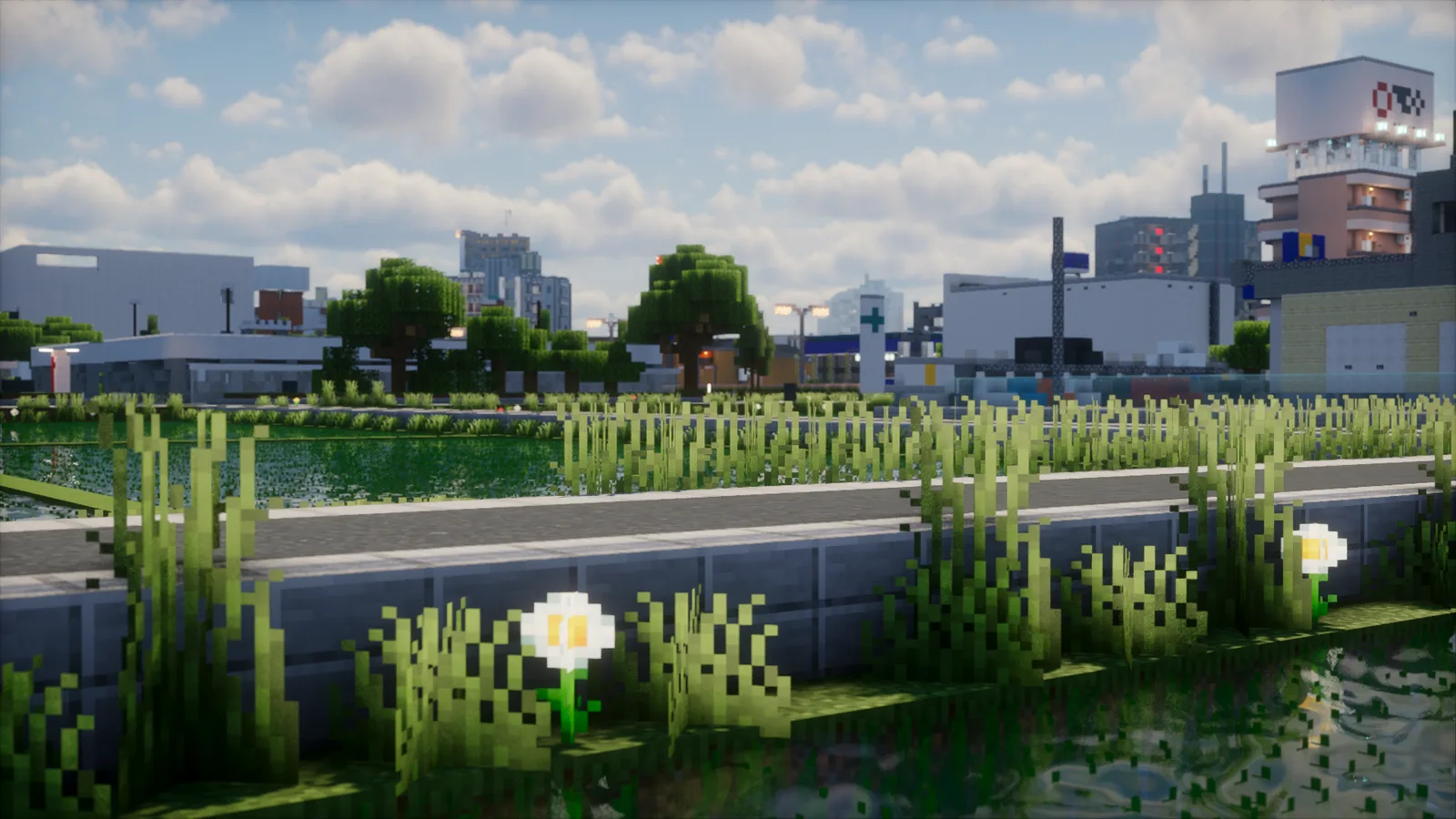
Bobby records every chunk the server sends and writes it to a local cache inside the Minecraft folder. When you walk away and those chunks fall outside the server’s view-distance, the server stops sending updates and normally the client unloads them. Bobby instead loads its cached copy and keeps drawing it.
The consequence is that distant terrain you can see is real terrain you have previously visited, drawn from your own disk. Three things follow from that:
- It only shows you what you have seen. On a fresh server the distance does not improve until you have explored. Walk a route once and the second trip looks dramatically better.
- Distant chunks are a snapshot. Anything built or broken outside the server’s view-distance will not update in your view until you get close enough for the server to send it again. On a busy server distant terrain is slightly out of date by definition.
- No entities at distance. Cached chunks are blocks only. Mobs, players, item frames contents and anything else entity-based will not appear until the chunk is within the server’s real view-distance.
There is a fallback option that most users never touch: renaming an existing single-player world folder to bobby-fallback lets Bobby load terrain from that world for chunks the server has never sent. This is useful when a server’s world was generated from a known seed, because the single-player generation of the same seed is identical for unmodified terrain.
Bobby versus LOD rendering
These are regularly confused and they solve different problems.
Bobby renders real cached chunks at full detail, limited to places you have been, and it exists to beat the server’s view-distance cap. A long-range LOD mod generates simplified geometry for terrain at distance, works in single player and on servers, and exists to make very long view distances cheap to draw. Our LOD mod review covers the other approach in detail.
They are complementary rather than competing, and running both is a common setup – Bobby supplies the chunk data, the LOD mod supplies the cheap distant geometry. The combination is also the heaviest thing you can do to a client’s memory budget, so it is worth watching.
What it costs
Three costs, in order of how often they bite people.
Disk. Bobby caches every chunk you have seen. On a server you play regularly across a large area, the cache directory grows to gigabytes. It is in the Minecraft folder, it is safe to delete, and deleting it just means re-exploring to rebuild it.
Memory. Holding distant chunk data for rendering uses heap. If your Minecraft instance is on a default memory allocation and you set a very high render distance, you will find the ceiling. This is the most common Bobby complaint and it is almost always an allocation problem rather than a mod problem.
Frame time. More chunks drawn means more draw calls. Bobby does not make rendering cheaper, it makes more things eligible to be rendered. Pair it with Sodium – our Sodium review covers what that does to the chunk render path – and our culling explainer covers why that pairing matters more here than almost anywhere else.
Server operator perspective
Bobby does not bypass anything server-side. It stores what the server already chose to send, so it is not a way to see further than the server permits in real time, and it gives no information the client did not legitimately receive.
Practically, the operator-side version of this problem is view-distance and simulation-distance tuning, which is a completely different lever. Our server performance tuning guide covers what raising view-distance actually costs, and our server specs guide covers why most operators set it low in the first place. A server that raises view-distance to 16 removes most of the reason players install Bobby.

Our read
Bobby is in the small category of mods that fix a structural limitation rather than add content, and those age well. The core design – cache what the server sends, redraw it later – has not needed to change in years, and the release history is almost entirely version ports. That is a healthy pattern and it is why a three-month gap on 26.3 was worth waiting for rather than replacing.
The one thing worth saying plainly: if your server runs a view-distance of 8 and you have never explored much of it, installing Bobby will appear to do nothing. The mod needs a history of visited chunks before it has anything to show you. Install it, play normally for a few sessions, and then look at the horizon. Our pregeneration guide covers the operator-side equivalent, and our chunk loading stutter guide covers what to do if the extra chunk work shows up as hitching.
Images: Photon Shaders project gallery.