Key takeaways
- Ice spikes only generate inside snowy plains, which makes them a sub-feature of an already uncommon biome rather than a biome you can search for directly.
- The useful spawn is not the spikes themselves but the combination of spikes, a frozen river or ocean, and a village or igloo within a few hundred blocks.
- With the Ice Caves biome arriving in 26.4, a snowy plains spawn is now worth keeping for what is underneath it as much as what is on the surface.
Ice spikes are the most photographed terrain feature in Minecraft and one of the least understood. People search for ice spikes seeds, load one, and find a field of packed ice columns with nothing else nearby – no village, no structure, no reason to stay. The spikes are scenery, and scenery alone does not make a world worth a hundred hours.
What makes an ice spikes spawn good is everything around it. This is a guide to what to look for, how to find one in a world you are already playing, and why the 26.4 snapshots have quietly made cold spawns more interesting than they have been for years.
Why ice spikes are rare
Ice spikes are not a biome in their own right in the way mushroom fields or badlands plateaus are. They generate as a variant feature inside snowy plains, which means two conditions have to line up: the generator has to place snowy plains, and it has to place the spikes variant within it. Snowy plains itself is a cold-temperature biome that only appears at the cold end of the climate noise, so the pool it draws from is already small.
The practical consequence is that you cannot search for ice spikes the way you search for a village. There is no structure locator for them, no map marker, and no sound cue. They are terrain, and terrain is only findable by looking. Our structure generation guide covers why structure searches work and terrain searches do not.
Two things about the blocks themselves are worth knowing before you plan a build around them. The spikes are packed ice, not regular ice, so they do not melt near light sources and they do not drop ice when mined without Silk Touch. And the ground between them is usually snow blocks over stone, which means the whole field is a free source of packed ice and snow blocks at scale.
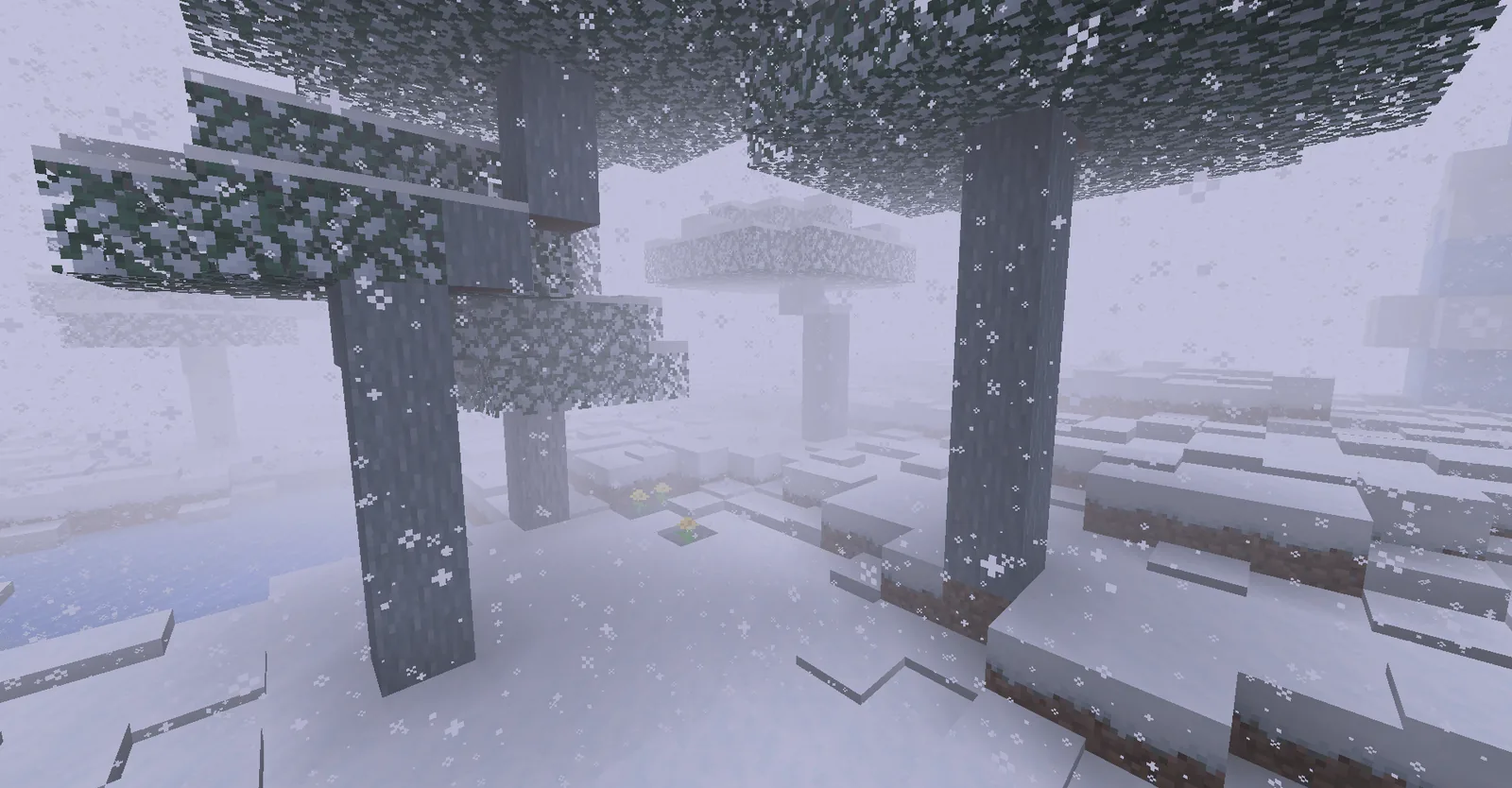
What to look for in a cold spawn
Rank these in order when you are judging a seed.
A village within 300 blocks. Snowy plains villages are the best early-game trade source in a cold start because the biome gives you almost nothing to eat. A village fixes food, beds and a starting trade loop in one visit. Our village finding guide covers the search methods that do work.
A frozen river or frozen ocean touching the spikes. This matters more than it sounds. Frozen water means an easy ice road for travel, it means the only reliable local fishing spot, and under the 26.4 generation rules a frozen ocean shore is a good indicator of what is below.
An igloo. Igloos are cheap shelter and roughly half of them generate with a basement containing a brewing stand, a zombie villager and a golden apple. That is a village-curing head start handed to you at spawn. Our curing and trading hall guide covers what to do with it.
A non-cold biome in reach. A snowy plains start with taiga or plains within a few hundred blocks solves wood and food. A snowy plains start surrounded by more snowy plains is a slow, unpleasant first week.
Exposed caves at the spike field edge. Under 26.4, a cave entrance in a cold surface biome is a candidate route into an Ice Caves biome, which is where the new blocks and the Frostbite mob live.
How to find ice spikes in a world you already play
The only approach that works at any scale is altitude plus pattern. Specifically:
- Get an elytra and rockets. Boat and horse searches are not worth the time for a terrain feature.
- Fly a grid rather than a line – out two thousand blocks, lateral five hundred, back two thousand. Straight lines miss everything either side of the flight path.
- Look for white on white at the horizon. Packed ice reads slightly bluer than snow, and at distance the colour difference is the only tell. Shape is useless until you are close.
- Follow the cold. Snowy taiga and frozen rivers are the generator telling you it placed cold climate noise here. Spikes are a variant of snowy plains, so you want snowy plains specifically, not any cold biome.
A long-range terrain renderer changes this search more than any other. Ice spike fields are visually distinctive at range but small enough that a default render distance will fly you past one a few hundred blocks away without drawing it. Our notes on long-range LOD rendering cover what that costs in frames, and our visuals guide covers the settings that make distant white terrain legible rather than a grey smear.
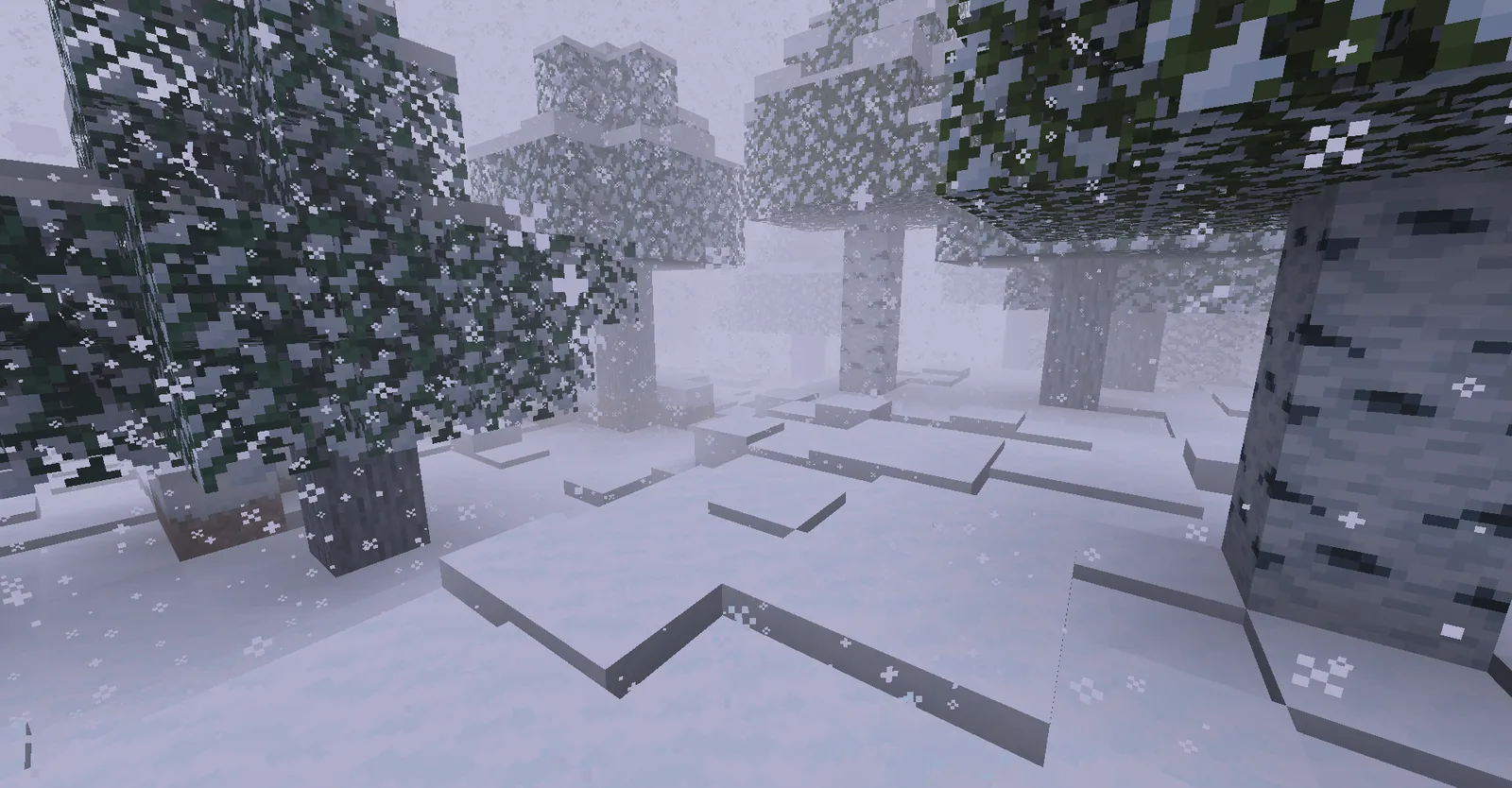
Building in an ice spikes field
The field gives you three materials in effectively unlimited quantity: packed ice, snow blocks and ice. That is a complete monochrome palette, and it is the most restrictive one in the game because none of the three has any texture detail to speak of.
Two things make builds there work. First, use the spikes as structure rather than clearing them – a build that threads between existing columns reads as part of the terrain, and one that flattens them reads as a mistake. Second, bring a contrast material. Dark wood, deepslate or blackstone against packed ice is the single most reliable cold palette in the game. Our monochrome building notes go through why an all-white build collapses visually and what fixes it.
Packed ice is also the fastest travel surface in the game. An ice road through a spike field is close to free because the material is already on site, and our travel speed comparison has the numbers on how much faster that is than anything else before an elytra.
What 26.4 changes about cold spawns
Until this cycle a snowy spawn was an aesthetic choice with a mechanical penalty. No local food, no local wood worth the trip, and a hostile mob variant that shot slowness arrows. People picked it for screenshots.
Three changes shift that. The Ice Caves biome generates under cold surface biomes, which gives a snowy plains spawn an underground reason to exist. The Frostbite mob and the Freezing effect give the surface a real threat rather than a cosmetic one. And Ice Crystals, Icicles and the ability to place snow on packed ice give builders new material in exactly the palette the biome already had.
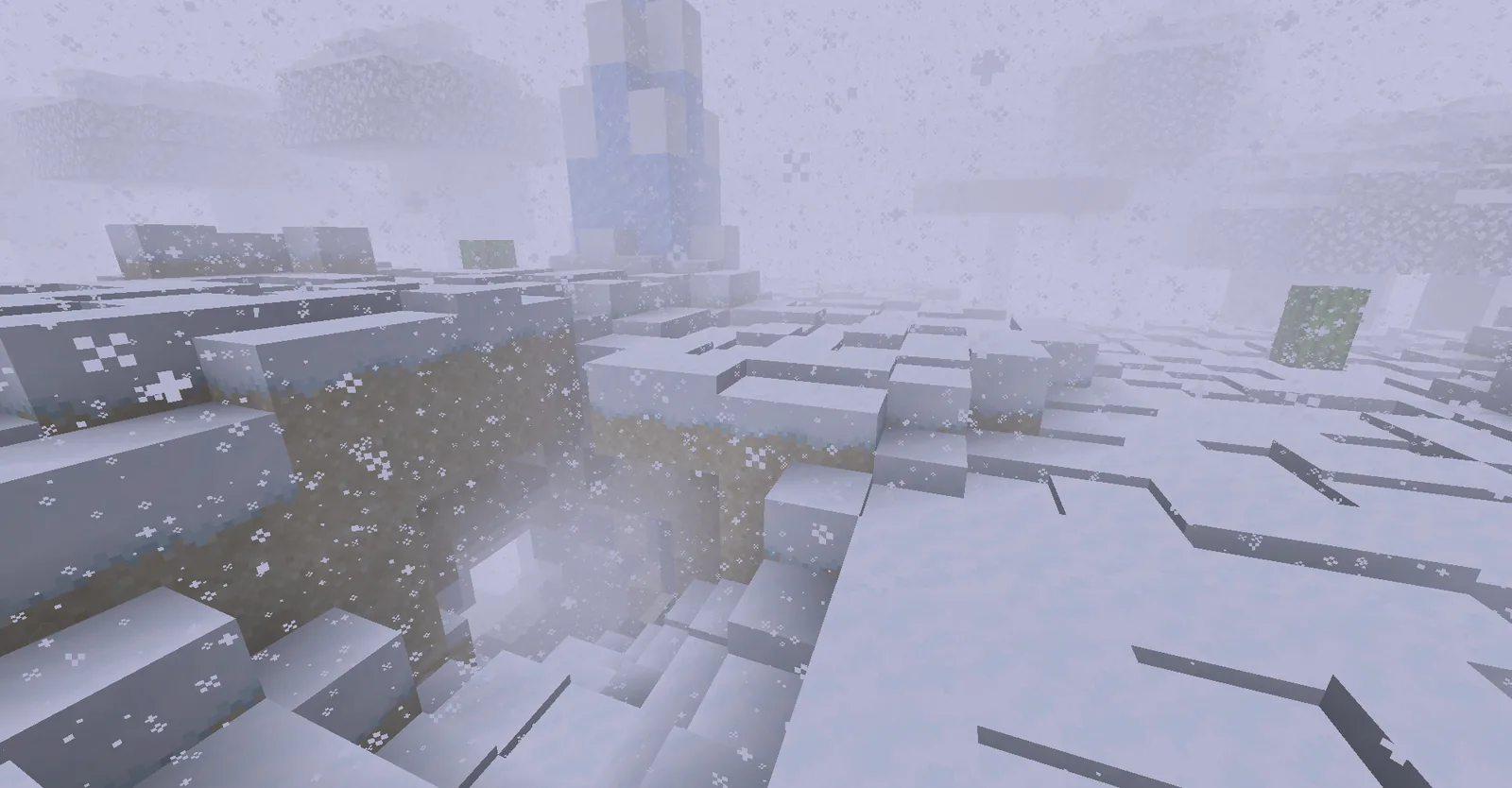
The practical approach
If you want an ice spikes world, do not hunt for a seed that puts spikes at coordinates zero. Hunt for a cold spawn with a village and a frozen shore, confirm there are cave entrances nearby, and accept the spikes being a few hundred blocks out. A field you fly to is worth more than a field you stand in with nothing else around.
And if you are generating a new world for this specifically, check your world creation options before you commit. Large biomes generation makes cold regions bigger and easier to find but pushes everything else further apart, which is usually the wrong trade for a first week. Our world creation options guide covers what each toggle actually does to generation.
Images: Primal Winter project gallery.