A trading hall is the closest Minecraft has to an economy, and the single mechanic that makes it worth building is the zombie discount. Curing a zombie villager permanently reduces its prices, and doing it twice reduces them to the minimum the game allows.
The curing process
- Find or create a zombie villager – a zombie killing a villager on Hard difficulty converts rather than kills.
- Splash it with a Potion of Weakness.
- Feed it a golden apple.
- Wait two to five minutes while it shakes.
- It becomes a villager with a large permanent discount.
The discount applies to everything that villager sells, forever, and stacks if you cure the same villager twice. Most one-emerald trades come from double-cured villagers.
Why the discount is so large
The mechanic exists to reward saving a villager, and it was tuned generously. A librarian that sold Mending for 30 emeralds will sell it for 1 after curing, which is the difference between an occasional purchase and unlimited books.
Nothing else in the game reduces prices by that proportion.
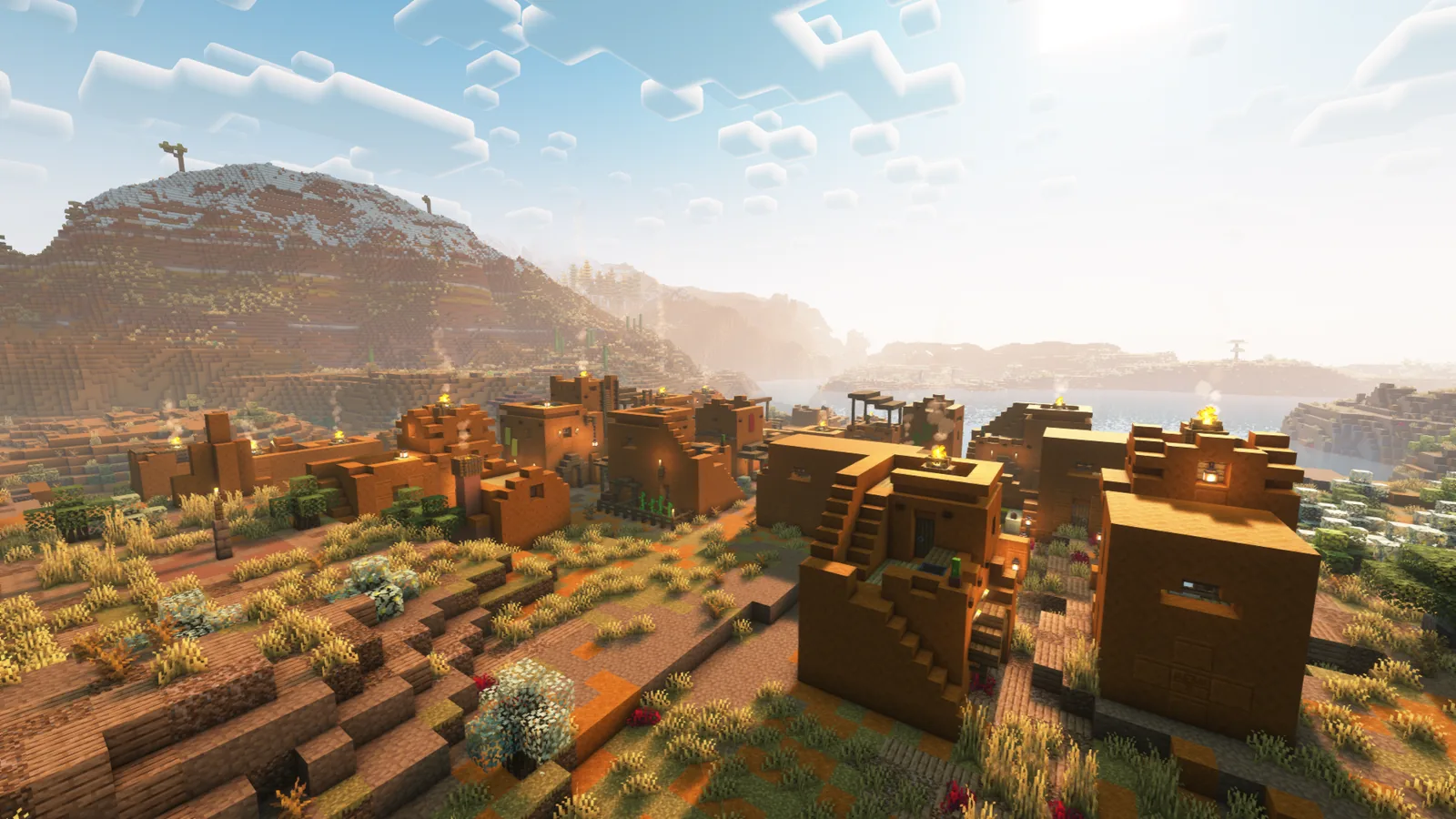
Building the hall
The standard design is a row of cells, each containing one villager, a workstation and a bed, with the player standing outside. Each cell must be isolated enough that villagers cannot swap workstations.
- One workstation per cell, reachable only by that villager.
- Beds are needed for restocking, not for trading.
- Villagers restock twice per day if they can reach their workstation.
- Label each cell. You will not remember which one has Mending.
Rolling for trades
An unemployed villager takes the profession of whatever workstation it can reach, and its trades are rolled at that moment. Break the workstation and replace it and the trades reroll – until the villager has traded once, at which point the profession locks.
That reroll loop is how you get specific enchantments. It is tedious and it is the only method.
The rules around when a villager will and will not change profession catch people constantly, and professions, prices and why your librarian changed its book covers the exact conditions.

What to buy
- Mending books – the whole reason most halls exist.
- Protection IV and Unbreaking III from librarians.
- Enchanted diamond gear from armourers and toolsmiths, which is often cheaper than enchanting.
- Bottles o’ enchanting from clerics – storable experience.
- Emeralds for paper or sticks from cartographers and fletchers, which is the income side.
Paper to a cartographer is the most efficient emerald income in the game and needs only a sugar cane farm – the observer build that needs no redstone circuit is four blocks and supplies it indefinitely.
Common mistakes
- Cells too close, so villagers link to the wrong workstation.
- No beds, so nothing restocks.
- Curing before rolling for the trade you want – roll first, cure second.
- Trading once with a villager you intended to reroll.
- Building the hall somewhere a raid can reach.
The third one is the expensive mistake. Curing locks nothing, but it is a lot of work to waste on a villager selling the wrong book.
Weakness potions in quantity
A splash Potion of Weakness is water, fermented spider eye and gunpowder – no nether wart required, which makes it one of the cheapest potions in the game. Brewing a stack before a curing session is worth the ten minutes.
Golden apples are the real cost: eight gold ingots each. A gold farm makes curing free; without one, each cure is a real expenditure.
Scale
Six to ten villagers covers everything a player actually needs. Halls with fifty are built for completeness rather than utility, and they cost server performance for trades nobody uses.
Start with a librarian, an armourer, a toolsmith, a cleric and a farmer. Add more only when you find you want something.
Protecting it
A trading hall is a village, which means it can be raided and villagers can be killed or converted. Walls, lighting and a roof are not optional, and the cells themselves should be sealed rather than open-fronted.
Losing a double-cured Mending librarian to a raid is the kind of loss that ends worlds.
Getting zombie villagers reliably
On Hard difficulty, a zombie killing a villager always converts it rather than killing it. On Normal it is a chance; on Easy it never happens. Most curing setups run the world on Hard for this reason alone.
The controlled version is a small chamber with a villager and a zombie separated by a fence, switched to Hard when you want a conversion. It is grim and it is the standard method.
Restocking
- A villager restocks twice per Minecraft day if it can reach its workstation.
- It must be able to path to the workstation, not just be near it.
- Sleeping villagers restock; ones that cannot reach a bed still trade but behave oddly.
- A villager trading out of stock shows the trade greyed out, not missing.
Emerald income at scale
The reliable earners are paper to cartographers, sticks to fletchers, and crops to farmers. All three are renewable with a small farm and all three cap at a fixed emerald count per restock.
Six trading villagers earning at cap is more emeralds than a survival world can spend, which is the point at which a hall stops being a project and starts being infrastructure.
Images: Towns and Towers project gallery on Modrinth.