The Nether has three things worth walking to: a fortress, a bastion, and eventually a portal home. Moog’s Nether Structures adds the rest of a dimension’s worth, and it did so for 26.3 on 17 September.
Like its siblings, it runs server-side only, which means vanilla clients see everything with nothing installed.
The family
This is the third of three. MVS covers the overworld, MES covers the End, and MNS covers the Nether. Same author, same construction philosophy, same architecture – vanilla blocks and vanilla entities throughout, installable on the server alone.
Running all three gives a consistent look across every dimension, which is genuinely rare. Mix structure packs from three different authors and you get three visual languages; this is one.
They are independent. Installing MNS does not require the others, and the project page notes it works well on its own or alongside MVS.
What it adds
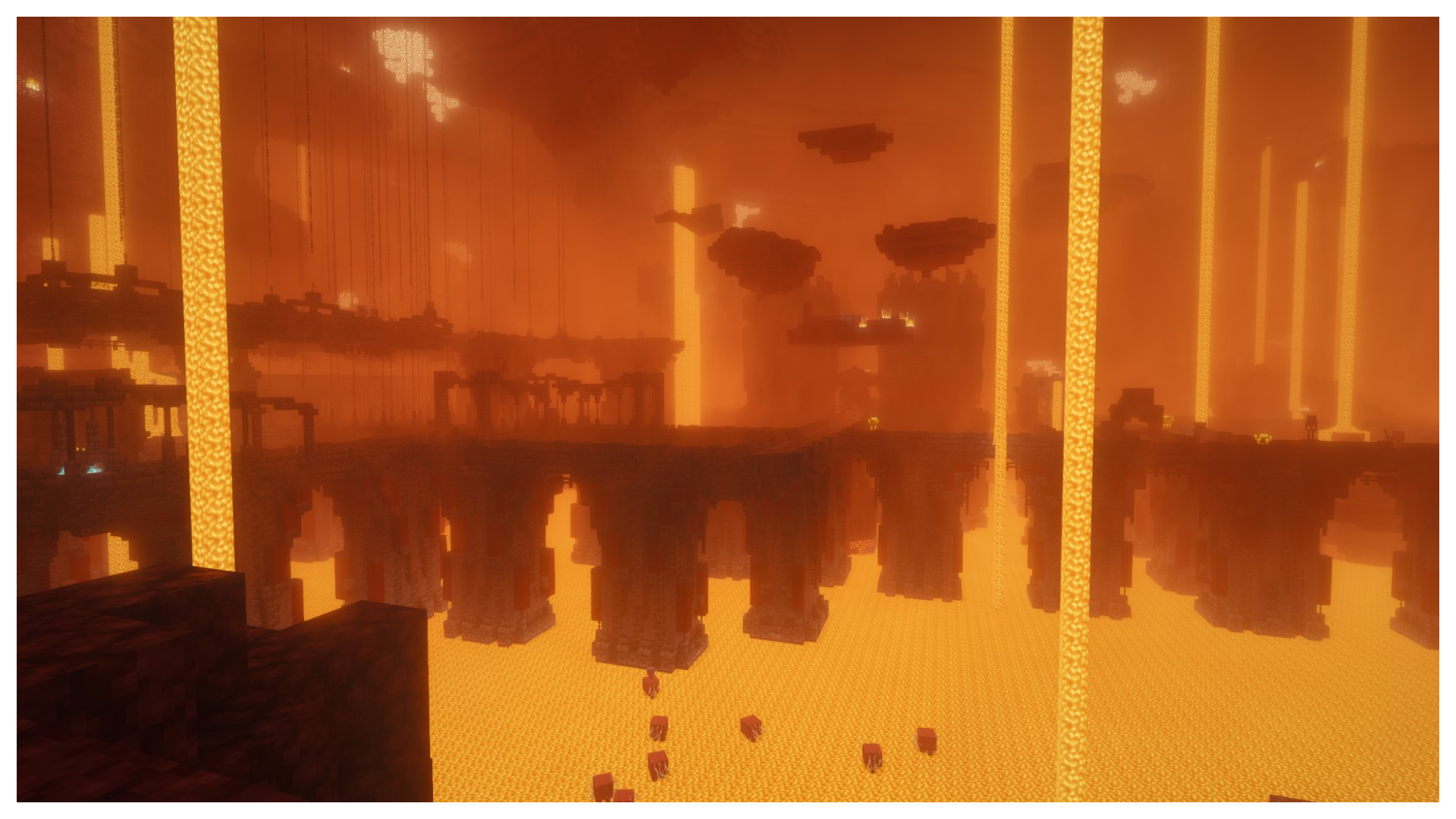
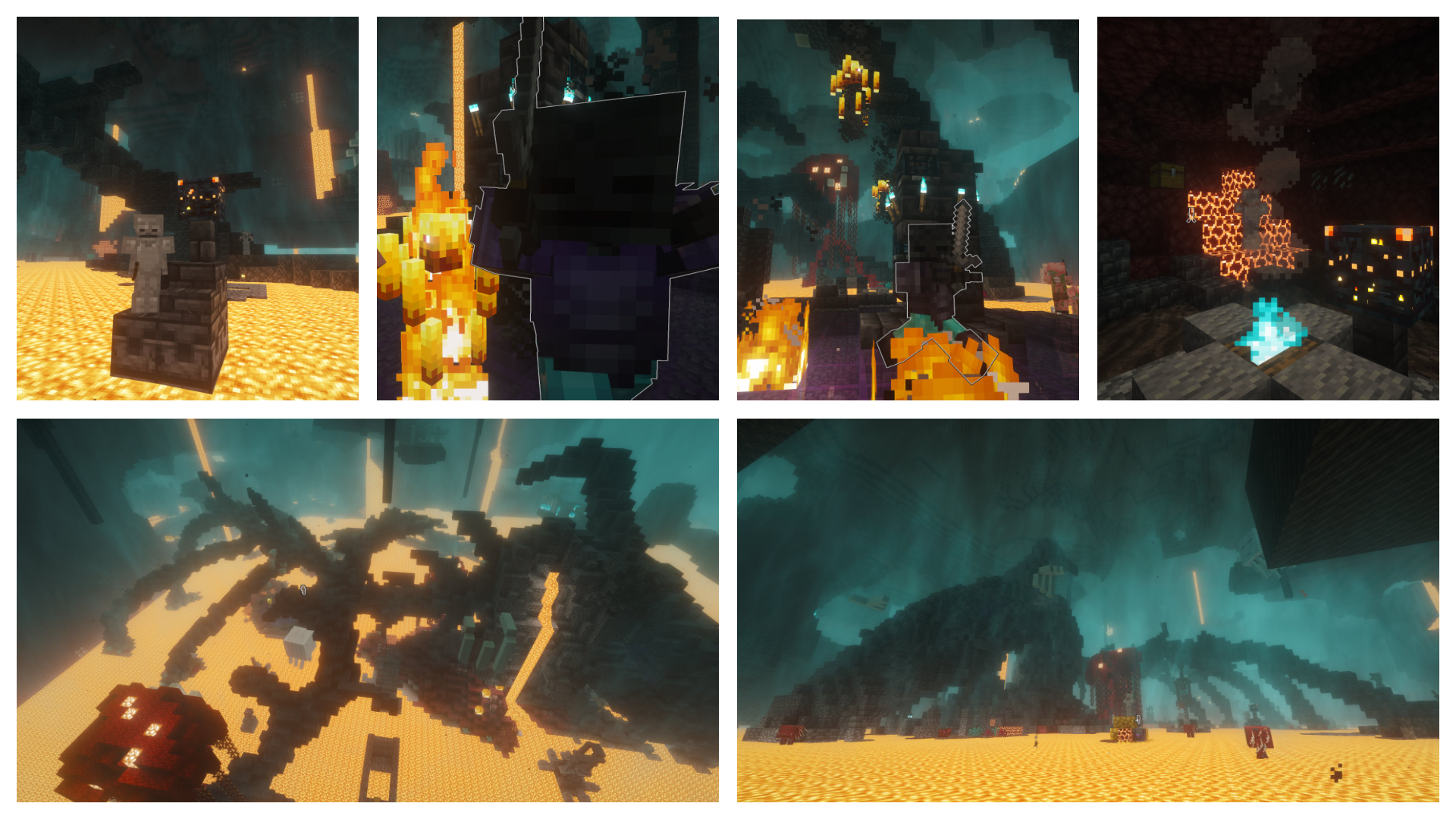
New structures across the Nether’s biomes, with their own loot, their own hostile encounters and a stated intent to keep the vanilla feel. There is a web previewer for the structure set if you want to see what generates before committing a world.
The Nether is an unusually good target for this kind of mod for a structural reason: it is dense, dangerous and almost entirely empty of destinations. You cross it constantly – a nether hub means most of your travel time is spent there – and there is nothing to stop for.
A structure every few hundred blocks changes that from a corridor into a place, and it does it without touching the terrain, which is what makes it safe to add to an existing world.
Server-side only, and why it matters more here
Client unsupported, server required. Everything is built from blocks the client already knows, so nothing has to be sent that a vanilla client cannot render.
For the Nether this property is worth more than elsewhere, because Nether travel is the part of a server most likely to be shared. Overworld bases are private; the nether hub is common ground. A structure mod everyone experiences without anyone installing anything fits that pattern exactly.
It also means it can go on a server mid-life without a coordinated update, which is the practical difference between a mod you add and one you plan for.
Adding it to an existing world
Structures generate in new chunks only. The Nether is the easiest dimension to get fresh chunks in – the 1:8 ratio means a short flight covers an enormous overworld distance, and a portal at new coordinates drops you straight into terrain the server has never generated.
So unlike an overworld structure mod, this one is practical to add to a year-old world. Build one portal a few thousand blocks out and everything from there is new.
The general constraints on retrofitting worldgen still apply, but the Nether is the dimension where they hurt least.
Loaders and licence
Fabric, NeoForge and Quilt. Forge support was dropped after 1.20.4, which matters if you are on an older pack expecting it.
Version 3.1.1 on 17 September, with a changelog of one line: Minecraft 26.3 support added. LGPL-3.0, so modpack redistribution is unrestricted – which is not true of several competing structure packs.
Around 4.19 million downloads and 538 followers. Smaller than the overworld sibling, which is what you would expect for a mod scoped to one dimension.
How it compares
Against YUNG’s Better Nether Fortresses, MNS adds alongside rather than replacing. YUNG’s rebuilds the vanilla fortress into something larger and more navigable; MNS leaves it alone and fills the space between fortresses.
They combine well for that reason, and the combination is close to the complete answer for a Nether that has become a transit corridor.
Against a broad multi-dimension pack, MNS is narrower and more consistent. If you want one mod covering everything, this is not it; if you want the Nether specifically handled, it is.
Verdict
Install it on any server where players have built a nether hub and stopped looking at the Nether. It costs nothing on the client, it retrofits more easily than any other structure mod, and it targets the dimension with the worst ratio of travel time to things worth seeing.
Skip it if your Nether is still new and dangerous, or if you are already running something that rebuilds Nether generation wholesale. The vanilla structure roundup is the baseline to judge it against.
What to expect while travelling
The practical change is to how a Nether trip feels rather than to how it works. Vanilla Nether travel is a straight line between two portals with nothing in between worth the detour.
With structures scattered through it, the same trip acquires the thing overworld travel has and Nether travel does not: a reason to look sideways. That is a small change that compounds over a long-running world, because Nether travel is something you do hundreds of times.
It also makes a nether base a more reasonable proposition, since there is now something around it.
Safety, which does not change
The mod adds structures and encounters. It does not make the Nether more forgiving, and the standard precautions apply unchanged – fire resistance, a way back, and not carrying anything you cannot afford to lose into a place where the floor is occasionally lava.
Structures concentrate danger by design. A generated building full of hostile mobs on a ledge above a lava sea is a harder fight than the same mobs on open ground, and that is the point rather than a flaw. Bring blocks.
Images: MNS – Moog’s Nether Structures project gallery.