Key takeaways
- Rebuilds nether fortresses as multi-level complexes with a central keep
- Blaze rods, wither skeletons and nether wart all still come from the same place
- Compatible with nether biome mods, which matters more here than in the Overworld
Nether fortresses have the worst ratio in Minecraft of importance to design quality. They are mandatory – blaze rods gate brewing, and brewing gates most of the endgame – and they are a grid of identical corridors extruded over a lava ocean, with the occasional staircase and a blaze spawner somewhere in the middle.
This mod rebuilds them as places worth being afraid of. Given that the fortress is where a survival world’s difficulty curve actually turns, it is arguably the most consequential structure rebuild available.
What changes
Vertical structure
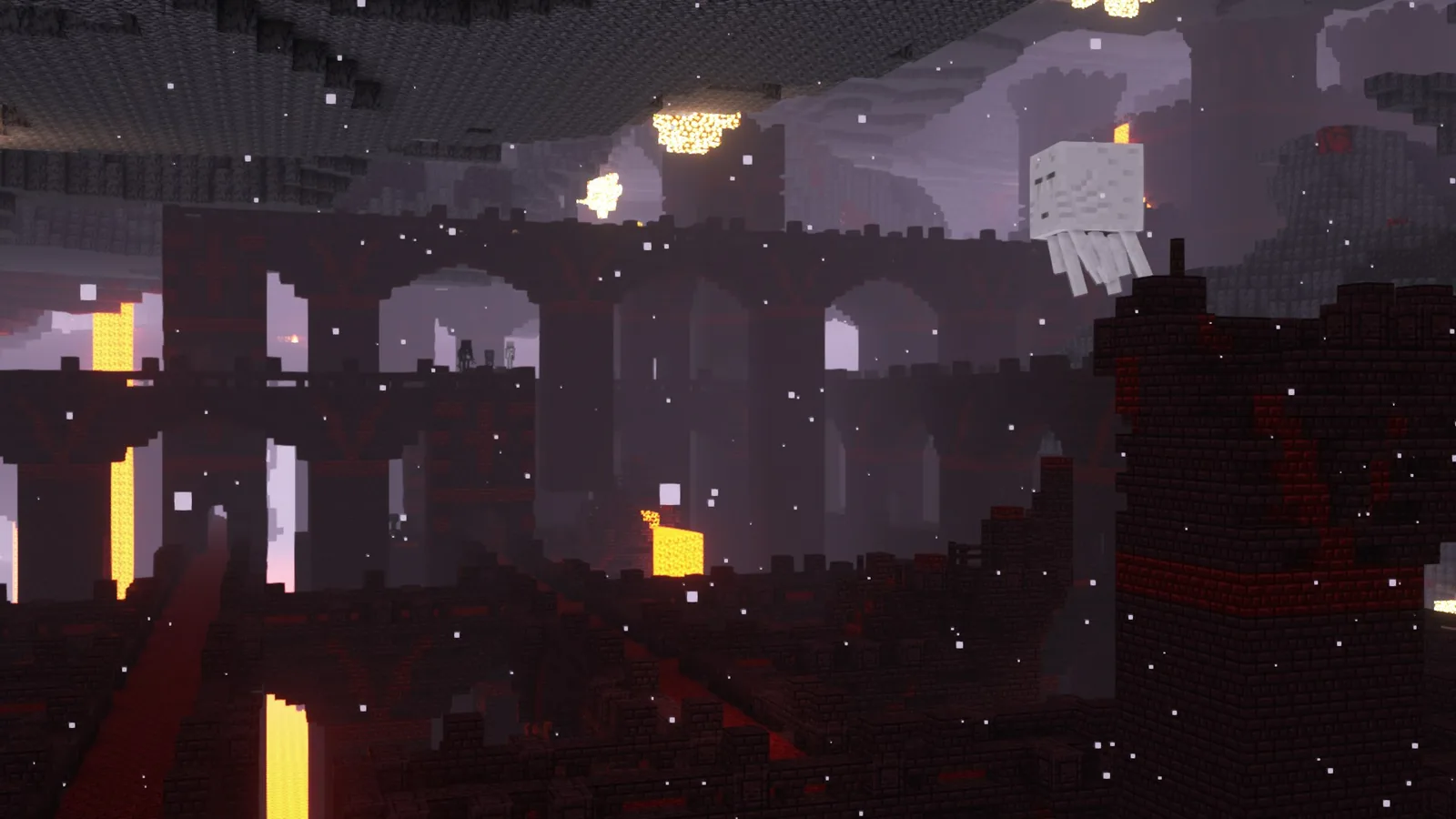
The vanilla fortress is essentially flat – one level of corridors with a few stairs. The rebuilt version stacks, with bridges over bridges and levels that overlook each other. That changes combat completely: you can be shot at from above, and you can approach from below.
A centre
There is a keep. Vanilla fortresses have no focal point, which is why they feel like infrastructure rather than architecture. Having somewhere the structure is clearly about gives the assault a shape – you are heading towards something instead of wandering until you find a spawner.
Scale
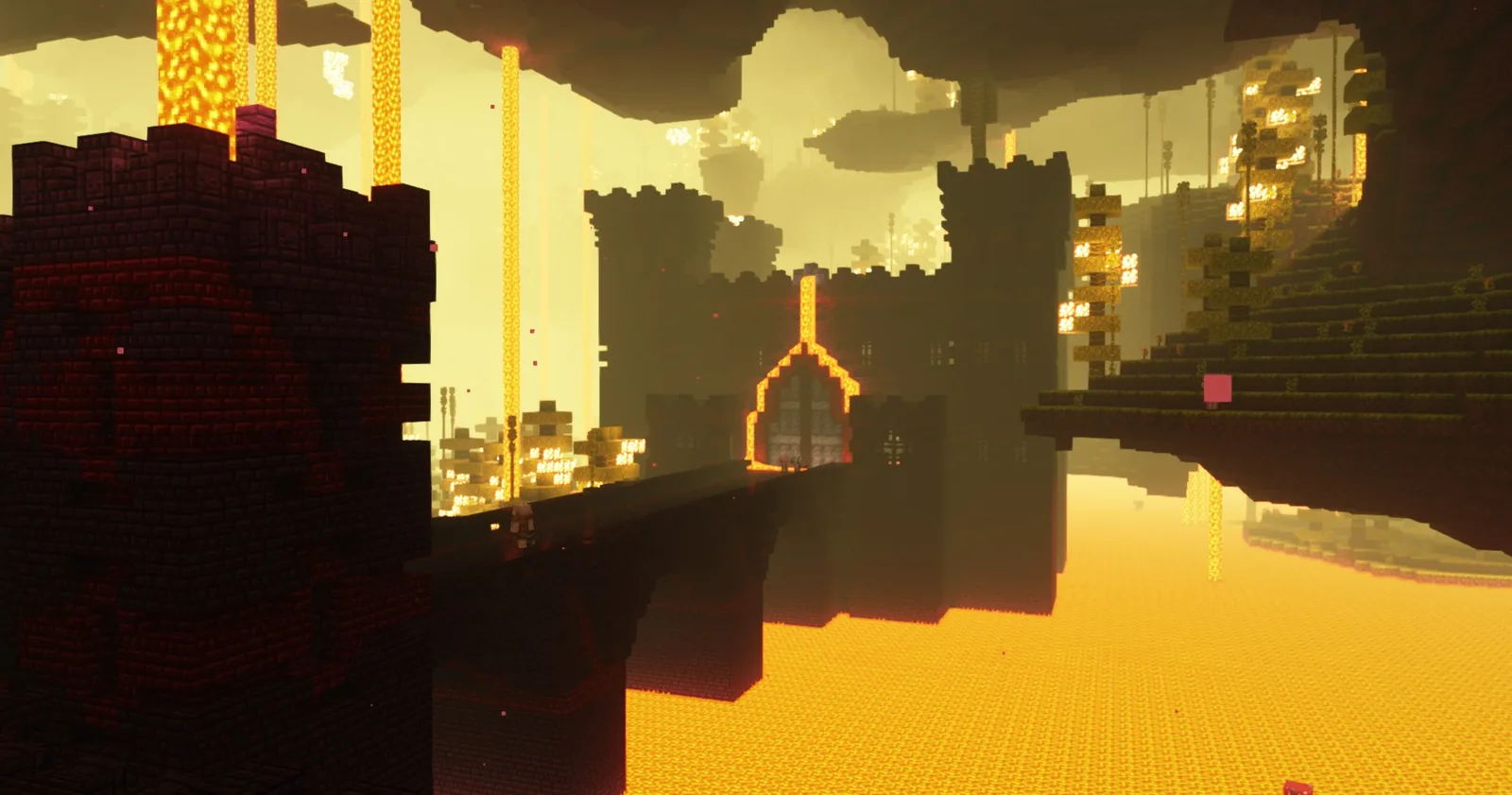
They are bigger, and the size is used rather than padded. A fortress that sprawls across a lava sea with multiple approaches is a meaningfully different tactical problem from one you enter at one end and walk through.
What it does not change
The important things. Blaze spawners are still there, wither skeletons still drop skulls at the same rate, and nether wart still grows in the same places. Every progression-critical resource the fortress gates is untouched.
That restraint is what makes the mod safe to install. A nether structure mod that moved blaze spawners would be a progression mod wearing a structure mod’s clothes, and it would break every guide and every farm design people rely on.
Biome mod compatibility
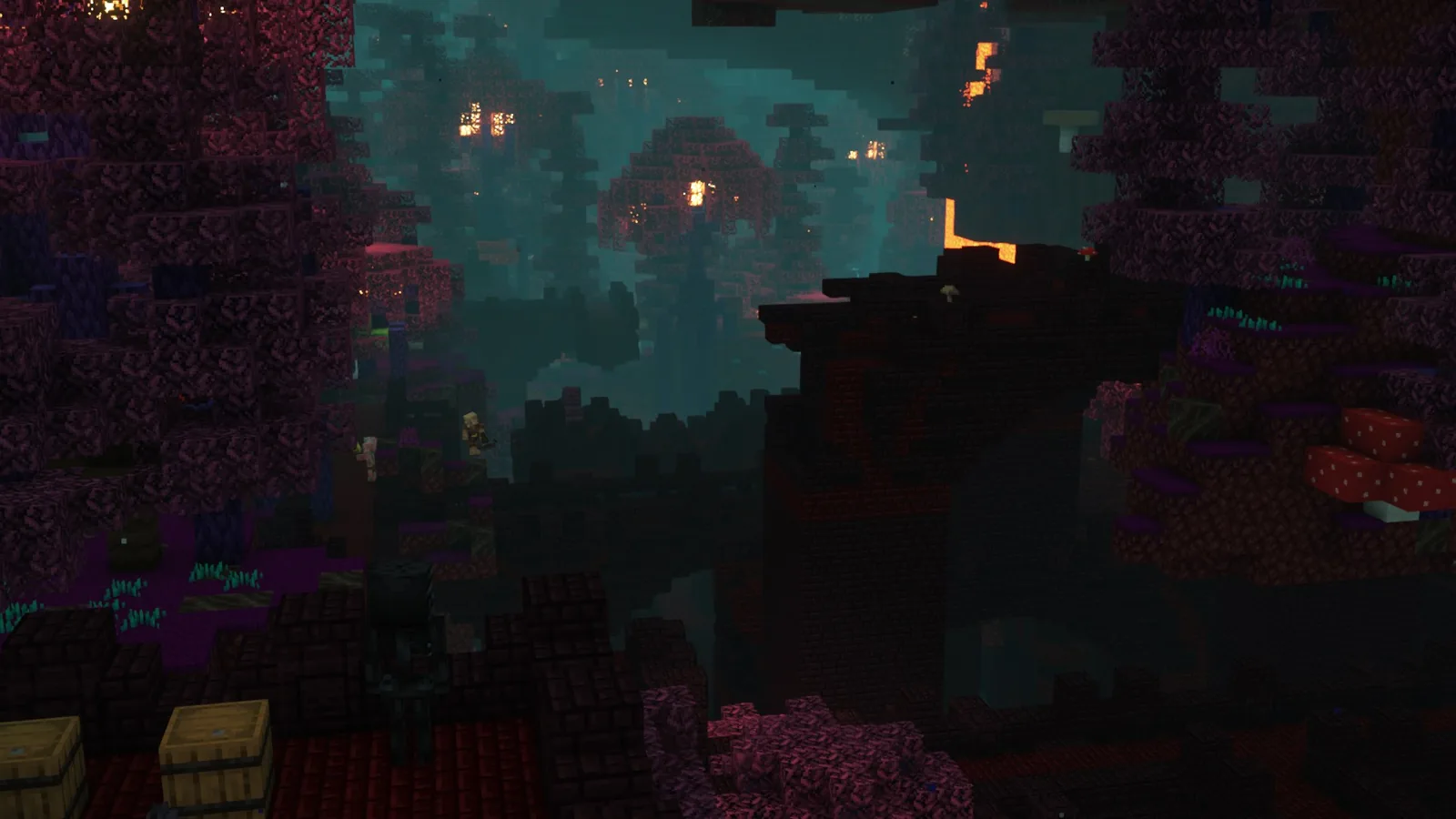
This matters more in the Nether than anywhere else. Nether biome mods are popular and they change terrain dramatically, which historically broke fortress generation in ugly ways – fortresses half-buried in new terrain or floating in the wrong places.
The mod handles generation across modded nether biomes explicitly, which is the reason it is the default choice in modpacks that include a nether overhaul. If you run one, check that the two declare compatibility before assuming it.
Difficulty
Higher, and worth planning for. A bigger, more vertical fortress means more spawning surface, more sightlines for blazes and more places to fall. If your usual approach is to sprint in with iron armour and leave with rods, that will go worse than it used to.
- Fire resistance matters more than it did – the lava exposure is greater
- Ranged options are more useful, because blazes now shoot from other levels
- Bring blocks; the verticality means more situations where you need to build across
- Clear a level before descending, rather than pushing through
Farm builders should read this part
Blaze farms and wither skeleton farms are built around fortress geometry, and almost every published design assumes the vanilla corridor grid. Those designs do not transfer. Spawner placement, spawnable surface area and the platform heights you need are all different in a rebuilt fortress, which means you are designing from first principles rather than following a tutorial.
That is a genuine cost worth weighing. If a blaze farm is on your plan for this world and you want to follow an existing build, either skip this mod or accept that you will be adapting. If you enjoy working a farm out yourself, the more interesting geometry is an argument for the mod rather than against it.
Where it sits in the family
The YUNG’s structure mods are designed to run together, and this one pairs naturally with Better Strongholds because both target mandatory progression structures. The two of them together change the two moments that every survival world passes through.
It also coexists with broad structure mods like Dungeons and Taverns, which adds nether content of its own without claiming fortresses.
Performance
Larger fortresses mean more blocks per structure and more entities spawning inside them, so a heavily populated fortress is a slightly heavier place to stand than the vanilla equivalent. On a server it is worth knowing that a group clearing one is a localised load spike rather than an ongoing cost.
Is it worth installing?
Yes, and of the whole family this is the one we would install first. Fortresses are mandatory, they are visited by every player, and the vanilla version is the weakest major structure in the game by a clear margin.
The chunk rule applies as always – install before you generate your Nether, or be prepared to travel. The Nether is small in terms of distance covered relative to the Overworld, which cuts both ways: reaching fresh chunks is quicker, but you have probably already generated the area around your portal.
Source
Images and project details from the YUNG’s Better Nether Fortresses page on Modrinth.