Building in the Nether is a different discipline from building in the Overworld. The palette is narrow and loud, there is no sky, the terrain is hostile in ways that affect construction, and everything you build has to compete visually with a landscape that is already dramatic.
The palette problem
Netherrack is red, warped blocks are cyan, crimson is magenta, and soul sand is brown. There are no neutrals except blackstone and basalt, which is why almost every good Nether build uses one of those two as its base.
- Blackstone – the workhorse. Full block family, dark, reads as stone.
- Basalt and polished basalt – grey with vertical grain, excellent for columns.
- Deepslate, brought from the Overworld – the best neutral available, worth carrying.
- Warped or crimson wood – for accents only, never for whole surfaces.
Building a Nether base entirely from nether blocks is a constraint some builders impose. Bringing deepslate and stone through a portal is the practical alternative and produces better results.
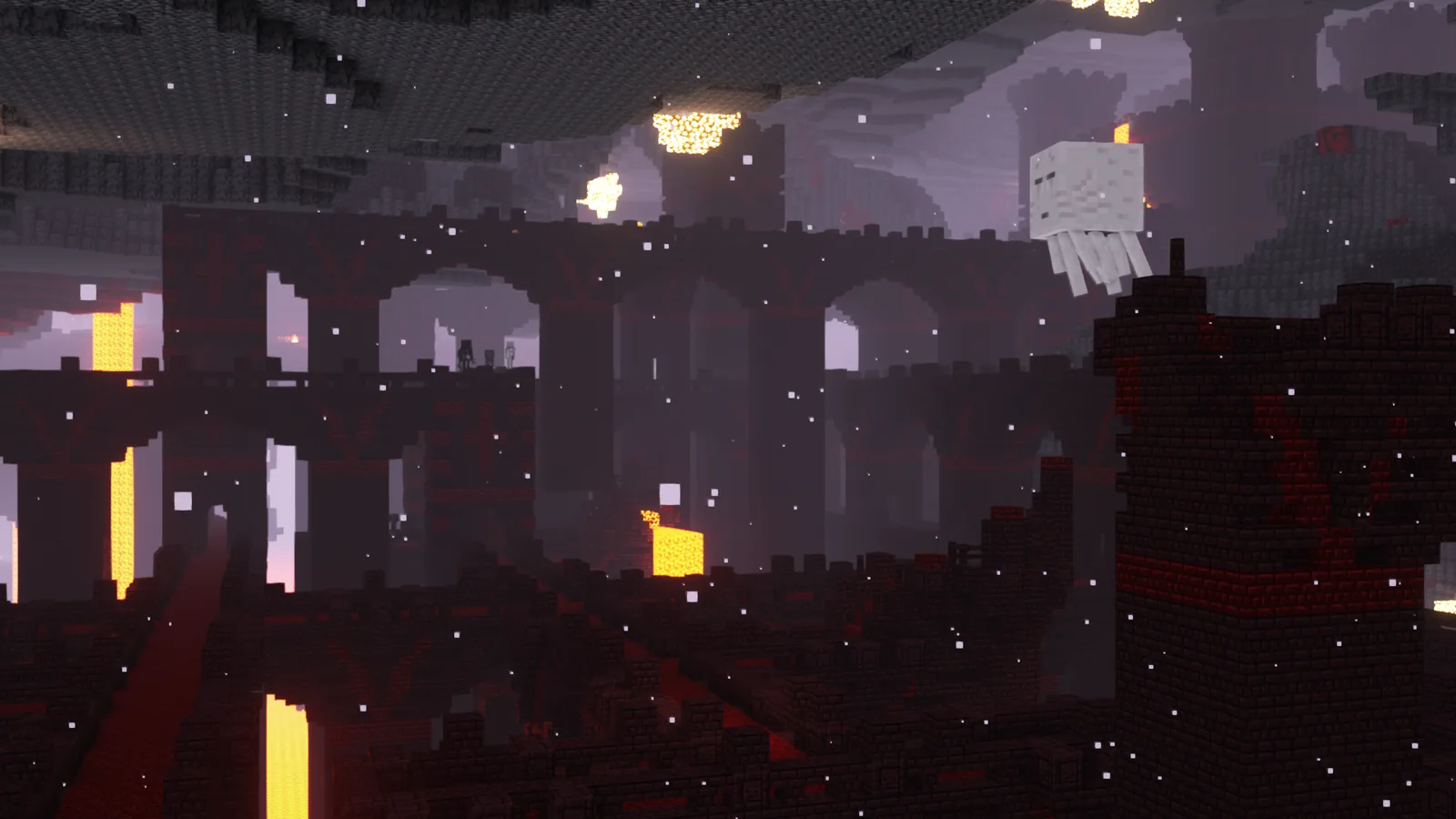
Safety before aesthetics
- Seal it. Ghast fireballs destroy netherrack and anything soft.
- Blast-resistant exterior – blackstone, deepslate, obsidian at the exposed faces.
- No open sides with line of sight to open space.
- Light it properly, or use non-spawnable floors.
- Wear gold, at least one piece, if piglins are anywhere near.
The gold point is not about the build but it determines whether you can work in peace. One golden boot removes an entire category of interruption.
Where to build
Three good options: carved into a basalt delta wall, built out over a lava sea on pillars, or occupying part of a fortress. Each has a distinct character.
The lava sea option is the most dramatic and the most exposed. It needs a sealed structure and a plan for ghasts, and it produces the best views in the game.
Lighting in the Nether
There is no day and no ambient light, which means every lit surface is one you chose. That is a gift – the lighting design has total control over what is visible.
- Shroomlights, which are warm and native.
- Glowstone, bright and everywhere.
- Soul lanterns, for a cold blue that contrasts with the fire.
- Froglights, if you have them, for colours nothing else provides.
Soul fire and soul lanterns against blackstone is one of the strongest colour combinations available anywhere in the game.
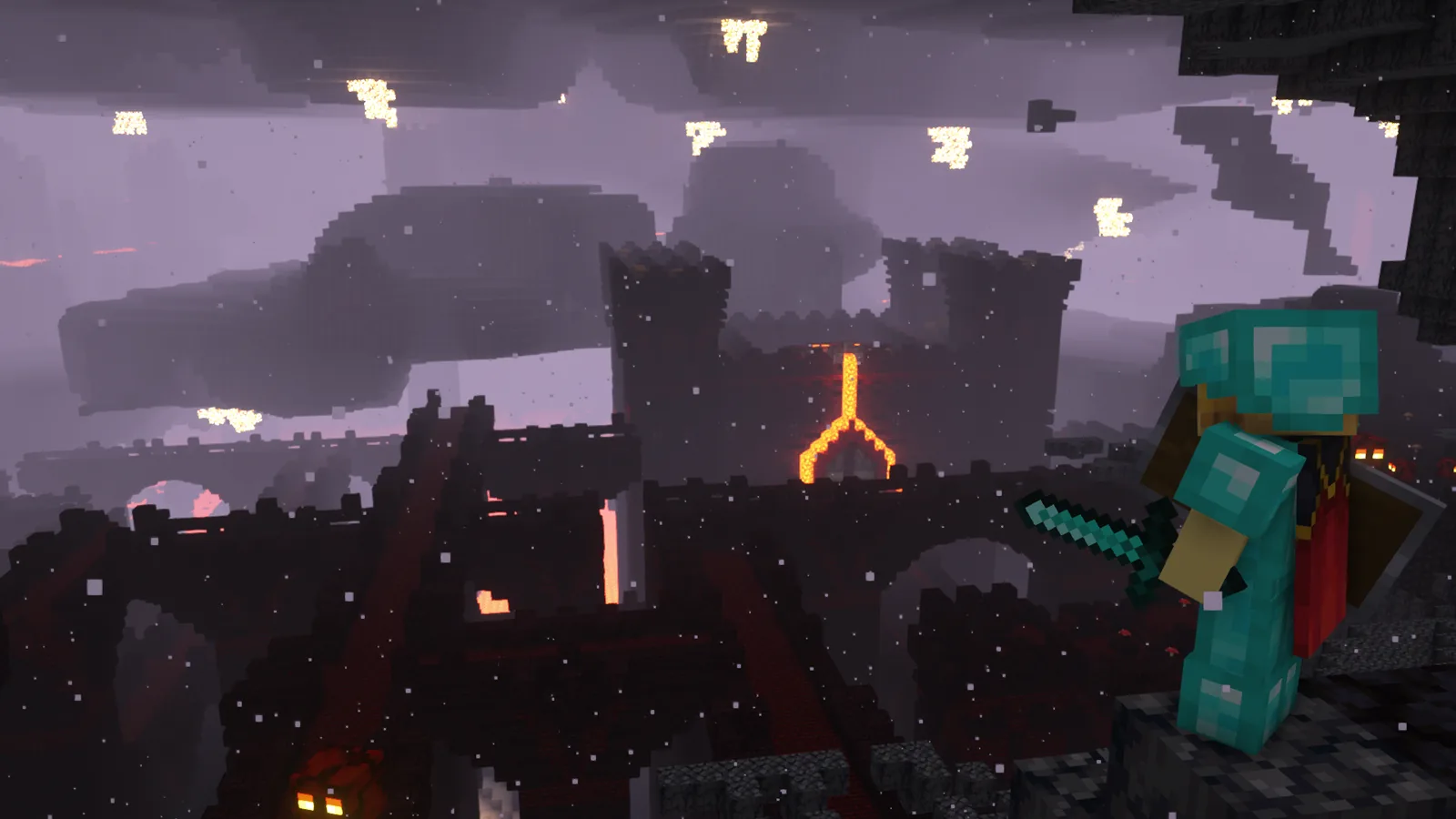
The travel argument
A Nether base is usually built at a hub rather than as a home, because the whole reason to be there is the 8:1 distance ratio. A hub that is also a place worth looking at is more motivating to use than a hole with portals in it.
Getting the portal coordinates right is what makes a hub work at all, and the maths is unforgiving – the coordinate rules and the 128-block search radius is the piece to read before placing a single portal.
Scale and the ceiling
The Nether has a hard ceiling at Y=128 and most of the interesting space is between 30 and 100. That is less vertical room than the Overworld and it favours horizontal, sprawling structures over towers.
Building up against the ceiling produces a cramped result. Building out over lava produces a spacious one, which is the opposite of the Overworld instinct.
Detailing
Chains, lanterns on chains, iron bars, and blackstone walls do most of the detail work. The Nether’s own structures – fortresses and bastions – are a good reference for what reads as intentional against that landscape.
Bastions in particular use blackstone with gold accents at a ratio worth copying: mostly dark, with small bright interventions.
Farms in the Nether
Blaze farms, gold farms and wither skeleton farms all live here, and all three are usually built as pure function. Wrapping a functional build in something that looks intentional is more work than the farm itself.
Worth doing at a hub you visit daily; not worth doing at a farm you AFK at.
Common mistakes
- Netherrack as a building material. It is a terrain block, not a build block.
- Open sides facing a lava sea.
- Too much warped and crimson wood, which overwhelms at scale.
- Building at Y=120, where the ceiling crowds everything.
- No consideration of how the build looks from outside, which is how you will always approach it.
Blast resistance in practice
- Obsidian and crying obsidian – effectively immune. Expensive, and the right answer for exposed faces.
- Ancient debris and netherite blocks – immune and absurd as a building material.
- Blackstone, deepslate, cobblestone – resistant enough that a ghast fireball marks rather than breaches.
- Netherrack, glass, wood – destroyed on contact.
A blackstone shell over a netherrack interior is the practical construction. You do not need obsidian everywhere; you need it where a ghast has line of sight.
Getting materials there
Everything that is not a nether block has to come through a portal, which makes a shulker box the enabling item for any serious Nether build. Two shulkers of deepslate is a small building.
The alternative is building entirely from what is there, which is a legitimate constraint and produces a distinctive result. Which approach to take is worth deciding before the first block goes down, and the palette consequences are covered in the palette guide.
Portal placement inside the build
A portal is a bright purple rectangle that dominates any room it is in. Putting it in its own alcove, framed with blackstone and lit deliberately, turns it from an eyesore into the focal point it should be.
Images: YUNG’s Better Nether Fortresses project gallery on Modrinth.