The Nether is a travel system disguised as a dimension. Every block you walk there covers eight in the Overworld, which means a two-minute walk through the Nether replaces a sixteen-minute walk at home. Understanding how portals link is the difference between using that and fighting it.
The eight-to-one rule
Overworld X and Z divided by eight gives Nether X and Z. Y is unchanged. That is the whole conversion, and it works in both directions – Nether coordinates multiplied by eight give the Overworld position a portal there will try to reach.
If your base is at 2400, 64, -1600, the Nether coordinate you want is 300, 64, -200. Build a portal there and it will connect to your base rather than to somewhere three hundred blocks into a lava lake.
Why portals link to the wrong place
Because Minecraft does not create a new portal if it can find an existing one within a search radius – 128 blocks in the Nether, 128 in the Overworld. Light a portal near one that already exists and you will arrive at the old one.
The consequence is that two Overworld portals within 1024 blocks of each other can both link to the same Nether portal, and travelling through one can bring you out at the other. This is the single most common source of confusion with Nether travel, and it is entirely predictable once you know the radius.
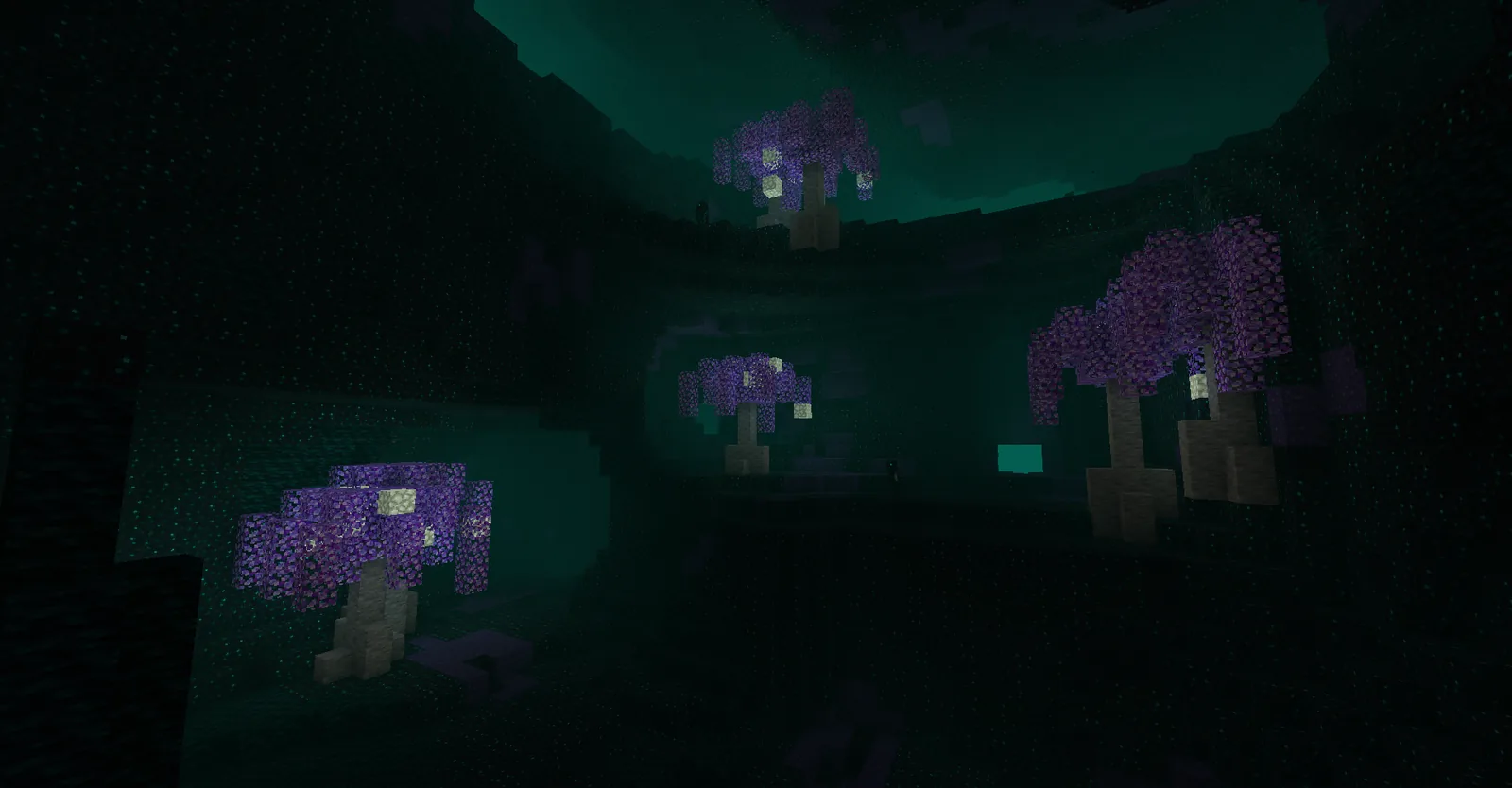
Building a hub properly
- Pick your destinations in the Overworld and write down their coordinates.
- Divide each by eight to get the Nether coordinates.
- Build the Nether portal at those coordinates first, before lighting anything in the Overworld.
- Go through it, and check where you come out. Adjust if needed.
- Only then connect the Nether portals to each other with tunnels.
Building the Nether side first is the key step most guides skip. A portal lit in the Overworld generates its Nether counterpart wherever the game finds space, which is frequently inside a lava ocean or a bastion.
Keeping portals more than 128 blocks apart
In the Nether, 128 blocks apart is the minimum for two portals to stay independent. That corresponds to 1024 blocks in the Overworld. Anything closer and the game may merge them.
If you need two Overworld portals closer than 1024 blocks to link separately, the trick is to separate them vertically in the Nether – the search is a cube, so 128 blocks of Y separation works where X and Z separation is impractical. Nether height gives you room for this.
Tunnel building
A two-by-two tunnel at Y=120 or above puts you over the roof-adjacent layer where almost nothing spawns, and it is flat. Most hub tunnels are built too low, where the terrain fights you and ghasts have line of sight.
- Seal the tunnel walls. Open sides mean ghast fireballs and piglin aggro.
- Light it properly, or use a light-blocking floor material.
- Sign every junction with the destination name, not the coordinate.
- Build it wide enough for two people to pass, or you will regret it on a server.
What to bring
Fire resistance, a water bucket that will not work for its usual purpose, blocks to bridge with, and a spare flint and steel in case a ghast breaks your portal. The water bucket still puts out fire on your own body if you are quick, and it is worth carrying for that alone.
Gold armour, even one piece, stops piglins attacking on sight. One golden boot is the cheapest safety item in the game.
Where the portal frame matters
A portal can be any size from 4×5 up to 23×23. Larger portals are easier to hit while falling and easier to find in the dark, and they cost only obsidian, which you will have more of than you expect once you are in the Nether.
Corners are optional, which saves four blocks per portal and matters when you are building a hub with ten of them.
Navigating once you are there
The Nether has no sky, no compass and no map that works the way you expect. Coordinates are the only reliable navigation, which is why the F3 screen is not optional here.
Reading that screen efficiently is a skill worth developing generally, and the same numbers that matter for navigation are the ones that matter for diagnosing performance – what the chunk counters actually tell you covers the second half of that.
The structures you will run into
Fortresses, bastions and the occasional ruined portal. All three have loot worth taking and all three will kill an underprepared player. Knowing which is worth stopping for while you are building a tunnel saves a lot of time, and reading loot tiers applies in the Nether more than anywhere, because the cost of a detour there is higher.
Common mistakes
- Lighting the Overworld portal first. Always build the Nether side to coordinates.
- Tunnels below Y=100, where terrain and mobs both interfere.
- Portals closer than 128 Nether blocks with no Y separation.
- No gold armour, which turns every bastion into a fight.
- Forgetting that a broken portal strands you. Carry the flint and steel.
Get the coordinates right and the Nether stops being a dangerous place you visit and becomes the fastest road on the server.
Images: BetterNether and Deeper and Darker project galleries on Modrinth.