Key takeaways
- Rechiseled adds over 600 decorative variants of vanilla blocks and a chisel item to swap between them in place.
- Most variants come in connected-texture and non-connected versions, toggled per block from the chiselling screen.
- It requires both client and server, which is the one real cost – this cannot be added to a server without everyone installing it.
Minecraft’s building palette has a specific gap. There are plenty of materials, but each material has roughly four shapes – block, stairs, slab, wall – and one texture. If you want a stone wall that is not the stone wall everyone else has, your only options are to combine materials or to install a texture pack that changes them globally.
Rechiseled fills that gap by adding variants rather than materials. Over 600 of them, all built on vanilla blocks, swapped with a tool rather than crafted. With over nine million downloads and current support through 26.3, it is the most-used mod in its category.
What this mod does
It adds decorative variants of existing vanilla blocks and a chisel to exchange between them. Stone does not become a new material – it gains a dozen different surface treatments, each of which still reads as stone.
The chisel works two ways:
- The chiselling screen. Right-click the chisel to open it, put a block in, and preview every variant that block has, including their stairs and slabs. Pick one and the stack converts.
- In-world chiselling. Left-click a placed block to cycle it to its next variant without breaking it. This is the mode that matters for building, because it lets you adjust a wall after you have built it.
That second mode is the real feature. Every other approach to varied textures requires deciding before placement. Being able to stand in a finished room and change the floor pattern without rebuilding it changes how you iterate on a build.
Key features
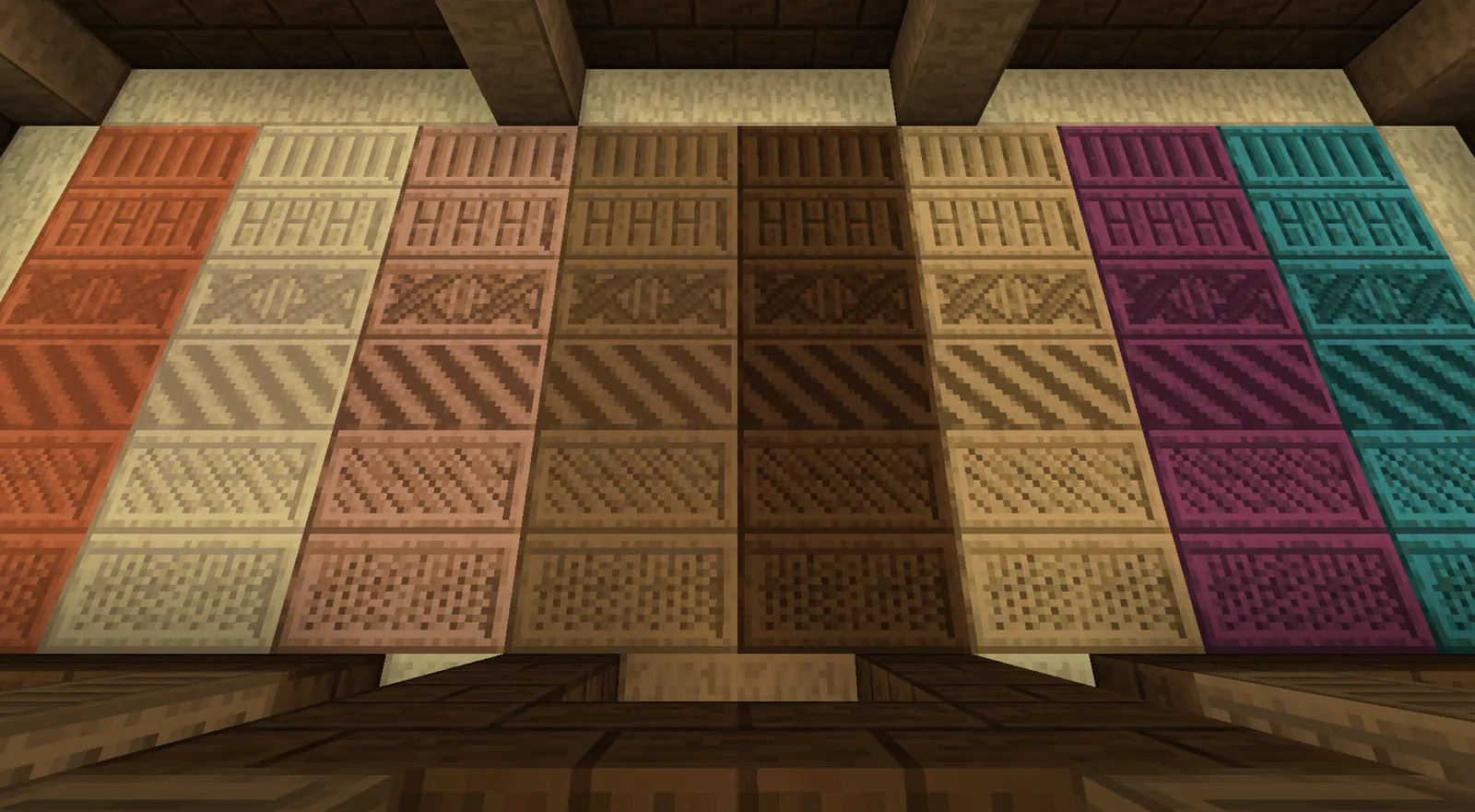
Connected textures, optionally. Most blocks have a version with connecting textures and a version without, and the chiselling screen toggles between them. This is the detail that separates Rechiseled from a simple variant pack – a connected-texture wall reads as one continuous surface rather than a grid of tiles, and having both options for the same block means you choose per build.
Vanilla-derived textures. The variants are treatments of vanilla textures rather than new art. They sit beside unmodified blocks without looking imported, which is the thing most variant mods get wrong.
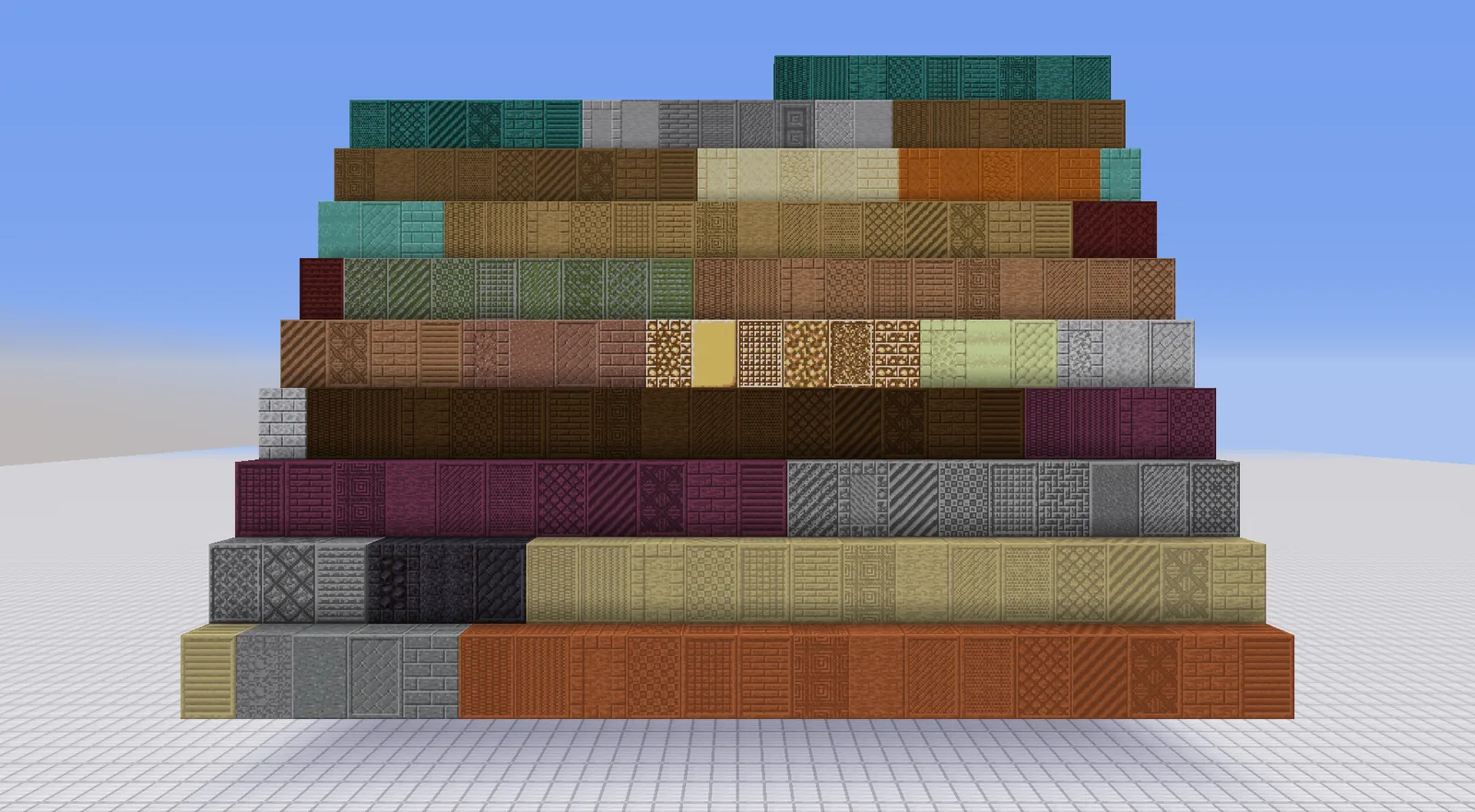
600+ variants. Enough that most vanilla building blocks have a meaningful set rather than one or two alternates. The practical effect is that a palette built from three materials has far more internal variety than vanilla allows.
Stairs and slabs included. Each variant carries its shapes with it, so you are not choosing between a nice texture and a usable shape.
Four loaders. Fabric, Forge, NeoForge and Quilt from one project, which is unusual for a mod this size.
Compatibility
This is where the honest assessment lives.
- Client and server both required. The mod adds real blocks, so a server running it needs every player to install it. There is no way around this and it is the single biggest constraint on where Rechiseled can be used.
- Supported versions run through 26.3 across all four loaders, which is current.
- Removing it orphans blocks. Any variant you placed becomes an unknown block if the mod is removed. For a world you intend to keep, this is a one-way decision.
- Texture packs interact unpredictably. A pack that retextures vanilla stone does not necessarily retexture Rechiseled’s stone variants. Our 16x pack roundup covers packs that are more likely to be maintained with mod support.
Connected textures specifically are worth a note. Rechiseled handles its own connecting variants, which means you do not need a separate connected-textures mod for Rechiseled blocks – but you probably still want one for vanilla glass and bookshelves. Our notes on the main connected-textures mod cover that side.
How to install
- Install the loader you are using – Fabric, Forge, NeoForge or Quilt – and its API where required.
- Put the Rechiseled jar in the mods folder.
- On a server, the same jar goes in the server mods folder and every player installs it client-side.
- Craft a chisel and start swapping.
Our mod installation guide covers the basics, and our plugins versus mods explainer covers why a block-adding mod cannot be server-only the way a structure mod can.
Is it worth installing
For single player or a small friends server, yes. If you build at all, this is one of the highest-impact mods you can add, because it changes a constraint you hit constantly rather than adding content you visit occasionally. The in-world chiselling in particular is the kind of feature that feels like it should have been in the game.
For a public server, probably not. Requiring every player to install a client mod is a real barrier, and the people who will not do it are exactly the casual players a public server needs. Our SMP guide covers that trade-off generally.
Skip it if you already run a large texture pack. There is overlap – a detailed pack already gives you more visual variety per block, and layering 600 variants on top is both redundant and a memory cost. Our Alacrity review covers one that does the texture job differently.
Where it sits against the alternatives
Two other approaches solve the same complaint.
Block variant mods with their own blocks. These add new materials rather than variants of existing ones. More distinctive, less vanilla-faithful, and the same client requirement.
A detailed texture pack. Changes how every block looks without adding anything. No client-server problem on a server that pushes the pack, but you get one look rather than a choice per block. Our server resource pack guide covers that route, and for a server it is usually the better answer.
Rechiseled’s distinct advantage over both is that the choice is per-block and reversible after placement. That is worth the install on a world you build in seriously, and worth skipping on one where you mostly explore. Our block palette guide covers getting more out of vanilla’s palette first, which is free and will tell you quickly whether variety is actually your bottleneck.
Images: Rechiseled project gallery.