“Can I run plugins on a Fabric server?” is the most common question a new server owner asks, and the answer is more interesting than yes or no. Plugins and mods are not two flavours of the same thing – they hook the game at different levels, and that difference decides what your server can and cannot do.
The actual difference
A plugin runs on a server that exposes an API. Bukkit, Spigot and Paper provide that API, and a plugin calls into it. The game’s own code is untouched, so players connect with a completely vanilla client and never know the plugin exists.
A mod modifies the game’s code, usually through Fabric or NeoForge. It can change anything, add blocks and items, and alter mechanics. But if it adds content, every player needs it installed too.
The consequence: plugins cannot add new blocks, and mods cannot be invisible to the client. Those two constraints explain nearly every decision below.
What each is good at
Plugins win at server management. Permissions, land claims, economy, chat formatting, moderation tooling, anti-grief – all of it is mature, well documented, and runs against a vanilla client. There is no realistic mod equivalent for most of it.
Mods win at content. New biomes, new mobs, new machines, new dimensions. A plugin cannot add a block, full stop.
Plugins win on player friction. Anyone can join. No installs, no version matching, no support burden when someone’s launcher misbehaves.
Mods win on depth. If you want a server that plays differently rather than one that is administered differently, you need mods.
That maps cleanly onto what you are building. A survival community with rules and claims is a plugin server. A modpack server is a mod server. The server software comparison covers which jar to run for each.
The hybrid question
Projects exist that run Bukkit plugins on a modded server – hybrid servers. They work, and people run them successfully.
The honest caveat is that hybrids inherit problems from both sides. When something breaks, the answer is frequently that a plugin assumed vanilla behaviour a mod changed, and neither project supports the combination. Debugging that is genuinely harder than debugging either alone.
Run a hybrid if you need a specific plugin on a modded server and have no alternative. Do not run one because it sounds like getting both.
The third option most people miss
Server-side-only mods. A growing set of Fabric mods run on the server without requiring anything from the client, which gives you plugin-like deployment with mod-level access.
This is where much of the interesting work is happening. Performance mods are the obvious case – they run server-side and players need nothing. But so do many management and mechanic-tweaking mods, and data packs cover a surprising amount of the rest without any mod at all.
For a server that wants vanilla gameplay with better performance and some rule tweaks, this is frequently the right answer and it is the least discussed. A stack built this way pairs naturally with the usual server performance mods.
Choosing, practically
Three questions settle it.
Do you need new blocks, mobs or dimensions? Yes means mods, and the decision is made.
Do you need players to join without installing anything? Yes means plugins or server-side-only mods.
Do you need land claims, permissions and an economy? Those are plugin territory, and if you also need mods, that is the case where a hybrid earns its complexity.
Most small communities answer no, yes, partly – which points at a Paper server with a handful of plugins, or a Fabric server with server-side mods and data packs.
What this means for version upgrades
One more practical difference. Plugins generally survive a Minecraft version bump, because the API absorbs the change. Mods generally do not, because they hook code that moved.
That makes a plugin server significantly cheaper to maintain across versions, and it is the factor most new owners underweight. A modded server is a commitment to redo the version migration every few months; a plugin server mostly is not.
The migration path between them
Worth knowing before you commit, because servers change shape. Going from plugins to mods means a new server jar, a new config layer and asking every player to install something – a hard break.
Going from vanilla to server-side-only mods is nearly free: drop jars in, restart, players notice nothing. Going from that to a full modpack is the hard break again.
So the low-regret order is vanilla, then server-side mods and data packs, then commit to one of the two ends only when you know which you need. Starting with a modpack because it sounds ambitious is how servers end up with four players and a version they cannot leave.
What data packs cover
Underrated and worth checking before installing anything. Data packs can change loot tables, recipes, advancements, world generation, predicates and functions – server-side, with no client install and no mod loader at all.
A surprising number of “I need a mod for this” requirements are a data pack. If your requirement is a rule change rather than new content, look there first.
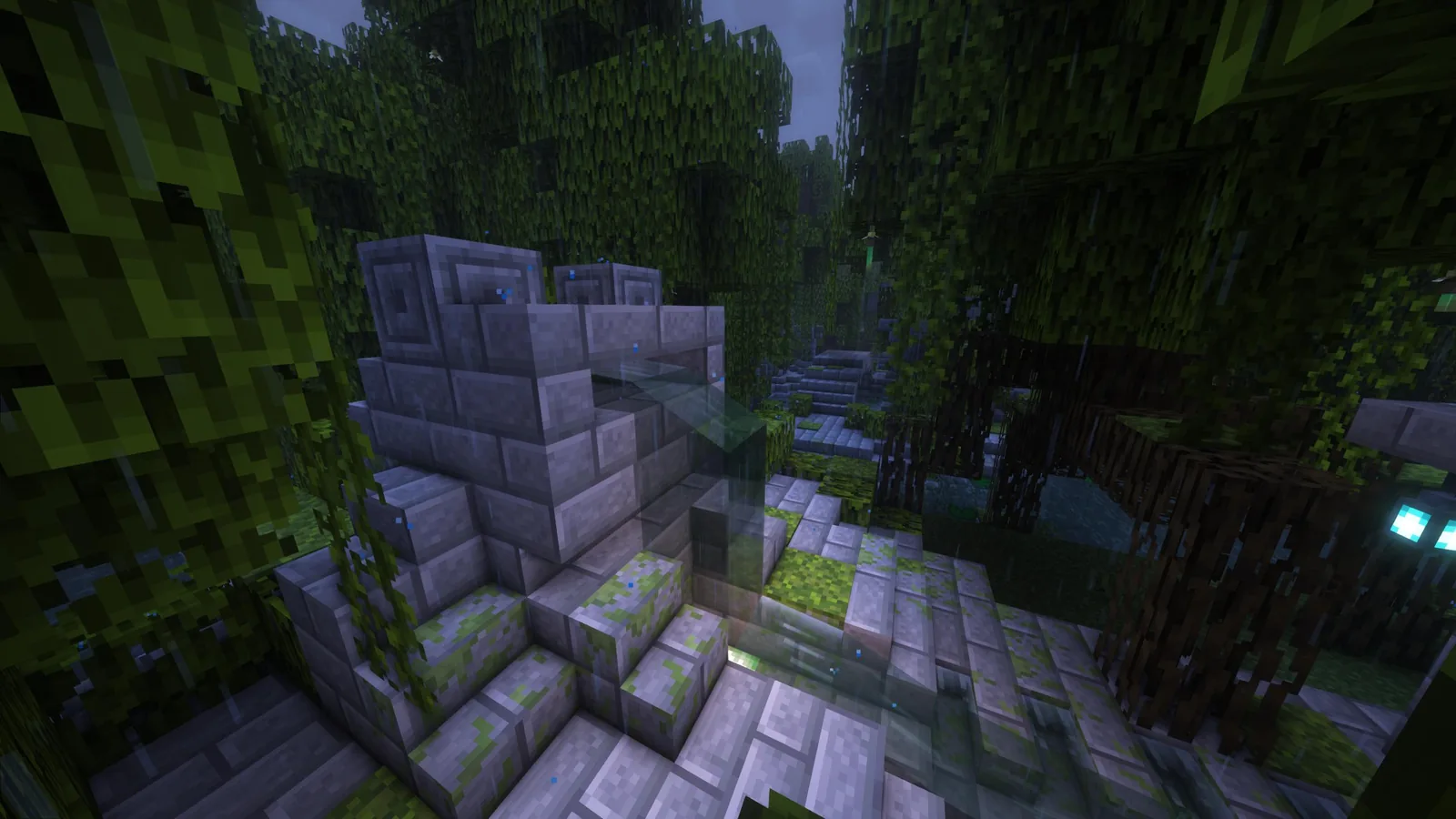
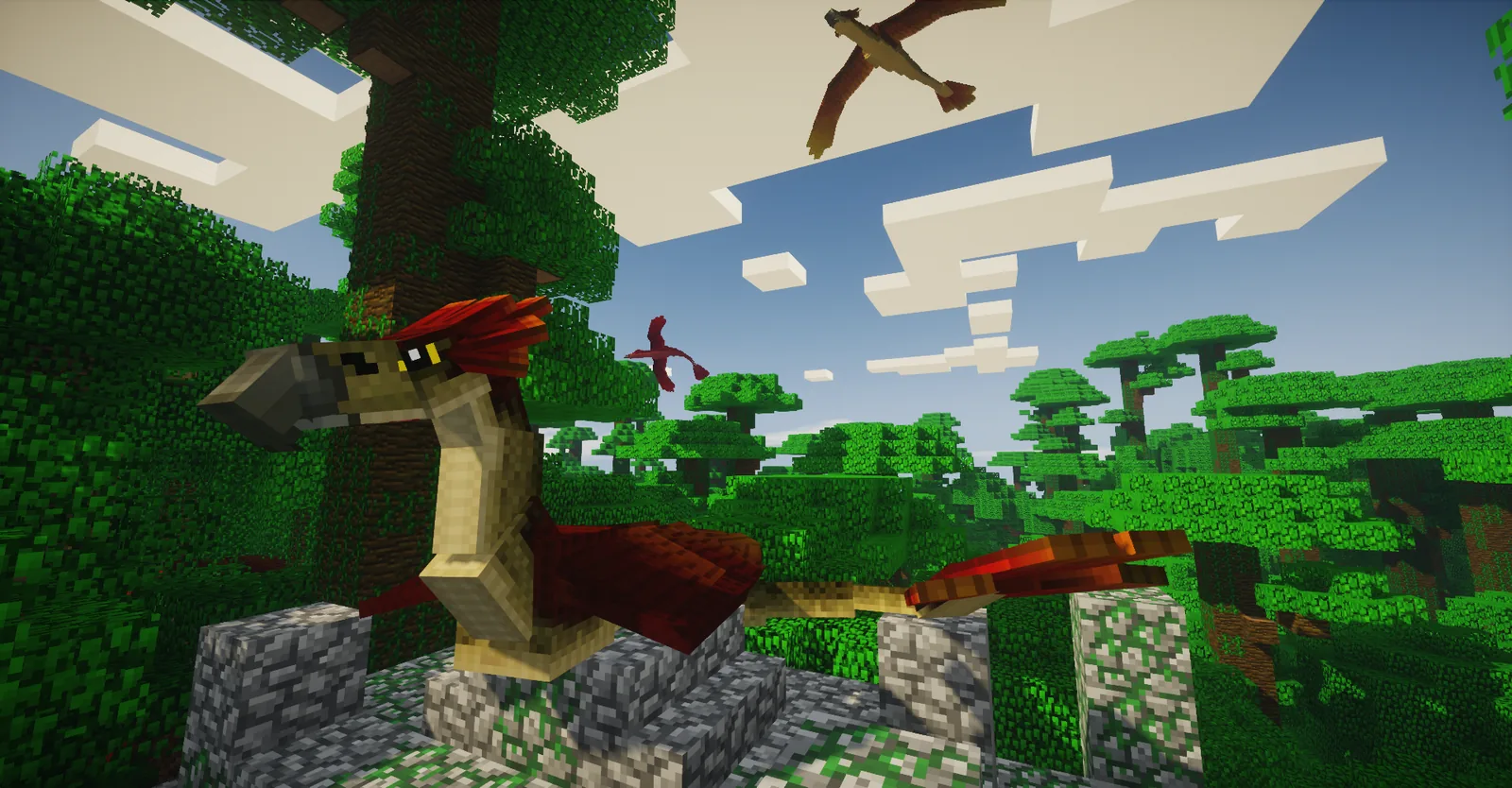
Images: Structory and Ice and Fire project galleries.