The immersive sim is the most praised and least copied genre in games. Every few years someone makes one, critics call it the best thing that year, it sells modestly, and nobody builds on it.
That pattern has a cause, and it is not that the genre is too clever for audiences. It is that the thing these games do well is extremely expensive and almost invisible in marketing.
What the genre actually is
Not stealth, not first-person, not RPG systems. The defining property is that the game’s systems interact with each other in ways the designers did not individually author.
Water conducts electricity. Fire spreads. Guards hear noise. Objects can be stacked. None of those is interesting alone. The genre exists in the intersection – the moment a player floods a room, throws a live wire in, and the game resolves it correctly because both rules were implemented generally rather than as special cases.
That is the whole thing. Everything else – the level design, the multiple routes, the stealth – is downstream of having systems that compose.
Why it costs more than it looks
A scripted game implements what the designer wants to happen. A systemic game implements rules and accepts whatever comes out, which means testing a combinatorial space rather than a list.
Every new system multiplies rather than adds. Ten systems that interact is not ten features; it is somewhere near fifty pairwise interactions, each of which can produce a soft lock, an exploit or a nonsense outcome.
And the payoff is unmarketable. You cannot put “the systems compose correctly” in a trailer. You can show one spectacular emergent moment, and the audience assumes it was scripted, because in most games it would have been.
The legibility problem
Emergent systems only produce interesting play when the player can predict them. A rule the player does not know about does not create a plan; it creates a surprise, and surprises are not strategy.
So systemic games spend enormous effort on making their rules visible – consistent material properties, readable sightlines, obvious affordances. The good ones feel simpler than they are, because every rule has been communicated before it matters.
This is the same problem as teaching without tutorials, at a larger scale. A game with twelve interacting systems has to teach twelve rules and then step back, and the stepping back is what makes it feel like freedom.
What Minecraft got right that the genre did not
Minecraft is systemic in exactly this sense – water flows, fire spreads, redstone carries signal, gravity affects some blocks and not others – and it reached a scale no immersive sim has.
Three differences explain it. The systems are fewer and simpler, so the combinatorial space is tractable. The consequences are reversible, so an emergent disaster is a story rather than a reload. And there is no authored critical path to protect, so the designers never had to guarantee that any particular sequence works.
That third one is the big one. An immersive sim has to ensure the player can always finish the mission, no matter what they broke. Minecraft has no mission, so nothing can be broken.
Where the genre’s ideas actually went
Not into more immersive sims. They went into two other places.
Sandboxes and survival games, which took the systemic interaction and dropped the authored narrative – Minecraft, Valheim, and the whole category that followed. The systems compose; nothing has to be completable.
Roguelikes, which took the systemic interaction and made runs disposable, so an emergent failure costs twenty minutes instead of a save file. That disposability is what lets them ship far more interactions than a linear game could risk, and it is the same trade examined in what a roguelite run is for.
Both solved the cost problem by removing the constraint that made it expensive, which is the thing a linear immersive sim cannot do.
Why a few still get made
Because the experience is genuinely unmatched when it works, and because a small number of studios have the institutional knowledge to do it. The techniques do not transfer easily from a document – they live in people who have shipped one.
The genre is not dying, it is just structurally rare. A studio needs an unusual tolerance for testing cost, a design team comfortable with not authoring outcomes, and a publisher willing to accept modest sales. That combination exists a few times a decade.
Which is also why the experimental end of the industry matters more than its size suggests – the ideas that end up in systemic games are frequently prototyped somewhere with nothing to lose, in the pipeline described in how jams feed the industry.
The test, for a designer
Ask whether a new system can be implemented as a general rule or only as a special case. A general rule composes with everything already there and costs testing. A special case composes with nothing and costs almost nothing.
A game full of special cases can look identical to a systemic one in a trailer. It will not survive a player who tries something the designer did not think of, and that is the entire difference.
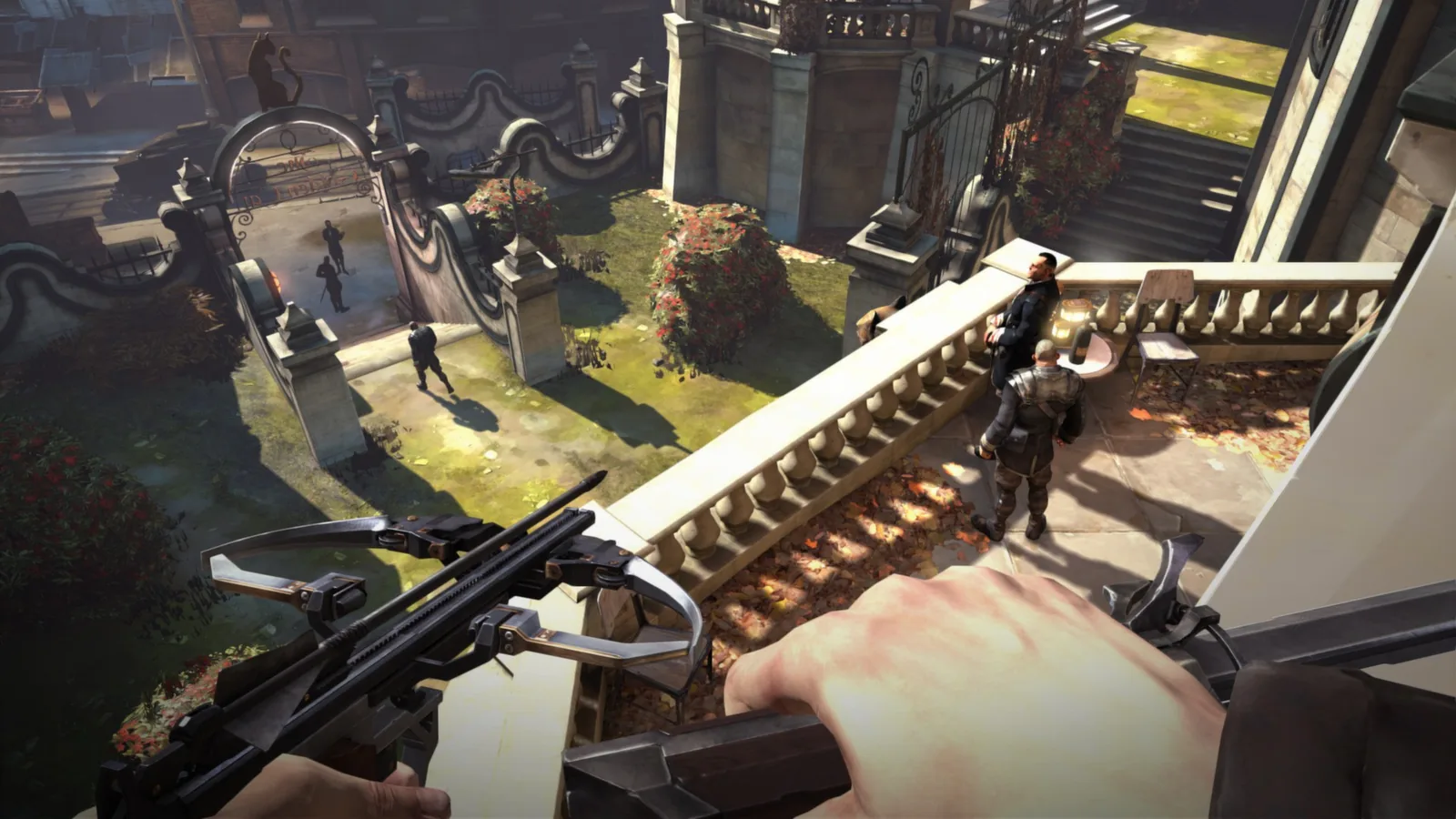
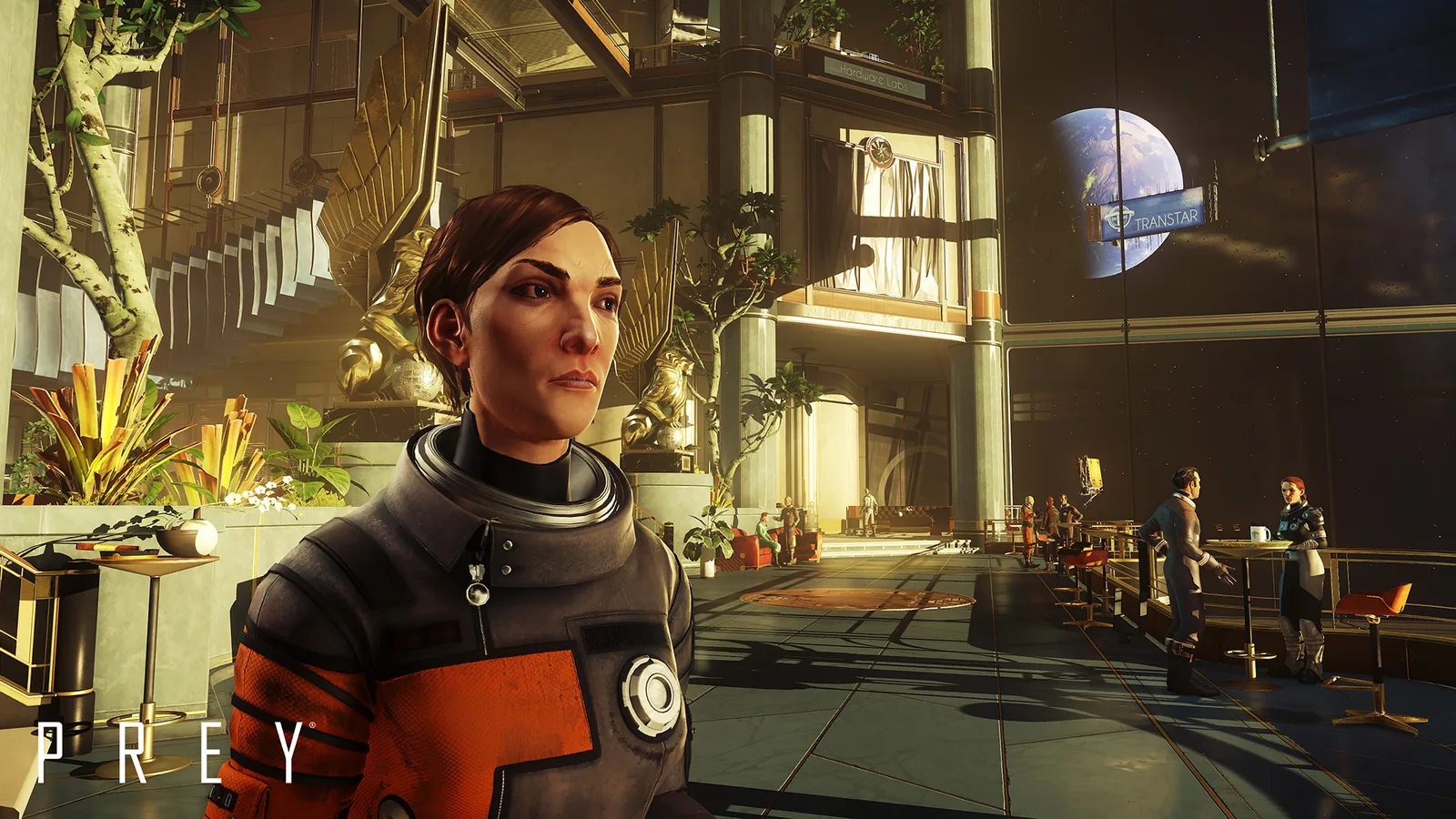
Images: Dishonored and Prey project galleries.