Game jams produce more prototypes in a weekend than the industry produces in a year, almost all of them are discarded, and a small number become commercially released games. The ratio sounds wasteful and is the point.
What a jam is for
Not for making games. For testing whether an idea is worth making a game out of, at a cost of one weekend and zero money.
The constraint – a theme, a deadline, a small team – eliminates the two things that kill experimental work: scope and justification. You cannot overbuild in forty-eight hours and nobody asks you to explain the pitch.
Why the failure rate is the feature
An experiment that cannot fail is not an experiment. A pipeline that produces a thousand prototypes and five games has a better hit rate on interesting ideas than a pipeline that produces five carefully justified projects, because the thousand included things nobody would have approved.
The economics only work because each attempt is nearly free.
What comes out of them
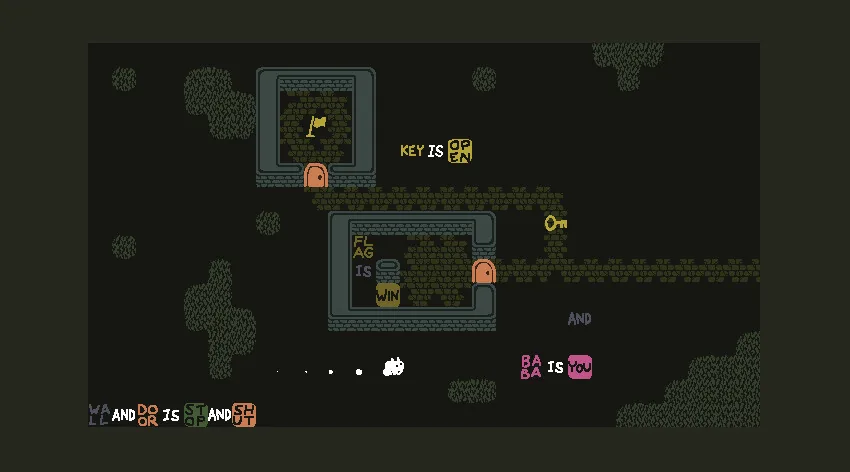
- Prototypes that become commercial games, occasionally.
- Mechanics that appear in someone’s later work.
- Developers who learn to finish something.
- Collaborations that become studios.
The third item is underrated. Finishing anything is a skill, and a weekend deadline teaches it faster than a two-year project.
The three routes into the industry
Experimental ideas reach commercial games through three channels: mods, student projects and jams. All three share the same property – the work is made before anybody has to approve it.
The mod route and what it produced is in the Stanley Parable piece, where a Half-Life 2 mod became a commercial release without the core idea changing.
The student route works the same way and is older. The jam route is the youngest of the three and the highest volume by a wide margin, producing more prototypes in a single weekend than the other two do in a year.
Showcases as the transmission layer
A prototype that nobody sees influences nothing. The mechanism that carries ideas from a jam entry to a commercial game is the showcase – festivals, conference sessions, and events where developers watch other developers demonstrate work.
The longest-running of those in the experimental space is documented on our impact page, and its record is a reasonable argument that the transmission layer matters as much as the making.
The scale-up problem
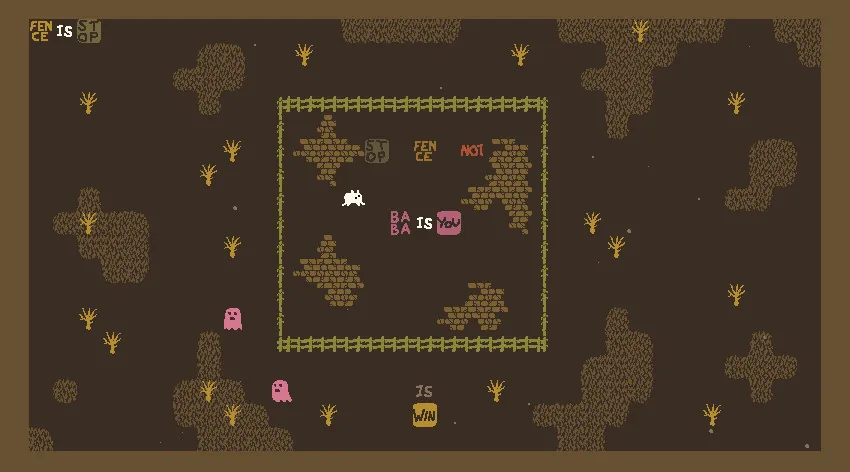
Most jam prototypes do not survive expansion. An idea that is delightful for five minutes is frequently exhausted at twenty, and the work of turning it into a full game reveals that there was only ever one interesting moment in it.
The ones that do survive tend to be the ones where the core rule generates variation rather than a single effect. That distinction is usually visible in the prototype if you know to look for it.
What to look for in a jam entry
- Does the core rule produce situations the developer did not design?
- Is the interest in the mechanic or in the presentation?
- Would a second hour be different from the first?
- Can the rule be stated in one sentence?
The last one is a strong filter. Ideas that take a paragraph to explain rarely survive contact with a player.
Themes and constraints
Jam themes exist to prevent people arriving with a finished plan, and the good ones are ambiguous enough to be interpreted several ways. A theme that suggests a genre produces a hundred similar entries; one that suggests a feeling produces a hundred different ones.
Why the format persists
Because it is the cheapest possible way to find out whether something works, and the industry has no better mechanism. Two decades in, the pipeline from a weekend prototype to a released game is busier than it has ever been.
The forty-eight hour constraint
Short jams and long jams produce different things. A weekend produces a mechanic; a month produces a small game. Both are useful and the weekend format is the one that generates ideas rather than products.
The deadline is doing the work. Without it, a prototype expands until it is a project, and a project has to be justified.
What to do with a prototype afterwards
- Put it somewhere people can play it in one click.
- Show it to other developers before showing it to players.
- Write down what the idea was, because you will forget.
- Decide within a month whether to expand it, and otherwise move on.
The first point is the one that decides whether anyone sees it. A prototype behind a download and an install reaches a fraction of the audience of one that runs in a browser.
The record
Two decades of showcases, festivals and jams have produced a long list of mechanics that are now standard and were once somebody’s weekend. That record is worth looking at directly rather than taking on trust, and it is collected on our impact page.
Images: Baba Is You and Spelunky store assets, Hempuli Oy and Mossmouth.