A greenhouse is the easiest build in Minecraft to start and the hardest to finish. Glass, a roof, some crops – that part takes ten minutes. Making it look like a building rather than a glass box with plants inside is the rest of the afternoon.
Start with the frame, not the glass
The mistake almost everyone makes is placing glass first and then trying to add structure around it. Do it the other way. Build the skeleton – corner posts, a sill course, roof beams – and treat the glass as infill that goes in last.
A good frame material has visible grain or joinery at a distance. Stripped logs, dark oak fences, copper grate, iron bars and deepslate tile all work. Avoid smooth stone and quartz for the frame, because they read as absence at range and the building loses its outline.
Two blocks of wall before the glass starts makes a large difference. A greenhouse that is glass from the ground up looks like a display case; one with a low solid base looks like it was built by someone who thought about drainage.
Roof pitch is the whole silhouette
Greenhouses read as greenhouses because of the roof. A flat glass ceiling is a conservatory at best and a room at worst. You want a visible pitch, and you want the ridge line emphasised with a different block from the glazing.
Three shapes that work:
- Simple gable. Stair blocks up both sides, a ridge of slabs or a full block run along the top. Cheap, always reads correctly.
- Half-barrel. Step the glass out one block every two courses to approximate a curve. Needs more height than people expect – budget seven blocks minimum at the ridge.
- Lean-to. One sloped face against an existing wall. The best option if you are attaching to a house rather than building free-standing.
Whichever you pick, run the frame material along every roof edge and every two or three glass panels. The rhythm of frame-glass-glass-frame is what sells it. This is the same principle that drives window framing on normal builds, applied to a surface that is almost entirely window.
The interior problem
Inside, the temptation is to fill the floor with farmland and call it done. A grid of wheat under glass looks like a farm with a lid on it.
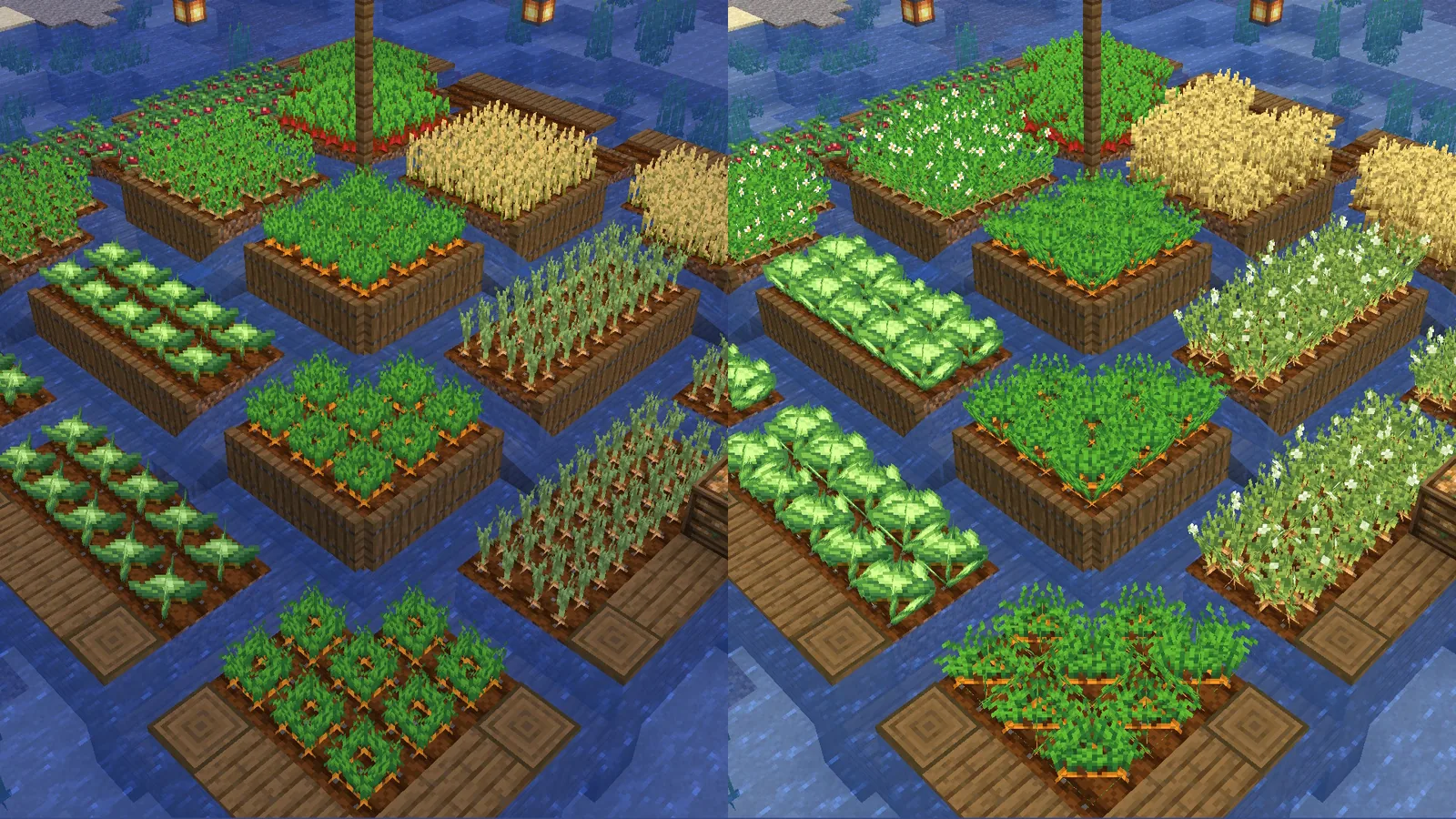
Better: raise the beds. Use a course of coarse dirt or podzol contained by trapdoors, walls or upside-down stairs, leave a walking path down the middle, and vary the heights. Two raised beds at different levels with a stone path between them reads as horticulture. One flat field does not.
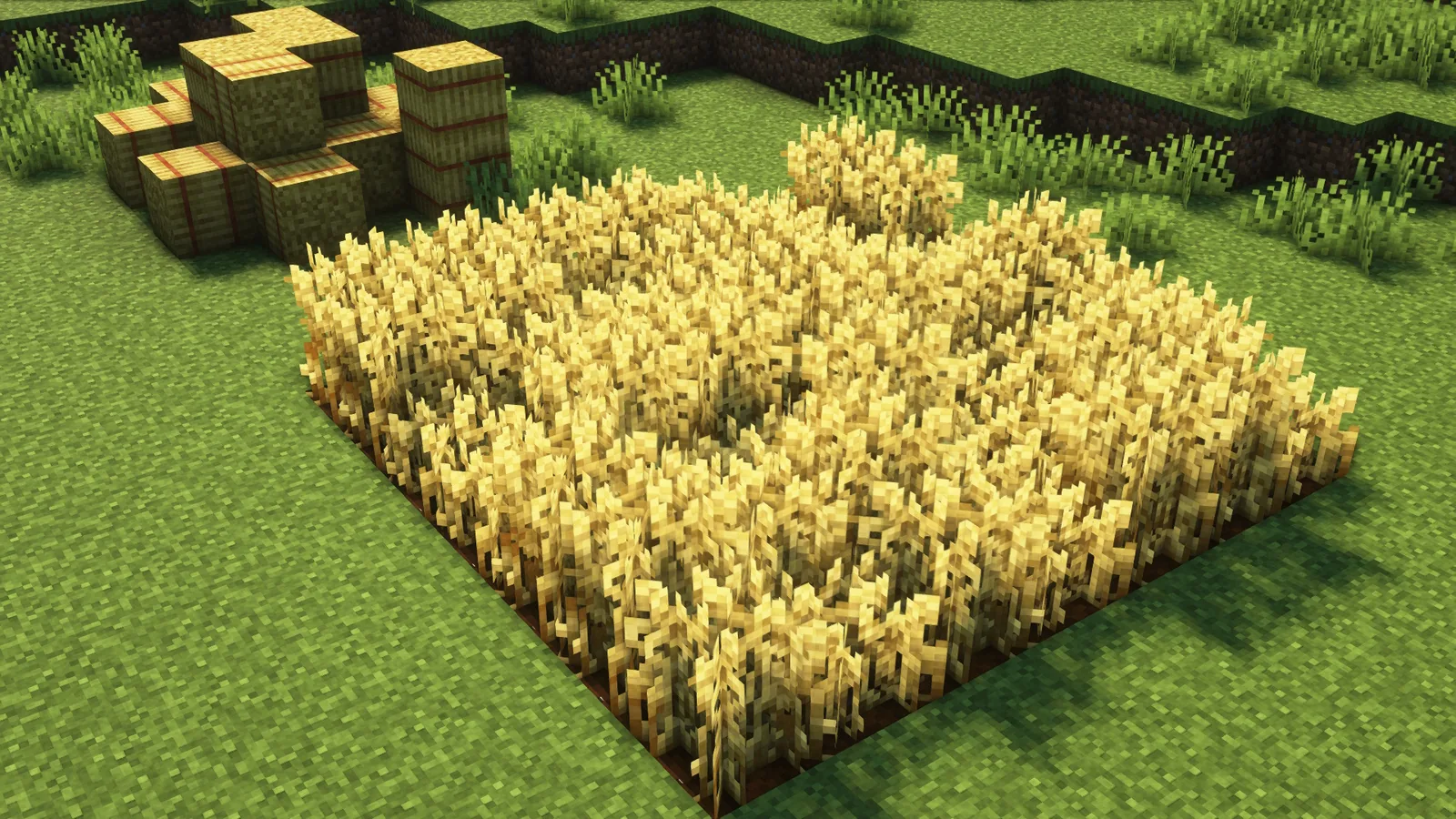
Mix crop types deliberately rather than randomly. Wheat, carrots and potatoes all have similar silhouettes; break them up with sugar cane for height, melon or pumpkin stems for ground cover, and berry bushes or flowers along the edges. If you want the space to feel productive rather than decorative, the growth mechanics behind each crop will tell you what can share a light level and what cannot.
Lighting it without ruining it
Torches on the frame posts kill the look instantly. Options that do not:
- Lanterns hanging from the roof beams, spaced wide, one per bay.
- Light blocks or glowstone buried under the path, covered with slabs or carpet.
- Sea lanterns in the raised bed walls, one every four or five blocks, half-hidden by the trapdoor lip.
- Shroomlight under leaf blocks in a decorative corner.
Keep the light source count low and the placement regular. A greenhouse lit by six lanterns in a line looks designed; one lit by nineteen torches looks like a spawn-proofing exercise, which is a different job with its own rules.
The details that finish it
A few small additions do a disproportionate amount of work. A water channel running the length of the building, one block wide, edged with stone. Composters at the end of a bed. A single flowering azalea in a pot as a focal point. Barrels and a crafting table in the corner as a potting station. Vines or glow lichen on the north-facing frame.
Outside, do not let the greenhouse sit on flat grass. A gravel or path-block apron one block wide around the base, some bushes against the low wall, and a short path leading to the door will connect it to the rest of the site.
Scaling up
Large greenhouses need internal structure or they turn into aircraft hangars. Break a long building into bays with full-height frame columns every five or six blocks, and vary what happens in each bay: beds, then a water feature, then a seating area, then beds again.
If you are going really big, build two or three connected structures instead of one enormous one. Three modest greenhouses joined by a short glazed corridor looks like an estate. One giant one looks like a mistake you were too far in to abandon.
Images: (Bee’s) Fancy Crops project gallery.