Windows are where amateur Minecraft builds are most obviously amateur. A hole in a wall filled with glass is a window in the sense that light passes through it, and in no other sense. What makes a window read as a window is everything around the glass.
The three components
- The opening – its shape and proportion relative to the wall.
- The frame – what separates glass from wall.
- The recess – whether the glass sits flush with the wall or set back from it.
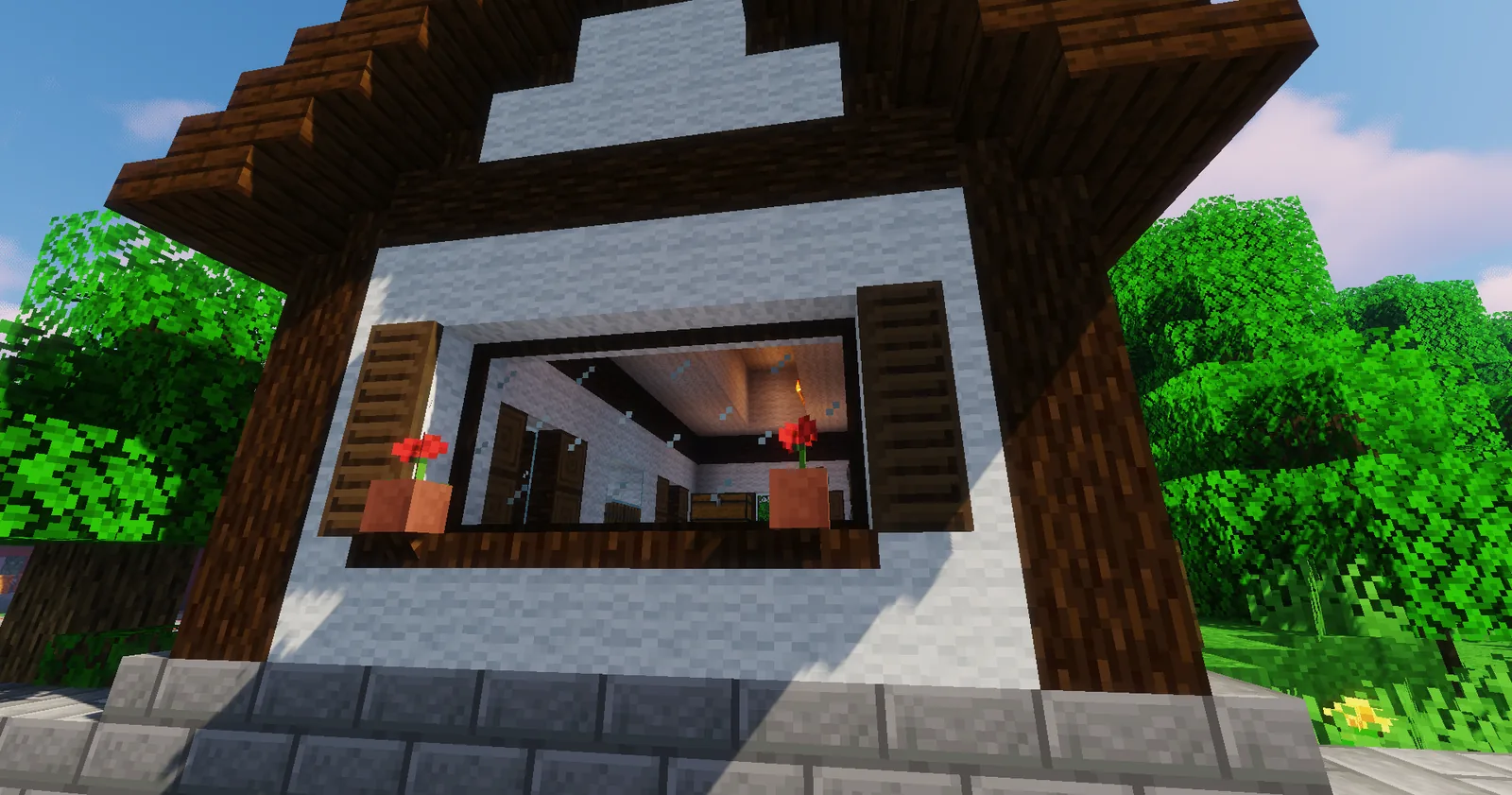
The recess is the one nobody does and the one that matters most. Glass flush with the wall face is a sticker; glass set one block back has depth and casts shadow.
Framing materials
- Stripped logs and wood, for anything rustic.
- Stone brick and deepslate, for heavier architecture.
- Trapdoors, which give a thin frame that reads as joinery.
- Iron bars or chains across the opening, for anything industrial.
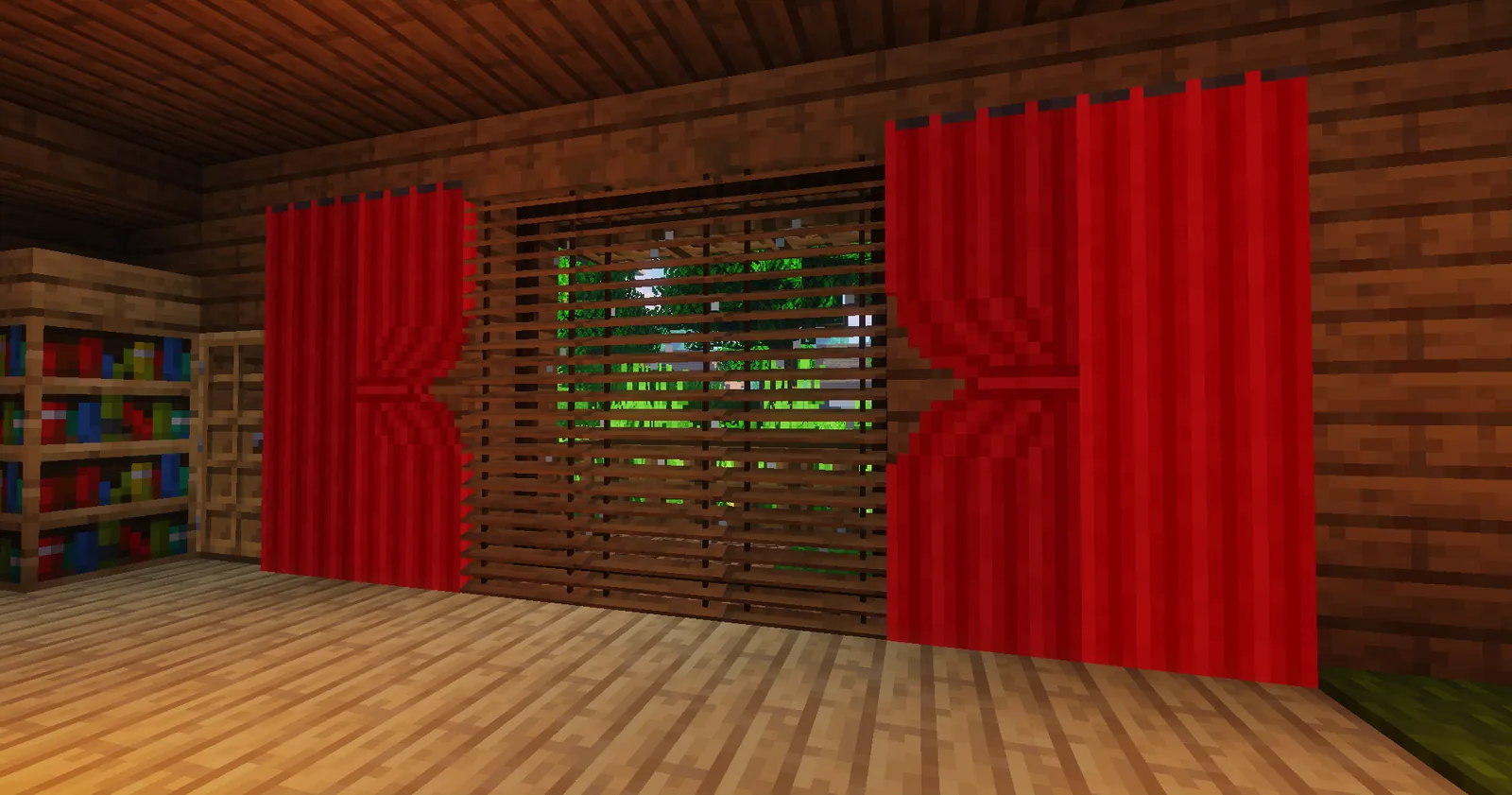
Trapdoors around a window are the cheapest upgrade available. Four trapdoors on the outside edge of a two-by-two window transform it.
Proportion
Windows taller than they are wide read as residential. Wider than tall reads as industrial or modern. Square reads as neither and is the default everyone uses.
A row of tall narrow windows at consistent spacing is one of the most reliable ways to make a plain wall look designed, and it costs nothing but planning.
Glass choice
Clear glass shows the interior, which is usually a mistake unless the interior is built. Stained glass in a low-saturation colour – light grey, brown, light blue – reads as glazing rather than as a coloured panel.
Glass panes rather than blocks give a thinner profile and connect to their neighbours, which is why they look better in a frame and worse alone.
Shutters and sills
Trapdoors on either side of a window, opened flat against the wall, read as shutters. A stair or slab under the opening reads as a sill. Both are one block and both add more than their cost suggests.
A flower box – a slab or trapdoor shelf with flower pots or a planter – under a window is the detail that makes a house look lived in.
Interior side
A window has two faces and builders usually finish one. From inside, the recess should be visible, the frame should continue, and there should be something at the sill – a plant, a candle, a book.
The vocabulary for that is entirely vanilla and the techniques are the same ones used for everything else indoors – furnishing a room without a furniture mod covers what each block can be made to represent.
Where to put them
- Not centred on a blank wall – offset, or in a group.
- Aligned vertically between floors, which reads as structure.
- Larger openings on the ground floor, smaller above, which matches how buildings actually work.
- A different treatment on the gable end from the long sides.
Vertical alignment is the rule that separates a considered facade from a random one. Windows that line up between floors imply a structural grid even where none exists.
Light through windows
Glass passes light but reduces it, which means a room lit only by windows will still spawn mobs at night. Interior light sources are still required, and hiding them near the windows makes the light appear to come from outside.
The spawning rules around this are worth knowing precisely, because a room that seems bright can still be at light level zero in the corners – the spawning conditions and what actually prevents them is the reference.
Common mistakes
- One block windows scattered across a wall at random heights.
- Glass flush with the exterior face.
- No frame at all.
- Bright saturated stained glass, which reads as plastic.
- Identical windows on every face of a building.
The last one is worth attention. Buildings rarely have the same window treatment on all four sides, and varying it – even slightly – makes a structure read as having an inside.
A quick upgrade routine
- Recess every window one block.
- Add a trapdoor frame.
- Add a slab or stair sill.
- Align them vertically.
- Vary the treatment on one face.
Five steps, no new materials, and it is the largest visual change available to an existing build for the least work.
Window groups
Three narrow windows side by side with a one-block pier between them read as a single architectural element rather than as three openings. Groups are almost always better than evenly distributed singles.
The classic arrangement is a wider central opening flanked by two narrower ones, which gives a facade a centre without needing symmetry everywhere else.
Arched openings
- Stairs at the top corners produce a simple arch in a three-wide opening.
- Upside-down stairs above give a flatter arch for wider spans.
- A keystone – one contrasting block at the apex – is one block and reads as deliberate masonry.
Arches suit stone and fail in wood, which is a reasonable rule to follow without thinking about it further.
Modern builds
Large glazed areas with thin frames are the modern vocabulary, and they need the opposite treatment – minimal recess, dark frames, glass panes in continuous runs. The one constant is that the frame must exist.
Images: Macaw’s Windows project gallery on Modrinth.