The original roguelike bargain was simple. You die, you lose everything, and the only thing that carries over is what you learned. Meta-progression broke that bargain on purpose, and the genre has spent a decade arguing about whether it was worth it.
The argument is usually framed as purists versus accessibility. That framing is wrong. The useful question is narrower: what is the permanent upgrade actually paying for?
Three things a permanent upgrade can buy
Power. The run starts stronger. More health, more damage, better starting gear. This is the version everyone means when they complain about meta-progression, because it solves difficulty by removing it.
Options. The run has more possible shapes. New weapons in the pool, new characters, new branches. The player is not stronger; the space of runs is larger.
Access. The run reaches further into content that existed all along. Shortcuts, unlocked areas, later starting points.
These feel similar from the unlock screen and behave nothing alike over fifty hours. Power flattens the difficulty curve. Options widen it. Access shortens it.
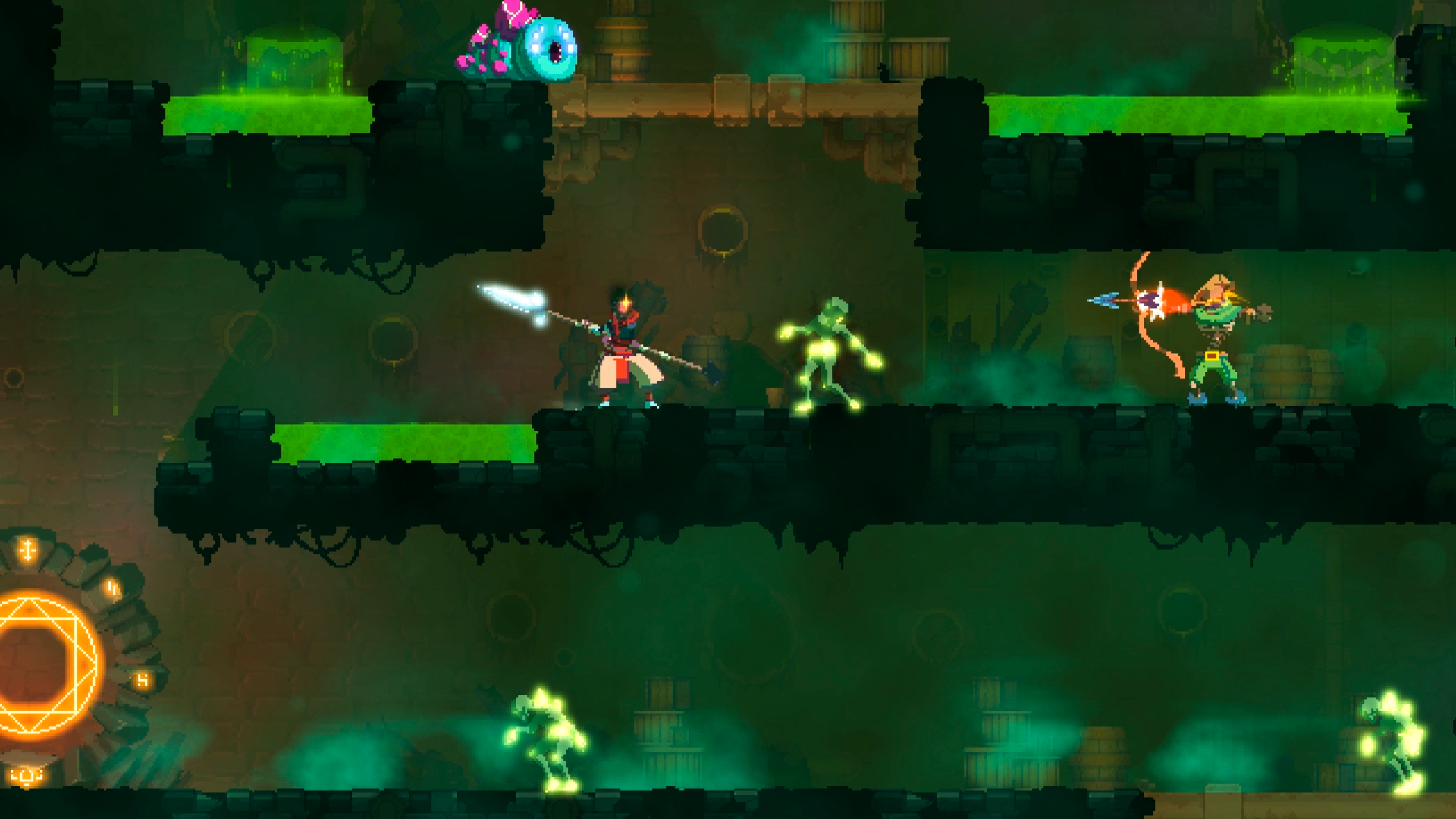
Why power upgrades are the risky one
A roguelike’s core loop depends on the player’s skill being the variable that changes. When permanent power is the variable that changes, the loop inverts: you are no longer learning to beat the game, you are grinding until the game is beatable.
The symptom is recognisable. A player who has stopped improving still progresses, because runs are being won by accumulated stats rather than by decisions. At that point the failure has stopped being informative – you did not lose because you misplayed, you lost because you had not farmed enough.
The deeper cost is that early runs get tuned around eventual power. Designers who know the player will eventually have double health tend to balance late content for that player, which makes the first twenty hours harder than they would otherwise be and the last twenty easier.
Why option upgrades usually work
Adding a weapon to the pool does not make the next run easier. It makes the next run different, and difference is the resource a run-based game consumes fastest.
It also solves the real problem that meta-progression was invented to solve, which is not difficulty but sameness. A player who has seen the same eight items three hundred times does not need more health. They need a ninth item.
This is the same distinction that shows up in deckbuilders, where the card pool is the content and the deck is the run – the structure of a deckbuilder is essentially a meta-progression system that only ever hands out options.
The Hades exception
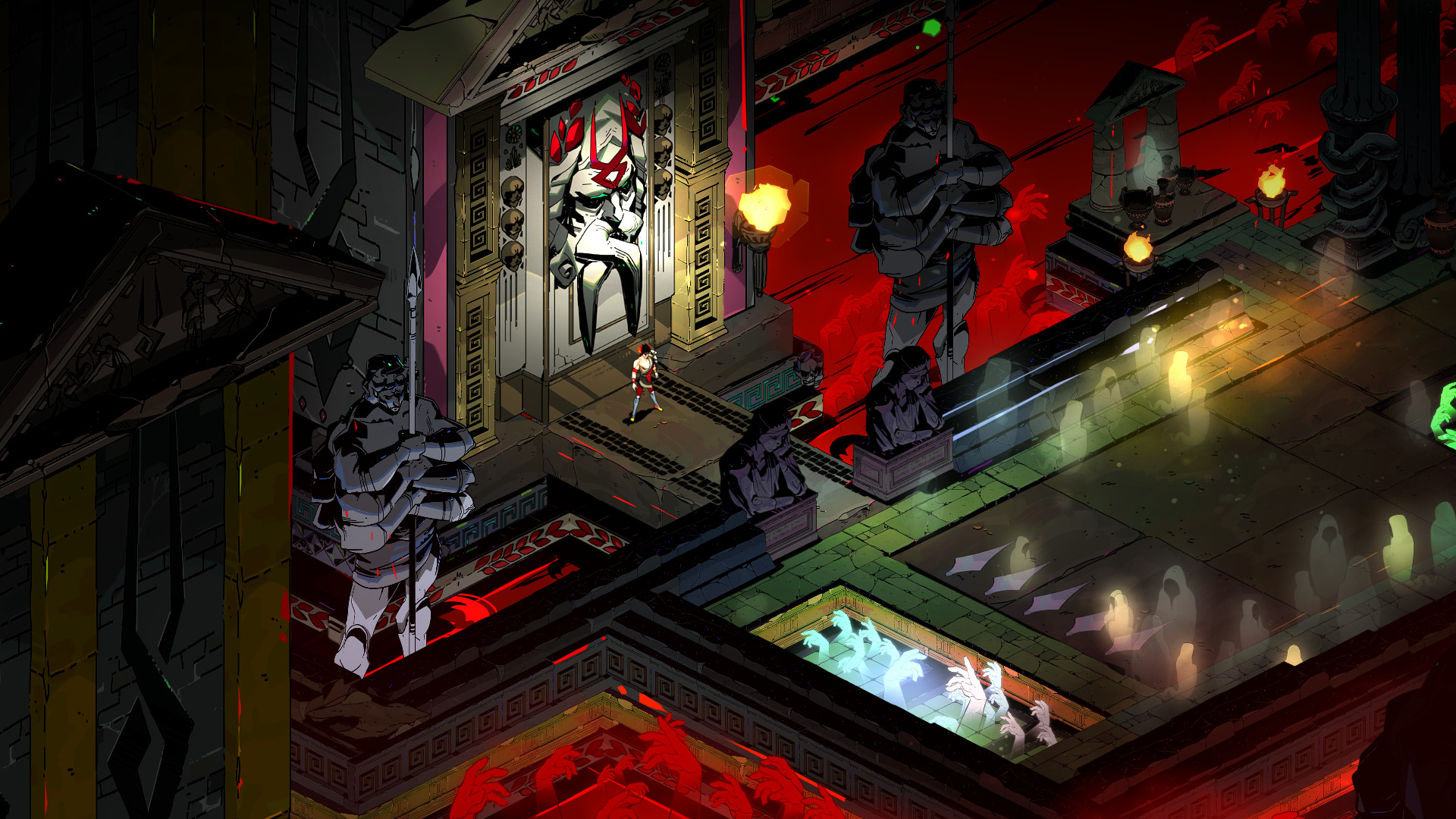
Hades is the usual counterexample, and it is a real one, but it works for a reason that does not generalise cleanly: the permanent upgrades are attached to a story that advances whether you win or lose.
Losing a run in Hades produces new dialogue. That means failure is never empty, which is the actual function meta-progression is serving – not making the next run easier, but making this run’s ending mean something. The power upgrades are load-bearing for pacing, not for the loop.
Games that copied the upgrade currency without copying the narrative payoff copied the wrong half.
What Spelunky proves by refusing
Spelunky has essentially no meta-progression. Shortcuts exist and that is close to the whole system. The result is a game where a player’s hundredth run and their first run start identically, and where the entire difference is in the player.
That is brutal, and it is also why the game’s skill ceiling is legible. You can watch two players and tell which is better within thirty seconds, because nothing external is confounding the comparison. What the genre took from Spelunky was mostly level structure; what it mostly declined to take was this.
The cost is real. Spelunky loses players who never get over the first wall. Meta-progression is, honestly, the mechanism that keeps those players in the game, and pretending otherwise is dishonest about who the design is for.
The test for a designer
Ask what a new player and a hundred-hour player experience differently on the same seed.
If the answer is that the veteran has more health, the meta-progression is doing power. If the answer is that the veteran has more choices available and knows what to do with them, it is doing options. If the answer is that the veteran starts on floor four, it is doing access.
All three are legitimate. But only one of them leaves the skill expression intact, and it is not the one that is cheapest to implement.
A practical middle
The version that seems to hold up is: permanent options, temporary power, optional access.
Unlock items and characters permanently. Keep all power inside the run, where it has to be earned again each time. Offer shortcuts but make using them cost something, so the player chooses between a shorter run and a complete one.
That shape keeps failure informative, keeps the skill ceiling visible and still gives a losing player something to take away from the run. It is more work than an upgrade tree, which is most of why upgrade trees are everywhere – a constraint that, as with the prototypes these systems get tested in, tends to decide the design before anyone argues about it.
Images: Dead Cells and Hades project galleries.