The Stanley Parable started as a Half-Life 2 mod released in 2011 by Davey Wreden, was rebuilt as a standalone game in 2013 with William Pugh, and expanded again as Ultra Deluxe in 2022. That path – mod to commercial release to expanded edition – is one of the most common routes into the industry and one of the least discussed.
Why mods produce good games
A mod has no budget, no schedule and no obligation to be commercially viable. It can be a single idea executed once, which is exactly what an experiment needs to be.
It also has an engine, assets and a distribution audience already in place, which removes most of the work that has nothing to do with the idea.
What The Stanley Parable was testing
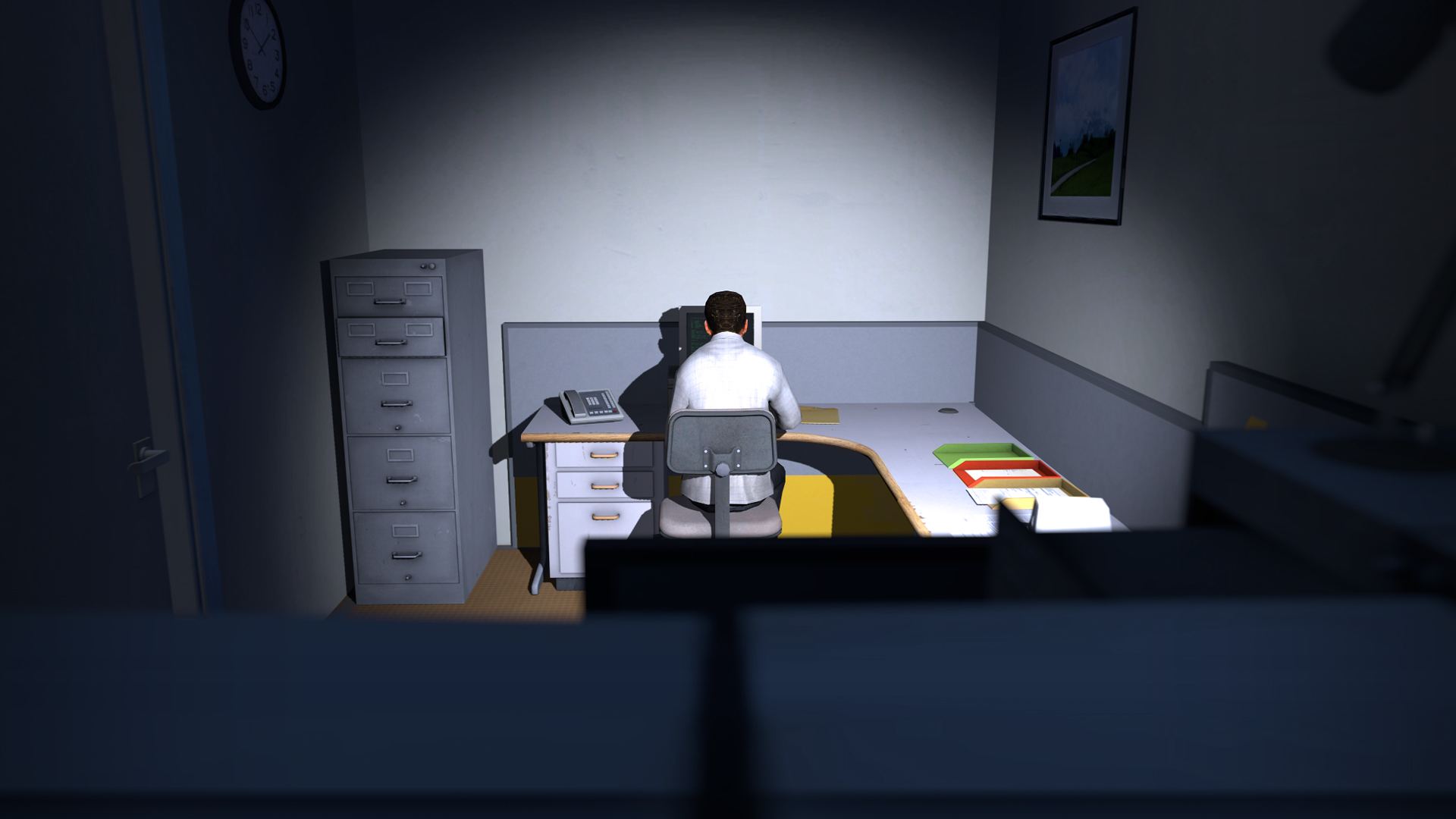
Whether a game can be about the relationship between a player and a narrator – specifically, about disobedience. The mechanics are walking and choosing doors. Everything else is writing and reaction.
That is a hypothesis you can test in a mod and cannot easily pitch as a commercial project, which is precisely the kind of work the mod scene has always carried.
The lineage
The mod-to-studio path is long and well populated. Counter-Strike was a Half-Life mod. Dota was a Warcraft III map. Team Fortress was a Quake mod. Garry’s Mod was a Half-Life 2 mod that became a platform.
Every one of those is now larger than the game it was built on, which says something about where innovation tends to happen.
Student work as the other route
The parallel path is a student project – DigiPen, USC, NYU and similar programmes producing prototypes that become commercial games. The best-known example is a student game that became a Valve title, and the story is covered in the Narbacular Drop piece.
The two routes share a property: someone building something with no requirement that it be a product.
What changed in the standalone version
- New art and environments, replacing repurposed Half-Life 2 assets.
- Additional branches and endings.
- Substantially expanded writing.
- A commercial release with the audience the mod had built.
The core idea did not change. That is the useful observation – the mod had already proved the concept, and the commercial version was execution rather than discovery.
Ultra Deluxe and the sequel problem
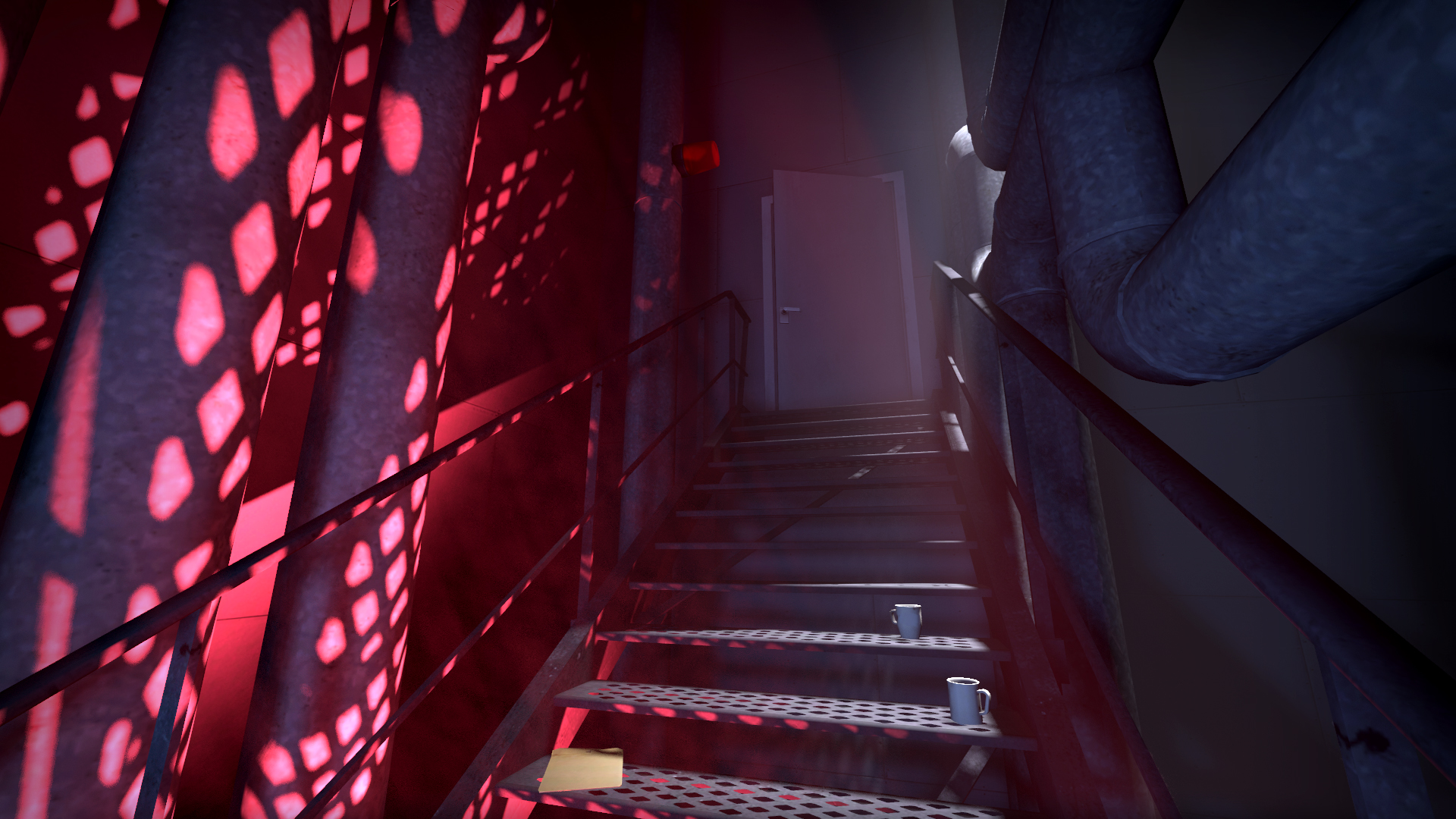
How do you expand a game whose subject is expectation? The 2022 edition’s answer was to make the expansion itself part of the joke, which is the only structurally honest option available.
It is a rare case of a game where the commercial pressure to produce more content became material rather than a compromise.
Why this matters for experimental work
Experimental games rarely start as commercial projects. They start as mods, student work, game jam entries and prototypes shown at events where the audience is other developers.
That pipeline is the actual mechanism by which new ideas reach commercial games, and it is documented on our impact page, which covers the workshop that served as one of its clearest showcases.
The counter-argument
Mods and student projects have survivorship bias attached. For every one that became a studio, a thousand were played by forty people and forgotten – and that is fine, because the cost of each one was somebody’s spare time rather than a budget.
The low cost of failure is the point. A pipeline that only produces successes is a pipeline that is not trying anything.
Where the route stands now
Harder than it was, because modern engines are less moddable than Source was, and easier than it was, because engines like Unity and Godot are free and distribution is a store page. The tools changed; the pattern did not.
What the narrator mechanic established
The idea that a game’s voice can be an antagonist rather than a guide has appeared repeatedly since, in games with no obvious relationship to this one. It is one of those ideas that seems inevitable afterwards and was not available before somebody built it.
The narrower version – a game about refusing what the game tells you – is harder to reuse, and most attempts have been imitation rather than extension.
Choice without consequence
The game has no meaningful choices in the branching-narrative sense. Every path is authored, every ending is a comment on the path, and nothing carries forward. That is the opposite of what the choice-driven games of the period were selling.
It works because the subject is the act of choosing rather than the outcome, which is a distinction most games in the space never made.
Where mods still come from
- Games that ship editing tools, which is fewer than it used to be.
- Community-built toolchains for games that do not.
- Engines that are free, which has largely replaced the mod route.
The third has done more for independent development than the first two combined, and it is why the jam route has overtaken the mod route in volume – covered in the game jams piece.
Images: The Stanley Parable store assets, Galactic Cafe and Crows Crows Crows. Official site: stanleyparable.com.