Key takeaways
- Narbacular Drop was a DigiPen student project that took an Independent Games Festival Student Showcase honour in 2006.
- Valve hired the team, which rebuilt the idea on the Source engine as Portal.
- GDC lists Portal among the games the Experimental Gameplay Workshop featured, which puts it on the same shelf as Braid and Journey.
The workshop years produced several stories like this one, and Portal’s gets told as a fairy tale: students make a clever thing, a famous studio hires them, a classic appears. The mechanics of how that actually happened are more specific and more useful.
What the student game was
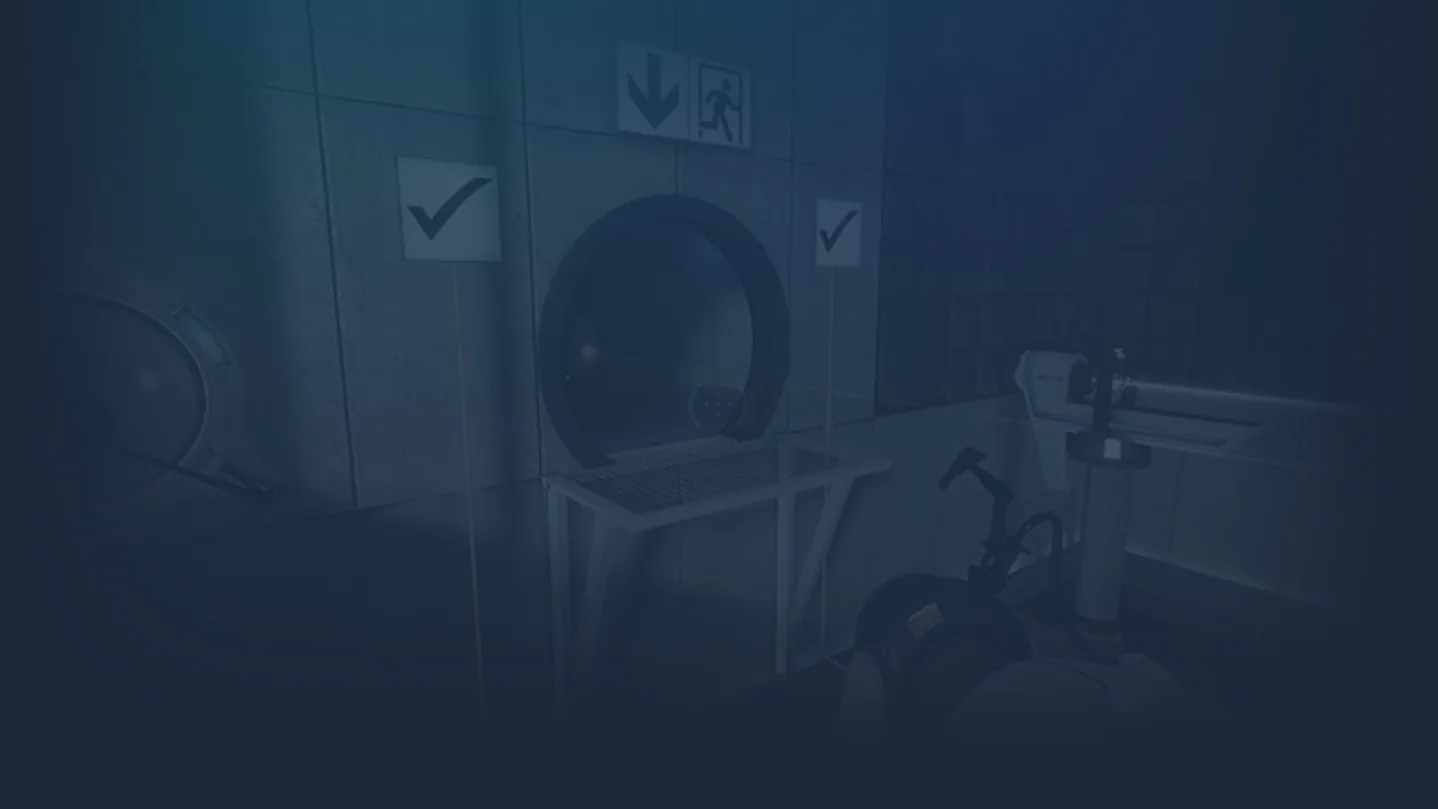
Narbacular Drop is built on one idea: two connected openings, placed on surfaces, through which momentum is preserved. Everything Portal is known for is present in embryo, without the writing, the voice, the test chamber framing or the polish.
It was shown in the circuit that existed for student work at the time, and it took a Student Showcase honour at the Independent Games Festival in 2006. That circuit – IGF, the Independent Games Summit, the experimental sessions at GDC – was the entire discovery mechanism for this kind of work before storefronts made self-publishing viable.
The hire
Valve took the whole team rather than licensing the idea, which is the part worth noticing. Buying a mechanic gets you a mechanic. Hiring the people who built it gets you the reasoning behind it, and the reasoning is what survives contact with a real production.
The team rebuilt the concept on Source, and the result shipped as part of The Orange Box in 2007.
Why the path is rarer than it looks
Several things had to align, in a way the session archive makes clear by counting the prototypes that never found a studio. The mechanic had to be legible in under a minute. It had to be something an existing engine could do better than a student engine. And it had to land in front of a studio with the appetite to absorb a team rather than a product.
Most student prototypes fail at least one of those tests, and the ones that fail are not worse games. They are simply harder to explain to someone in the thirty seconds of attention a showcase affords.
Our own view is that Portal is the most misleading success story in the prototype-to-product genre, precisely because it worked so cleanly. For every Narbacular Drop there are a dozen prototypes with equally sharp ideas that needed a studio nobody was going to build.
The pattern it set
The through line from the mid-2000s showcases is that a single readable mechanic, demonstrated live, was worth more than a design document. The same conditions produced Braid and flOw in the same period.
Line-ups from the workshop’s later years are preserved in the archive on this domain.
What Valve added
The mechanic arrived intact. What the finished game added was framing: test chambers that teach one idea at a time, a voice that fills the silence, and a structure that turns a physics toy into a story about being tested.
That framing is the part students usually cannot build, and not because of talent. It requires writing, voice work, level design iteration and a schedule measured in years. The prototype proved the mechanic was worth that investment, which is the only question a prototype can answer.
The DigiPen pipeline
DigiPen student projects have a specific character: they are usually built on custom engines, scoped to a single mechanic, and finished. The school’s structure forces completion, and a finished small thing is far more useful to a studio evaluating a team than an ambitious unfinished one.
That is the transferable lesson. The team was hired on evidence that they could ship, not on evidence that they could imagine.
What a student team should take from this
Three things. Build one mechanic that reads in thirty seconds, because thirty seconds is what you will get. Finish it, even at small scale, because unfinished work cannot be evaluated. And show it in the places where people who hire are actually looking – which in this period meant festivals and conference sessions, and now means storefronts, jams and public video.
What has not changed is the underlying test. Can a stranger understand what is interesting about this without you standing next to them explaining it?
Where it sits in the workshop’s history
GDC’s own retrospective lists Portal among the games the session featured, alongside Braid and Journey. Whatever the exact route each of those took through the conference, the pattern is the same: an idea small enough to demonstrate, shown before anyone knew what the finished game would be. The archive of later sessions on this domain is full of the same shape, and most of them did not end at a Valve office.
Images: Valve, via the Portal Steam store page; conference photography via Wikimedia Commons (CC BY).