Terralith 2.6.3 shipped on 2 July 2026 with 26.2 support and three additions that read like a direct response to the drop: geysers in Yellowstone, Cinnabar in Stony Spires, and Tuff in Sulfur Caves.
What that list tells you
All three are Terralith biomes absorbing vanilla’s new materials. Chaos Cubed added sulfur and cinnabar; two weeks later the largest worldgen datapack in the game had placed both into biomes it invented years earlier.
That is the interesting part. A worldgen mod that ignores new vanilla materials ends up with a world where the new content only exists in the parts the mod did not touch – which in Terralith’s case is not much.
Geysers, specifically
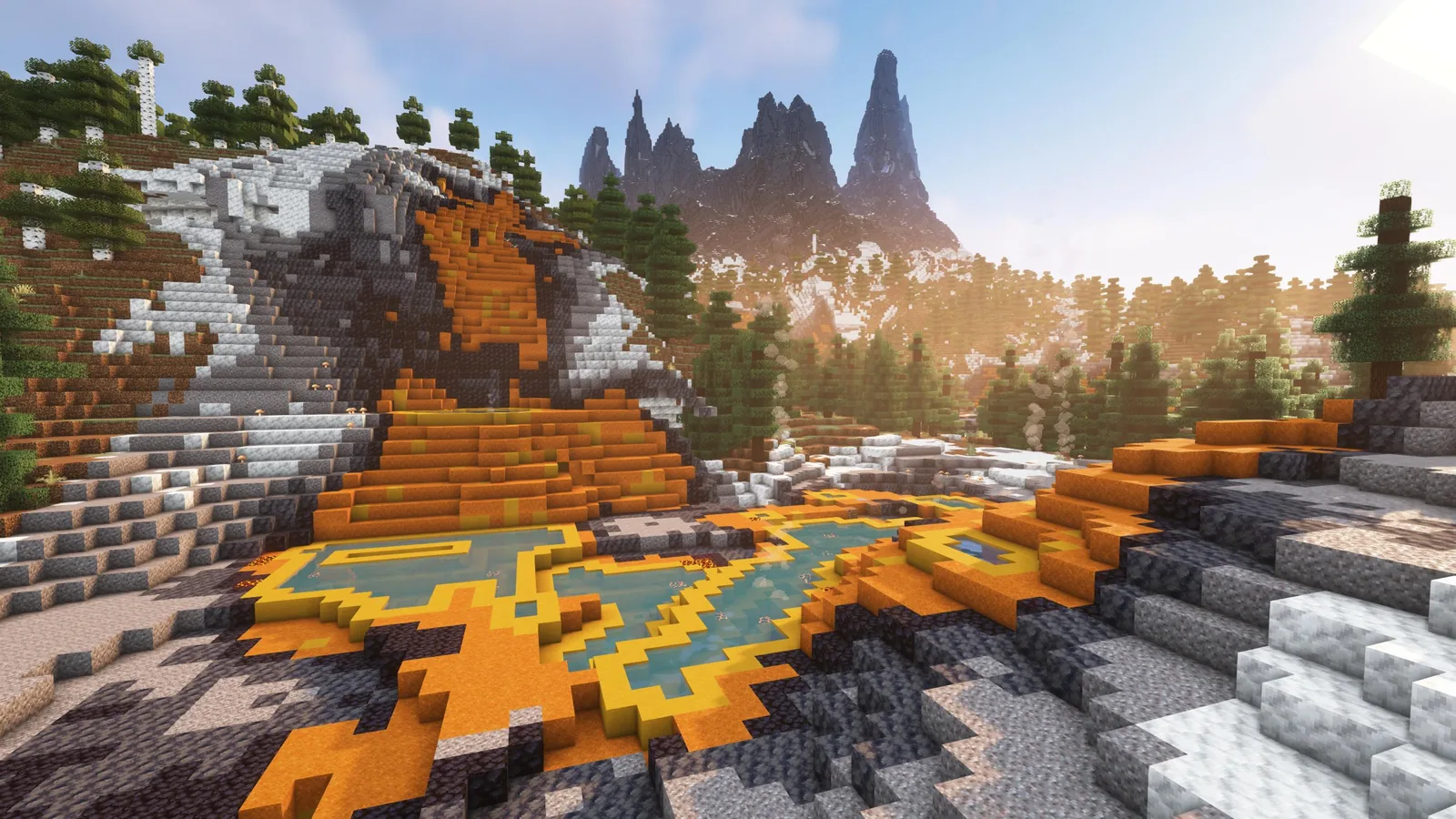
Yellowstone has been in Terralith for a long time as a visual biome without much to do in it. Geysers give it a feature rather than a colour scheme, which is the difference between a biome you screenshot and a biome you remember.
Terralith against Tectonic
These two get compared constantly and they are not competitors in the way people assume – one rebuilds the biome layer, the other rebuilds terrain shape. Running both is common and produces a world neither would alone.
The comparison in full is the piece to read before choosing, because picking on screenshots leads people to install the one that does not solve their complaint.
The layer question
Anything that changes which biome goes where is operating on the same layer as vanilla’s climate grid, and two mods on that layer will fight. Anything that changes terrain height is on a different layer and generally will not.
Knowing which layer a mod touches is most of what you need to predict whether a combination works, and what changes when you replace the biome layer takes that apart properly.
Version notes
- 2.6.3, 2 July 2026 – 26.2 support, geysers, cinnabar, tuff.
- 2.6.4, 8 July 2026 – fixed a critical issue where sulfur caves and the cave distribution rework did not apply when Lithostitched was installed.
If you installed 2.6.3 in that six-day window with Lithostitched present, the cave changes silently did nothing. Updating fixes it for newly generated chunks only – already-generated terrain keeps whatever it got.
Adding it to an existing world
Possible, with the usual caveat: new biomes appear only in chunks that have never loaded, and the seam between old and new terrain can be abrupt. Travelling a few thousand blocks before judging it is the standard advice.
What Terralith is, for anyone new to it
A datapack rather than a mod – it changes worldgen using Minecraft’s own data formats, which is why it runs on servers without client installs and why it works on both loaders. It adds around a hundred biomes and rebuilds cave generation.
Being a datapack is its defining constraint and its defining advantage. It cannot add blocks or mobs, so everything it does is arrangement, and arrangement turns out to be most of what makes a world feel different.
Biomes that get talked about
- Yellowstone, now with geysers.
- Stony Spires, now carrying cinnabar.
- Sulfur Caves, now with tuff.
- Amethyst Rainforest, Moonlight Valley, Skylands – the ones that appear in every screenshot thread.
The named biomes are what people install it for. The cave rework is what changes how the world actually plays, and it gets a fraction of the attention.
Server considerations
Terralith increases worldgen cost because there is more to decide per chunk. On a server this shows up as slower chunk generation during exploration rather than as a permanent tax – once terrain exists, it costs nothing extra.
Pregenerating the area around spawn is the standard mitigation and takes an afternoon of server time you were not using anyway.
Combining with vanilla content
The sulfur and cinnabar placements are the point of this release: vanilla added materials, and the datapack made sure they exist inside biomes vanilla does not know about. Without that work, a Terralith world would have large regions where the new drop’s materials simply do not generate.
That is a maintenance burden that recurs every drop, and it is the main reason worldgen datapacks fall behind and get abandoned.
Version notes
2.6.3 supports 26.2. The datapack form means one download works for Fabric, NeoForge and vanilla servers alike, which is unusual and is one of the reasons it has the reach it does.
A closing thought on datapack worldgen. Working inside Minecraft’s own data formats is a hard constraint – no new blocks, no new mobs, no code – and the results are consistently more interesting than that limitation suggests. Everything Terralith does is rearrangement of things the game already has, and it produces a world most players describe as unrecognisable. There is a lesson in that about how much of a game’s feel comes from arrangement rather than from content.
Images: Terralith project gallery on Modrinth.