Key takeaways
- A vanilla-style pack that swaps flat faces for real 3D models on decorative blocks
- Randomised bookshelves, ores and crops mean repeated blocks stop looking tiled
- Runs on Fabric with Sodium and Iris; a few features such as the trident model need OptiFine or EMF
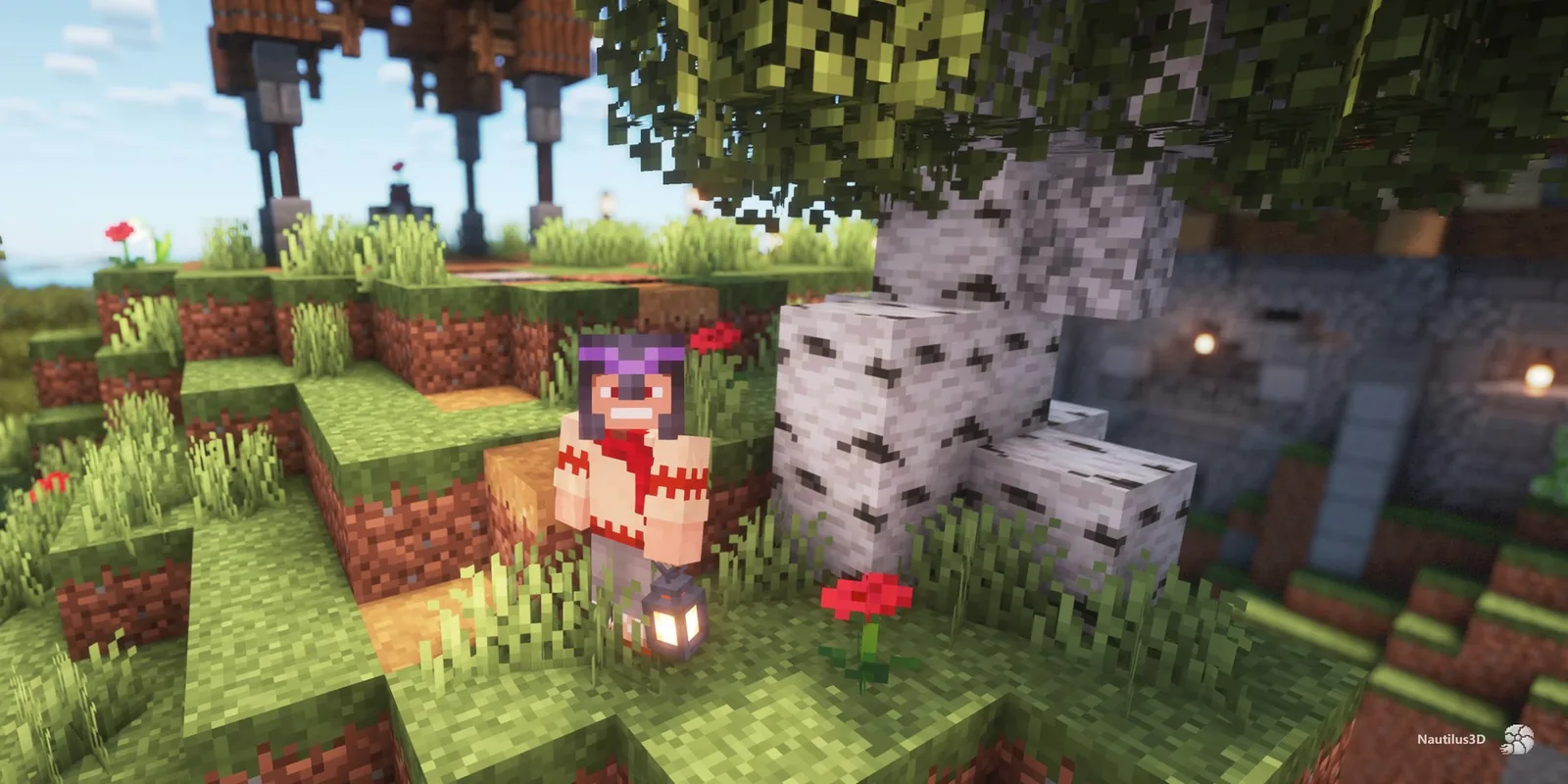
There are two ways to make Minecraft look better with a resource pack. The common one is to raise the texture resolution. The other, much harder one is to leave the textures alone and change the geometry, and that is what Nautilus 3D does. Leaves become bushy volumes instead of flat planes, ore crystals stick out of the stone, rails sit on modelled sleepers, and the stonecutter’s blade actually moves.
The result is a pack that does not look like a pack. Nothing here reads as a different art style – it reads as Minecraft with the geometry it always implied. That is a narrow target to hit and the reason Nautilus 3D has built a following well beyond its download count.
The randomisation is the headline feature
The most valuable thing in this pack is not the 3D at all. It is block randomisation. Bookshelves, chiselled bookshelves, ores and crops all get multiple variants, chosen per block position, so a wall of bookshelves stops being the same image repeated forty times.
Anyone who has built a library knows exactly how much this matters. Vanilla’s tiling is the single biggest thing that makes large flat surfaces look artificial, and randomisation fixes it without you changing anything about how you build. The crafting table gets semi-random treatment too, which is a small thing you will notice every time you place more than one.
What gets a model
- Leaves – full bushy volumes rather than flat cross-planes
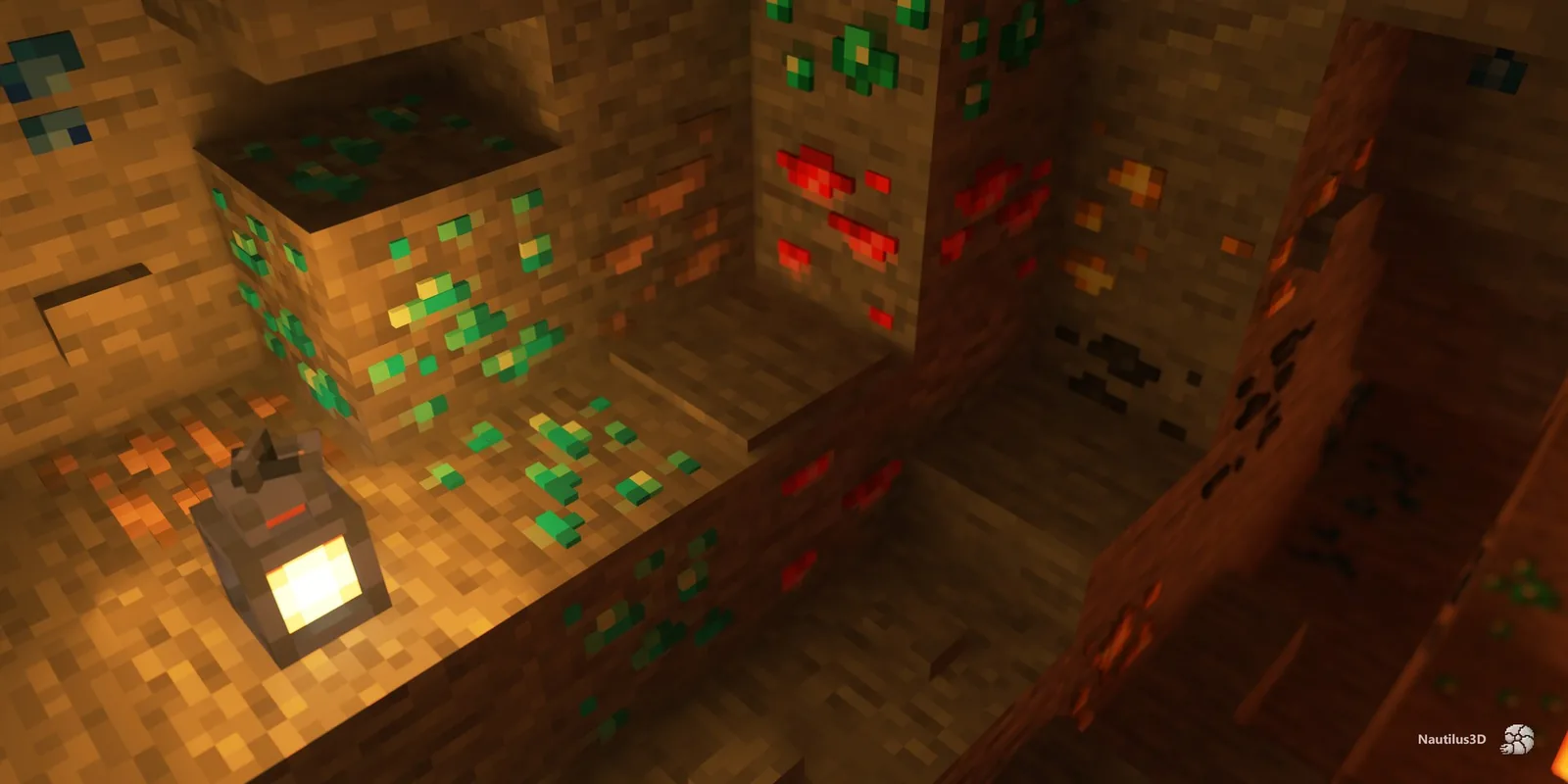
- Ores – crystals and mineral clusters that protrude from the block face
- Rails – raised sleepers and proper metal profiles
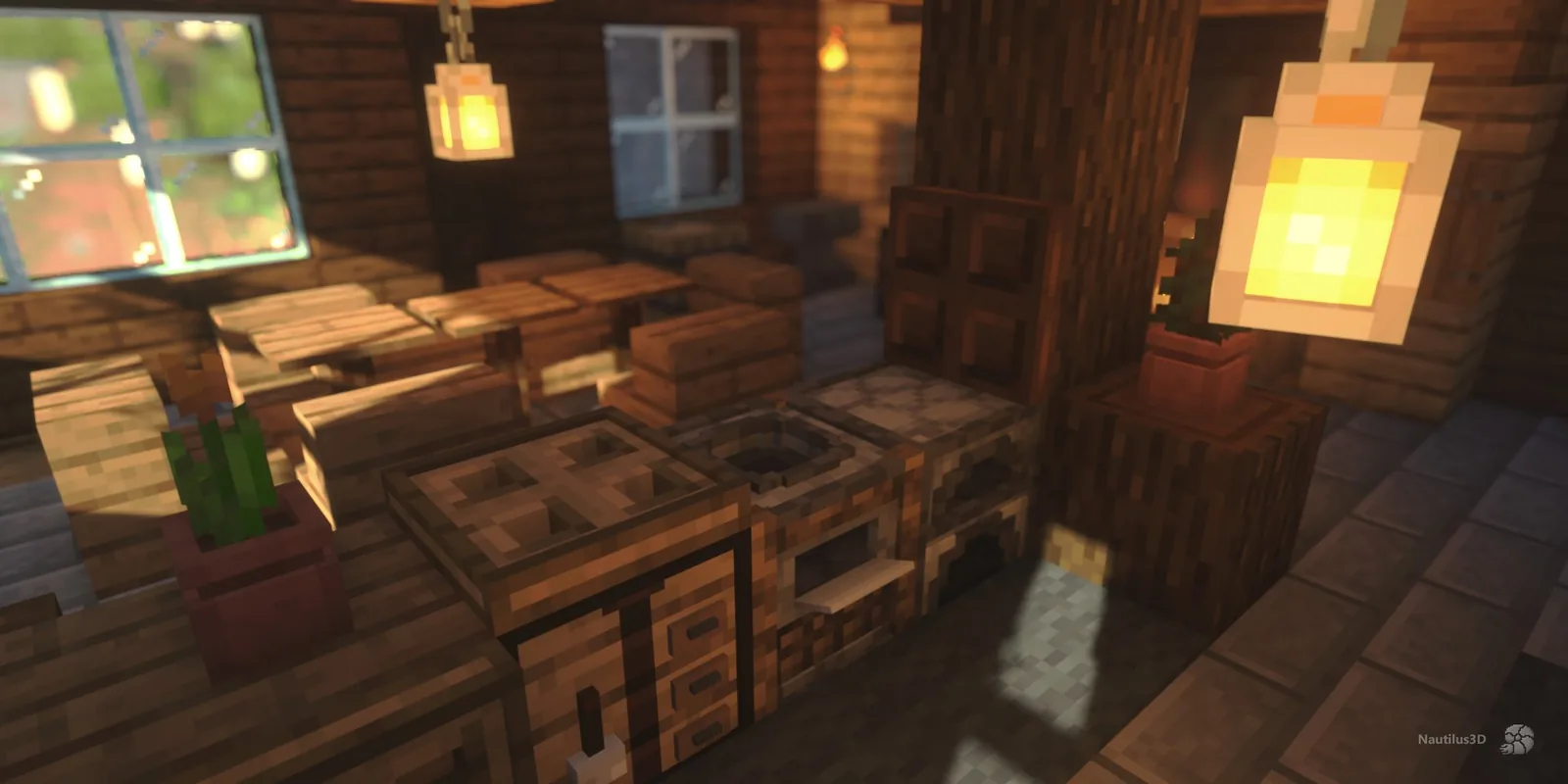
- Doors and trapdoors – panelled, with real depth
- Lanterns, chains and decorative blocks across the board
- An animated 3D stonecutter with a moving blade
- A hand-modelled trident, which requires OptiFine or EMF
The selection is deliberate. Nautilus 3D concentrates on decorative and structural blocks – the ones you look at while building – and leaves the rest close to vanilla. That keeps the pack’s performance cost proportional to what it actually improves.
The GUI and menu work
Less discussed but worth mentioning: the pack includes a themed main menu, a reworked hotbar and cleaner icons. It is a small thing, but it means the pack feels finished rather than like a bag of block models. If you have ever installed a 3D pack and been jarred by the untouched vanilla interface around it, this is the difference.
Compatibility, honestly
The recommended setup is Fabric with Sodium and Iris, and that is not a hedge – it is where the pack is tested. Our Sodium review covers why that is the default modern stack, and the Iris installation guide gets the shader side running.
Forge and OptiFine work, with caveats. OptiFine has fallen behind on recent versions and some features may misbehave, though a handful of them – the trident hand model in particular – specifically need it or an equivalent. On Fabric, the alternatives are Entity Model Features for custom entity models, Entity Texture Features for item textures, and Continuity for connected textures.
The pack also uses a configuration mod to expose its own options rather than shipping separate editions for every combination of features. That is a better approach than the usual maze of optional add-on zips, and it means you can turn off anything you dislike from inside the game.
Performance
3D models are not free. Every leaf block that becomes a volume adds geometry the renderer has to handle, and on a large forest render distance that adds up. The pack is optimised for this – the author names optimisation as an explicit goal – but if you are already at the edge of playable frame rate, this is not the pack to add. Pair it with performance mods first; our list of performance mods worth installing covers the ones that buy you the headroom.
Who this is for
Builders and decorators, clearly. The blocks that gain the most are the ones you place deliberately – bookshelves, lanterns, doors, rails, crops. If your play is mostly caving, combat or redstone, you will see the ore models and little else, and the frame rate cost will not be worth it.
It is also a good pack for people who have tried 3D packs before and bounced off them. Most of that category goes too far, turning Minecraft into something that no longer reads as Minecraft. Nautilus 3D is restrained enough that after an hour you stop noticing it, which is the highest compliment a vanilla-style pack can get.
Verdict
Nautilus 3D is the best-judged 3D pack currently available, mostly because it understands that randomisation matters more than polygon count. Install it if you build. Skip it if your frame rate is already tight, and come back after you have the performance stack sorted.
Source
Images and pack details from the Nautilus 3D page on Modrinth.