Most structure problems are not “there are not enough structures”. They are “there are too many of this one”, or “this mod’s structures keep landing on top of that mod’s”, or “I do not want ancient cities in this world at all”.
Structurify is the mod for that. It reached 26.3 on 22 September.
What it does
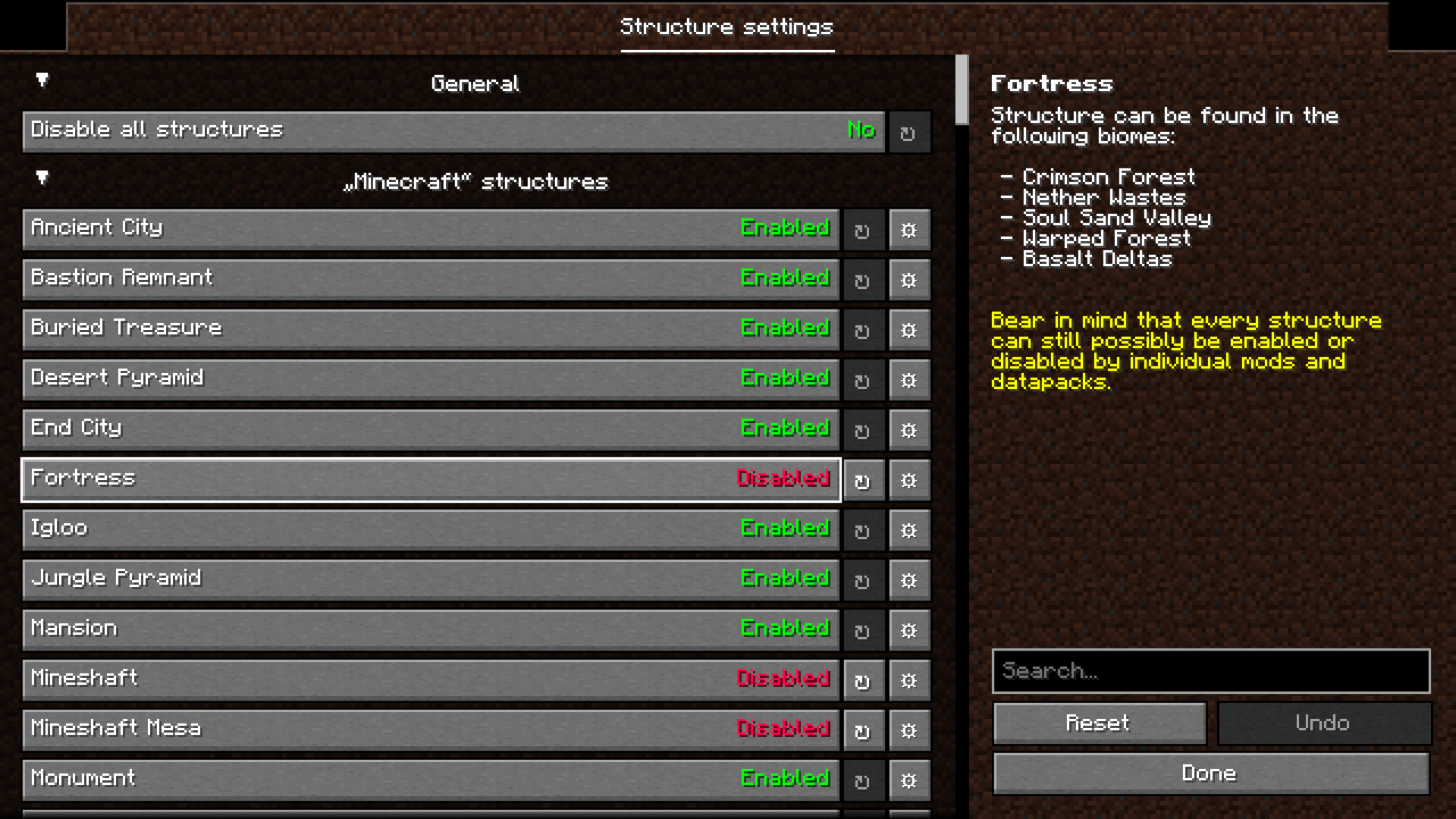
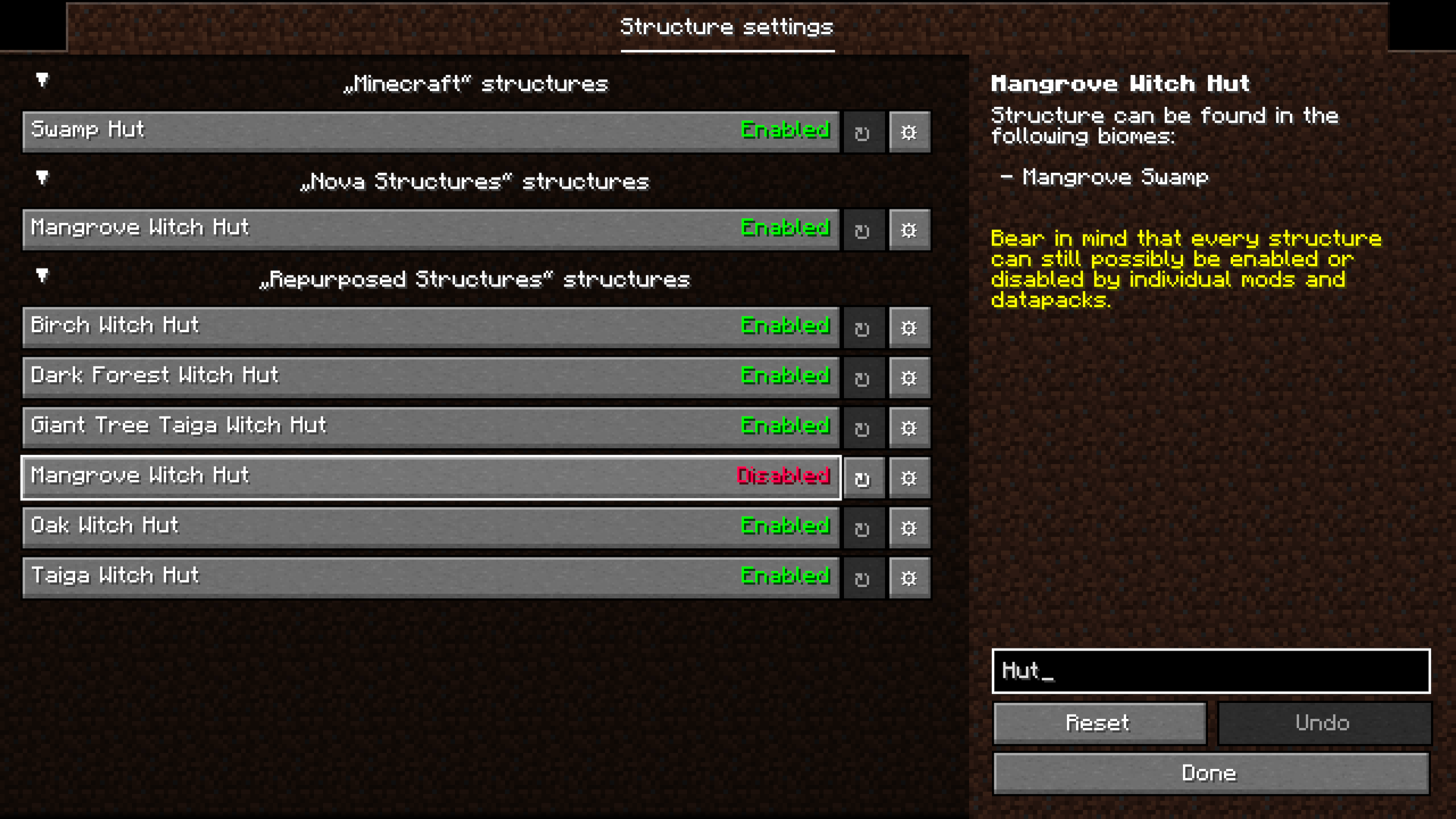
It exposes structure generation as a configuration surface. Every structure the game knows about – vanilla and modded – can be disabled, and its spawn frequency and separation adjusted, from one place.
That is the whole mod, and the value is in the “modded” part. A structure pack’s own config handles its own structures. Structurify handles all of them at once, which is what you need when the problem is three mods interacting rather than one mod misbehaving.
It also means you can tune vanilla generation, which vanilla gives you no way to do short of writing a datapack.
The problems it actually solves
Overcrowding. Install two structure packs and the overworld fills. Turning down frequency across the board restores the scarcity that makes finding something matter – the trade discussed in the Repurposed Structures piece.
Structures you do not want. Some structures are disliked for specific reasons – a trial chamber in a world built around exploration, an ancient city under a base site. One toggle removes it.
Collisions. Two packs placing structures in the same biome at the same frequency produce overlaps. Adjusting separation on one of them fixes it without removing either.
Themed worlds. Disabling everything except a chosen set is the fastest way to build a world with a consistent character, and it needs no datapack knowledge.
When the setting applies
The same rule as every worldgen change: on chunk generation. Adjusting frequency does nothing to terrain you have already loaded.
That makes Structurify a world-creation tool more than a live one. Decide the configuration before you start, or accept that changes only take effect where you have not been – the constraint covered in adding worldgen mods to an existing world.
Disabling a structure does not remove instances that already generated. They stay where they are.
Loaders and requirements
Fabric, NeoForge, Forge and Quilt. Both client and server are listed as required, which is worth noting – unlike most worldgen configuration mods, this one is not server-side only.
Version 2.0.40 on 22 September, with a changelog fixing a StructureManager mixin crash. A mod that hooks structure loading via mixin is one where a crash fix is the expected shape of a release, and a version that lands the same week as a game version is doing well.
Around 3.05 million downloads and 520 followers. Licence is CC BY-NC-ND, so modpack redistribution needs care – no derivatives, non-commercial.
How this compares to doing it yourself
Everything Structurify does can be done with a datapack. Structure sets are data files, frequency and separation are fields in them, and a determined person can write the JSON.
Two reasons not to. Writing structure set overrides for modded structures means knowing every mod’s identifiers, and the format changes between versions – 26.4’s snapshot already adjusted placement validation and cuboid semantics, which is exactly the kind of change that breaks a hand-written pack.
A mod absorbs that maintenance. A datapack you wrote does not.
Who should install it
Anyone running more than one structure mod, anyone starting a themed world, and anyone who has looked at a map and thought there was too much on it.
Skip it on a vanilla or lightly modded world where generation is already sparse – there is nothing to tune, and it is one more required mod on both sides. The structure generation explainer covers what the underlying system is doing if you want to understand the numbers before changing them.
Reading a structure config
Two numbers control how often a structure appears, and they work together in a way that is not obvious.
Spacing is the average distance in chunks between attempts. Separation is the minimum distance between them. Separation must be lower than spacing, and the closer the two numbers are, the more evenly spread the structures become.
So raising spacing makes a structure rarer, and raising separation toward spacing makes what remains more regularly distributed rather than clumped. Most people only change the first and wonder why the results still cluster.
The practical starting point is to change one structure, generate a fresh world, fly around, and adjust. Reasoning about the numbers is slower than looking.
Where this fits in a modpack
Pack authors are the audience this mod was really built for. A pack with four content mods has four structure sets that were each balanced in isolation, and nobody balanced them together.
One config that thins everything by a consistent factor is a far smaller job than editing four mods’ settings and keeping them in sync through updates. It is also the only way to tune the vanilla structures alongside the modded ones.
Images: Structurify – Structure Control project gallery.