Minecraft has weather and it has biomes, and between them it has no sense that time is passing. A spruce forest looks the same in your first hour and your five hundredth. Serene Seasons changes that, and the 26.3 build went out on 21 September.
What it does
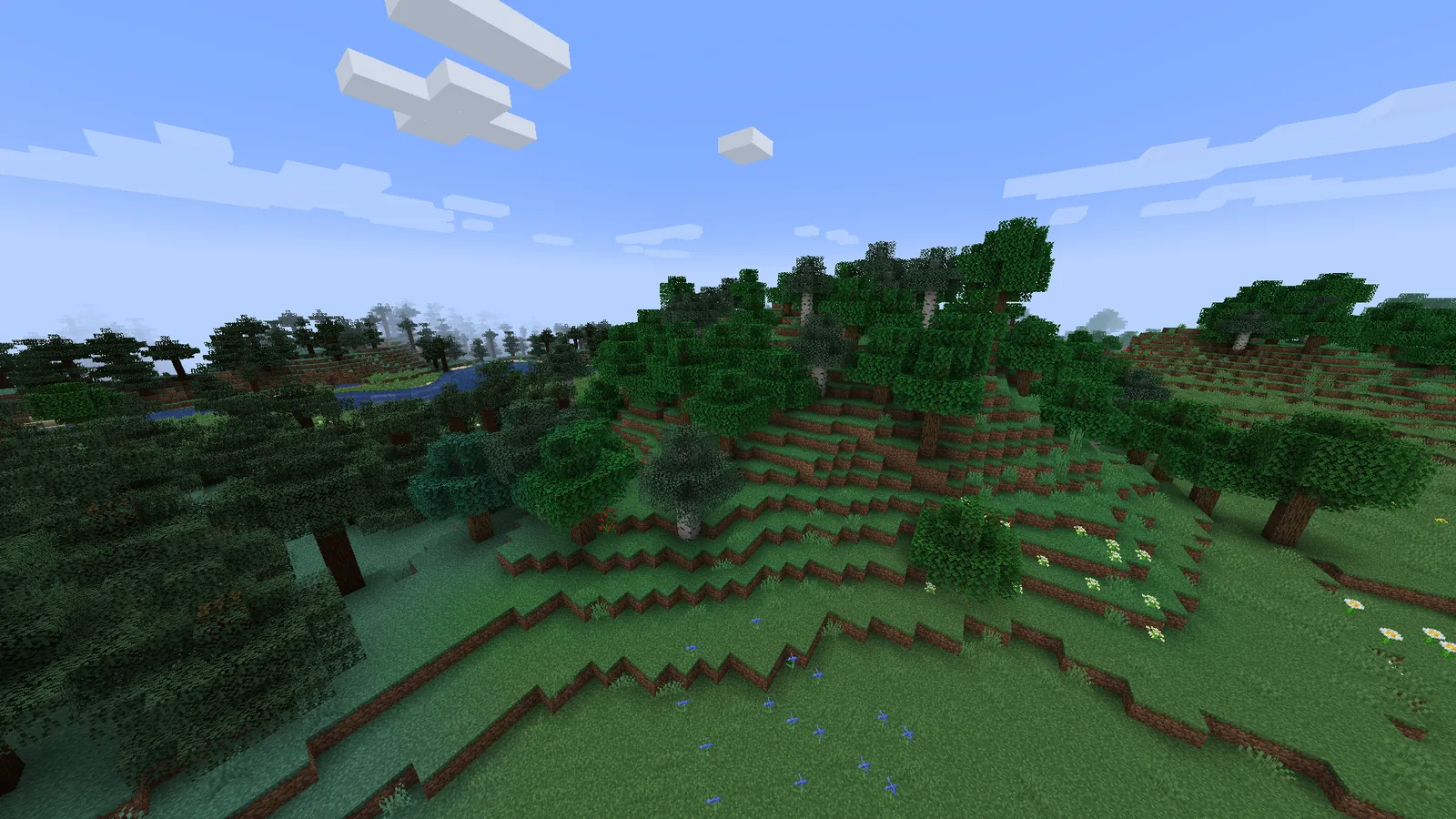
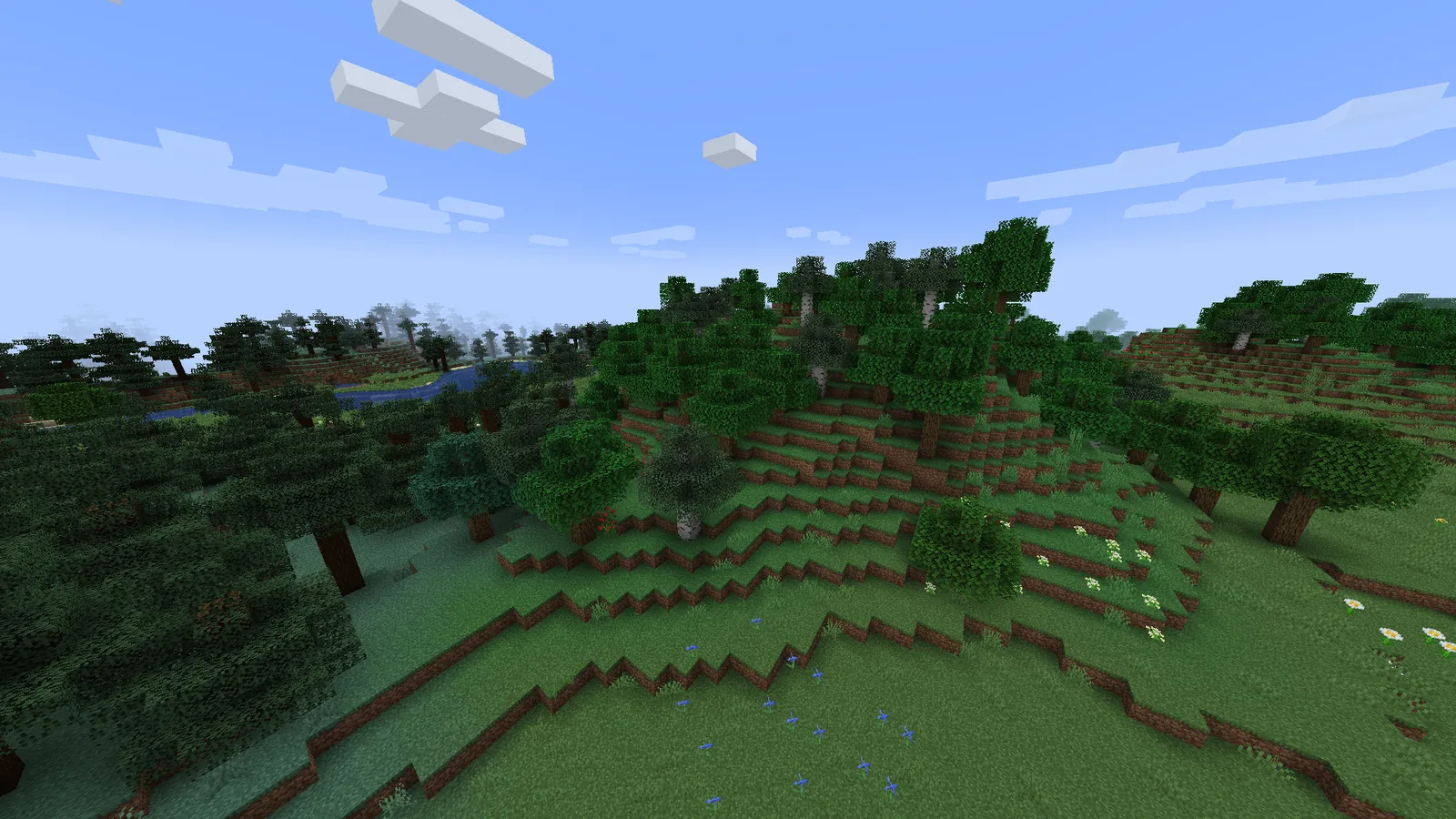
A year, divided into seasons, with three sub-seasons each. Grass and foliage colours shift through it. Temperatures move, so biomes that never see snow get it in winter. Weather patterns change with the season.
And crops respond. That is the part that turns it from a visual mod into a gameplay one – planting at the wrong time of year produces nothing, and a farm that ran year-round now has an off-season.
The colour shift is the thing people install it for and the crop behaviour is the thing that changes how they play.
The crop system is the real mechanic
Each crop has seasons in which it grows well, seasons in which it grows slowly, and seasons in which it does not grow at all. A survival world with Serene Seasons installed has to think about storage in a way vanilla never asks for.
That is a genuine addition rather than a restriction, because it gives a reason to do something vanilla gives no reason for: keeping a full granary. In vanilla, surplus wheat is surplus. Here it is the thing that gets you through winter.
It also interacts directly with the vanilla growth mechanics rather than replacing them – light, hydration and layout still matter exactly as the growth formula describes, with a seasonal multiplier on top.
Winter, and the thing nobody expects
Temperature shifts mean snow falls in biomes that do not normally get it. A plains base looks completely different in winter, and water freezes in places you were relying on it not to.
That last part catches people. A farm irrigated by an exposed water source stops being irrigated when the source freezes over, and an open-air water elevator stops working. Covering water is a thing you learn to do in the first winter.
Ice also means terrain you crossed in autumn is walkable differently in winter, which is a small thing that makes travel feel seasonal rather than just look it.
Configuration, and the length of a year
Season length is configurable, which is the first setting to change and the one that decides whether the mod is interesting or tedious.
Too short and seasons become a strobing colour effect with no consequence. Too long and a single winter outlasts your interest in the world. The default is a reasonable starting point and it is worth adjusting after one full cycle rather than before.
Crop rules, temperature effects and whether seasons apply in other dimensions are all adjustable. A server that wants the visuals without the farming consequences can have exactly that.
Requirements and compatibility
It requires GlitchCore, the same Glitchfiend library that reached 26.3 on 20 September. That dependency is why the 26.3 build arrived when it did rather than earlier.
Client and server are both required, so everyone on a server needs it. That is unavoidable – seasonal colour is rendered client-side and crop behaviour is server-side, and the two have to agree.
It works alongside biome mods rather than against them, which is the usual concern with anything touching foliage colour. Glitchfiend also maintain Biomes O’ Plenty, and the two are designed to coexist.
Licence is all rights reserved, so modpack inclusion needs permission.
The 26.3 build
Tagged beta, versioned oddly – the file carries a 26.1.2 prefix with a changelog that simply says updated to Minecraft 26.3. Version string aside, it is a fresh build for the current game.
Beta on a mod that changes crop growth and block temperature is worth respecting. The failure mode is a farm that stops producing for a reason you cannot diagnose, which looks identical to a mod bug and to correct seasonal behaviour.
Who it is for
Install it if your world has reached the stage where nothing changes – where the base is built, the farms run and each session looks like the last. Seasons are the cheapest way to make a long-running world feel like it has a clock.
Skip it if you play in short bursts across many worlds, where a season length long enough to matter will never complete, or if you want the world to be predictable. For terrain that changes rather than colour that changes, a worldgen overhaul is the different answer to the same boredom.
The first winter, as a checklist
Most of what Serene Seasons breaks on an established base breaks once, in the first winter, and all of it is preventable.
- Cover exposed water. Farm irrigation, water elevators and decorative pools all freeze. A block or a slab above the surface prevents it.
- Stockpile before autumn ends. A granary is not decoration here. Work out roughly what you eat per in-game year and keep more than that.
- Check which crops suit which season before planting a large field, rather than after it produces nothing.
- Expect your base to look different. A palette chosen against green grass reads differently against snow, which is worth knowing before you conclude the mod ruined your build.
Point four is not a problem to solve. A build that looks good in two seasons and interesting in the other two is a better build than one tuned for a single unchanging backdrop.
Greenhouses, and the obvious workaround
The crop restrictions are configurable, and there is also an in-world answer: the mod’s rules are about the season and the location, so growing indoors under controlled conditions is the natural response.
That gives a survival world a reason to build something it otherwise never needs – a heated, enclosed growing space, which is a genuinely interesting building brief and one vanilla provides no motivation for. It is the clearest example of the mod adding a problem worth solving rather than simply adding an obstacle.
Images: Serene Seasons project gallery.