Key takeaways
- Swamp huts generate only in swamp biomes, always on stilts over water, and always with a cauldron, crafting table and the witch already inside.
- The hut’s value is the permanent witch spawn inside its bounding box, which makes it the cheapest redstone-free source of redstone, glowstone dust and sugar.
- A good swamp spawn is judged on the hut plus a nearby village or mangrove swamp, not on the hut alone.
Swamp huts are one of the few structures in Minecraft that come with their own mob, their own loot source and their own farm potential in a single three-by-five footprint. They are also one of the least used, because most players find one, kill the witch, take the cauldron and leave.
That is a mistake. The hut’s bounding box keeps spawning witches regardless of light level, which makes it a renewable resource you can build around in the first hour of a world. This is a guide to what makes a swamp spawn worth keeping, how to find a hut in a world you already play, and what to do with one once you have it.
What a swamp hut actually contains
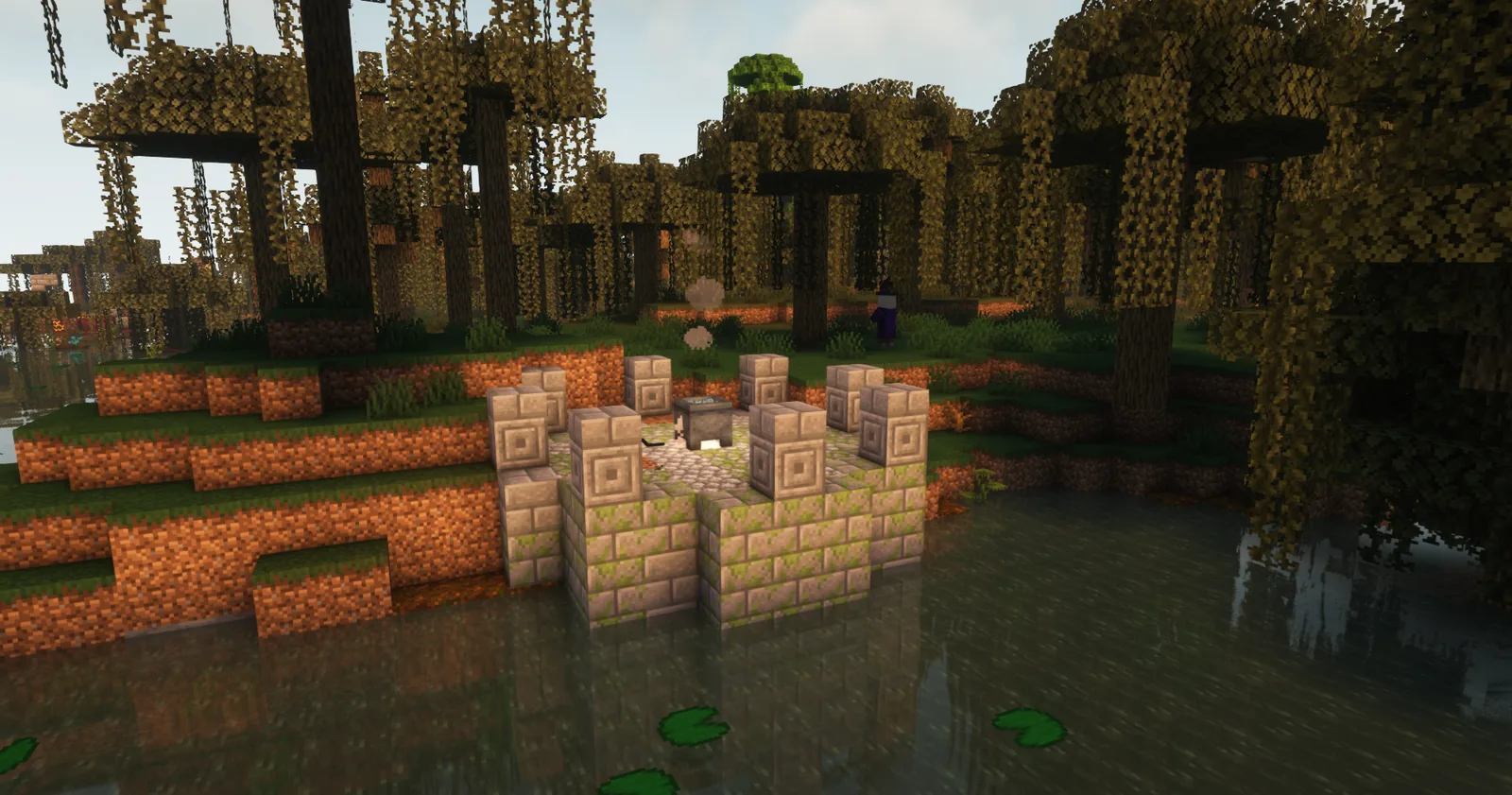
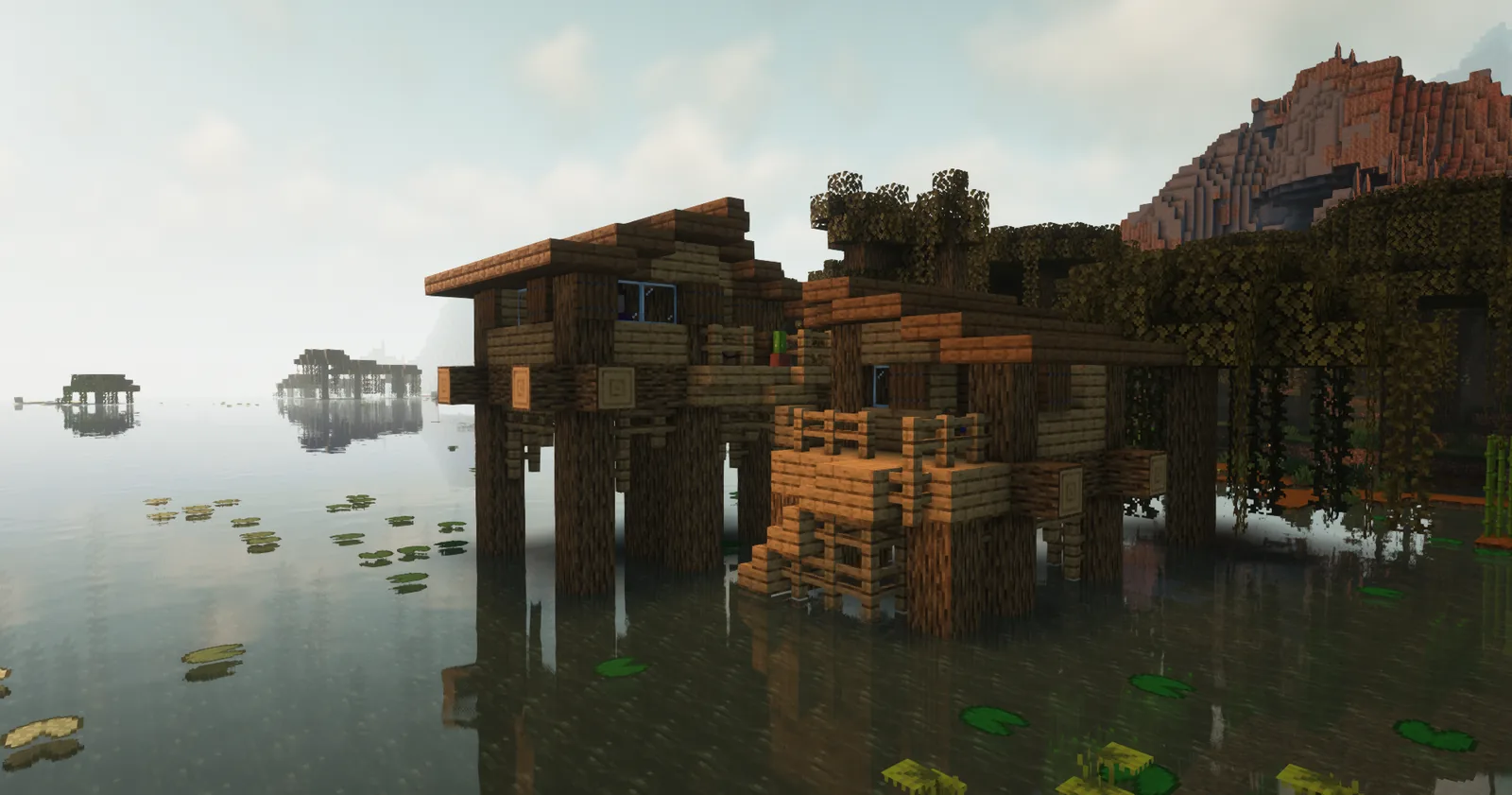
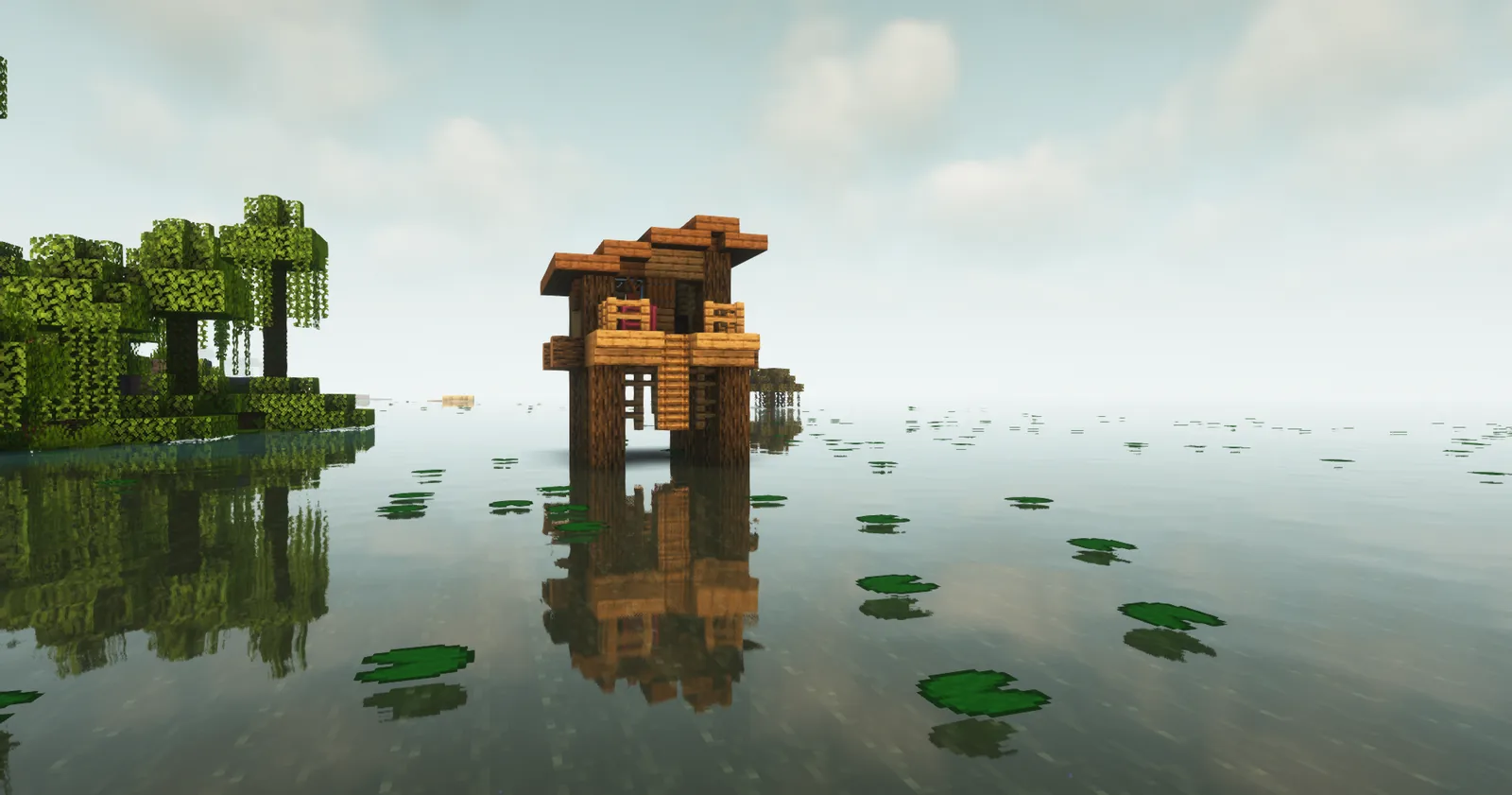
The structure itself is minimal. A dark oak platform on stilts over water, a sloped roof, an open interior, and three fixed contents:
- A cauldron, usually empty.
- A crafting table.
- A flower pot with a red mushroom.
There is no chest. The hut has no generated loot at all, which is why a lot of players write it off on first contact. The value is the witch, not the furniture.
A witch spawns with the structure, and a black cat spawns alongside it. The cat is the only guaranteed black cat spawn in the game outside of a Halloween date check, which matters if you want one specifically.
Why the hut keeps producing
The hut’s structure bounding box allows witch spawning at any light level, on any block, inside that volume. This is the same mechanic that makes nether fortresses produce blazes and ocean monuments produce guardians – the structure overrides the normal spawn rules within its own bounds.
Practically that means you can light the entire hut, place slabs on every surface, and witches will still spawn. You cannot spawn-proof it, which is a problem if you build next to one and an opportunity if you build around one. Our spawn-proofing guide covers why the normal rules do not apply here.
Witch drops are the reason to care:
- Redstone dust, in quantity, with no mining.
- Glowstone dust, which is otherwise a Nether trip.
- Sugar, gunpowder, glass bottles, sticks and spider eyes.
Redstone and glowstone dust without mining or a Nether trip is a genuinely significant early-game shortcut. Our redstone basics guide covers what you can build once redstone stops being a bottleneck.
What to look for in a swamp spawn
Rank these when judging a world.
A hut within 200 blocks of a workable base site. Close enough to use, far enough that witches are not wandering into your build. Witches throw potions and they will path towards you, so adjacency is not the goal.
Mangrove swamp nearby. Mangrove swamps are a separate biome from ordinary swamp and huts do not generate in them, but the adjacency is valuable – mangrove wood, mud, and frogs, and mud is one of the better building materials added in recent years.
A village in reach. Swamp biomes have no village variant, so a village means a different biome within travel distance. That solves food, which is swamp’s main weakness. Our village finding guide covers the search.
Shallow water around the hut. Huts generate over water, and the depth varies. Shallow water means you can build a platform under the hut without an enormous amount of material, which is what you need for a collection system.
Clay and lily pads. Swamps are the best clay source in the game and the only lily pad source. Both are easy to overlook until you need a few hundred of either.
How to find a hut in an existing world
The honest answer is that swamp huts are found by exploring swamps, not by any clever technique. There is no locator item, no sound cue and no map marker. But swamps themselves are findable, and the huts are dense enough inside them that finding the biome is most of the job.
What works:
- Fly the biome, not the world. Once you are in a swamp, the hut is likely within a few hundred blocks. The search problem is finding swamp, not finding the hut.
- Look at night. The hut is dark oak over dark water and almost invisible by day from altitude. At night the witch’s own movement and the cat’s eyes are often the first thing you see.
- Follow the water edges. Huts generate over water, so the shoreline strips inside a swamp are where to look, not the dry patches.
- Use a long render distance. A hut is a small structure and default render distance will take you past one. Our LOD rendering review covers what that costs.
Building a witch farm around one
The basic design is simple enough to build in survival without a schematic. Light the entire swamp around the hut so that ordinary hostile mobs cannot spawn and compete for the mob cap, then build a platform under the hut with water channels that push witches into a kill area.
Three things to get right:
- Spawn-proof everything except the hut. The hut will keep spawning witches regardless. Everything else should be lit or slabbed so the mob cap is not full of zombies.
- Do not break the hut. The spawning is tied to the structure bounding box, which is set at world generation. Breaking blocks inside it does not remove the bounding box, but rebuilding the hut elsewhere does not create one either.
- Plan for potions. Witches drink healing and fire resistance potions when damaged, so fall damage and drowning are more reliable than fire. Our raid guide covers the same problem in a different context.
The realistic verdict
A swamp hut is not worth rerolling a world for on its own. It is worth keeping a world for when it comes with a village in travel distance and a mangrove swamp next door, because that combination gives you food, wood, clay, mud, and a renewable redstone source inside the first few hundred blocks.
If you are generating a new world specifically for this, generate normally rather than reaching for large biomes. Large biomes makes swamps bigger, which makes the hut harder to find inside them, not easier. Our world creation options guide covers what each setting actually changes about structure density and spacing.
Images: YUNG’s Better Witch Huts project gallery.