Key takeaways
- 26.4 Snapshot 2 landed on 29 September with sky and cloud rendering blended into the terrain fog, so the horizon no longer has a visible seam.
- A new sky occluder hides the sun, moon and stars behind the bottom half of the skybox in the Overworld.
- Both are tied to the “Improved Transparency” video setting, and both are exposed to data packs through a new environment attribute.
Minecraft’s horizon has always had a tell. Terrain fades into fog, the sky does not, and at the boundary between them there is a line where one stops and the other starts. Snapshot 2 removes it.
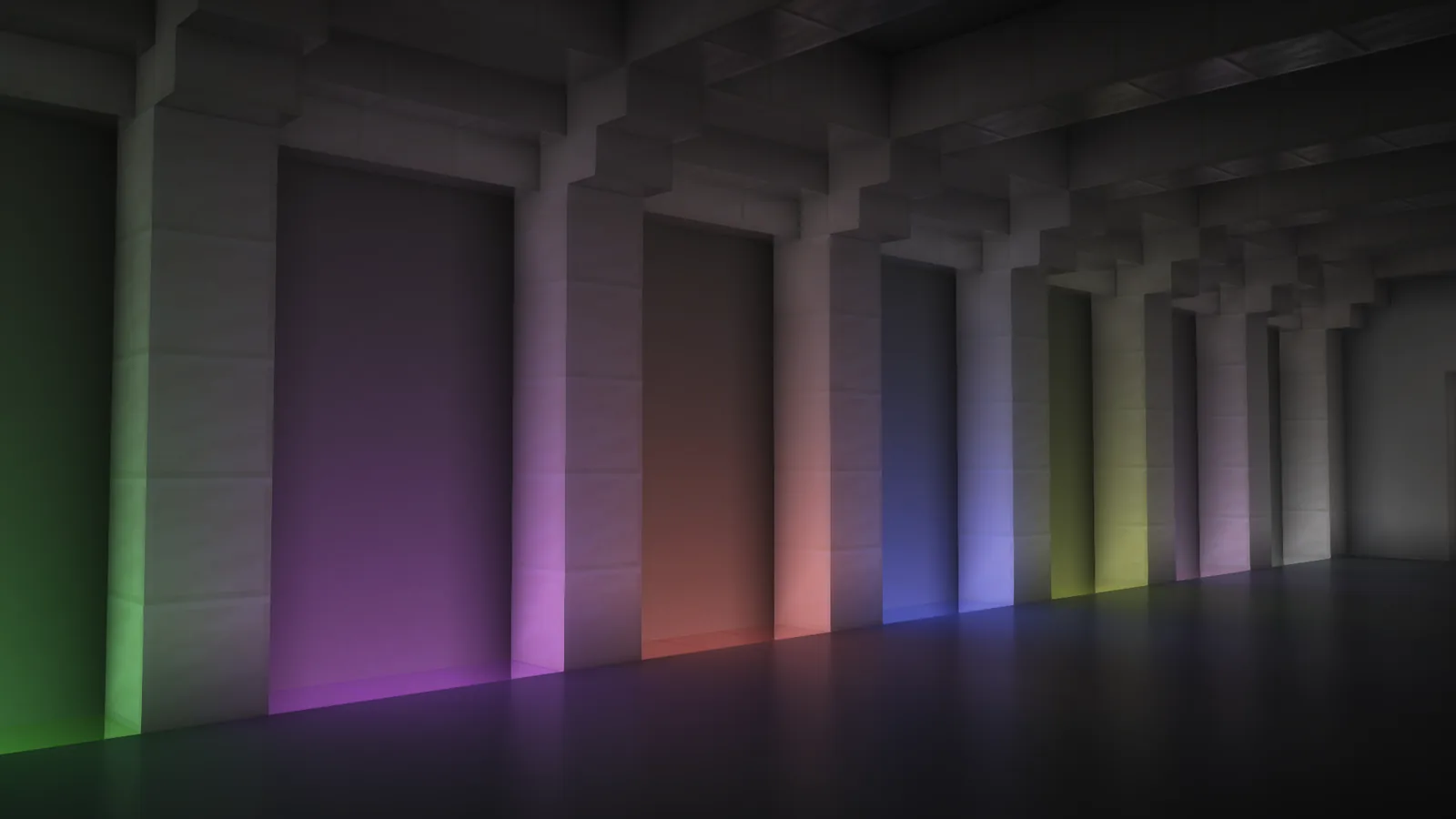
What the fog change actually does
With Improved Transparency enabled, the sky background and any clouds sitting behind terrain are now blended into the same render distance fog the terrain uses. The practical effect is that the far edge of the world stops looking like a wall with a painted backdrop behind it and starts looking like distance.
This also closes two long-standing bug reports. MC-300250 covered clouds rendering in front of foggy terrain, which produced the odd effect of a cloud appearing to float between you and a mountain that was supposedly nearer. MC-152504 covered the sky overlapping fog underwater, most visible at sunrise and sunset, where the horizon line would cut through the water column.
Anyone running a high render distance will notice this most, because the fog boundary is further out and therefore occupies more of the screen. It pairs naturally with level-of-detail terrain rendering, where the far field is the whole point.
The sky occluder
The second change is more specific. In the Overworld, the bottom half of the skybox now occludes celestial objects – the sun, the moon and the stars – with fog colour, fading out at a smooth border.
The reason this matters is that Minecraft’s sun and moon are drawn on the skybox rather than positioned in a world, so at low angles they could appear below the horizon line while still being fully visible. The occluder gives the horizon something to hide them behind.
Data packs get control over this through a new environment attribute, minecraft:visual/has_sky_occluder. It is a boolean, it defaults to true in the Overworld and false in the Nether and the End, and it is not interpolated. That default split is sensible: neither the Nether nor the End has a horizon in the ordinary sense.
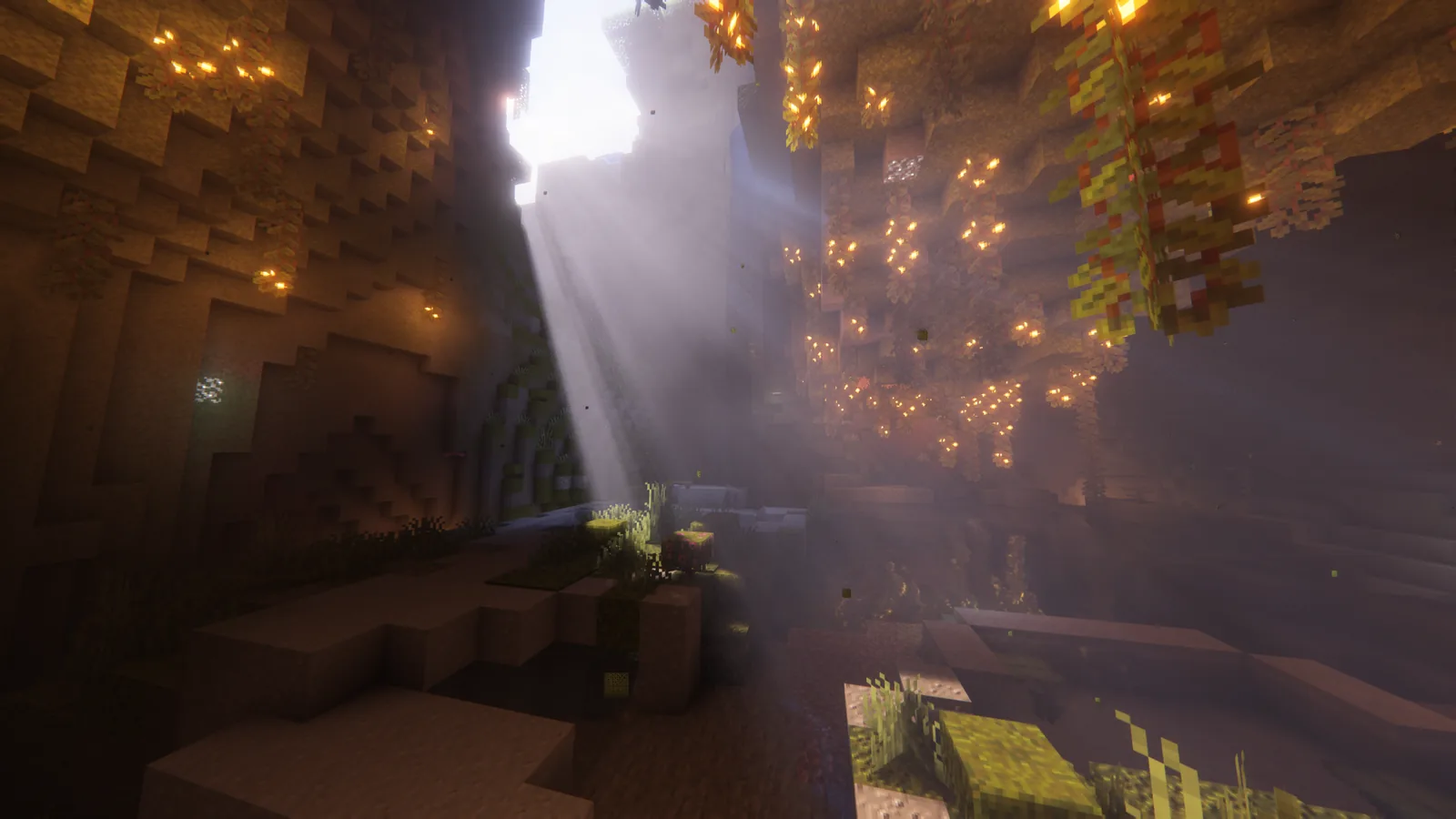
What it means for shader packs
Two new shaders ship with the change, sky_occluder.vsh and sky_occluder.fsh. Cloud rendering was also reorganised: OIT support was removed from clouds.fsh, which now draws clouds either directly when Improved Transparency is off or to an offscreen target when it is on, and a new blit_clouds.fsh composites that offscreen target into the OIT targets.
For shader pack authors this is a real change rather than a cosmetic one, because the cloud pass moved. Expect pack updates before this is stable, and expect the usual lag between a snapshot and shader support. The current shader pack landscape will not absorb this overnight.
Resource and data pack versions
The data pack version moves to 122.1 and the resource pack version to 99.0. A point bump on the data pack side rather than a whole number suggests an additive change, which matches: a new attribute and a new predicate rather than anything removed.
If you maintain a pack, this is the release to test against rather than the one to ship on. Snapshot 2 of a cycle is early, and 26.4 has already shown it is willing to move rendering defaults around after the first snapshot made Vulkan the default.
Should you install it
On a test profile, yes – this is one of the more visually noticeable snapshots in a while, and it is the kind of change you have to see moving rather than in a screenshot. Load a world with a long sight line, set render distance high, and watch a sunrise.
On a world you care about, no. Snapshots are not for that, and this one touches rendering deeply enough that mod compatibility will be unpredictable for a few weeks.
What to watch next
Two things. Whether the occluder gets a data pack control for its angle as well as its on-off state, since right now the cutoff is fixed. And whether Improved Transparency stops being optional – the more features that depend on it, the less sense it makes as a toggle.
The wider question is how much of 26.4 ends up being a rendering release. Snapshot 1 changed the graphics default, snapshot 2 rewrote how the sky meets the ground, and neither added a block. That is not a complaint; it is the part of the game that has needed attention longest.
How to see it properly
The change is hard to judge from a screenshot because it is about a gradient. Load a superflat or a plains world, set render distance to 24 or higher, and stand somewhere with nothing between you and the horizon.
Then watch a full sunrise. The old behaviour put a visible line where the fog stopped and the sky started, and it moved as the sun colour changed. The new behaviour does not have that line at all. Turn Improved Transparency off and back on while standing still if you want the before-and-after in one place.
Underwater is the second test. MC-152504 was specifically about the sky overlapping fog below the surface at sunrise and sunset, so dive and look up at the right time of day.
Images: Complementary Shaders – Reimagined project gallery.