South Korea is the country that built professional gaming into a broadcast industry, and it is also a country where betting on that industry has been effectively illegal for its entire history. That may change. In September 2026 the Ministry of Culture, Sports and Tourism named esports among the disciplines it will consider adding to Sports Toto, the state-licensed sports betting system, with a final decision targeted for 2028.
Nothing has been approved. What exists is a policy document, a review process and a deadline – which is more than the idea has ever had before.
What was actually announced
On 4 September 2026 the ministry presented “Sports Policy Vision 2030” at the second meeting of the National Sports Policy Committee. Sports Toto reform was one of its pillars. Vice Minister Kim Dae-hyun framed it plainly: the betting system has run for two decades without a structural overhaul, and the list of eligible sports has barely moved since the mid-2000s.
Today Sports Toto covers five sports – football, basketball, golf, baseball and volleyball – all added between 2001 and 2006. The candidates now under review are billiards, table tennis, handball and esports. A review committee is to set the selection criteria, and the decision on which disciplines make the cut is scheduled for 2028.

The timeline the ministry published
- 2026 – review committee formed, criteria for adding new disciplines drafted.
- 2027 – mobile betting app launched; the current 8am to 11pm betting window extended.
- 2028 – real-time in-play betting introduced; final decision on new disciplines, esports included.
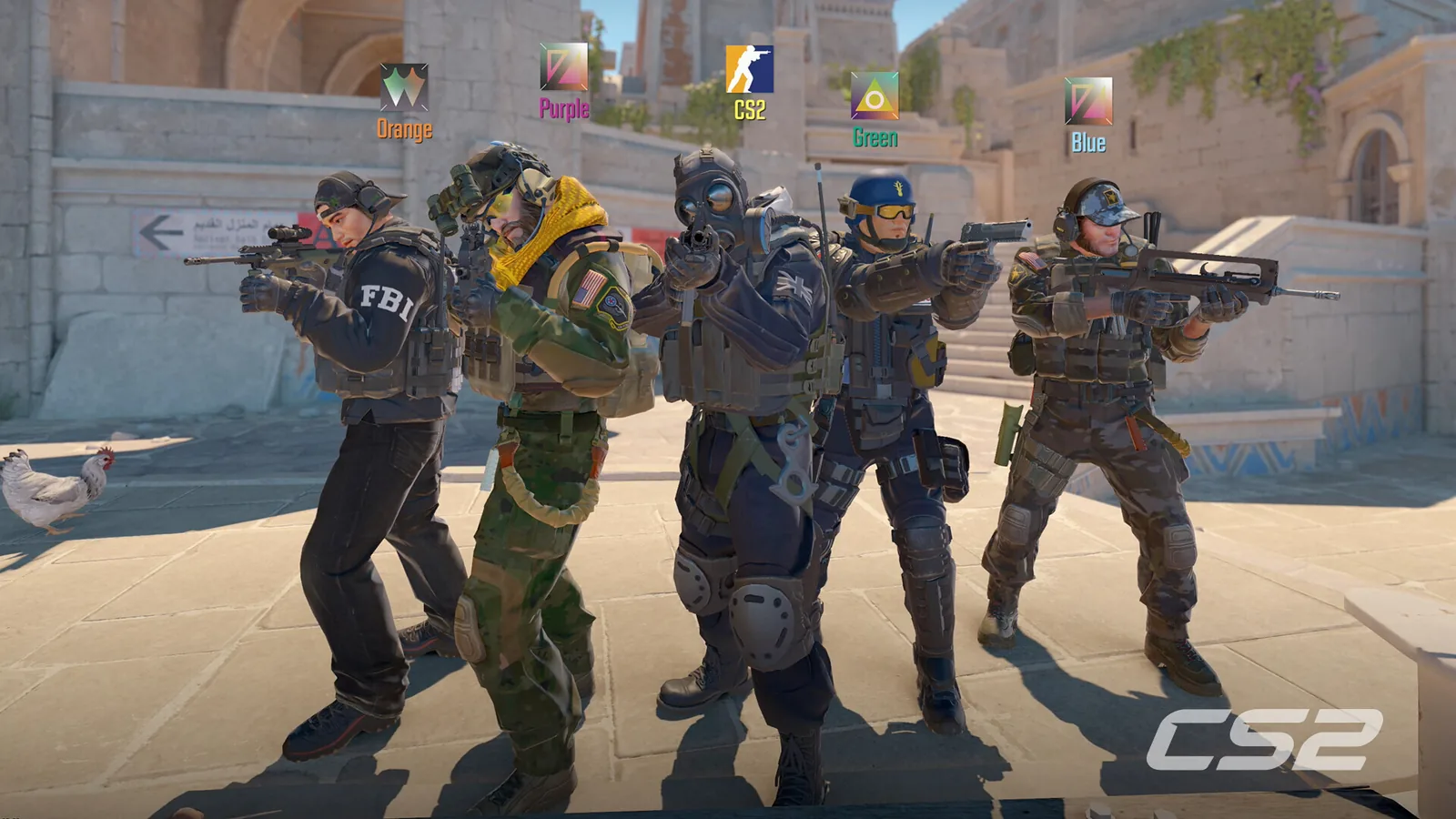
The sequencing matters more than the headline. Real-time in-play betting arriving in the same year as the discipline decision is not a coincidence – a best-of-three Counter-Strike series is close to unbettable under a pre-match-only model, and perfectly suited to a live one.
Why the ministry is moving now
The argument in the document is not about esports. It is about the illegal market. Korean authorities put unlicensed sports gambling at roughly 21.7 trillion won in 2025, about four times the size of the legal system it competes with.
The reason is mechanical. Legal Sports Toto returns around 64 percent of stakes to bettors. Other legal gambling in Korea returns 72 to 75 percent. Illegal operators return close to 90 percent. A legal product that pays worse, runs on a fixed schedule and cannot be bet in-play is not competing on product – it is competing on legality alone, and losing.
Adding disciplines, extending hours and allowing live betting are all attempts to close that gap. Esports is attractive in that framing for one reason above all: the audience most likely to bet illegally on it already exists, and is already betting on it through offshore sites.
What the esports industry asked for
This is not the ministry’s idea alone. In December 2025 the Korea e-Sports Association submitted a roughly 150-page proposal that treated Sports Toto inclusion as one component of a wider restructuring. The package included:
- Adding esports to the legal betting system, with a share of the handle returned to the sport.
- A dedicated integrity body, provisionally “K-ESIC”, to handle match-fixing investigation and player education.
- A 1 to 2 percent royalty on betting revenue paid to game publishers, acknowledging that the underlying product is privately owned.
- Raising the esports tax credit from 10 percent to 15 to 20 percent.
- A development pyramid modelled on the K League, with promotion pathways below the top tier.
The royalty line is the unusual one. No traditional sport has an owner who can switch the game off, patch the rules mid-season or decline to license it. Korean esports betting cannot be designed without the publishers agreeing, and the proposal accepts that by paying them.
The money problem underneath all of this
The reason a federation writes a 150-page document about betting is that the current funding model does not work. Combined losses across LCK organisations exceeded 100 billion won over 2021 to 2023. T1, the most valuable brand in Korean esports, reported 32.8 billion won of revenue in 2023 against roughly 12 billion won of operating loss.
Payroll runs above 70 percent of most team budgets. Publishers cover more than 90 percent of top-league operating costs, which means the leagues exist at the discretion of the companies that make the games. More than half of Korea’s professional organisations have been reported as looking for buyers.
Franchised league structures were supposed to fix this. The league system built around franchising stabilised rosters and schedules, but it did not create an independent revenue stream, and Korea is now watching the same shortfall play out across multiple titles.
The objection that has not gone away
An almost identical proposal was rejected on 1 April 2024. The ministry’s reasoning then was specific, and none of it has been answered.
The first objection was youth exposure. Esports audiences skew younger than those for any Toto-eligible sport, and a betting market attached to a sport teenagers watch is a different proposition from one attached to professional football.
The second was public perception. Korean esports has its own match-fixing history, and the 2010 StarCraft scandal remains the reference point – a case that ended careers and reshaped how the scene was governed. Any betting framework has to survive a comparison to that.
The third was that esports had no differentiation strategy – no clear answer to why it belonged in a system built for physical sport. The KeSPA proposal’s integrity body is an attempt at that answer.
What would have to be true for this to work
Match integrity in esports is harder than in physical sport for reasons that are structural rather than cultural. A single player can lose a round without it being visible to anyone watching. Server-side data exists but is owned by the publisher. Tier-two and tier-three competition, where players earn least and are most exposed, is exactly where offshore betting volume concentrates.
Whatever oversight body emerges would need publisher cooperation on match data, jurisdiction over the lower tiers rather than only the LCK, and the authority to suspend players before a criminal case concludes. That is a significant amount of institutional machinery to build by 2028.
It is also worth noting what a legal market changes about the viewing product itself. Betting audiences want information – odds context, in-game economy states, round win probability. Broadcast teams would be under pressure to supply it, and the conventions of esports observation were not designed with that in mind.
What to watch
Three things will indicate whether this is real. Whether the review committee publishes criteria that esports could plausibly meet. Whether any publisher – Riot above all, given the LCK’s centrality – says anything on the record. And whether the integrity body gets founded before the decision rather than promised as a condition of it.
The 2027 milestones are the honest test. If the mobile app and extended hours ship on schedule, the 2028 decision is a live one. If they slip, esports inclusion slips with them, and the conversation resets to where it was in April 2024.
Korea would not be the first jurisdiction to regulate esports betting, but it would be the most consequential, because it is the only one where the domestic scene is large enough for the decision to change how the sport is funded. The scale of that scene is why Korean competition has outlasted its own titles, and it is the same reason a betting decision made in Seoul does not stay in Seoul.
Images: Valve / Counter-Strike 2 press assets.