Every esport eventually discovers that its hardest problem is not balance or cheating. It is that the game is unwatchable without an observer who knows what to show, and that this person is doing a job nobody trains for.
The problem
A competitive match contains ten to a hundred simultaneous actions across a space larger than one screen. Somebody has to choose what the audience sees, in real time, with no ability to rewind.
Choose wrong and the decisive moment happens off camera. Choose right and the viewer feels like they understood a play they could not possibly have parsed themselves.
What an observer is doing
- Predicting where the next action will be, not following the current one.
- Establishing spatial relationships so a later engagement makes sense.
- Showing economy, cooldowns and resources at the moment they become relevant.
- Getting to a player before they do something, not after.
That first point is the whole skill. An observer who follows the action is always late; one who anticipates it is where the play happens before it starts.
Genre differences
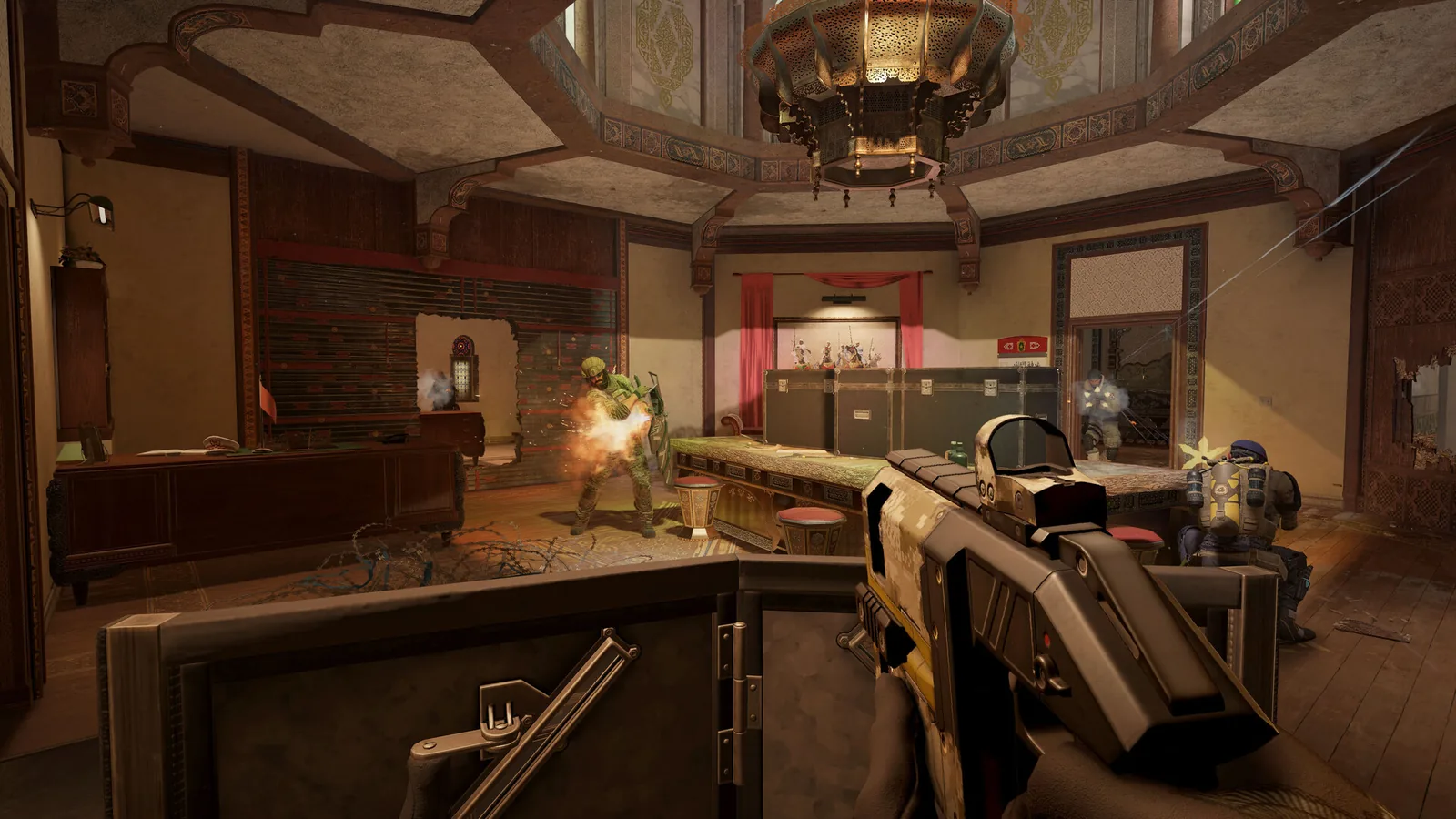
A tactical shooter is the hardest case – one life per round, information asymmetry, and decisive moments lasting under a second. A MOBA is more forgiving because teamfights are telegraphed by rotation. A battle royale is nearly impossible, with sixty players across kilometres.
Every genre has evolved its own observing conventions, and battle royale broadcasts in particular lean on automated systems that flag likely engagements.
Delay as a necessity
Broadcasts run behind live play, usually by minutes. That delay exists to prevent stream-sniping and it also gives production a small window to prepare.
The cost is that the audience in the venue and the audience at home are watching different moments, which is a strange property no other sport has.
The interface problem
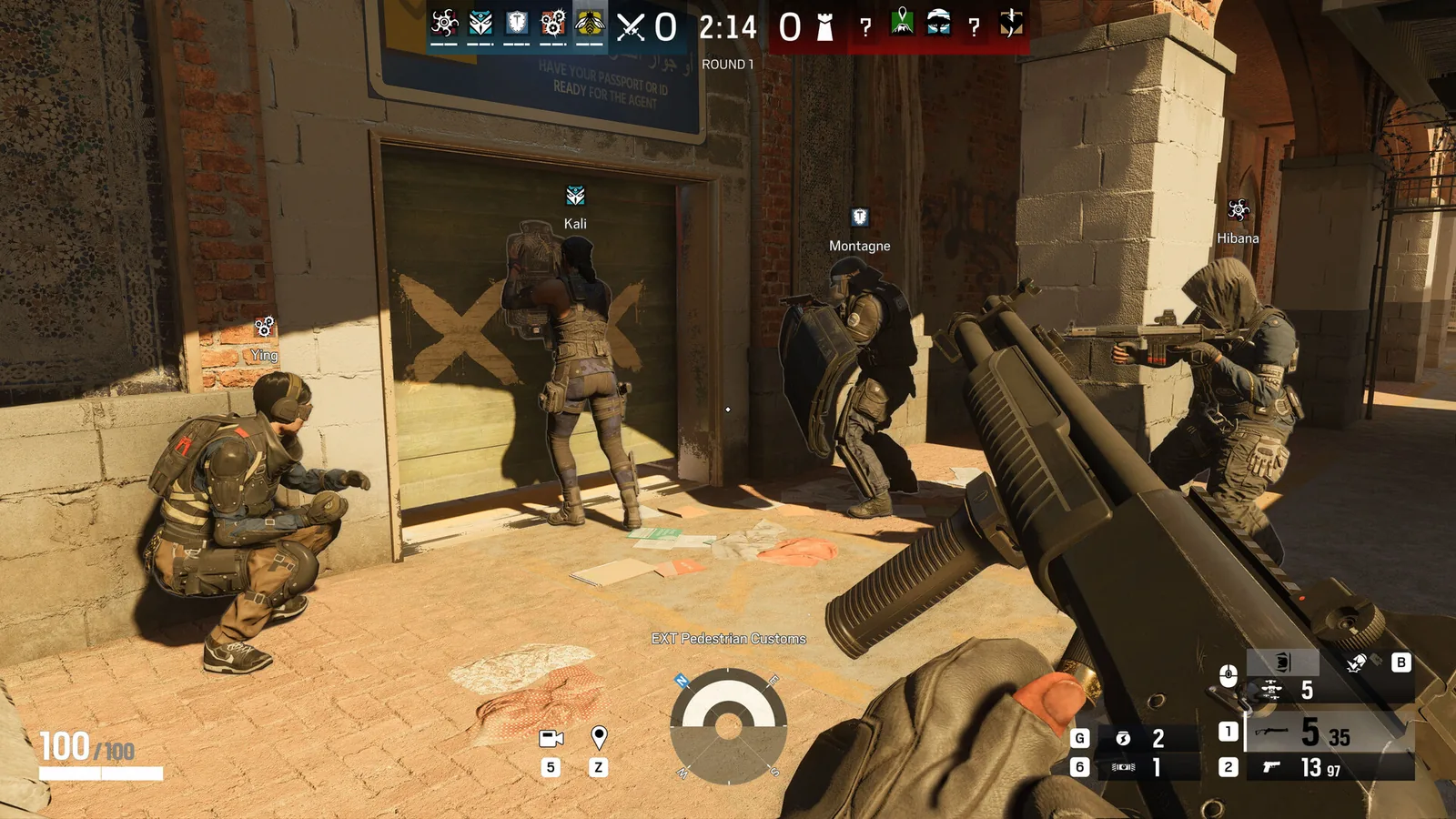
Competitive games are built for players, and players have information the camera does not show – cooldowns, ammunition, what they can hear. A broadcast has to reconstruct that as overlay.
Games designed with broadcast in mind expose that data through an observer API. Games that were not have to have it reverse-engineered, which is why some scenes have far better production than others.
Why it matters commercially
An esport’s audience ceiling is set by how comprehensible it is, not by how good it is. Several excellent competitive games have small scenes because watching them is work.
The clearest counterexample is a game whose objective needs no explanation at all, and what that buys is covered in the Rocket League piece.
The knowledge gap
Games with large rosters face this most acutely. A viewer needs to know a hundred abilities to follow a fight, which is why analyst desks exist and why draft phases need explaining.
The structural version of that problem in MOBAs is covered in the draft phase piece – the most decisive part of the match is the one a new viewer cannot read.
What good production does
- Establishes the map before the round so positions mean something.
- Shows economy and resources at decision points, not constantly.
- Cuts to a player before their play, using prediction.
- Replays only what changed the round, not everything.
- Trusts the commentary to carry what the camera cannot.
Most of that is invisible when done well, which is the usual fate of production work.
The underrated role
Observers are rarely credited, rarely paid comparably to talent, and are more responsible for whether a broadcast works than anyone on camera. That is a strange allocation and it has been noted for years without changing much.
Automated observing
Several games now use systems that score potential camera targets by likely action and switch automatically. They are adequate and consistently worse than a good human, because prediction based on what has happened is not the same as prediction based on what a player is about to do.
Where they work best is in genres too large for a human to survey – battle royale in particular, where flagging engagements is more useful than choosing between them.
The overlay problem
- Too little information and the audience cannot follow.
- Too much and the screen is unreadable.
- Information shown constantly becomes invisible.
- Information shown at the decision point is what lands.
The last point is the craft. An economy overlay during a buy phase is essential; the same overlay during a fight is noise.
What game design can do about it
Expose the data. A game with a documented observer API gets better broadcasts than one without, regardless of how good the game is, because production teams can build what they need rather than reverse-engineering it.
Very few competitive games treat broadcast as a design requirement, and the ones that do have measurably healthier scenes.
Images: Rainbow Six Siege and Dota 2 store assets, Ubisoft and Valve.