Rainbow Six Siege has a mechanic almost no other competitive shooter uses: before a match, teams remove operators from the pool entirely. Both sides lose access, and the removals are permanent for that match. It is one of the most interesting rules in esports and it exists to solve a problem most shooters pretend they do not have.
The problem it solves
A shooter with sixty distinct characters has some that are simply better. Balance patches chase them, but patches are slow and the meta settles between them, which produces long periods where the same handful of picks appear in every match.
Bans move that decision to the players and make it per-match. If one operator is dominating, teams remove them, and the game’s balance is negotiated in the pick phase rather than in a patch three months later.
How it changes preparation
- Teams must have second and third options for every role.
- A one-trick player is a liability rather than a specialist.
- Banning becomes a read on the opponent as much as on the meta.
- Scouting matters, because you are banning what they are good at.
That last point is the interesting one. A ban is information – it tells the opponent what you fear, which is a small cost paid for a real benefit.
Destruction as the core mechanic
Siege’s actual foundation is that walls, floors and ceilings are destructible in specific, learnable ways. A map is not a set of rooms; it is a set of rooms that can be reconfigured during a round.
That makes map knowledge in Siege deeper than in any other tactical shooter, because knowing a map means knowing every angle that can be created, not just the ones that exist.
Attrition, not respawns
One life per round, no respawns, and a short round timer. That structure – shared with Counter-Strike and Valorant – is what makes tactical shooters tactical: every death is permanent for the round, so information is worth more than aggression.
The difference in Siege is that the environment itself is a consumable. Reinforcements, breaching charges and drones are all finite, which adds a resource layer the others do not have.
The drone phase
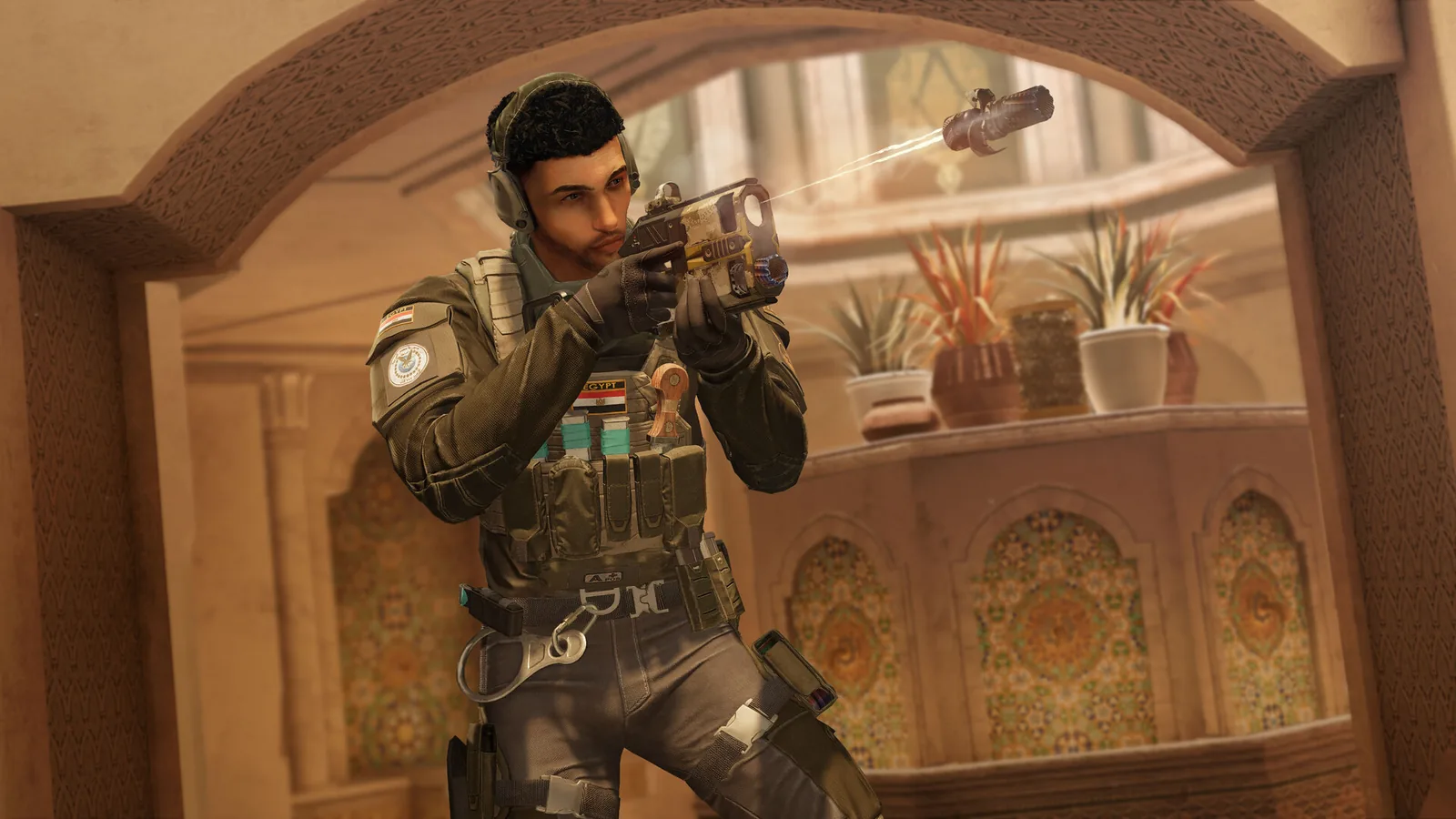
Siege begins with a preparation phase where attackers scout with drones and defenders fortify. It is the least exciting part of the match to watch and the part that decides most rounds.
A round is largely won or lost in the first thirty seconds, before a shot is fired – which is true of most tactical shooters and unusually explicit here.
Why bans have not spread
Counter-Strike has no characters to ban. Valorant has agents but a much smaller roster, and its design assumes every agent is viable. Overwatch tried hero bans and stepped back from them.
The mechanic requires a large roster and a tolerance for asymmetry, which is a specific combination. Siege has both, which is why it works there and has not been copied.
The cost
Bans make the game harder for new players and harder to watch, because understanding a ban phase requires knowing sixty operators and the current meta. It is a mechanic for a committed audience.
That trade – depth for accessibility – is the defining choice of the whole game, and it has produced a smaller, more durable competitive scene than a more accessible design would have.
What other games could take
The general idea is that some balance decisions are better made by players at match time than by developers at patch time. Very few competitive games trust their players with that, and the ones that do tend to have healthier metas between patches.
The map ban layer
Bans in this game happen at two levels – maps and operators – and the interaction between them is where preparation happens. A map ban shapes which operators matter; an operator ban shapes which sites are attackable.
Teams prepare a matrix rather than a list, and the depth of that preparation is one of the clearest separators between tiers.
Comparison with map pools elsewhere
Most tactical shooters have a map veto and no character bans, because their rosters are small or nonexistent. The veto alone is a substantial strategic layer and it is the part most viewers skip.
The equivalent system in a game with agents rather than operators is covered in the Champions Tour piece, where a smaller roster produces a different balance of map and character preparation.
Why the roster keeps growing
New operators are the game’s content model – they are what a season delivers and what players buy into. That growth is exactly what makes bans necessary, which means the balance mechanism and the revenue mechanism are in tension by design.
Every live-service competitive game has some version of this tension. Few have handled it as directly as handing players a delete button.
The genre comparison
Bans work here because the roster is large and the game tolerates asymmetry. In a genre built on smaller rosters where every character is meant to be viable, the same mechanic would remove viable options rather than dominant ones.
That trade-off, and the role queue question that comes with a large character roster, is covered in the hero shooter piece.
Images: Rainbow Six Siege store assets, Ubisoft. Official site: ubisoft.com/game/rainbow-six/siege.