Hero shooters keep coming back. Team Fortress 2, Overwatch, Paladins, Apex, Valorant, Marvel Rivals – the genre has been declared saturated repeatedly and keeps producing new entrants that find audiences. The reason is a design property that most other competitive genres lack.
The property
A hero shooter lets a player be good at the game without being good at aiming. A support player with excellent positioning and timing contributes as much as a hitscan player with perfect aim, and they are doing completely different things.
That multiplies the addressable audience. A traditional shooter has one skill axis and filters everyone who is not good at it; a hero shooter has four or five.
What that costs
Balance becomes intractable. Thirty characters with unique abilities produce hundreds of interactions, and no amount of testing finds them all before players do.
Every hero shooter therefore lives on a patch cycle, and the patch cycle becomes part of the product – the game people play in March is not the game they played in January.
Role queue and what it fixed
The genre’s recurring structural problem is composition: five players who all want to play damage produce a team that loses. Role queue solves it by making the selection before matchmaking rather than after.
It works, queue times for the popular role become long, and players complain about both states. There is no configuration of this that satisfies everyone, which is why different games in the genre have landed in different places.
The version Overwatch settled on is covered in its competitive system, and the trade-offs are the same everywhere.
The counter-pick question
Some hero shooters allow mid-match character switching and some do not, and it is one of the genre’s deepest divides.
- Switching allowed – matches become adaptive, comps evolve, and a locked-in bad pick is recoverable.
- Locked picks – the draft matters more, specialisation is rewarded, and the match is more readable.
Neither is wrong. They produce different games, and a player who prefers one usually finds the other frustrating rather than merely different.
Why the genre is hard to watch
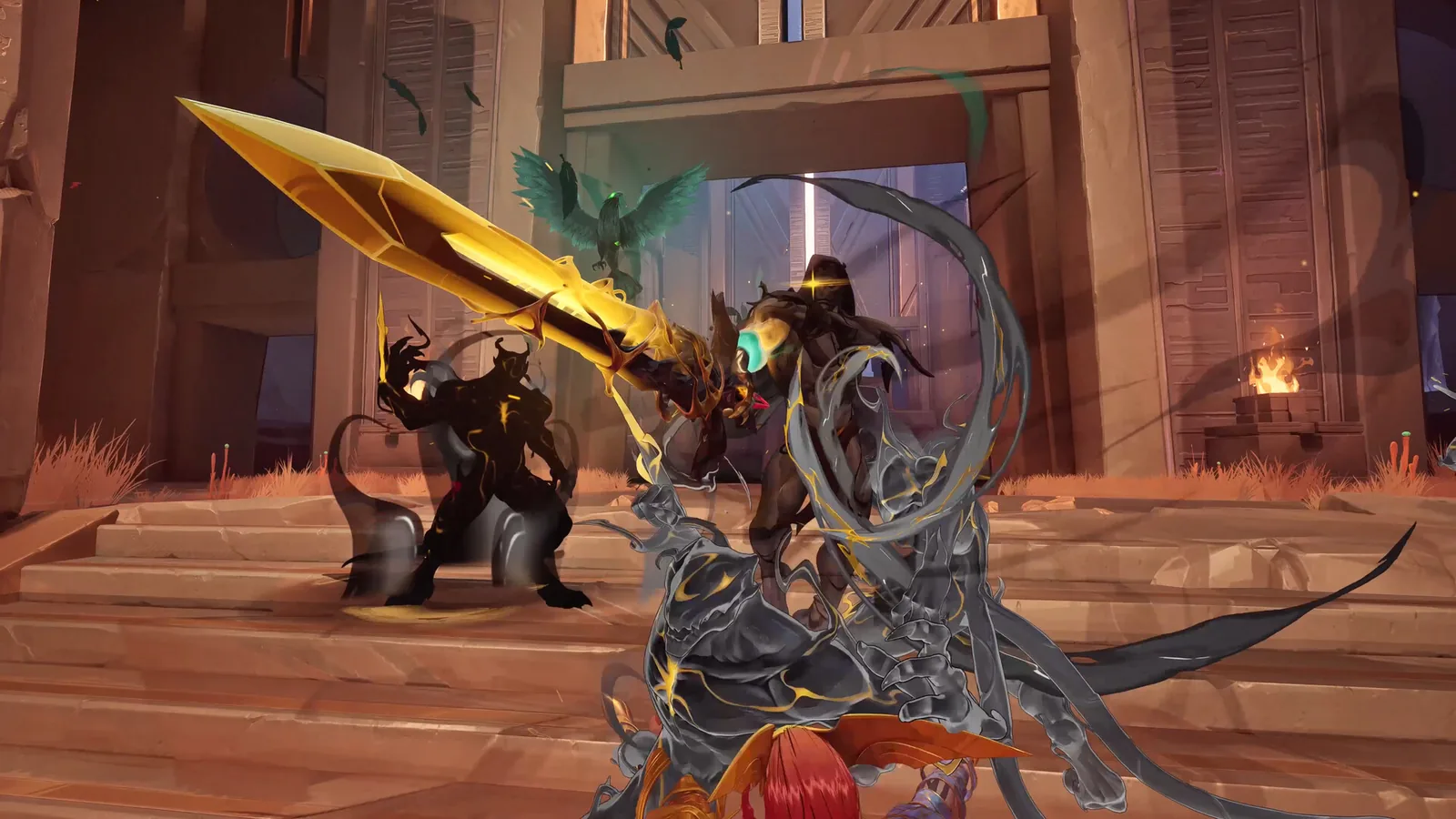
Thirty characters means a viewer needs to know thirty ability kits to follow a fight. That is a real barrier, and it is why hero shooter broadcasts lean heavily on observer work and on-screen ability indicators.
The games that have done best as spectator products are the ones with the smallest effective rosters in competitive play, which is an argument for bans or for smaller rosters that nobody in the genre wants to make.
Identity as a retention mechanic
Character attachment is the genre’s quiet advantage. Players do not return to a hero shooter because of the game; they return because of a character, and character loyalty outlasts patch frustration.
That is why cosmetic monetisation works so well here and so poorly in games with no characters to be attached to.
Why saturation never arrives
Because the genre is not one thing. A tactical hero shooter, a brawler hero shooter and a battle royale hero shooter share a label and almost no design assumptions.
Saying the market is saturated is like saying there are too many games with guns in them. The label is doing less work than it appears to.
The recurring lesson
The genre’s persistence comes from letting people contribute in different ways, which is a design goal more competitive games could adopt. Most esports have one skill and reward people who have it; this one has several and rewards teams that combine them.
The balance cadence
A hero shooter’s patch schedule is part of its design rather than maintenance. A roster of thirty-plus characters cannot be balanced statically, so the game is balanced dynamically – continuously adjusted, never finished.
That has a competitive cost: preparation expires, and a team’s practice against one meta is worth little against the next. It also keeps the game from settling, which is what keeps players returning.
Comparison with a MOBA
MOBAs face the same problem with larger rosters and solve it with draft and bans rather than with constant patching alone. That gives players a per-match balance tool that hero shooters mostly lack.
The strategic layer that produces is covered in the draft phase piece, and it is the clearest structural difference between the two genres.
Where new entrants find room
- A different tempo – slower and more tactical, or faster and more chaotic.
- An existing character roster from another medium, which solves identity instantly.
- A different team size, which changes composition maths entirely.
- Free-to-play economics that the incumbent cannot match.
The second one has become the most common route, and it explains most recent entrants in the genre.
Images: Marvel Rivals store assets, NetEase Games and Marvel Games. Official site: marvelrivals.com.