Key takeaways
- The 2006 line-up included Braid, flOw, Cloud, a Guitar Hero freestyle prototype, Every Extend, Shooter Album and Ocular Ink.
- Two of those presenters – Jonathan Blow and Jenova Chen – went on to define separate strands of the following decade.
- Braid was shown as a mechanic, not a product. The finished game arrived two years later.
Read a list of what was presented at a single conference session in 2006 and it looks like a coincidence. Braid and flOw, in the same room, before either creator was known outside a small circle.
What was on the bill
The session’s contemporaneous write-up records the line-up: a freestyle mode prototype from the Guitar Hero team at Harmonix, Downbeat from GameLab, flOw and Cloud from Jenova Chen, Braid from Jonathan Blow, the PSP version of Every Extend, Shooter Album from Jonathan Mak, and Ocular Ink.
That mix is characteristic. Two student projects, two commercial experiments from studios with shipping products, and a couple of things that resist categorisation entirely.
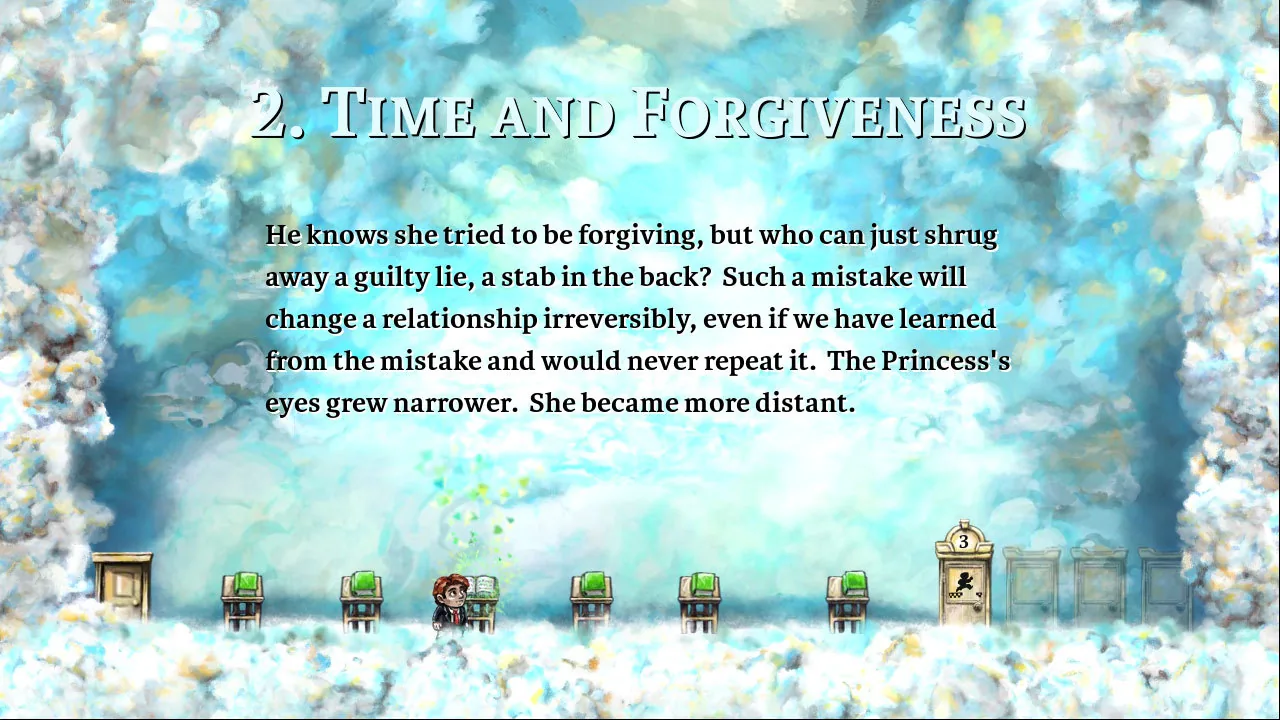
What Braid was at that point
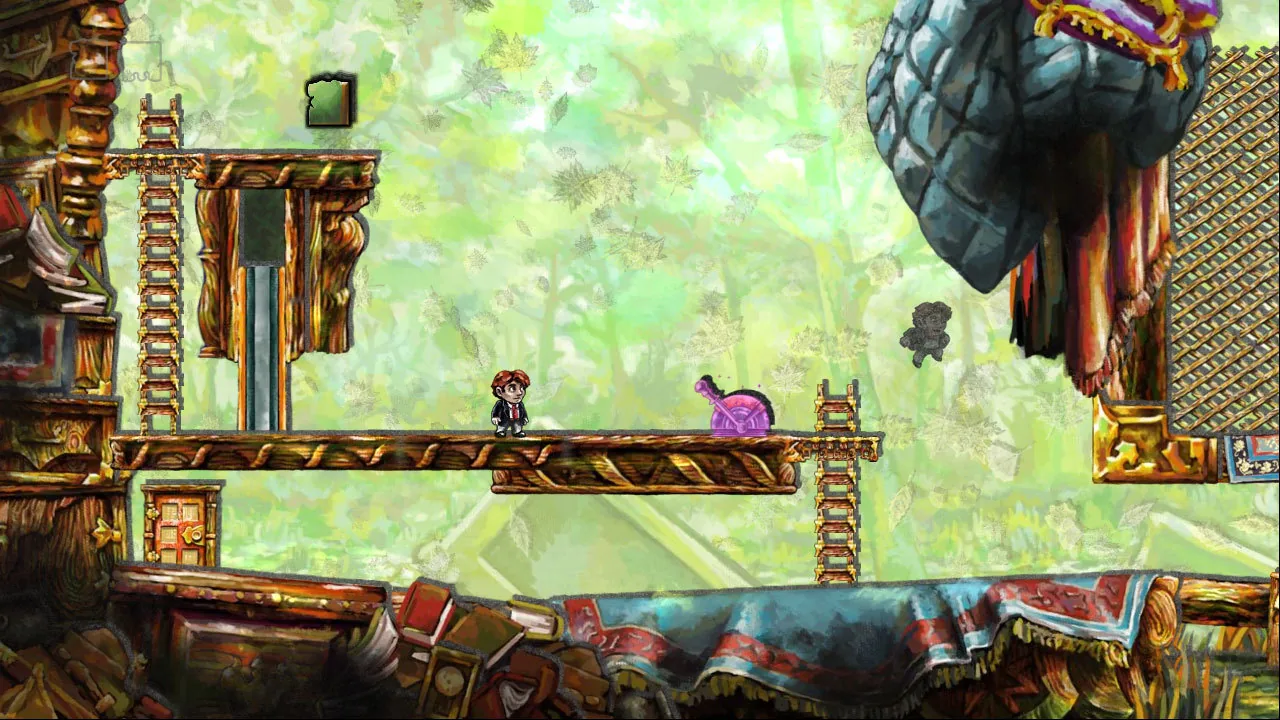
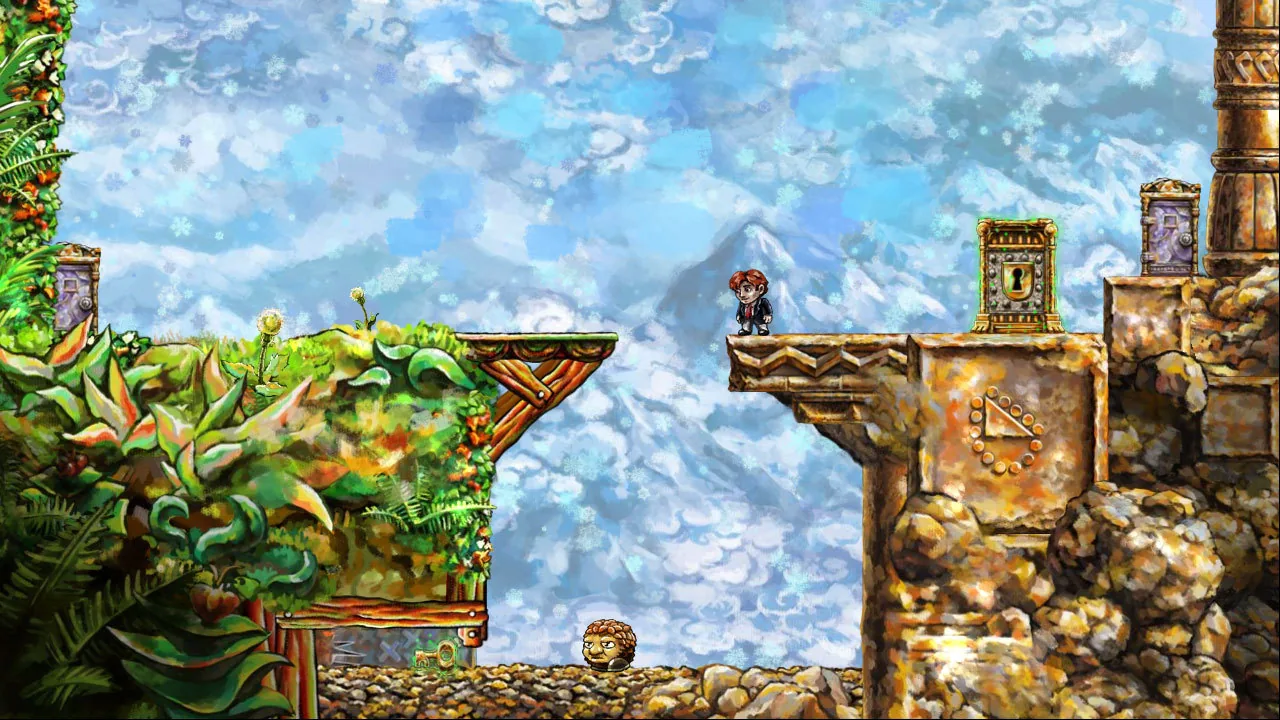
Not a finished game. What Blow presented was the time manipulation mechanic and the puzzle design built on it – the idea that rewinding is not a convenience but the rule system itself. The full release followed in 2008 and became one of the defining commercial successes of the download era.
Blow’s remark from the session, that a lot of things in games are only interesting because they are hard, is a reasonable summary of what the prototype was arguing. Remove the difficulty of execution and what remains has to be interesting on its own terms.
flOw, Cloud and the other path
Jenova Chen showed two things from his student work at USC. Cloud and flOw are both attempts to make a game about something other than conflict, and flOw in particular went on to a commercial release and to the founding of thatgamecompany – the studio that later made Journey. That thread is followed in the piece on flOw and Journey.
The two strands in that one room are worth noticing. Blow’s line of work leads toward difficulty, precision and systems that reward analysis. Chen’s leads toward mood, motion and games that avoid failure states altogether. Both came out of the same session, and the decade that followed had room for both.
What the session format gave them
Neither project was ready to be judged as a product in 2006, and neither was presented as one. A few minutes in front of an audience of designers is a different test from a publisher meeting: the question is whether the idea is interesting, not whether it will sell.
Our view is that this is the workshop’s real function and the reason its alumni list looks the way it does. It is not that the session discovers winners – it is that it is one of the few venues where an unproven mechanic can be shown before anyone has decided what the game around it will be.
Where to read more
The contemporaneous write-up of the session is on Game Developer, and the archive of later years sits in this site’s workshop record.
The rest of the 2006 bill
The two names that became famous are not the whole story. Harmonix showed a freestyle mode prototype for Guitar Hero, built on the premise that anything the player does should sound good without requiring actual skill – a design goal that runs directly against the series’ shipped design and is more interesting for it.
GameLab showed Downbeat. The PSP version of Every Extend appeared via Q Entertainment. Jonathan Mak showed Shooter Album, and his later work on music-driven games continued the thread it started. Ocular Ink, from John Edwards and Justin Kim, built play around brush strokes.
Three student projects, three commercial experiments, one port. That mix is what a curated session looks like when the curation is working.
What 2006 was like for a game like Braid
There was no practical route to an audience for a single-developer puzzle game in 2006. Digital storefronts for independent work barely existed, console certification was closed, and the retail shelf was not an option. A conference session, a festival and a press write-up were the entire distribution system for an idea.
That context explains why the workshop mattered so much more then than an equivalent session would now. It was not one option among many. For a large share of the games on that bill, it was the only room where the work would be seen at all.
The quotes worth keeping
Mak’s line from the session – that maybe being artistic has nothing to do with being innovative – is a useful corrective to how this period gets remembered. The developers in that room were not unified by an artistic movement. They were unified by an interest in mechanics nobody had tried, which is a narrower and more practical thing.
Blow’s remark in the same session, that many things in games are only interesting because they are hard, points at the same practicality. Remove execution difficulty and what is left has to justify itself, which is what the Braid prototype was built to test.
Images: Number None, via the Braid Steam store page.