Key takeaways
- Helldivers 2 ran its live service as a war rather than a season, which changed what a player who logs in once a week is doing when they get there.
- The Galactic War made every mission a vote, which is the cheapest way to make repetitive content feel like it matters – and the most expensive to get wrong.
- Its hardest problem was the one every shared-objective game has: the result has to be in doubt, but the players have to believe they caused it.
Live service design has settled into a shape. A season lasts about three months, a battle pass runs alongside it, the meta shifts when the patch lands, and the loop is: log in, make progress on a bar, log out. Our look at the battle pass treadmill covers why that structure is so stable – it is legible, it is schedulable, and it monetises cleanly.
Helldivers 2 did something different, and the interesting thing is not that it succeeded commercially. It is that the structural choice it made solves a problem the standard season format does not even attempt.
The problem with seasons
A season is a container for content, and the player’s relationship to it is consumption. The content exists before you arrive, it is the same for everyone, and your participation does not change it. You progress through a season the way you progress through a hallway.
That is fine, and it supports the one thing live service needs most, which is a reason to come back on a schedule. Our Diablo 4 season breakdown covers how precisely that machine can be tuned.
But it has a known failure. Once a player understands that the season is a hallway, the content stops being a place and becomes a rate. The question changes from “what is in this season” to “how many hours for the rewards”. Once a player is asking that question, they are already most of the way to leaving.
What a war does instead
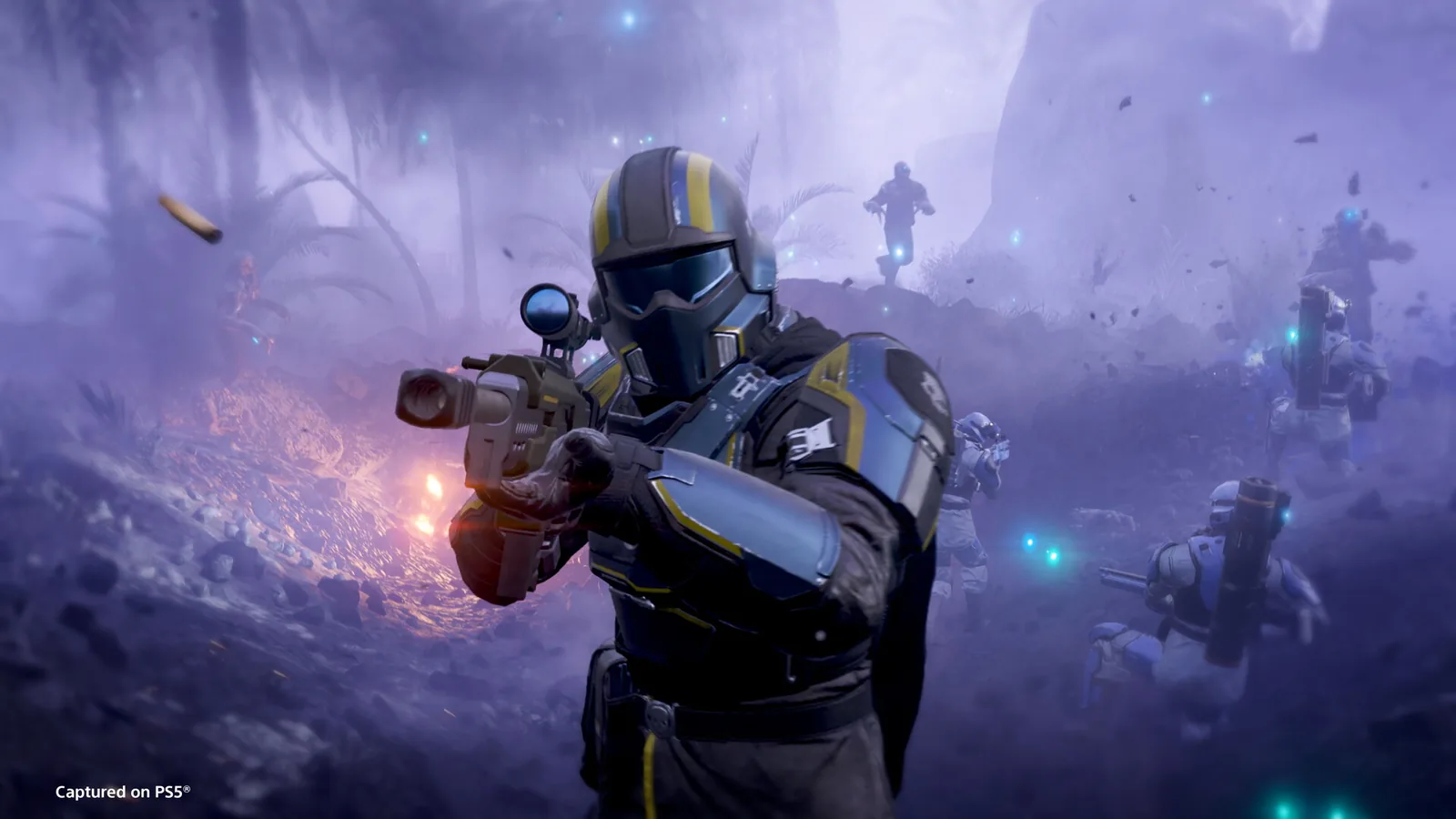
The Galactic War framing replaces the hallway with a map. Planets have liberation percentages. Every mission a player completes contributes to one. The front line moves.
Three things follow from that, and they are worth separating because they get credited to each other.
The content has a state. Logging in on Tuesday and logging in on Friday are different, not because new content shipped but because the situation changed. That is a renewable source of novelty that costs almost nothing per unit, which is the opposite of how seasonal content economics usually work.
Every mission is a vote. You choose which planet to deploy to, and that choice allocates your effort. A player who would otherwise be grinding identical missions is now making a strategic decision, even though the mission is the same mission. Our notes on scarcity in sandbox design cover the general version of this – a choice costs nothing to add and changes how the activity feels.
Failure is possible and visible. Planets get lost. A defence campaign can fail. This is rare in live service, where failure usually means a slower bar rather than a worse outcome.
The credibility problem
Here is where it gets hard, and this is the part worth thinking about rather than admiring.
A shared-objective war needs two things that pull against each other. The outcome must be genuinely uncertain, or the players are watching a cutscene. And the players must believe their individual contribution mattered, or the whole frame collapses into theatre.
Both are difficult at scale. With hundreds of thousands of players, any single player’s contribution is statistically nothing. The design has to make a rounding error feel like participation. And because the war is also a narrative the developers are telling, the outcome cannot be left entirely to arithmetic – a story needs the invasion to arrive when the invasion is ready.
So there is a dial. Turn it toward simulation and the war is honest but the story is incoherent. Turn it toward authorship and the story lands but players eventually notice that the numbers were decoration. Every game with a persistent shared objective sits somewhere on this dial, and the position is usually inferred by players rather than stated.
The interesting thing is that players are remarkably tolerant of authorship as long as the losses feel real. A war you can only win reads as fake immediately. A war where you lose planets you fought for buys an enormous amount of credulity for everything else.
Difficulty as the retention curve
The second structural choice is less discussed and does more work than it looks like it does.
Most live service games keep difficulty roughly flat and move progression through gear and unlocks. Helldivers 2 has a wide difficulty ladder, and the content at the top is genuinely punishing in a way that gear does not fully solve.
That matters because it gives long-term players somewhere to go that is not a number. Our piece on difficulty settings covers why a difficulty ladder is a design statement rather than an accessibility feature – what it says here is that mastery is the progression, and the unlocks are tools for expressing it rather than the point.
It also keeps the co-op coherent. Our look at why co-op is harder to design than competitive covers the core issue: co-op fails when the game is easy enough that players stop needing each other. High difficulty is the cheapest fix, and friendly fire – which is the game’s most-discussed mechanic – is the second.
Friendly fire as a social system
Worth isolating, because it is usually discussed as a comedy feature and it is actually doing structural work.
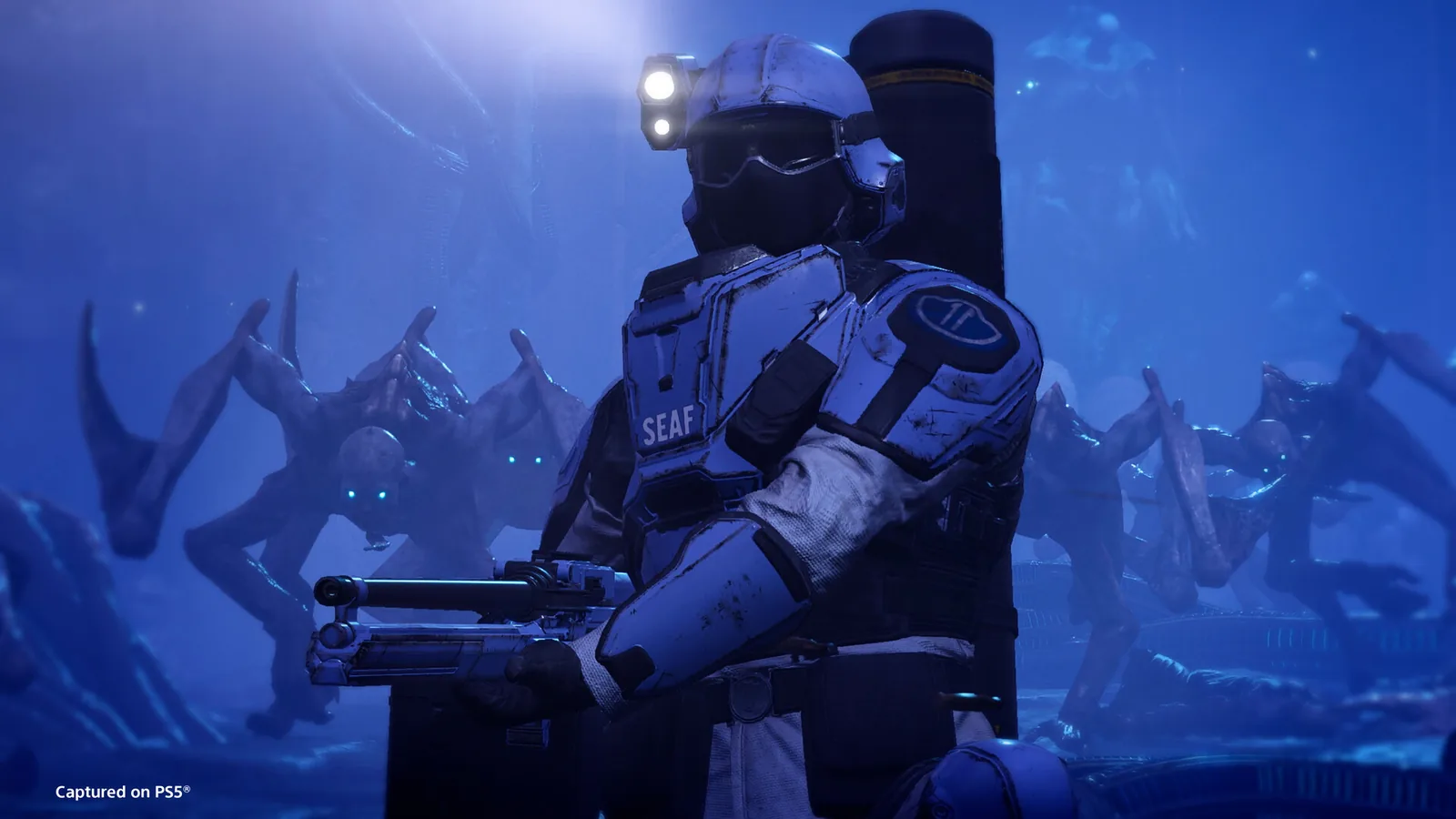
Permanent friendly fire means every player is a hazard to every other player. That has three effects. It forces spatial awareness, which turns a shooting gallery into a positioning problem. It makes communication functional rather than optional. And it generates the failure stories that the game’s whole culture is built on.
The last one is underrated. A game that produces memorable failures produces conversation, and conversation is the cheapest marketing there is. Our piece on emergent systems and what they cost covers the trade – systems that interact produce stories you did not write, and also bugs you did not anticipate.
What it does not solve
An honest accounting, because the design has real limits.
The mission loop is narrow. The war frame makes repetition feel purposeful, but it is still repetition, and the frame wears thinner than content does.
Balance in a co-op game is a different problem. With no opponents to protect, a nerf has no competitive justification – it only ever takes something away from the player. This is the recurring friction point in every co-op live service, and it has no clean solution. Our piece on patch notes as design documents covers why communicating the reasoning matters more here than anywhere else.
The war needs constant authorship. Unlike a season, which can be built in advance and shipped, a persistent war needs someone making decisions every week. That is an ongoing staffing cost that does not shrink.
What transfers
The reusable lesson is not “add a war map”. It is narrower than that.
Repetitive content becomes tolerable when the player’s participation has a direction. A season gives the player a rate of progress. A shared objective gives them an allocation decision. The second costs very little more to build and changes the question the player is asking from “how long until the reward” to “where should I go”.
The precondition is that the objective has to be able to fail. That is the expensive part, and it is the part most studios decline, because a live service that can visibly lose is a live service where a bad month reads as a bad month. Our look at Rust wipe cycles covers a different solution to the same problem – if you cannot risk losing, you can at least reset, and a scheduled reset is its own kind of honesty.
Images: Helldivers 2 project gallery.