Key takeaways
- The 2018 session included Baba Is You, Untitled Goose Game, Noita, Everything is Going to be OK, TimeWatch, Feng Shui, Luna prototypes, Freeways and La Tabla.
- The room filled past capacity and screens went up outside for the overflow.
- Three of the nine became commercial landmarks. The other six are the reason the archive is worth keeping.
Hindsight makes this line-up look like a talent-spotting exercise. At the time it was nine developers with a few minutes each, and nobody in the room knew which three would matter.
The nine
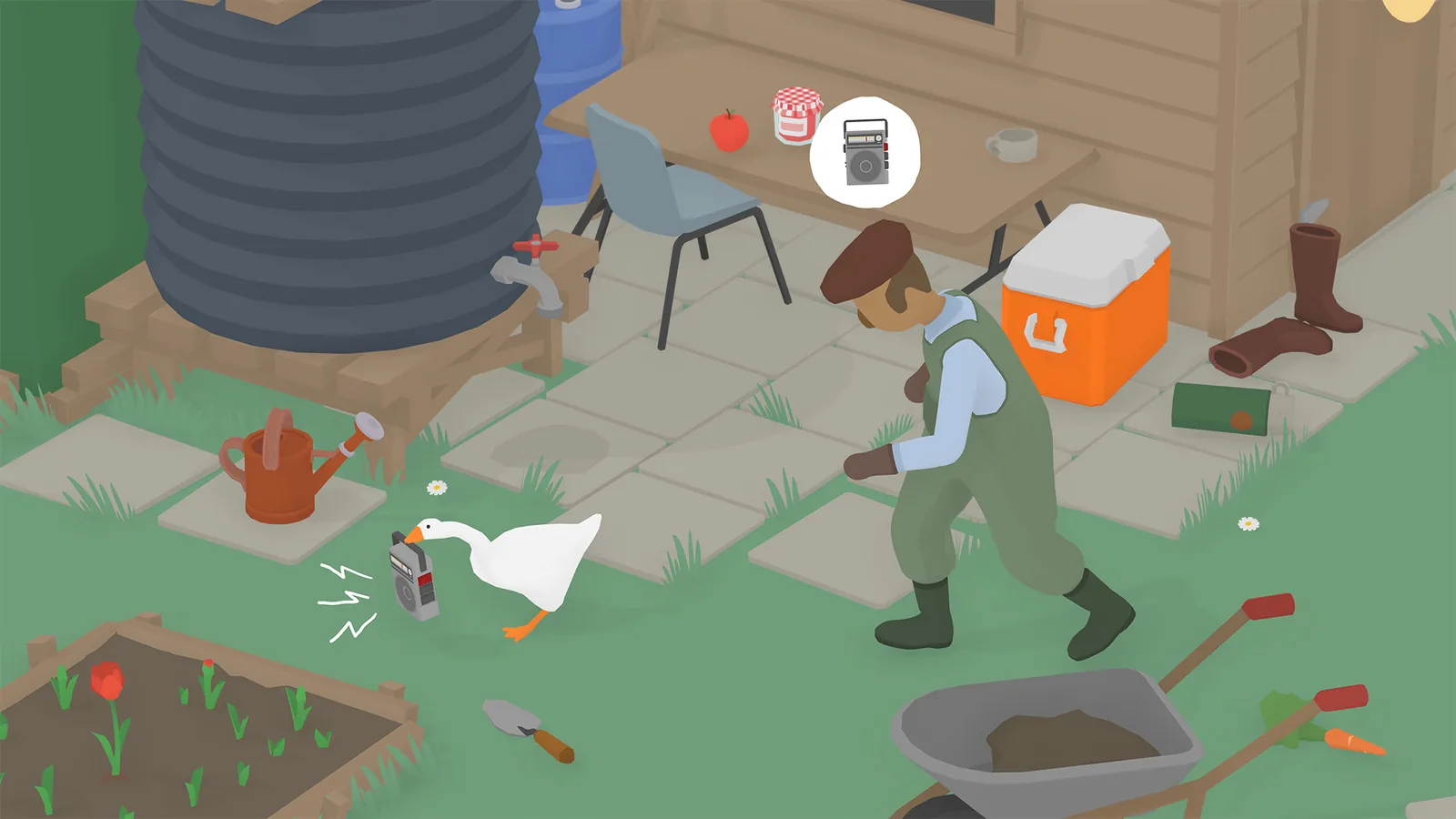
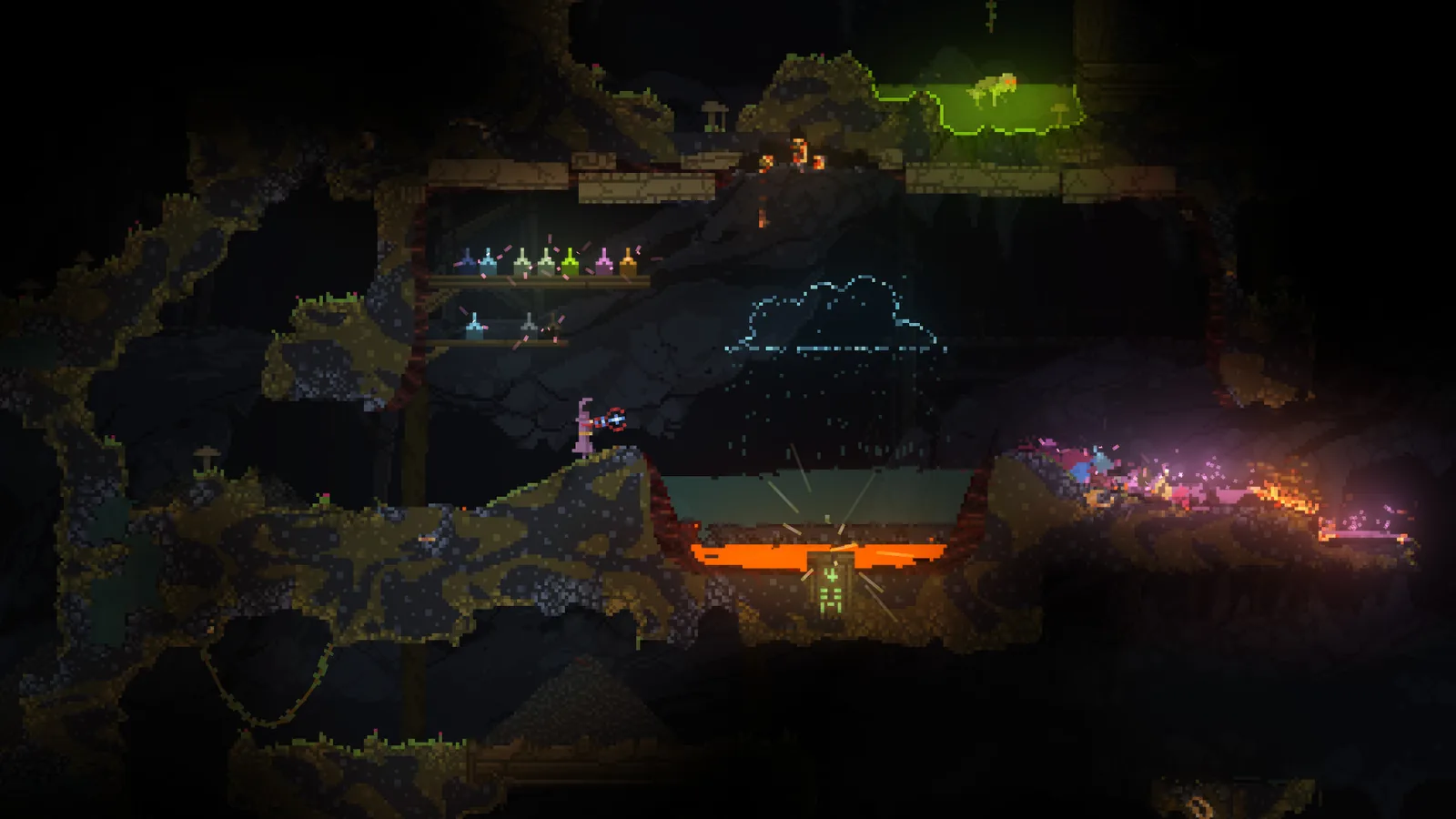
Baba Is You by Hempuli – a puzzle game where the rules are physical blocks you can push around, which went on to win Independent Games Festival awards for design and best student game. Untitled Goose Game by House House, built explicitly around producing annoyance with you as the goose. Everything is Going to be OK by Nathalie Lawhead, vignettes setting irrational optimism against difficult situations. Noita by Petri Purho at Kloonigames, an action roguelite that simulates every pixel.
Then: TimeWatch from NGD Studios on time travel and causality, Feng Shui from LudopiaNet built on Feng Shui rules, prototypes from Funomena’s Luna covering audio and VR, Freeways by Justin Smith where you draw road networks and watch traffic emerge, and La Tabla by Chaim Gingold and Luke Iannini, giving life to physical objects on a table.

What the three had in common
Each of the three that broke out is explainable in one sentence – the same property that carried Braid a decade earlier and surprising in that sentence. Rules you can push. You are the goose. Every pixel is simulated. That property – a premise that survives being compressed to a line – is what a five-minute session slot selects for, and it is also what survives being passed between players afterwards.
That is not a quality judgement on the other six. Freeways and La Tabla are both sharper design work than their profiles suggest. They are simply harder to transmit.
The visa footnote
The Feng Shui creators could not attend. Their visas were denied, and they sent a video instead. It is a small detail in a session recap and worth keeping in view: an international showcase depends on people being able to enter the country it is held in, and for a significant share of developers that is not a given.
Why a room this size for unfinished work
Capacity overflow with screens outside is not what you expect for a session about prototypes. By 2018 the workshop had a reputation that preceded it – if you wanted to see what the next few years would look like, this was the hour to attend.
Our view is that the reputation is a mixed blessing. A session whose audience is there to spot the next hit exerts pressure toward legible, pitchable work, which is the opposite of what the format was built for. The 2018 line-up is strong evidence both ways: three legible hits, and six things that would never have made it onto a showcase stage selected by commercial promise.
The archive
The following year went further still, with fourteen entries in the same hour – covered in the 2019 line-up.
What Baba Is You actually does
The rules of each level are written on the board as blocks – subject, verb, object – and the player can push those blocks around. Move a word and the rule changes. Break a sentence and the rule stops existing.
That is a compiler disguised as a puzzle game, and it is the rare mechanic that is both trivially explainable and effectively bottomless. It went on to take Independent Games Festival awards for design and best student game, which is unusual for something first shown as a prototype in a four-minute slot.
Noita and simulating everything
Noita’s premise is that every pixel in the world is simulated – liquids flow, powders fall, fire spreads through whatever will burn. The design consequence is that the game cannot fully predict its own states, which makes it both remarkable and extremely difficult to balance.
Petri Purho’s earlier work at Kloonigames came out of the same rapid-prototyping culture the Carnegie Mellon rules helped popularise, which is covered in the seven-day prototyping piece.
Designing for annoyance
House House built Untitled Goose Game around producing a specific feeling in non-player characters and, by extension, in the player watching them: irritation. Choosing an emotion that games normally try to avoid, and then building every system to produce it, is a legitimate design method and almost nobody uses it.
It is also a good illustration of why the session’s four-minute format favours certain work. “You are the goose and you are the problem” needs no further explanation, and the audience is laughing before the first clip ends.
Images: Hempuli, House House and Nolla Games, via their Steam store pages.