Key takeaways
- The 2011 session included Maquette, The Sense of Connectedness, Loop Raccord, Opera Omnia, Mantra, Inside a Star-Filled Sky and a talk on user-generated play.
- It was the first year the session included a live, non-digital game played by the audience.
- Several of these projects took a decade to reach a commercial release, and some never did.
The line-up below is not reconstructed from memory. It comes from the recap the organisers posted on this domain at the time, preserved in the workshop archive.
What was shown
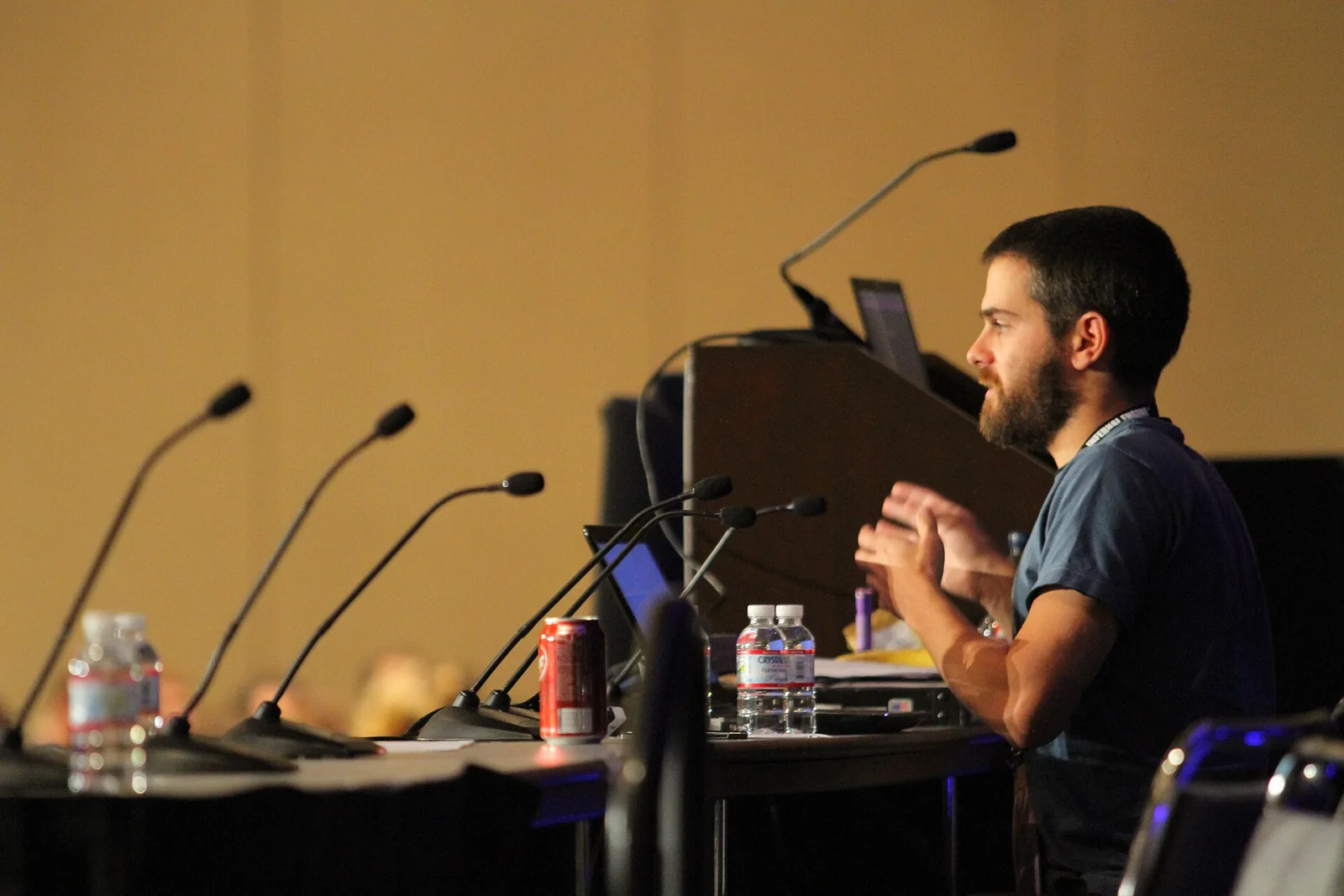
Hanford Lemoore presented Maquette, a puzzle game where the world you are standing in also exists as a miniature model in front of you, so an object placed in the model becomes a full-size feature of the world around you. Michael Brough showed The Sense of Connectedness, built around memory and the passage of time. Nicolai Troshinsky showed Loop Raccord, where the player splices segments of video into a continuous motion.
Stephen Lavelle’s Opera Omnia – demonstrated at the session by Daniel Benmergui – asks the player to construct a history that justifies a given end state. Agustin Perez Fernandez showed Mantra, an unreleased piece intended to induce a meditative state. Jason Rohrer debuted Inside a Star-Filled Sky, a recursive shooter where descending into an enemy generates a new level from its shape.
The part that was not a video game
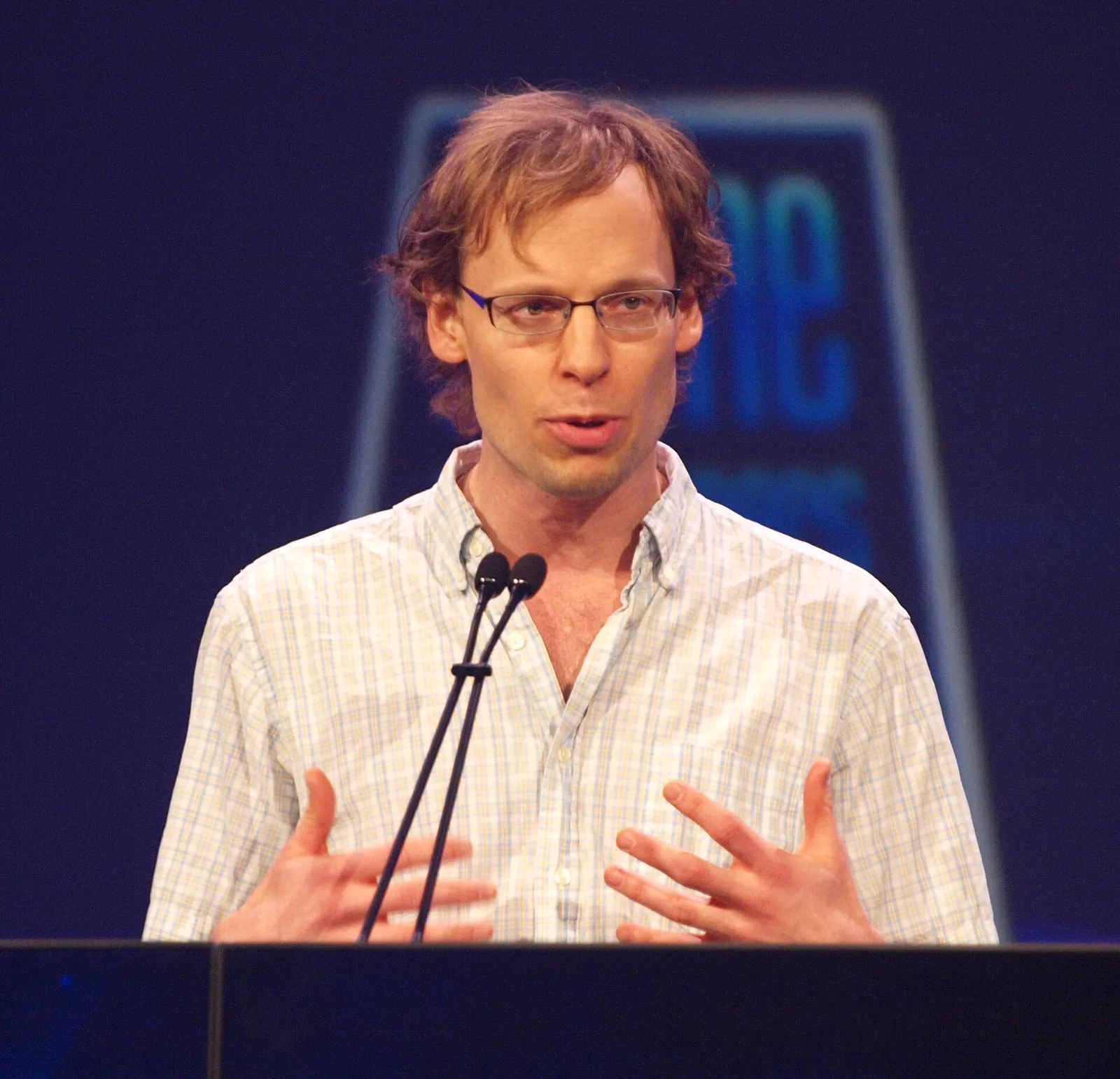
Andy Schatz presented work on user-generated content, including Farbs’ wiki-based game Playpen, and brought Farbs into the discussion of why user-generated play is both promising and frustrating.
Then the session did something it had not done before: it ran a live game. USC students Mihir Sheth and Asher Vollmer led the audience in a round of Ninja, the physical playground game, and rules for it and for Andy Nealen’s Grow 21 were handed out afterwards.
A room of several hundred game developers standing up to play a physical game is a strange image and a deliberate one. The session’s brief is approaches to interactivity that have not been tried, and there is no rule that says the interactivity has to be on a screen.
What happened next
Maquette eventually reached a commercial release, a decade after this showing. Loop Raccord picked up festival recognition in the year that followed. Inside a Star-Filled Sky remains the kind of game people describe as difficult to explain and easy to remember.
Others did not ship at all, which is the normal outcome and the reason a session like this has archival value. The 2011 recap is the only accessible record that some of these projects existed.
Reading a line-up like this today
The clearest pattern is how many of the entries are about structure rather than subject. Splicing video, constructing a justifying history, descending into a level generated from an enemy’s shape – each one is a proposal about how a game could be organised, not about what it is about.
Our view is that this is what separates the workshop’s line-ups from a normal indie showcase. A showcase selects for games people will want to buy. This session selected for arguments, and an argument can be interesting even when the game around it never arrives.
More from the archive
The rest are footnotes, and that is the normal outcome for a session built to test ideas rather than products.
Playpen and the user-generated question
By 2011 the session had been running for most of a decade – the background is in the workshop overview. Andy Schatz’s segment covered his own work on user-generated content and brought in Farbs’ Playpen, a wiki-based game where players build the game as they play it. The discussion afterwards was about both the promise and the frustration, which in 2011 was a live argument rather than a settled one.
The frustration part has aged into consensus. Systems that let players build content produce enormous quantities of it and very little that other players want, and the design work moves from making content to filtering it. That is a harder problem than the one it replaced.
Why running a physical game mattered
A room of developers playing Ninja is not a stunt. It puts the audience inside an interaction rather than watching one, and for four minutes it removes every layer of technology between the players and the rules.
Handing out rules for a physical game afterwards makes the point explicit: the session is about interaction design, and the screen is an implementation detail. Several later line-ups included physical or edible work for the same reason.
Where these projects went
Maquette reached a commercial release roughly a decade later, a gap that makes the 2018 line-up look fast by comparison, which is an unusually long gap and a reminder that a prototype’s clock and a studio’s clock are different. Loop Raccord picked up festival recognition in the year after this showing. Inside a Star-Filled Sky remains available and remains difficult to describe.
The rest are footnotes, and the archive is the only place several of them are recorded at all. That is the argument for keeping session recaps online rather than treating them as event ephemera.
Images: Experimental Gameplay Sessions and Game Developers Conference photography via Wikimedia Commons (CC BY).