Key takeaways
- An observer fires a single one-tick pulse on a block update, which is exactly what a crop farm needs and exactly what a clock cannot do.
- A clocked farm runs all night doing nothing; an observer farm is idle until the plant actually grows.
- Scaling is horizontal, not clever – the same three blocks repeated, sharing one water channel.
Watch an observer farm fire once and the appeal is obvious. A sugar cane block grows, a piston punches out, the column drops, and the circuit goes silent again. Nothing ticks, nothing runs, nothing costs you frames while you are two thousand blocks away.
That is a design decision, not an accident, and it is worth understanding because the same pattern shows up in every efficient farm in the game.
What the observer is actually doing
An observer watches the block directly in front of its face. When that block changes state – grows, is placed, is broken, changes its blockstate in any way – the observer emits a redstone pulse from its back lasting one game tick.

One tick is short. It is long enough to fire a piston and nothing else, which is why the design is so clean: the piston extends, breaks the block, and retracts before anything downstream has time to react. There is no timing to tune because there is no timing.
Why a clock loses
The alternative design is a repeater or hopper clock firing the piston every few seconds regardless of whether anything has grown. It works. It is also worse in every measurable way.
A clock ticks constantly, which means block updates and piston movements every cycle whether or not the farm produced anything. Multiply that by the fifty columns you eventually build and you have a permanent, pointless load on the chunk. An observer farm does nothing until the game hands it something to do.
The timing detail nobody mentions
Sugar cane grows on random ticks, which means the interval between harvests is not fixed. Any clock you tune is either firing too often – wasted work – or too rarely, leaving cane sitting at full height. The observer design sidesteps the entire question by reacting instead of guessing.
Reading the pulse
If you want to see what the circuit is doing, put a redstone lamp on the observer output instead of a piston. The lamp flickers once per growth and stays dark otherwise, which makes the whole design legible in a way a wall of pistons never is.
Scaling without breaking anything
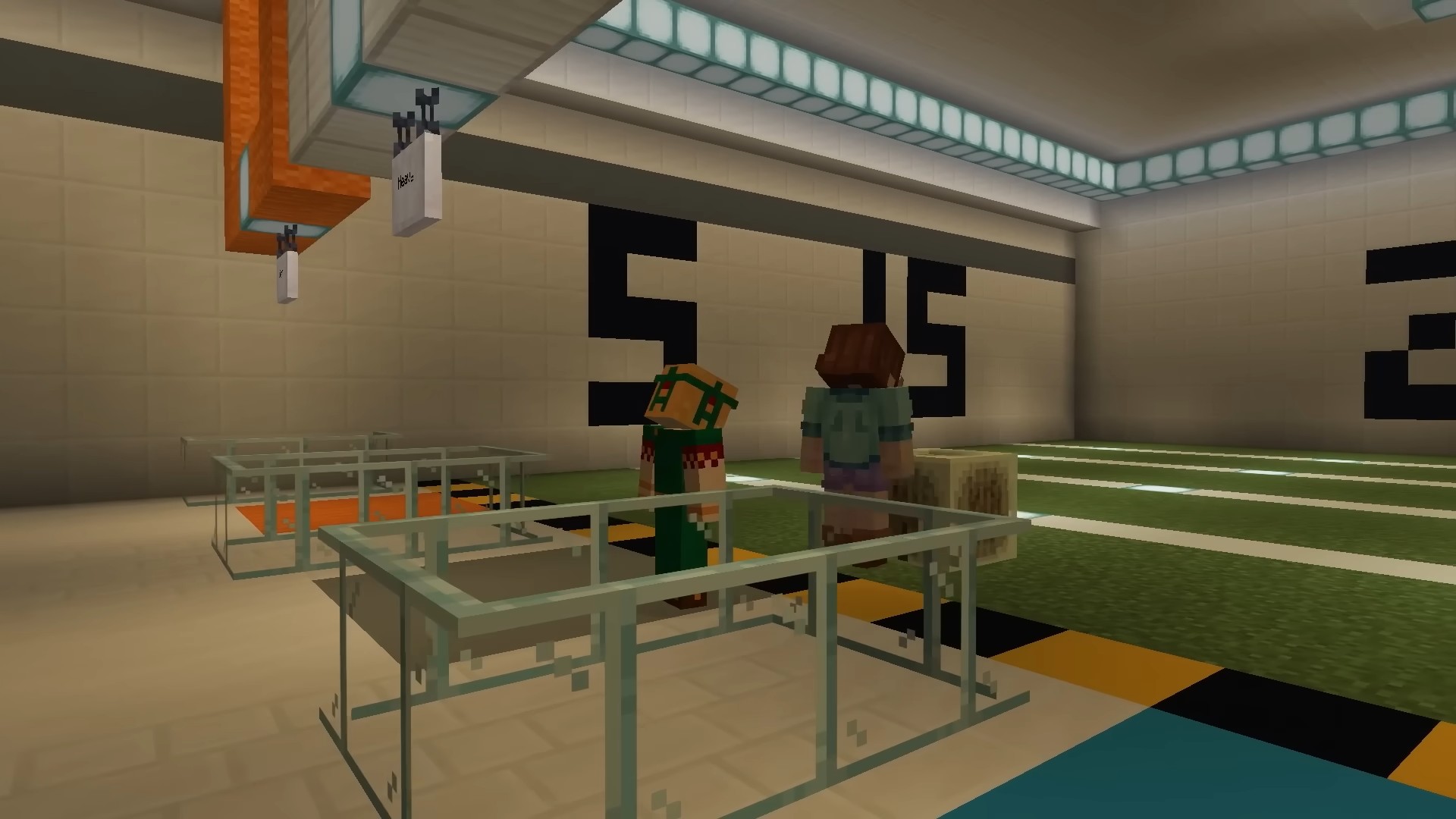
The scaling strategy is boring on purpose. Each column is an identical unit: plant, observer, piston, and the same water channel running beneath all of them to a single hopper. You do not rewire anything as you grow it – you repeat it.
The two things that do change at scale are collection and chunk boundaries. Water only carries items eight blocks from a source, so a long row needs a source block every eight. And a farm that straddles two chunks will behave oddly when only one of them is loaded, so keep a single farm inside one chunk where you can.
If you want the step-by-step build rather than the theory, the full sugar cane farm guide covers the layout block by block.
What it costs to run
Almost nothing, and that is the headline. An idle observer is not polling the block in front of it every tick – the game notifies it when that block updates. A farm of fifty columns sitting in a loaded chunk with nothing growing is fifty blocks doing no work at all.
Compare that with a hopper clock, which moves items back and forth continuously to generate its pulse. Hopper clocks are the single most common cause of a base that runs at half the frame rate it should, and they are usually powering something that does not need a clock in the first place.
The practical rule: if the machine is waiting for an event the game already tracks – a plant growing, a block being placed, an item entering a container – use an observer or a comparator, not a timer.
Where the design fails
It fails wherever the crop does not produce a block update the observer can see. Wheat, carrots and potatoes change blockstate as they grow, so an observer facing the crop works. Melons and pumpkins grow a fruit next to the stem, so the observer has to watch the space where the fruit appears, not the stem.
And it fails completely on anything that does not grow at all – a mob farm needs a different trigger, usually a pressure plate or a timer, because mobs do not update blocks by existing.
The broader pattern
Once you see it, the observer-pulse pattern is everywhere in efficient redstone: react to the event, do one thing, go back to sleep. Flying machines, auto-smelters, item sorters and automatic door circuits all use the same logic.
The reason it matters beyond elegance is load. A base full of clocked machines is a base that runs badly; a base full of event-driven machines is silent until something happens. That difference is invisible on a single farm and very visible on a server with forty of them.