Key takeaways
- A working automatic door is a trigger, a short delay and a piston or door – everything else is decoration.
- Pressure plates are the worst trigger in survival because mobs and items stand on them; observers and tripwire are better.
- Most failed door circuits are wrong because of piston update order, not because the redstone is wrong.
Automatic doors are the first redstone build almost everyone tries, and the first one almost everyone abandons. The circuit itself is three components. What breaks is everything around it: the door opens but never closes, the piston fires once and jams, a zombie stands on the plate all night with the door hanging open.
This is the version that survives an actual survival world, plus two variants for when the basic one is not enough.
The three parts
Every automatic door is the same shape. A trigger tells the circuit somebody is there. A delay decides how long the door stays open. An actuator – an iron door, a piston, or a pair of pistons – does the moving.

Choose the trigger first, because it decides the rest. A pressure plate is instant and terrible: any mob, any dropped item and any wandering villager sets it off. A tripwire is better and nearly invisible. An observer watching a block you break or place is the most controlled of the three, and the one to use if the door protects anything.
What you need
One iron door or two pistons, one trigger of your choice, redstone dust, one repeater, and a solid block to build the frame into. A comparator is optional and only matters for the timed variant below.
Building the basic door
1. Frame it
Put the door in a two-block-tall gap with solid blocks either side. If you are using pistons instead, the pistons face each other across a one-block gap with a block in front of each.
2. Run power under the floor
Dig one block down in front of the doorway, run dust from the trigger position back to the door block, and cover it. Dust powers the block it sits on and the door next to that, which is the part most tutorials skip explaining.
3. Insert the delay
Put a repeater between the trigger and the door, set to two or three ticks. Without it the door slams shut on you as you walk through, because the trigger releases the moment you step off.
4. Mirror it inside
Repeat the trigger on the other side. A door that only opens from outside is a door that traps you in your own base at the exact moment a creeper walks in.

One more thing the basic build needs in survival: light. A doorway that is dark on the inside spawns mobs directly behind the door you just opened, and the first time it happens you will assume the redstone did it. Put a light source in the entry before you blame the circuit.
Three variants worth knowing
Hidden piston door
Two pistons pushing matching blocks into a doorway, wired to a tripwire under the approach. It reads as a wall until it opens. Cost: more redstone and a much higher chance of getting the update order wrong.
Timed door
Add a second repeater chain so the door stays open for a set number of ticks regardless of whether the trigger is still active. This is the variant to use on a mob farm entrance or anywhere you walk through carrying a full inventory.
Mob-proof door
Trigger from an observer facing a lever or button rather than the floor. Nothing that wanders into your base can activate it, which is the entire point, and the cost is that you have to press something.
Why yours is not working
Four causes, in the order they actually happen. The repeater is missing or set to one tick, so the door closes into your face. The dust is powering the wrong block – dust powers the block underneath it and the block it points into, not everything nearby. The pistons are pushing blocks that cannot be pushed, such as a chest or an obsidian block. Or the two sides are wired together in a loop that leaves the circuit permanently on.
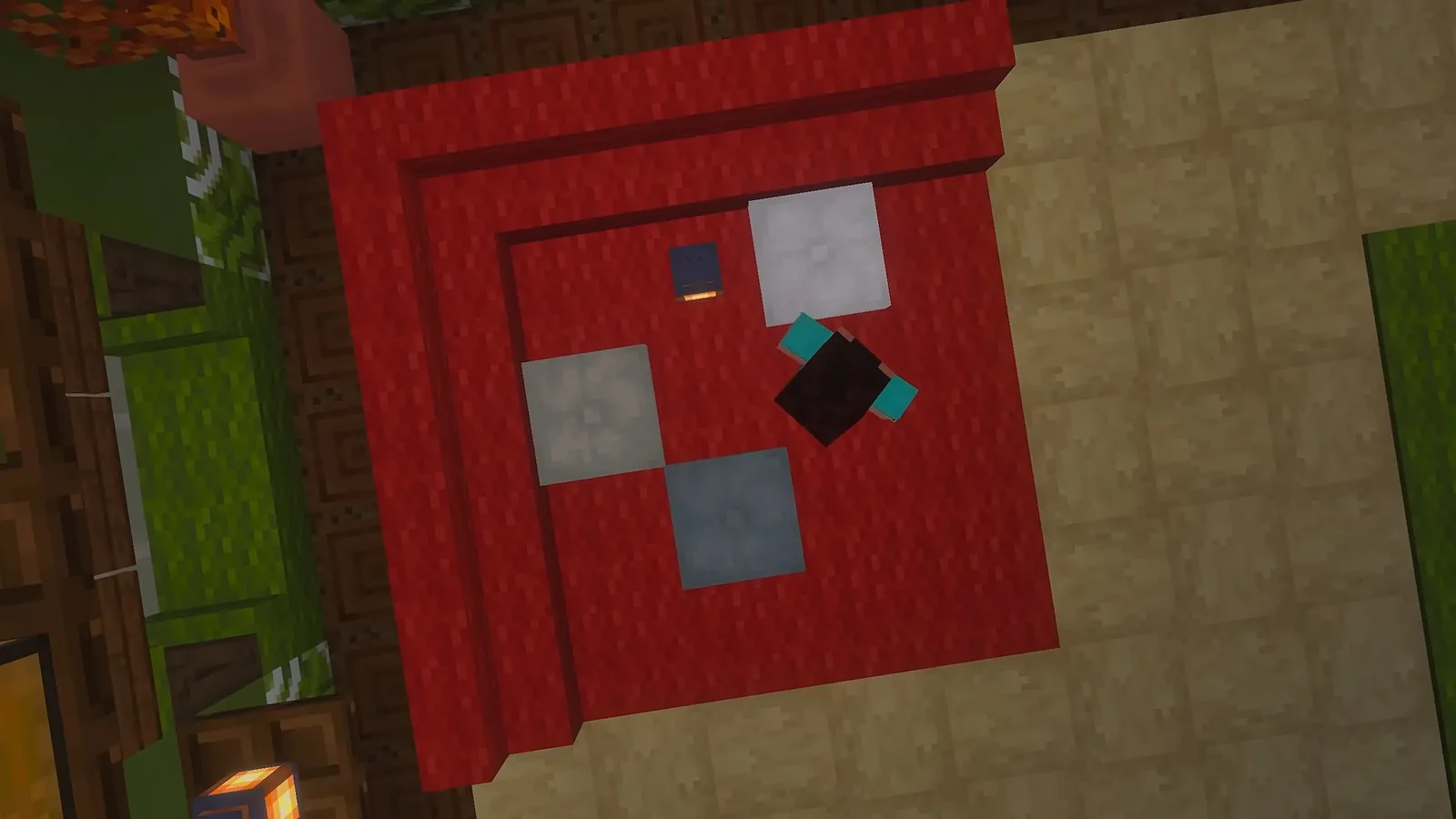
If the door works when you place it and stops working after a chunk reload, the problem is almost always a piston that was left extended when the chunk unloaded. Rebuild it so the resting state is unpowered.
Is it worth building
For a base entrance, yes – not for security, because doors are not security in a game where anyone can mine a wall, but because a door you do not have to click is a door you will actually close behind you.
For a farm, absolutely. Automatic doors are how you keep a sugar cane or crop farm sealed without stopping to click every time you collect. The circuit here is the same family as the observer builds those farms use, and learning one teaches the other. The same idea scales into a full observer-driven farm circuit.
And if you are building this for looks rather than function, spend the redstone on the hidden piston version. A wall that opens is worth three repeaters more than a door that opens on its own.