Key takeaways
- Formations Nether adds a set of small structures to the Nether and nothing else – no blocks, no mobs, no items.
- One file covers Fabric, Forge, NeoForge and Quilt from 1.21 through 26.3, which is unusually broad support for a worldgen mod.
- It requires the Formations structure library, and because it only adds generation it is server-side with no client requirement.
The Nether has a structure problem. Fortresses and bastions are both large, both dangerous, and both rare enough that you can cross a thousand blocks of crimson forest without meeting anything built. The space between the big structures is empty, and that emptiness is why Nether travel feels like a corridor rather than a place.
Formations Nether is a narrow fix for exactly that. It adds a set of small structures spread across the Nether biomes and does nothing else. No new blocks, no mobs, no items, no config-heavy systems. For a mod with over six million downloads that is an unusually disciplined scope, and it is the main reason it is worth looking at.
What this mod does
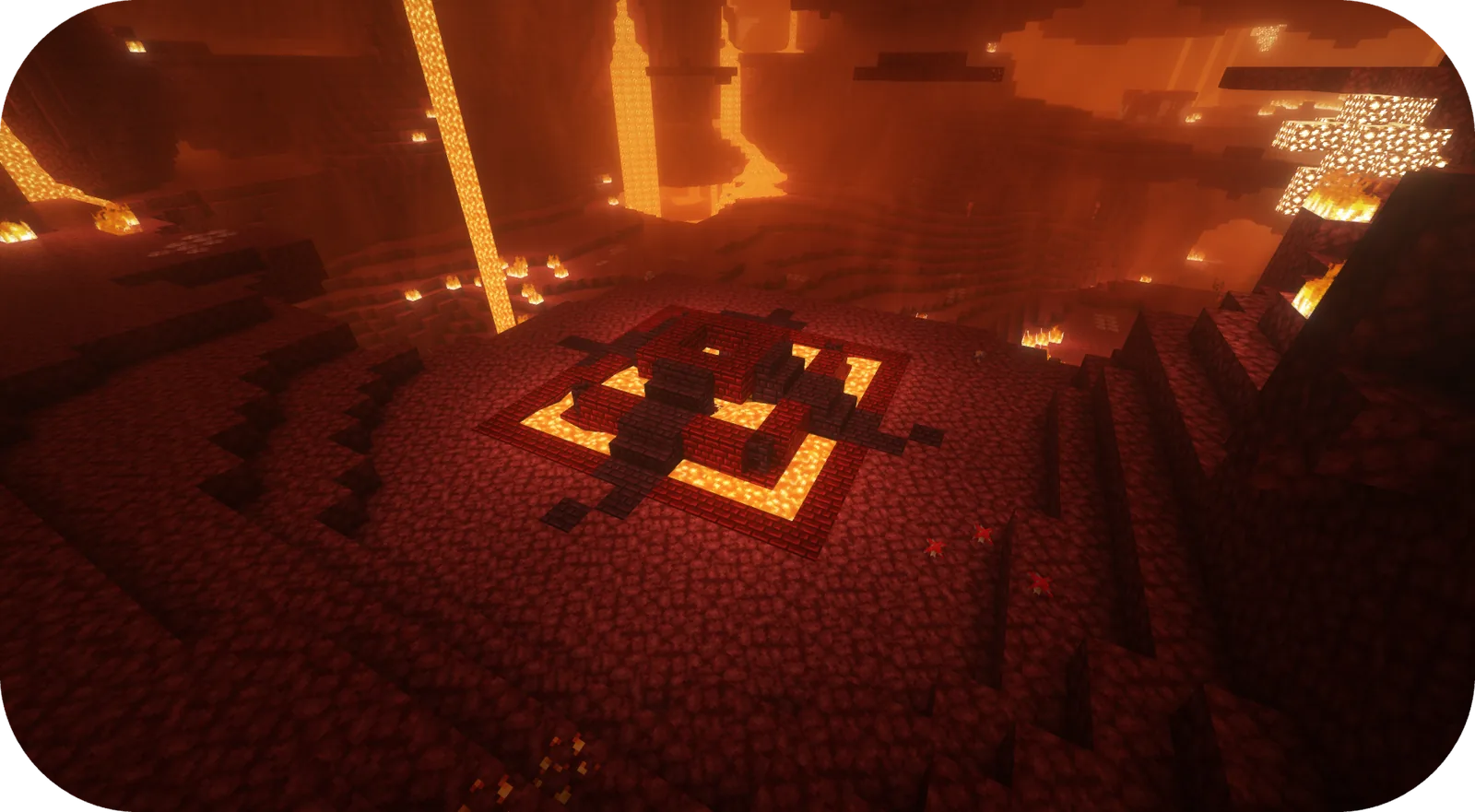
It places small structures throughout the Nether dimension. They are built from vanilla blocks, they fit the biome they generate in, and they are sized to be found incidentally rather than sought out. You are flying or walking between two points and there is something there.
That is the whole feature list, and it is deliberate. The mod is by the same author as the broader Formations family, and the design philosophy across all of them is that generated content should look like it could have shipped with the game. Nothing here will make you stop and check whether a mod is installed.
Crucially, it does not touch fortress or bastion generation. Those still generate on vanilla rules at vanilla spacing. Formations Nether fills the gaps between them rather than competing for the same placement slots, which is what makes it safe to run alongside other structure mods.
Key features
Vanilla-block construction. Every structure is built from blocks already in the game. This matters more than it sounds – it means the mod can be removed from a world without leaving unknown block errors, and it means the structures read correctly under any resource pack.
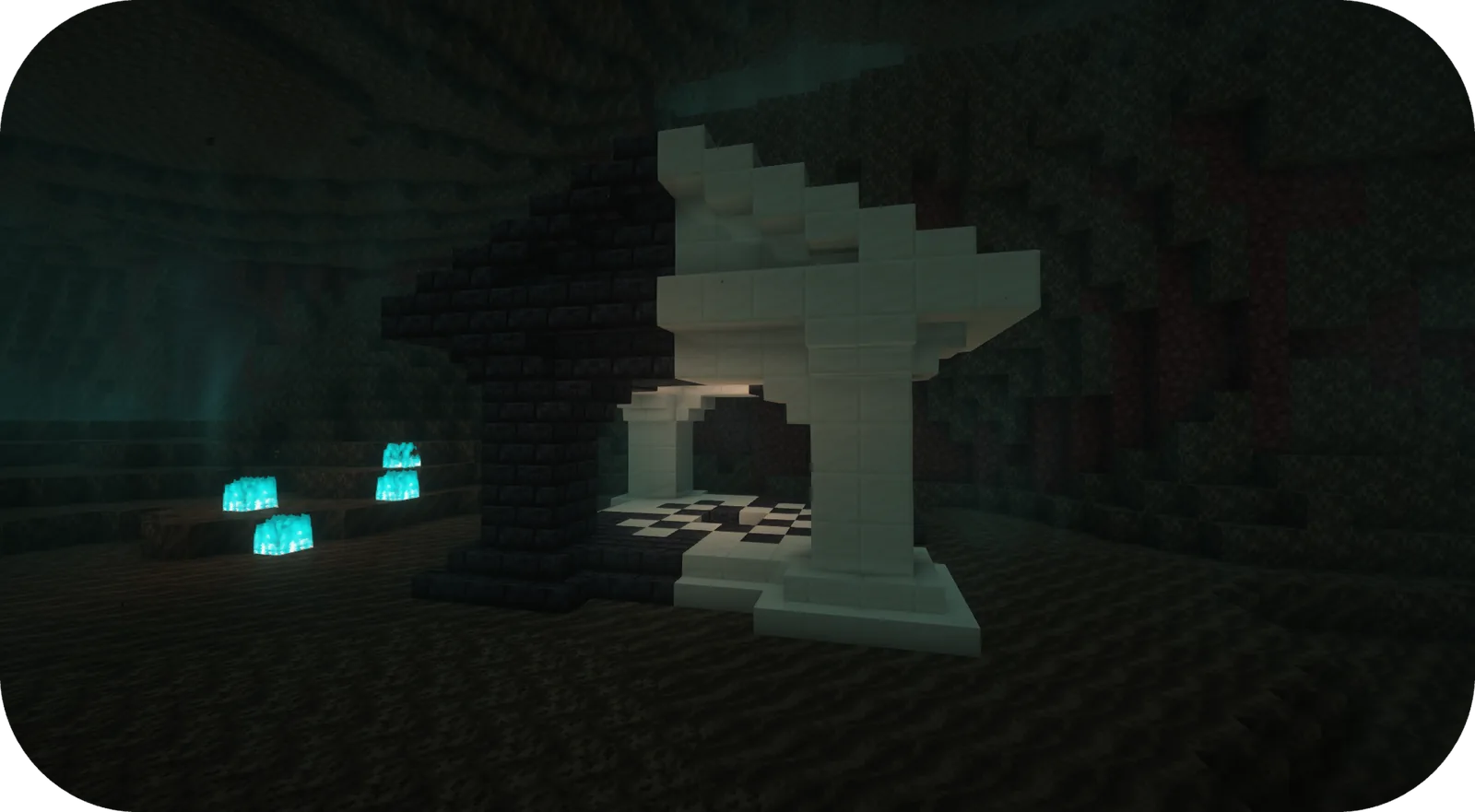
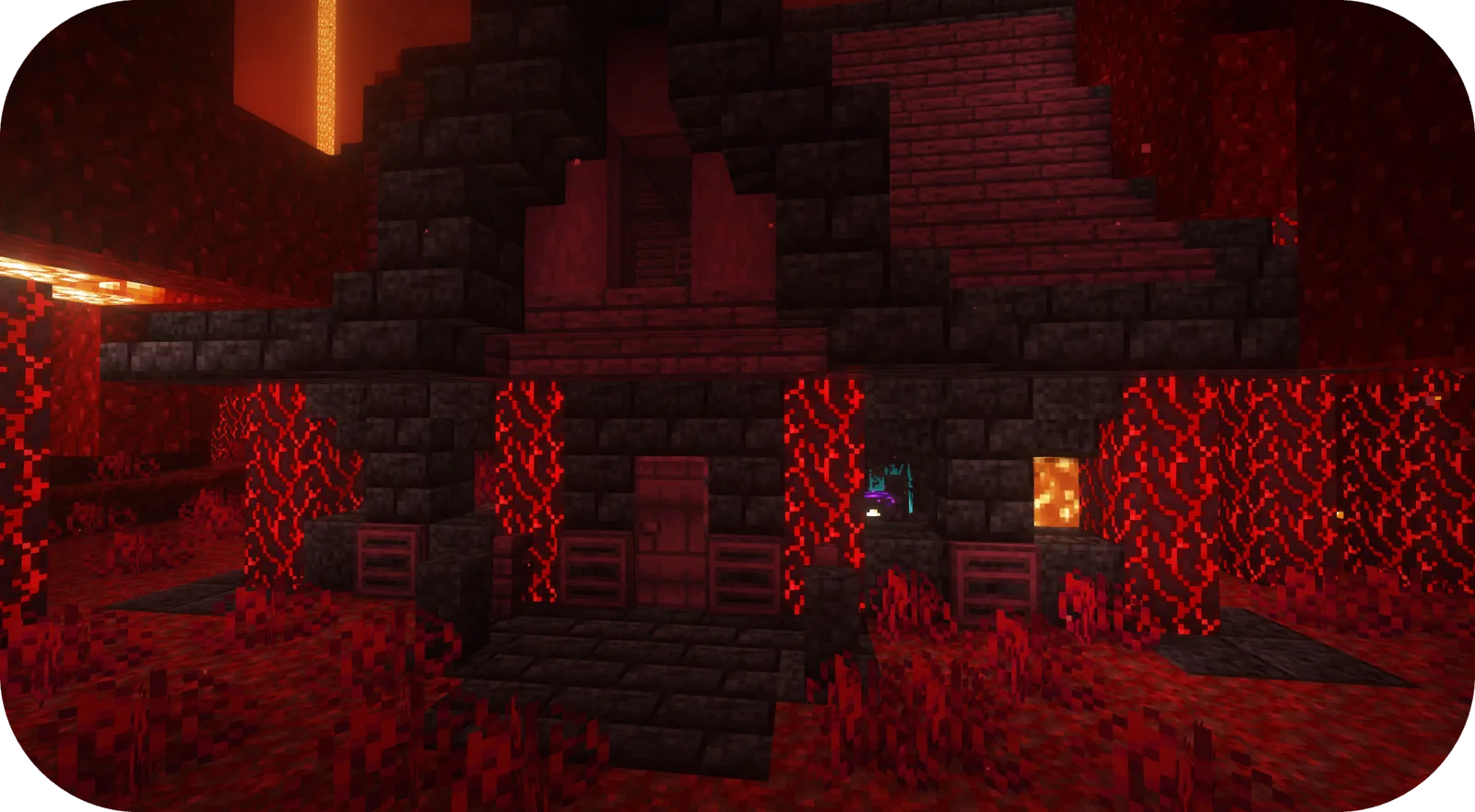
Per-biome placement. Structures are matched to the Nether biome they generate in rather than being scattered uniformly. The soul sand valley formations look like soul sand valley, the crimson forest ones look like crimson forest.
Small footprint. These are not dungeons. They are formations – the name is accurate. Most are a handful of blocks of built detail rather than enterable structures with loot rooms, which keeps worldgen cost low and avoids the problem where every modded structure becomes a loot vending machine.
Modpack permissive. The author explicitly permits modpack inclusion, which removes the licensing question that stops a lot of structure mods being bundled.
No configuration required. It works on install. If you want to tune spacing, that is handled through the structure library rather than a mod-specific config file, which means it responds to the same density controls as everything else built on that library. Our sparse structures review covers the global approach to structure density if you end up with too much.
Compatibility
This is the strongest part of the package. The current release covers Fabric, Forge, NeoForge and Quilt in a single file, and its supported version list runs from 1.21 through 26.3 continuously. That is a very wide window for a worldgen mod, and it is only possible because the mod adds structures through a library layer rather than hooking version-specific generation code.
Three compatibility notes:
- It requires the Formations structure library. That is a separate download and it is a hard dependency. If the mod fails to load, this is almost always why.
- It is server-side. Structures generate on the server, so clients do not need the mod. On a multiplayer server you install it once and nobody has to download anything.
- It coexists with other structure mods. Because it does not modify vanilla structure placement, running it alongside a dungeon mod or a village overhaul does not produce the usual overlapping-structure problems. Our structure mod roundup covers which combinations do conflict.
The one real caveat applies to every worldgen mod: structures only generate in chunks created after installation. Adding it to an existing world means the Nether you have already explored stays empty. Our guide to adding worldgen mods to an existing world covers the options, and for the Nether specifically the practical answer is usually to reset the Nether dimension rather than fly further out.
How to install
Standard two-file install:
- Download the Formations structure library for your loader and version.
- Download Formations Nether for the same loader and version.
- Put both in the mods folder.
- On a server, both go in the server’s mods folder. Clients need neither.
If you are adding it to an existing world, decide the Nether question first. Deleting the Nether dimension folder regenerates it with the new structures but destroys anything you built there, so back up first. Our server backup routine covers doing that properly, and our mod installation guide covers the basics if this is a first mod.
Is it worth installing
Yes, with one qualification. If your complaint about the Nether is that there is nothing to look at between fortresses, this fixes exactly that at close to zero cost – no client install, no new blocks, no performance impact beyond ordinary structure generation, and a version support window wide enough that it will not be the thing holding your pack back.
If your complaint about the Nether is that there is nothing to do, this is not that mod. The structures are scenery and incidental detail rather than content with objectives attached. There is no new loot tier, no new mob to fight, no new progression step. For that you want a Nether overhaul or a dimension mod, and our dimension mod notes cover what those cost in comparison.
The honest framing is that Formations Nether is infrastructure rather than a feature. It makes the dimension feel inhabited enough that crossing it is not purely a transit cost, and it does that without asking anything of your client, your server’s performance budget or your update schedule. That combination is rare enough to be worth the two-file install on almost any pack, and our Nether base building guide covers what to do with the better-looking terrain once you have it.
Images: Formations Nether project gallery.