Ecologics 2.6.1 landed on 29 September and it is a backport rather than a new feature release – maple trees, previously only in the newer branch, are now available on 26.2. The maple set is the most involved thing the mod has added in a while, and it is worth understanding what it actually gives you.
Maple trees, and where they grow
Maples generate in Forest, Flower Forest and Windswept Forest – three biomes that are common, early and previously interchangeable. Dropping a distinct tree into them is a cheap way to make the starting area less uniform.
The leaves come in four colours: red, orange, yellow and green. Which you get is not random. Grow a sapling near flowers and you get red and green; the green variant may have bees if grown near flowers.
That is a nicer mechanic than a random roll, because it gives you a reason to plant flowers and a way to plan a colour. A builder who wants a red maple avenue can produce one deliberately rather than resetting saplings until the game cooperates.
Sap and syrup
The functional half. Maple trees can be tapped for sap, and the sap can be boiled into syrup in heated cauldrons.
Two things about that are worth noting. First, it uses the heated cauldron mechanic rather than a custom machine, which keeps it in vanilla-adjacent territory – no new UI, no power system, just a cauldron over fire. Second, sappy maple logs are a distinct block, so the tapping is visible on the tree rather than hidden in a menu.
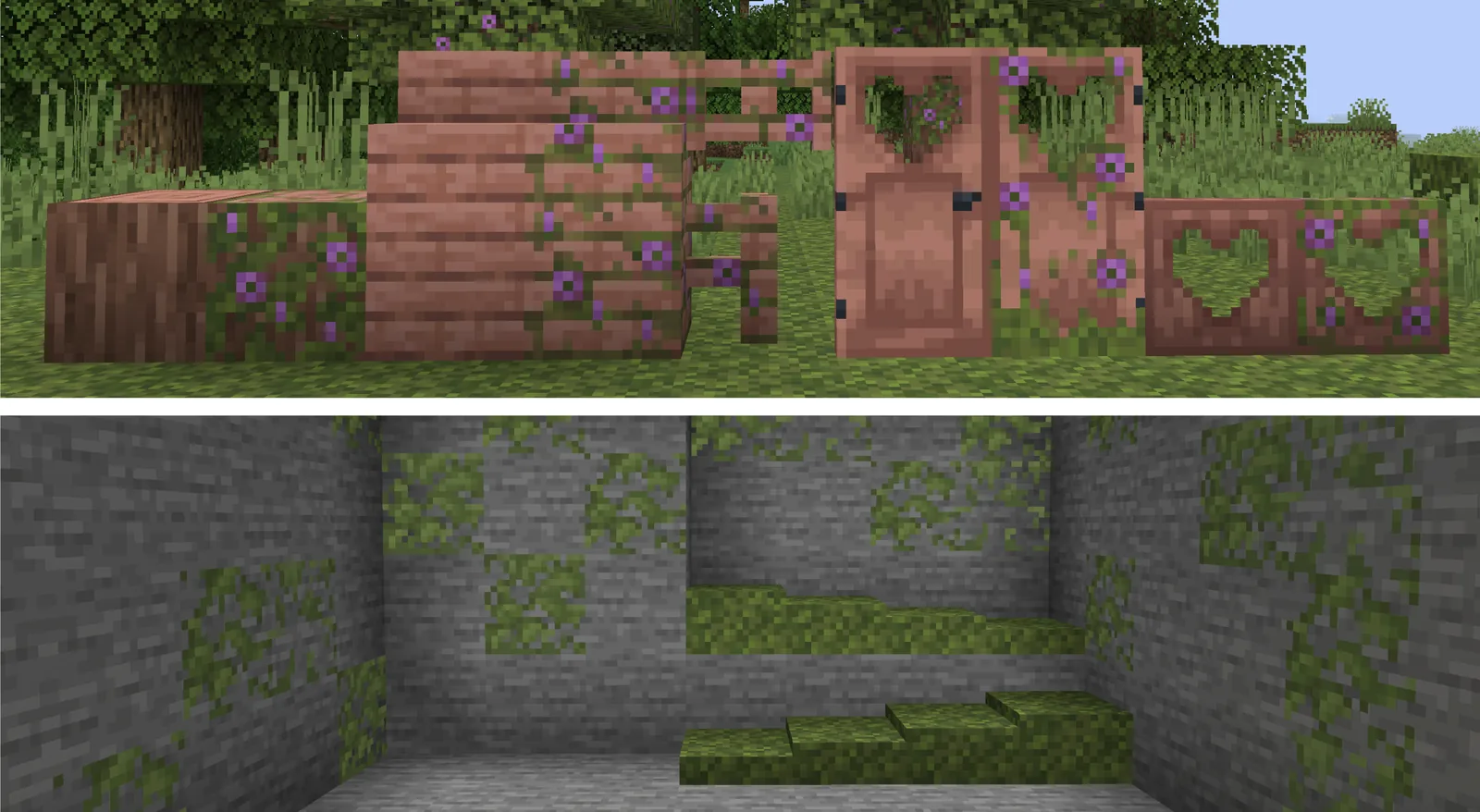
The full wood set ships with it – planks, stairs, slabs, doors, the usual – so maple is a complete building material rather than a decorative leaf on a vanilla trunk. For anyone assembling a palette, a warm wood with four leaf colours attached is a genuinely useful addition.
Why backport it
Because plenty of packs are still on 26.2 and will be for a while. Content mods that only move forward strand every pack that has not migrated, and a backport is the cheapest way to keep those packs current without forcing a version jump.
It also says something about where the 26.3 adoption curve is. Two weeks after release, a mod author judged it worth spending time on the previous version, which means the previous version still has a substantial audience. The overall picture is tracked in the 26.3 support status.
What Ecologics does generally
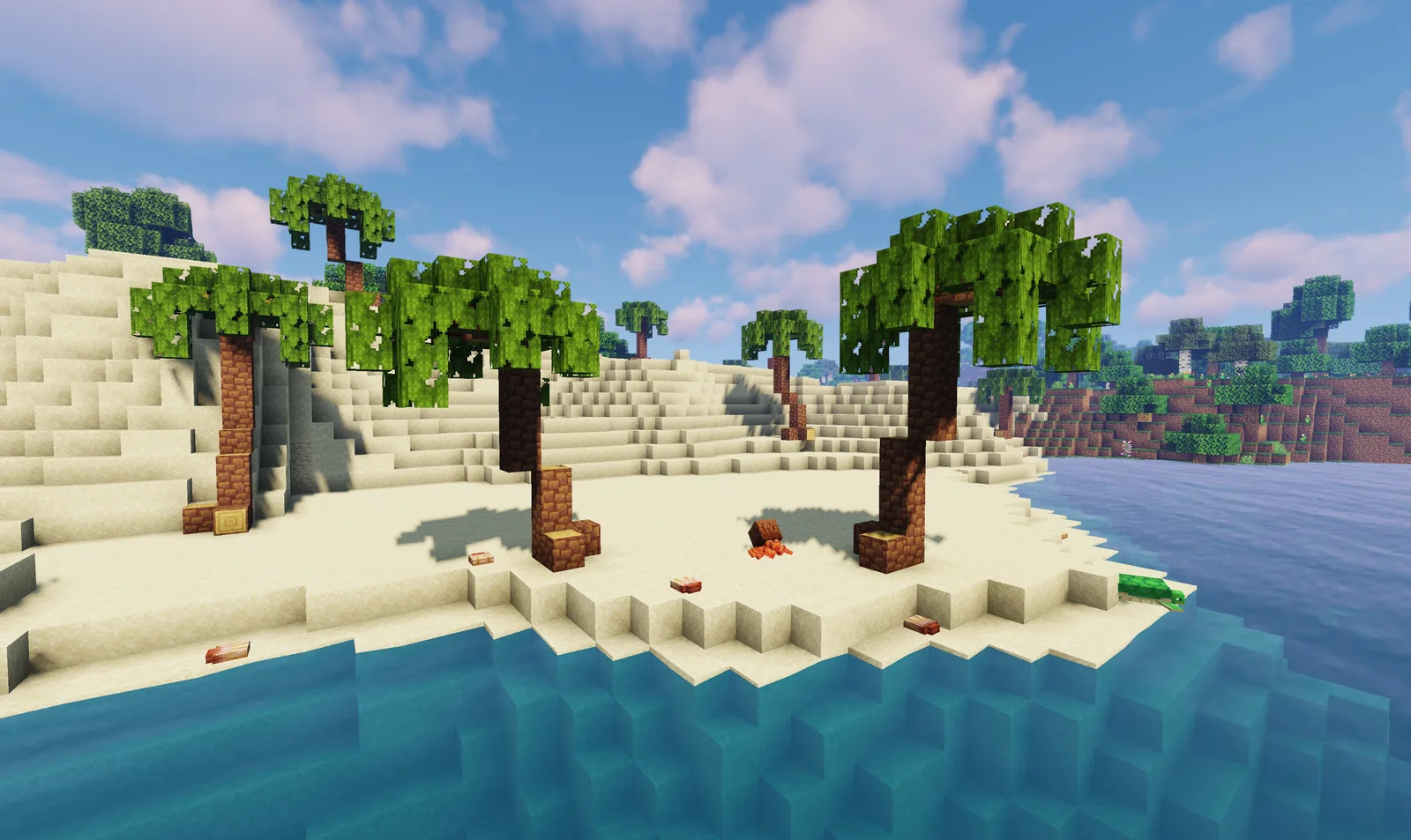
It extends vanilla biomes with content that feels like it was always meant to be there rather than adding new biomes of its own. Coconut palms on beaches, penguins on ice, crabs in swamps, prickly pears in deserts, and now maples in forests.
The restraint is the appeal. Each addition is scoped to one biome, uses vanilla-adjacent mechanics, and does not require you to learn anything. It sits in the same category as a vanilla-plus biome overhaul – improving what exists rather than expanding outward.
That also makes it unusually safe to add to an existing world. New trees generate in newly created chunks, but the mod does not restructure terrain, so the seam where old chunks meet new is a change in vegetation rather than a cliff.
The 26.3 line
Worth keeping the versions straight. 2.7.0_2 is the 26.3 build, released 27 September with a loot table fix for prickly pears. 2.6.1 is the 26.2 build with the maple backport.
So the higher version number is not the newer feature set on your branch. Read the game version tag rather than sorting by version number, which is the recurring trap with mods that maintain parallel lines.
Worth installing?
Yes if you want the early-game biomes to have more in them without changing how the game plays. The maple set alone is a reasonable argument – four leaf colours you can steer, a full wood set, and a small production chain that does not need a tech tree.
Less compelling if you already run a large biome mod that adds its own trees, in which case you will have overlapping content competing for the same forest.
Add it early in a world’s life if you can. Like all worldgen content it only appears in fresh chunks, and forest is exactly the biome you explore first, so the usual caveats for existing worlds apply with more force than usual.
Steering the leaf colour
The flower rule is the part worth planning around. Growing a sapling near flowers produces red and green variants, and the green one may carry bees if grown near flowers.
For a builder that means colour is a placement decision rather than a reroll. If you want an avenue of red maples, plant flowers along it before the saplings. If you want the full four-colour range, vary what is nearby.
The bee interaction is a small bonus that pays off – a green maple with a nest in it is a decorative tree and an early honey source at the same time.
The syrup chain in practice
Tap a maple for sap, boil the sap in a heated cauldron, get syrup. No machine, no power, no new interface – a cauldron over a fire or a campfire does the work.
That restraint is why the feature fits. A mod that added a Sap Refinery with its own GUI would be asking you to learn a system for a condiment. Using a mechanic already in the game means the whole chain is legible the first time you see it.
Images: Ecologics project gallery.