Key takeaways
- MCC 63, themed Spell Bound, ran on 21 March 2026 at 8pm GMT as the second event of Season 6.
- Forty creators played in ten teams of four, with TommyInnit returning to the regular roster for the first time since MCC EC.
- The format was unchanged: eight minigames, coins, and a Dodgebolt duel between the top two teams.
MC Championship’s second event of the year landed on 21 March 2026 under the name Spell Bound. The number that matters to people who track these things is 63 – sixty-three main events since the first one in November 2019, which is a longer unbroken run than most publisher-backed esports leagues manage.
Spell Bound also carried the return that got the most attention in the announcement thread: TommyInnit back on a regular MCC roster for the first time since MCC EC, on the Pink Parrots alongside 5up, Roscumber and Tubbo.
The ten teams
Rosters at MCC are assembled by Noxcrew rather than drafted, and the mix is deliberate – a veteran or two, a builder, someone who is dangerous in Battle Box, and at least one person who will be funny when it goes wrong. Spell Bound’s ten teams ran as follows.
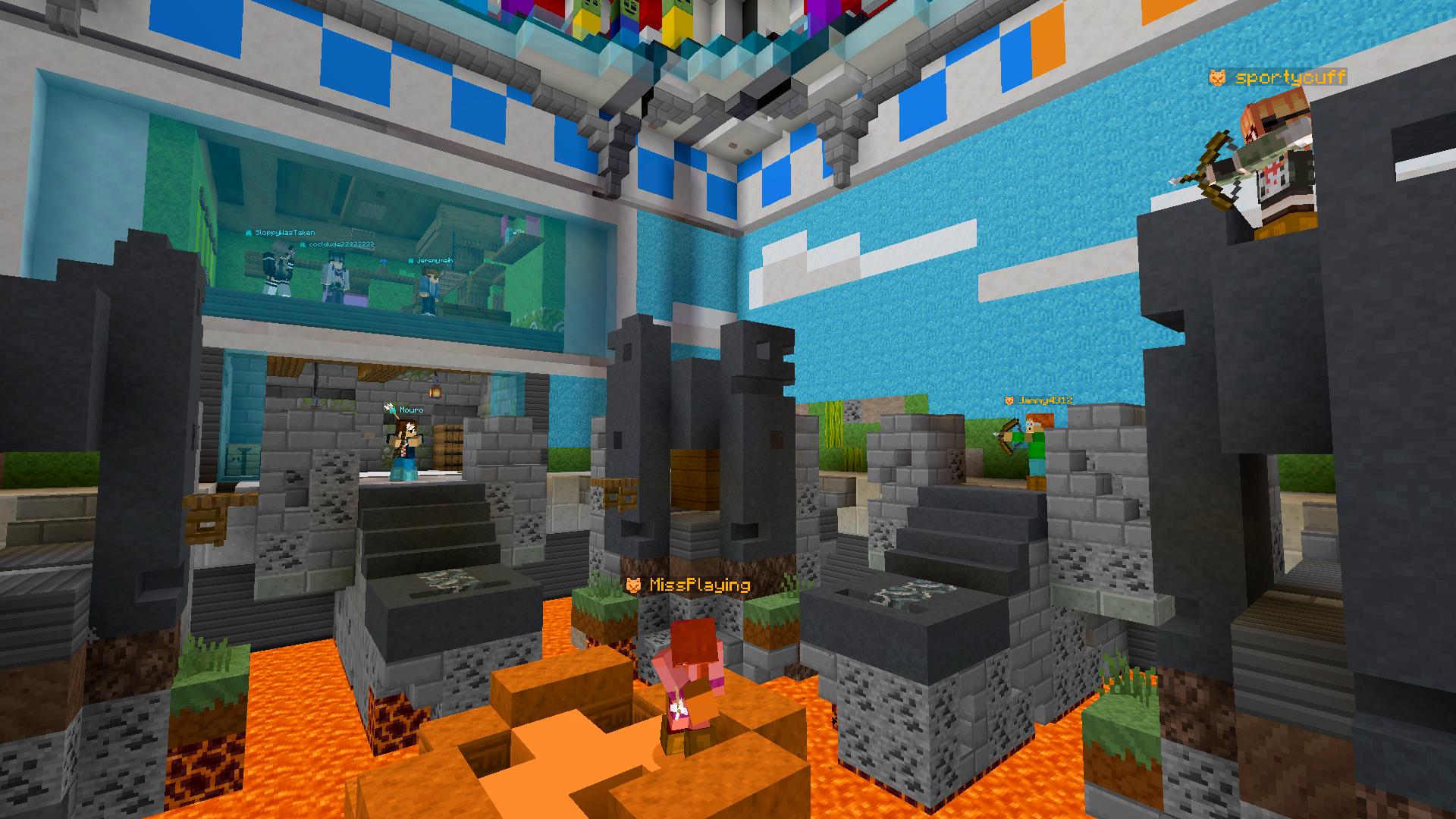
A few of those lineups are worth flagging. The Cyan Coyotes paired Smajor1995 – the tournament’s founder and its most decorated competitor – with aimsey, InfiniteDrift and Pangi. The Red Rabbits stacked Couriway, Grian, HBomb94 and Shubble, which on paper is one of the strongest four the event has fielded this season.
How the night is scored
The structure has not changed since 2019 and it does not need to. Eight minigames are drawn from a rotating pool, each one paying out coins, with later games carrying multipliers so that a bad first game is recoverable and a bad seventh game usually is not.
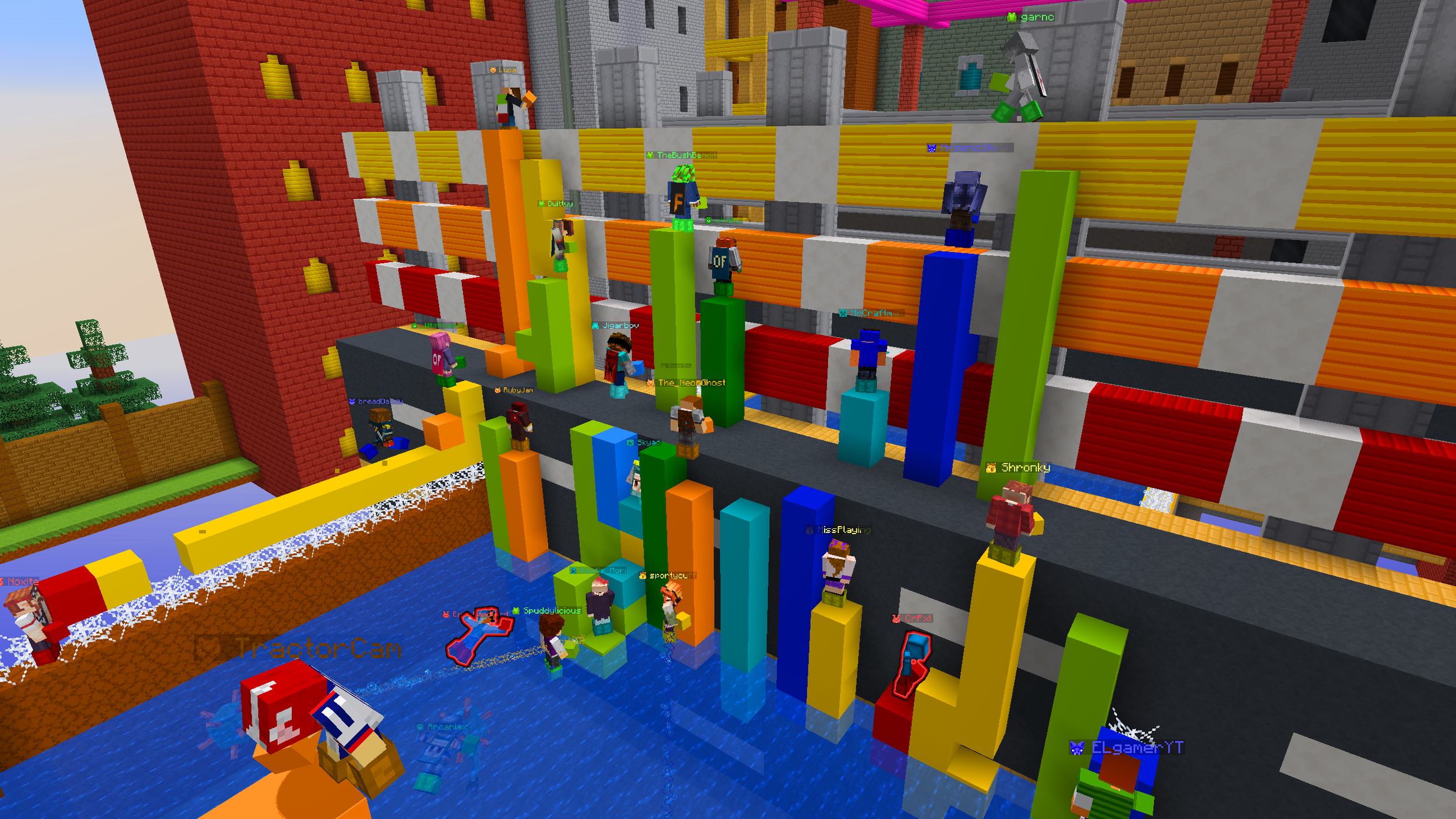
At the end of the eighth game, the two teams with the highest coin totals play Dodgebolt – a best-of-five archery duel in a small arena, one hit per arrow, with everyone else watching from the stands. It is the least fair and most watched part of the night, and every attempt to argue Noxcrew out of it has failed for seven years running.
The games themselves
The pool includes Ace Race, Battle Box, Sky Battle, Big Sales at Build Mart, Sands of Time, Parkour Warrior, Survival Games, Grid Runners, Hole in the Wall and TGTTOS. Not all appear at every event, and the order is announced in advance so teams can plan which games to spend energy on.
Most of them are legible to someone who has never played Minecraft, which is not an accident. Build Mart is a copying race. Sands of Time is a risk-management game about leaving before the timer kills you. Survival Games is a battle royale. None require the viewer to understand redstone or crafting.
Where events are won
Coin totals at MCC are decided in two places. The first is Build Mart, which rewards communication above mechanical skill and where a team that has played together before will out-score a stronger but unfamiliar four. The second is the last game of the night, whose multiplier is large enough that the standings before it are frequently irrelevant.
Everything in between is noise in the statistical sense – good teams bank coins steadily, bad teams do not, and the gap is rarely large enough to survive a multiplied final game. It is a scoring system built to keep the outcome open until the last twenty minutes, which is a broadcast decision rather than a competitive one.
What a returning name actually means
TommyInnit’s return is a story because MCC has no qualification path. There is no ladder feeding into it, no open bracket, no results-based route from playing well to appearing on the broadcast. The competitor pool is an invite list, and who is on that list is the single biggest lever Noxcrew pulls.
That is the structural weakness of the tournament and the reason it also works. An invite list built on audience means every event arrives with forty creators bringing their own viewers, which is why MCC peaked at roughly 913,000 concurrent viewers back in 2021 without a publisher spending a penny on marketing.
It also means a very good Minecraft player with no audience will never play in it. The ranked speedrun ladder is the opposite arrangement – open to anyone, invisible to most people – and the two exist side by side without connecting.
Season 6, two events in
Season 6 opened on 14 February with Double Date, built around real-life pairs. Spell Bound followed five weeks later with a standard roster shuffle and a magic theme that, as usual, was a costume rather than a rule change.
That cadence – roughly monthly, themed, same skeleton underneath – is what turns a stream into a season. Viewers do not need to relearn anything between events, which is why the format has survived long enough to have a sixty-third instalment. The full explainer on how MCC works covers the scoring and the game pool in more depth.
The thing to watch over the rest of the season is not the winners. It is whether the roster keeps widening. MCC’s audience is enormous and its competitor pool is small, and events like Spell Bound – where the headline is a returning name rather than a new one – are a reminder of how narrow the door still is.