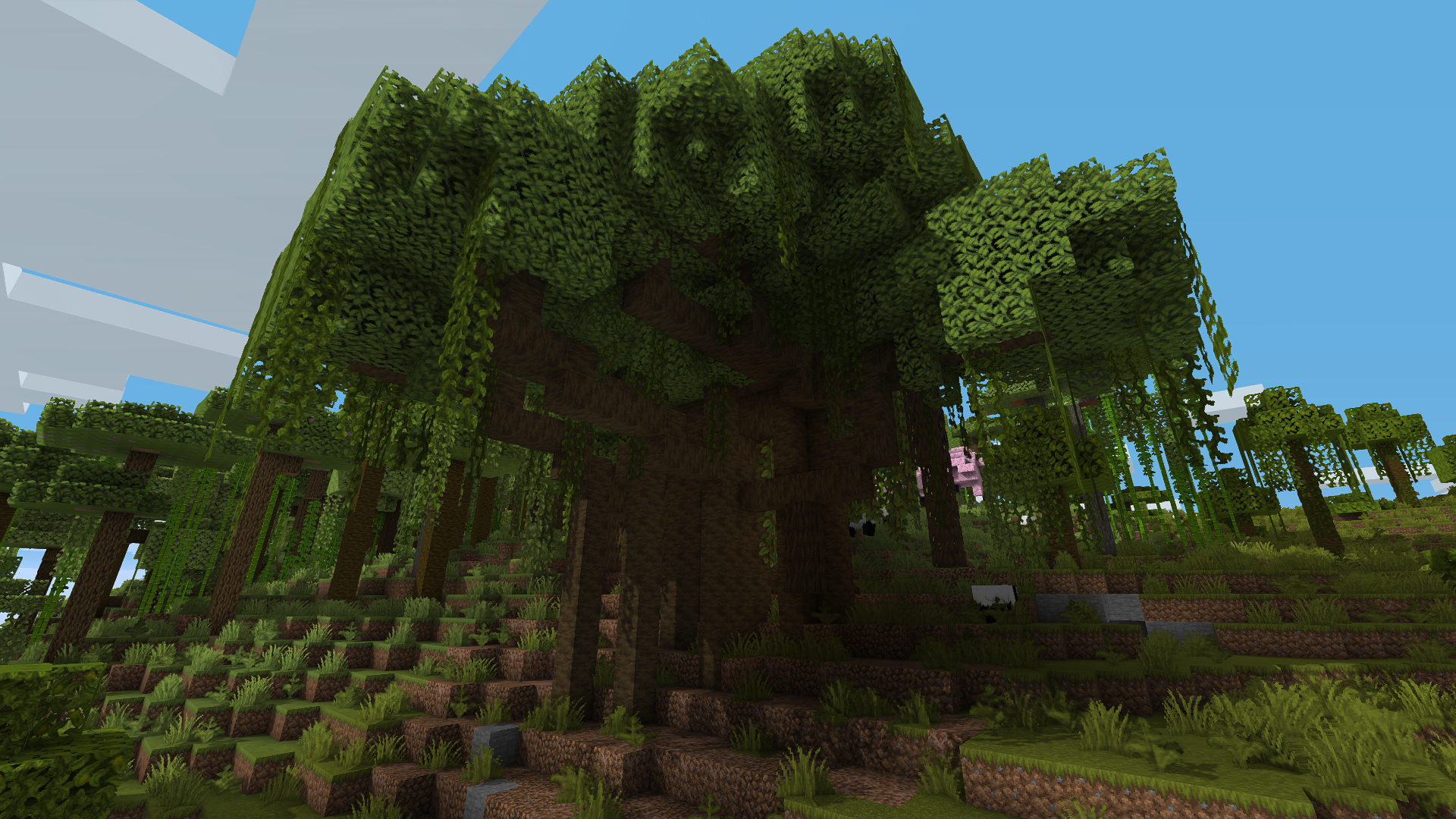
Two days after Wilderness Bound shipped, William Wythers’ Overhauled Overworld released a complete rewrite for 26.3 – and rather than leaving the new dappled forest alone, it reworked it into a temperate Asian landscape and made it the only place giant pandas live.
That is a bold reaction to a biome that is two days old, and it is a useful example of what a worldgen overhaul is for.
What WWOO is, and what it is not
It overhauls vanilla biomes. It does not add new ones. That distinction is the entire project, and it is the reason the mod exists as a separate thing from its sibling.
The author split the work in two. Expanded Ecosphere adds new biomes and builds on the older 1.19/1.20 line, at the cost of poor compatibility with other worldgen mods. WWOO focuses on reworking the vanilla set in the style of the 1.16/1.17 original, and plays well with others. The project is explicit that you install one or the other and never both.
The practical effect is that a WWOO world is recognisably Minecraft. A plains is still a plains. It is just a plains with sub-biomes, transitions and a considerably more convincing shape.
The vanilla blocks rule
WWOO uses only vanilla blocks. That single constraint is worth more to a server than most feature lists.
It means the mod can be installed server-side and players can join with completely vanilla clients. No mod folder, no version matching, no explaining to a friend why the game will not connect. The terrain changes for everyone and nobody has to install anything.
Client side is optional, server side is required, which is the shape that statement produces. For a small SMP where half the group will not install mods, this is close to the only category of worldgen mod that works.
What 3.0.0 changed
The 26.3 build is a complete rewrite rather than a port, and the changelog is candid about what that cost.
- Missing entirely: Ice Spikes and Mangrove Swamp overhauls.
- Unfinished: Mushroom Fields, Swamp and the Windswept biomes.
- Moved: the autumnal forest treatment has shifted to the Windswept Forest biome, because the dappled forest now occupies the space it used to.
- New: the dappled forest reworked as a temperate Asian landscape, with giant pandas exclusive to it.
- 3.0.1: small fixes plus gravel shores added to taiga.
The builds are marked beta, and the missing biomes are the reason. That is the right label for what this is.
The dappled forest decision
Vanilla’s new dappled forest is a temperate woodland with poplar, red shrubs and shelf mushrooms. WWOO keeps the location and rewrites the character of it, which is a more interesting choice than either ignoring the biome or reskinning it.
Moving pandas out of the jungle and into it is the part that will divide people. It is a deliberate ecological argument – pandas live in temperate mountain forest, not tropical jungle – and it is also a change to where a player expects to find a mob after years of habit.
If you are running this on a server, that is a thing to mention before someone spends an evening in a jungle looking. The vanilla behaviour and the new blocks themselves are covered in our dappled forest and poplar guide.
Add-ons, now built in
Since version 2.6.0 three former add-ons ship inside the mod and are toggled in the config rather than installed separately.
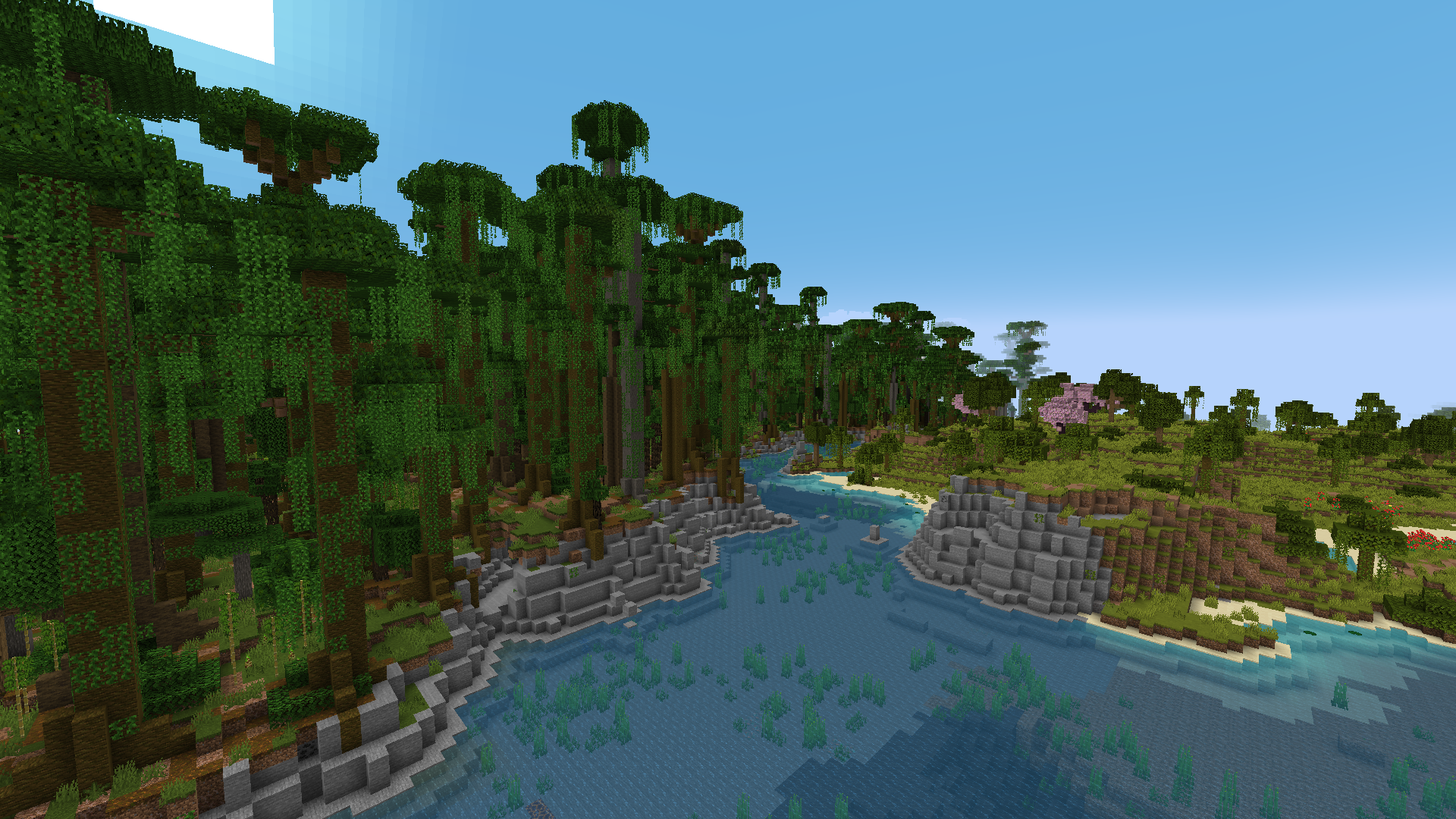
Navigable Rivers makes rivers continuous and wide enough to travel, which changes early-game movement more than it sounds like it should. Cliffs and Coves reworks coastlines away from the flat sand shelf vanilla produces. Towering Tepuis adds flat-topped highland formations as a landmark feature.
All three are off by default in the sense that they are config options rather than assumptions. Navigable Rivers is the one worth turning on first if you play with boats at all.
There is also a datapack version of WWOO for anyone who wants the terrain without a mod loader, though the config options are less accessible that way.
Compatibility and requirements
WWOO needs Lithostitched, which is the compatibility layer that lets multiple worldgen mods coexist rather than overwriting each other. That dependency is the reason the project can claim good compatibility with other worldgen mods and back it up.
It will not combine sensibly with a mod that also rewrites vanilla biomes. It combines fine with structure packs, which operate on a different layer. Licence is CC BY-NC-ND 4.0, so modpack redistribution needs care – no derivatives, no commercial use.
Reading a WWOO world
Seeds behave differently here, and the habit worth forming is to judge on transitions rather than on the spawn biome. The mod’s main selling point is that biome edges blend instead of switching at a chunk boundary, so a good WWOO seed is one where three biomes meet somewhere walkable.
The rest of the first ten minutes checklist still applies – structures, water access, a cave mouth. What changes is that terrain shape becomes a reason to stay somewhere, which it rarely is in vanilla.
Verdict
Install if you want vanilla terrain to be better rather than different, run a server with vanilla clients on it, or stack worldgen mods and need one that cooperates. Wait a version if you specifically care about Ice Spikes, Mangrove Swamp, or the Windswept biomes – those are genuinely not finished yet.
If you want new biomes rather than better old ones, Oh The Biomes We’ve Gone is one direction.
The other is Biomes O’ Plenty which asks for a client install from everyone on the server.
Images: William Wythers’ Overhauled Overworld project gallery.