Most players decide whether a seed is good by looking at it. That works for scenery and misses everything that matters, because what makes a world playable is resource access in the first hour, not what the terrain looks like from spawn.
The ten-minute checklist
- Wood within sixty seconds.
- Exposed stone or a cave mouth within a hundred blocks.
- Water, for farming and for emergencies.
- Animals in sight, for food and leather.
- At least two biomes reachable on foot.
- Somewhere defensible or diggable for night one.
Six things, all checkable before committing. A seed that fails three of them will be frustrating for hours regardless of how it looks.
Why two biomes matter
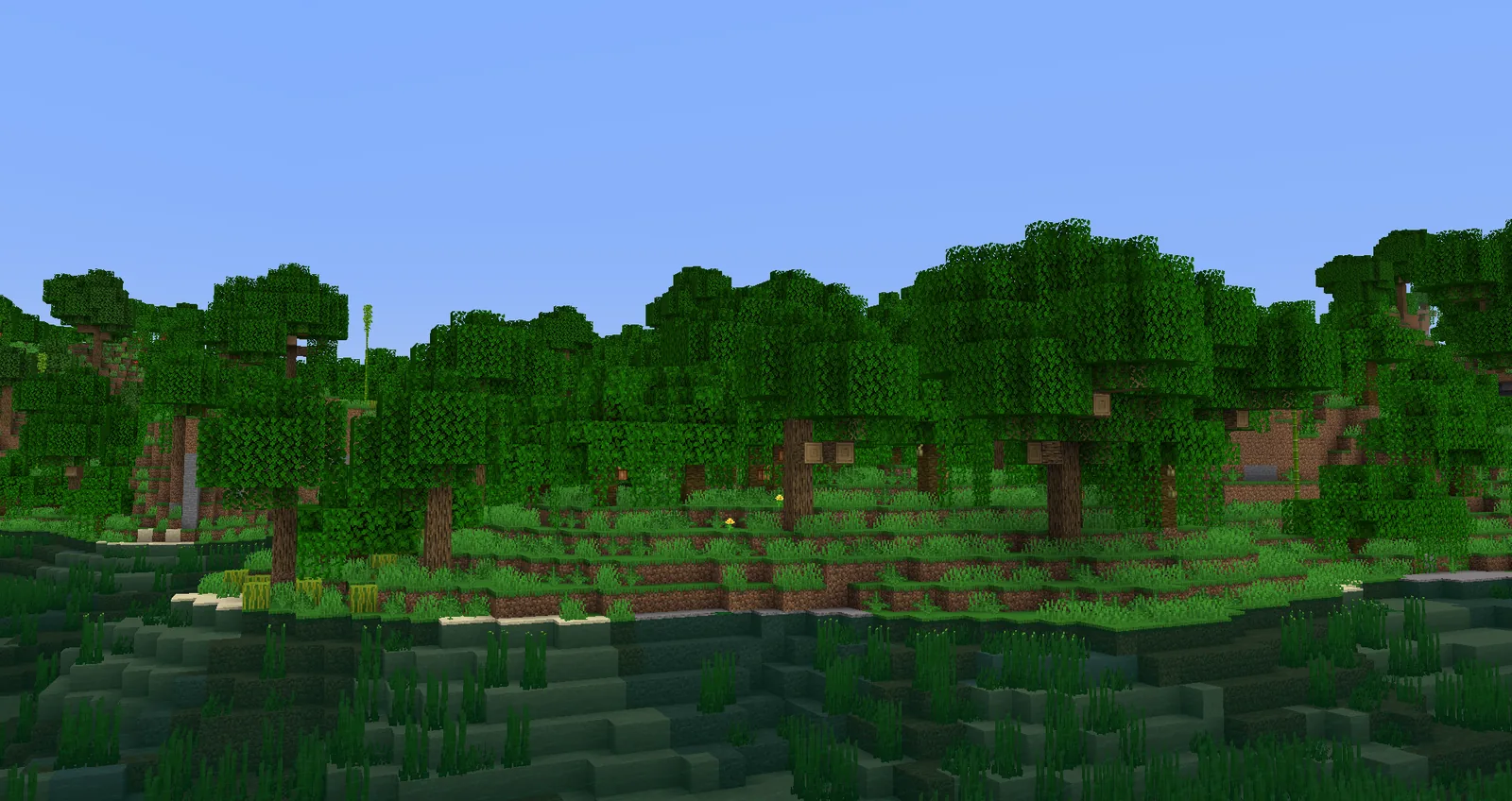
Biomes gate resources. Sand, clay, different wood types, specific animals, and the mobs you need for particular drops are all biome-dependent, and a spawn in the middle of a very large single biome means a long walk for anything it lacks.
A biome border is the ideal spawn – two resource sets within the same short walk.
What scenery does and does not buy
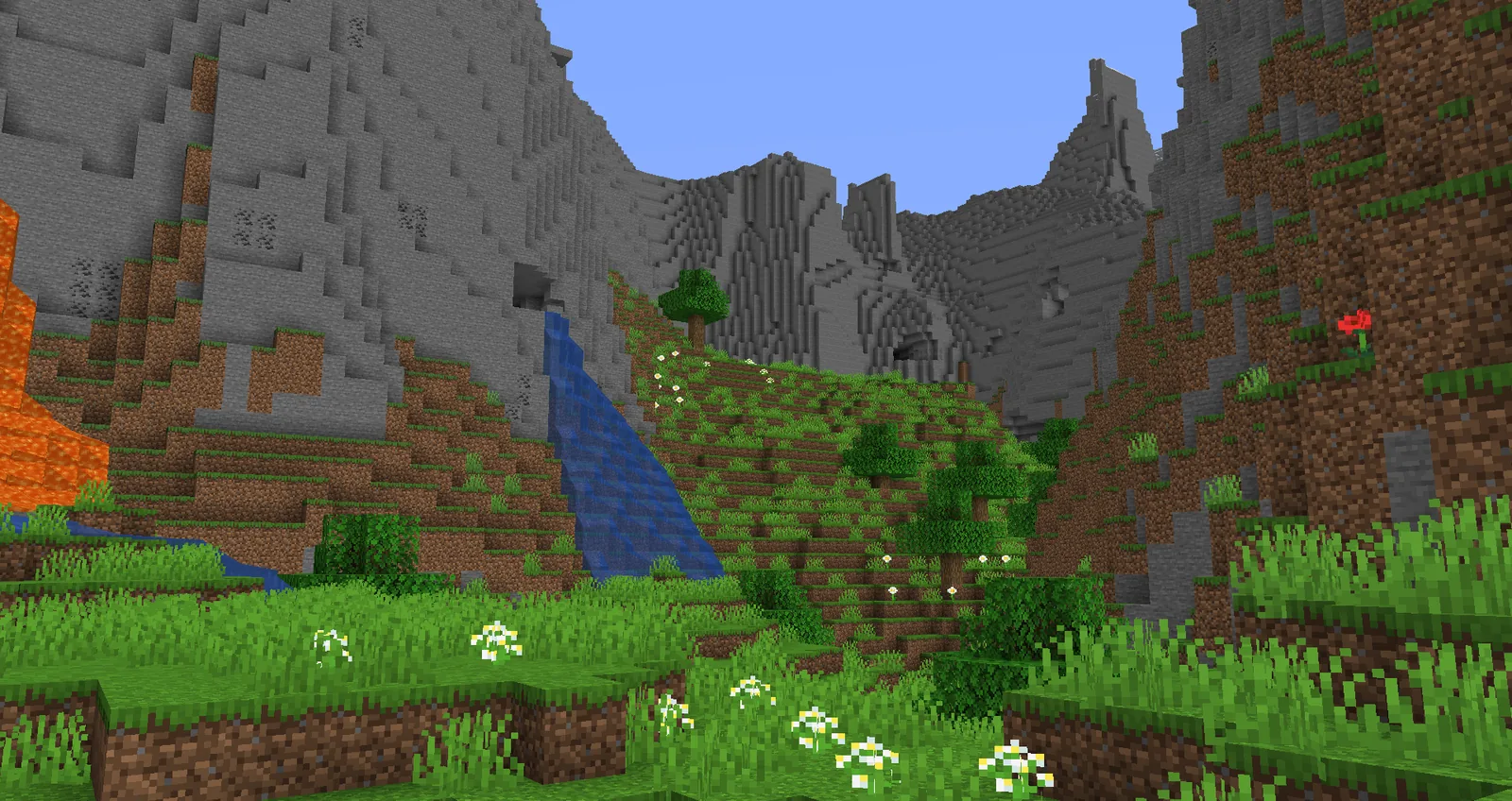
Dramatic terrain is worth something – it makes builds look better and it is more interesting to walk through. It is also frequently a resource desert, because steep terrain means less flat ground for farms and fewer animals.
The compromise most experienced players make is dramatic terrain in view and workable terrain underfoot.
Island starts
A survival island is the most-requested seed type and the one most likely to be unplayable. The difference between a good one and a bad one is entirely in what is on it – trees, sugar cane, at least some animals.
Those signals are visible in the first two minutes if you know to look, and the ones that matter are covered in what makes an island playable rather than just pretty.
Villages
A village near spawn is the single largest head start available. Beds, food, iron, a workstation for every profession, and eventually a trading hall.
Finding one is not luck – village placement follows the game’s structure spacing rules, and travelling along biome boundaries rather than in a straight line materially improves the odds. How to find a village worth starting on covers the method.
What to check underground
Cave access near spawn matters more than surface features after the first day. An open cave system within a short walk means ore without strip mining, and it means the mine entrance can be part of the base.
Where the ore actually is depends on depth rather than location, and knowing the distribution is what makes cave mining efficient – why diamonds sit at Y -59 is the reference.
Things that do not matter as much as people think
- Distance to a stronghold. You will have an elytra before you care.
- Distance to an ocean monument. Same.
- Rare biomes near spawn, which are usually scenery rather than resources.
- A ravine at spawn, which is dramatic and mostly a hazard.
The stronghold point surprises people. Endgame structures are reachable at endgame speeds, and optimising spawn for them is optimising for the least constrained phase of the game.
Checking a seed without spoiling it
Creating a throwaway world on the same seed and flying around in creative answers every question above in five minutes. It also removes the discovery, which for some players is the whole point.
The middle approach is to check only the checklist items – resources and biomes – and deliberately not look at structures or terrain beyond a few hundred blocks.
Worldgen mods change all of this
A seed is only meaningful for a specific worldgen configuration. Adding a biome or terrain mod produces a completely different world from the same number, which means seed lists are version-and-modlist specific.
That is also why the worldgen list has to be final before starting a world you intend to keep – the constraint is covered in adding worldgen mods to a world you already play.
The honest advice
Spend ten minutes checking, then commit. The most common mistake is not choosing badly – it is restarting eight times looking for perfect and never playing past day three.
Spawn mechanics, briefly
Minecraft places world spawn near the origin, on a valid surface block, within a search radius. It does not care whether the location is good – only that it is valid.
That is why so many spawns are mediocre. There is no quality check, and a seed that spawns you in the middle of a large ocean or a featureless plain is working exactly as designed.
Moving your spawn
You are not obliged to build where you spawned. Walking five hundred blocks in a promising direction costs ten minutes and frequently turns a poor start into a good one.
Sleeping in a bed sets your respawn point, which is the only thing tying you to a location after the first night.
Restarting versus committing
- Restart if you fail three or more checklist items.
- Walk if you fail one or two.
- Commit otherwise, and stop looking.
The most common failure is not a bad seed. It is spending an hour generating worlds and never playing one past day three.
Images: Traverse project gallery on Modrinth.