Immersive Weathering adds systems rather than blocks. Leaves pile up under trees in autumn, ash falls near volcanic terrain, frost creeps across the ground in cold biomes, and mud forms where water meets dirt. It is one of the few mods that changes how the world behaves rather than what is in it.
What it actually does
- Falling leaf particles and leaf piles that accumulate beneath trees.
- Icicles, frost and snow behaviour that responds to temperature.
- Mud and cracked mud forming and drying based on water proximity.
- Ash and soot near fire and lava.
- Weather effects that vary by biome rather than being uniform.
All of it is emergent from rules rather than placed at worldgen, which means the world changes as you play in it.
Why that matters
Minecraft’s world is static. Terrain generates once and then only changes when a player changes it. A mod that makes the world do things on its own is rare, and the effect on atmosphere is out of proportion to the block count.
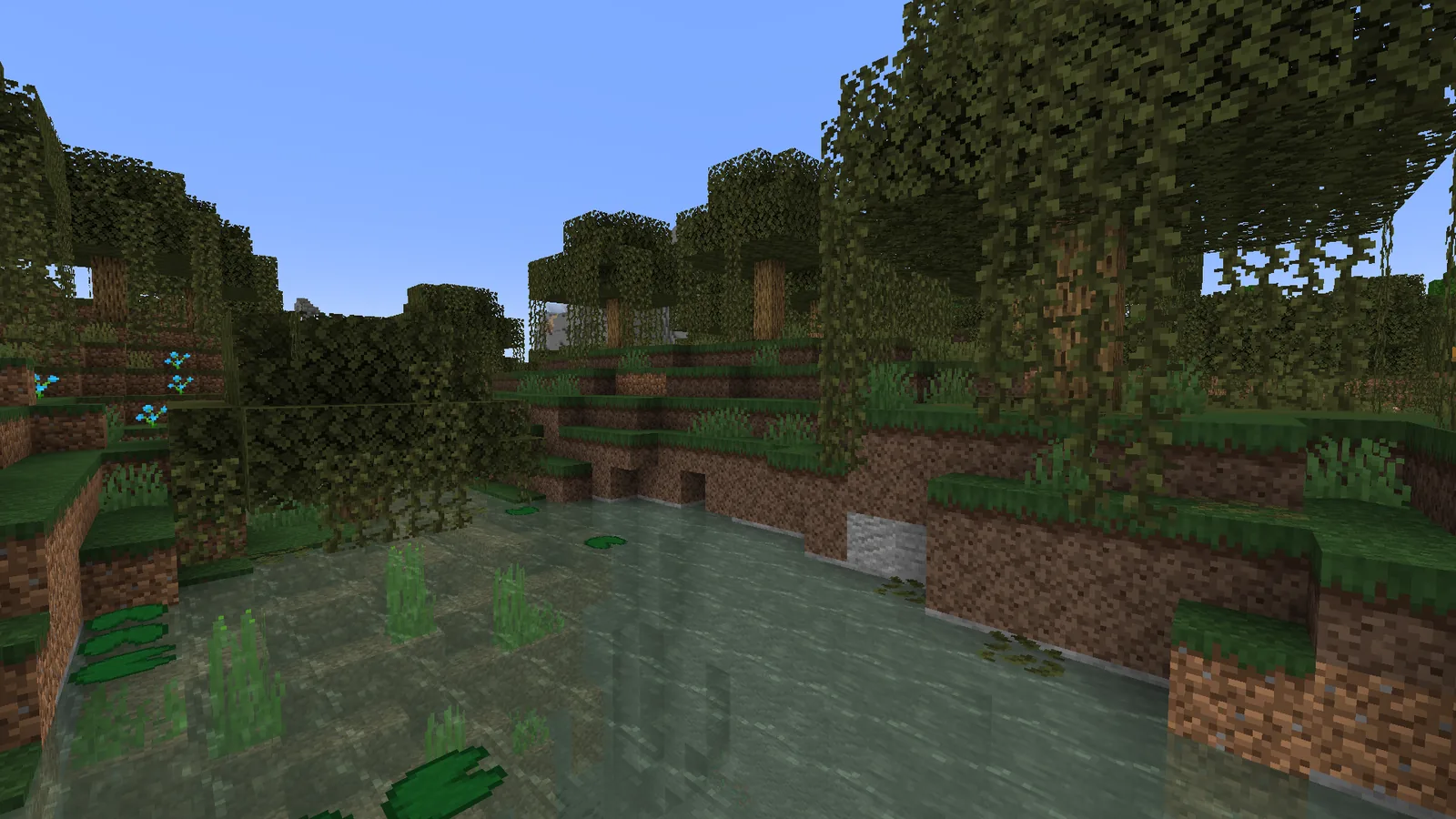
Walking into a forest and finding leaf litter that was not there last autumn is a different experience from finding a decoration someone placed.
Where it is strongest
Temperate forests and cold biomes. Leaf piles and frost are the two most visible systems and the two that most change how a familiar biome looks.
Deserts and the Nether get less from it, which is worth knowing if your base is in one.
Performance
This is the real consideration. Systems that modify blocks over time cost tick budget, and a mod that does it across loaded chunks costs more than a mod that places blocks once.
The configuration lets you disable individual systems, and turning off the ones you do not notice is the standard adjustment on a server. Leaf piles are the most visible and the cheapest; the weather variation is the most expensive.
How it interacts with worldgen mods
It layers on top rather than competing. A biome mod decides what biomes exist; this decides what happens in them. The two operate at different stages and do not conflict.
That layer separation is the thing to understand before assembling a worldgen list, and it is why some combinations stack cleanly and others fight – what changes when you replace the biome layer covers which mods sit where.
Building with it
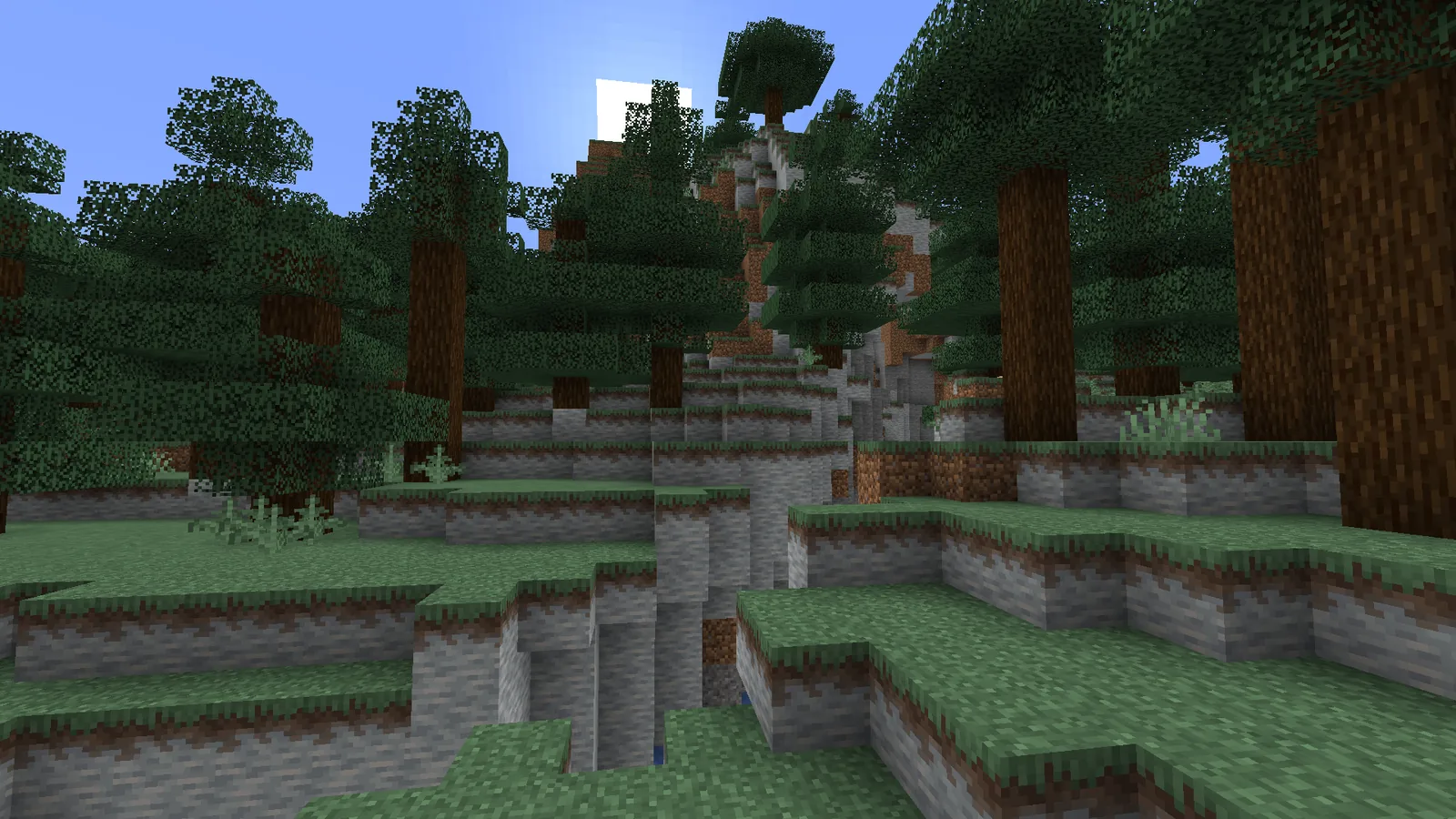
The new blocks – leaf piles, mud variants, ash, icicles – are genuinely useful for detailing, and several of them are better ground cover than anything vanilla offers.
Leaf litter around the base of a build is one of those details that makes terrain look settled, and it is the kind of ground texture that terraforming usually has to fake – the techniques for that are in sitting a build into terrain.
Configuration worth changing
- Disable weather systems on a server if tick time is tight.
- Reduce particle density if frame rate suffers.
- Turn off ash if you do not play near lava.
- Keep leaf piles – they are cheap and the most visible.
Version support
The mod has been through several Minecraft versions and its version support is narrower than the biggest mods. Checking that it targets your version before planning a pack around it is worth thirty seconds.
Verdict
The best atmosphere-per-block mod available, with a real performance cost that the configuration lets you manage. For a single player world where you want the overworld to feel like a place rather than a map, it is one of the few mods that delivers that directly.
The systems, one at a time
- Leaf piles – accumulate under trees, can be walked through, decay over time.
- Frost and icicles – form in cold biomes, spread from water, melt in warmth.
- Mud – forms where water meets dirt, dries into cracked mud in heat.
- Ash and soot – accumulate near fire and lava.
- Directional weather – rain and snow behave differently by biome.
Each can be toggled independently, which makes the mod unusually easy to tune for a specific machine or server.
The blocks as building materials
Several of the new blocks are genuinely better ground cover than vanilla offers – leaf piles for forest floors, mud variants for wetlands, ash for volcanic terrain. Builders install it for those alone.
Where it is weakest
In biomes with no weather systems to express – deserts, the Nether, the End. A base in any of those gets almost nothing from it while still paying the tick cost of the systems running elsewhere.
The broader point is that Minecraft’s world is remarkably inert for a game built on simulation. Water flows, crops grow, and almost nothing else happens without a player. Mods that add autonomous world behaviour are working against that grain, which is why they cost tick time and why the few that do it well feel disproportionately significant.
Images: Immersive Weathering project gallery on Modrinth.