Naturalist adds 47 animals and 66 variants to Minecraft, which on its own would make it a content mod. What makes it interesting is that the animals behave – they sleep, hunt, flee, herd and react to each other, which vanilla mobs largely do not.
What behaviour means here
Vanilla animals wander and eat. Naturalist’s animals have states: a bear forages and becomes aggressive near cubs, deer flee in a herd, snakes hide and strike when stepped on, fireflies appear at dusk.
The result is that the overworld has things happening in it rather than things standing in it, which is a bigger change to atmosphere than any number of new blocks.
The animal list
- Bears, deer, boar and wolves in temperate forests.
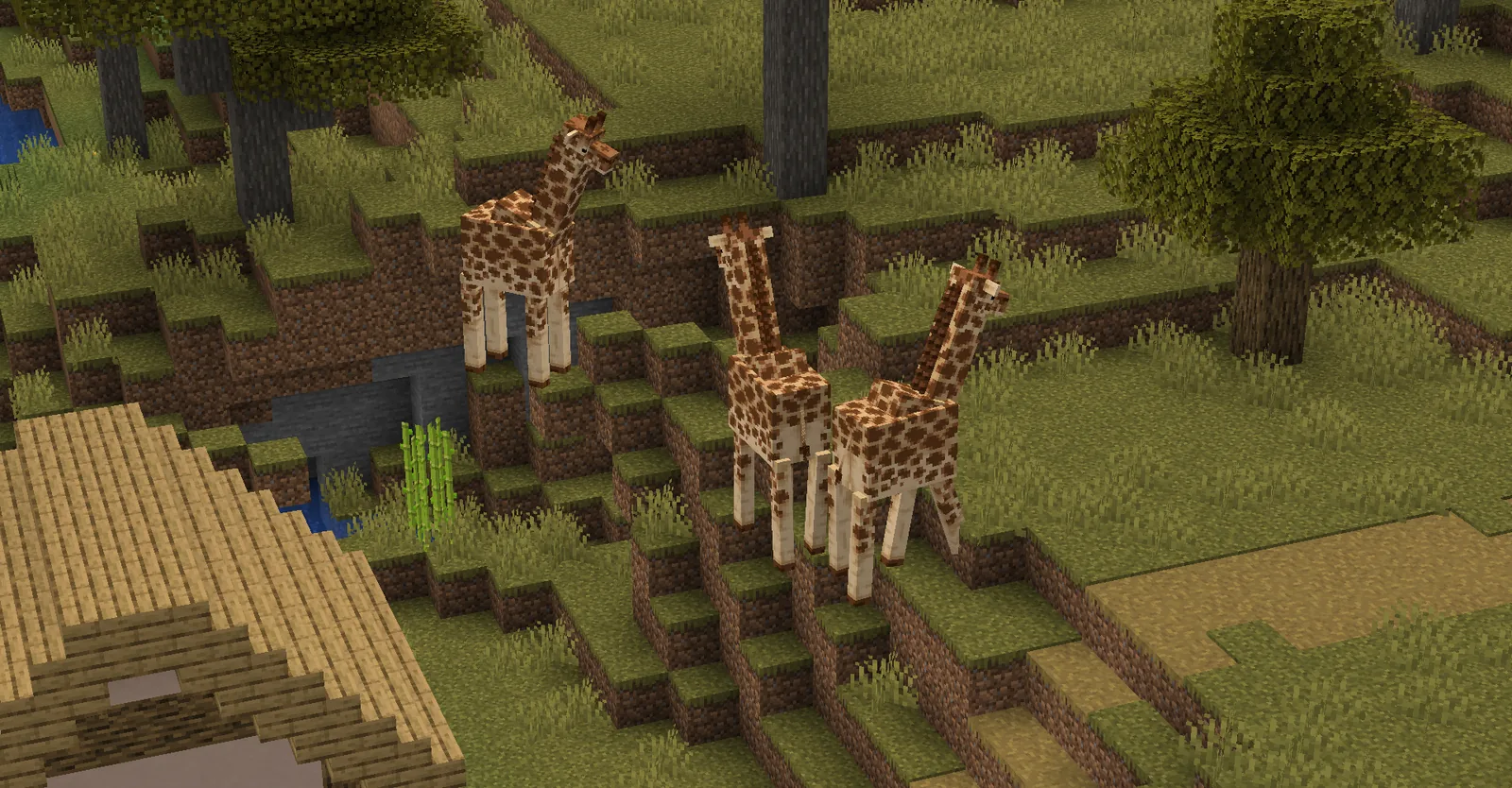
- Elephants, lions, zebras, giraffes and hippos in savanna.
- Snakes, alligators and various birds in swamps and jungles.
- Fireflies, butterflies and small ambient creatures nearly everywhere.
- Whales, sharks and rays in oceans.
Biome-appropriate placement is what stops it feeling like a zoo. Nothing appears where it does not belong.
Where it sits against Alex’s Mobs
Alex’s Mobs is larger and more fantastical; Naturalist is smaller and more grounded. Alex’s adds creatures with abilities and drops that feed into gameplay; Naturalist mostly adds creatures that exist.
They coexist, and running both produces a somewhat crowded overworld. Most players pick one, and the choice is between “more things to do” and “a world that feels alive”.
Danger
Several of these animals will kill you. Bears, lions, alligators and hippos are genuinely dangerous in early game gear, and they are not confined to any structure.
That changes early exploration – a forest is no longer safe during the day, which is a meaningful shift. Whether it is welcome depends on whether you wanted daytime to be safe.
Drops and usefulness
Most animals drop meat and some drop materials. The mod is restrained here – nothing drops an item that changes progression, which is consistent with its design.
That restraint is also why it slots into almost any pack without rebalancing.
Breeding and farming
Several of the new animals can be bred, which extends the vanilla food chain without replacing it. The mechanics follow vanilla conventions – feed two, cooldown, offspring – so nothing new has to be learned.
The vanilla constraints on throughput apply unchanged, and they are less obvious than they look – food, cooldowns and building a farm that keeps up covers what actually limits a breeding operation.
Performance
More entities means more entity ticking, and a mod that adds 47 animals with complex AI is not free. On a server with a large loaded area this is measurable.
The spawn rates are configurable, and lowering them is the first adjustment worth making on a server. The AI cost is exactly the kind of thing a game-logic optimisation mod addresses, which is why the two tend to appear in packs together.
Configuration worth changing
- Spawn weights per animal, on a server.
- Whether dangerous animals are hostile by default.
- Firefly density, which is atmospheric and adds entities.
- Whether animals despawn, which affects long-term entity counts.
Visual style
The models are more detailed than vanilla without being incongruous – a step up in fidelity rather than a different art direction. They sit alongside vanilla mobs without looking imported, which is harder than it sounds and is a large part of why the mod is popular.
Mods that get this wrong are immediately obvious, and the ones that get it right tend to stay installed – creature design that does not try to look like vanilla takes the opposite approach and is worth comparing.
Verdict
The best atmosphere mod in the animal category. It does not change what you do; it changes what is happening around you while you do it, which for a lot of players is exactly what was missing from the overworld.
Fireflies
Worth a paragraph of their own, because they are the detail people remember. They appear at dusk in appropriate biomes, drift, and provide a small amount of light.
Vanilla cut fireflies during development for gameplay reasons. Several mods have added them back, and this is the implementation that most feels like it belongs.
Bestiary and discovery
The mod includes an in-game reference for the animals you have encountered, which is a small addition that changes how people engage with it – collecting sightings becomes a reason to visit biomes you would otherwise skip.
Where it conflicts
- Other large mob mods, on spawn weights rather than on code.
- Packs with careful difficulty tuning, because several animals are dangerous.
- Servers with strict entity budgets.
None of those are hard conflicts. All of them are configuration conversations.
Version availability
Fabric and NeoForge across several Minecraft versions. As with any mob mod, spawn behaviour is worth testing on your specific version before building a pack around it.
Images: Naturalist project gallery on Modrinth.