Interior lighting is the single largest difference between a room that looks finished and one that does not, and almost every Minecraft interior fails at it the same way: a torch on the wall, or worse, a torch on every wall.
The problem with torches
A torch is a bright point source at eye level with a visible flame and a stick. It draws the eye to itself, it flattens everything near it, and there is no arrangement of torches that looks like architectural lighting.
Every alternative is better, and most of them cost the same or less.
Hide the source, show the light
The principle behind all good interior lighting in Minecraft: put the light source where it cannot be seen directly and let the illumination be what you notice.
- Glowstone under a trapdoor, in a floor or a ceiling coffer.
- Sea lanterns behind a slab overhang at the wall-ceiling junction.
- Light blocks, if you are willing to use commands.
- Shroomlight inside a lantern cluster, which is warmer than glowstone.
- A campfire under a grate, with the smoke blocked by a block beneath it.
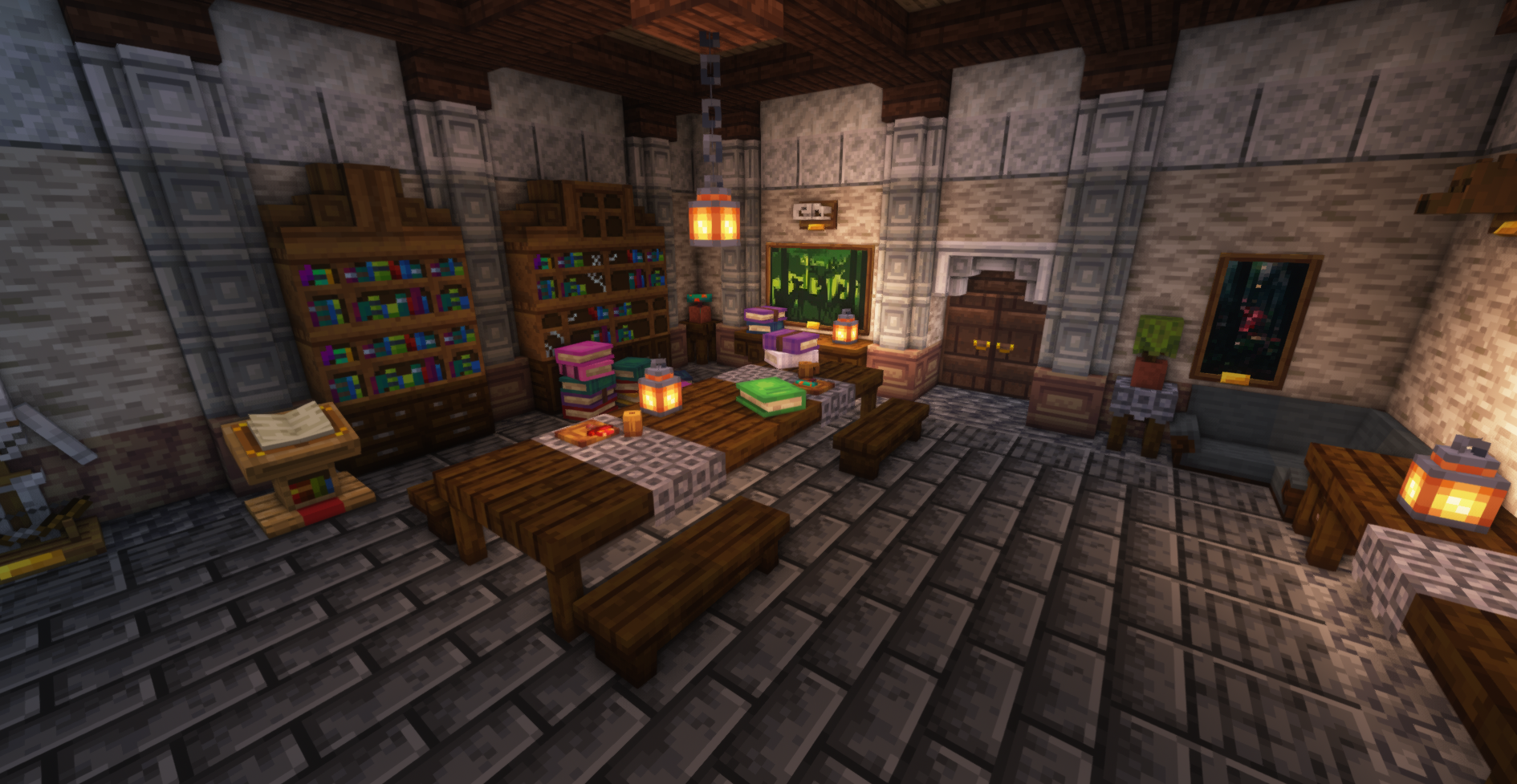
Lantern hanging
Lanterns on chains are the most reliable interior lighting in vanilla. They hang at a chosen height, they read as objects, and the chain gives vertical interest to an otherwise empty ceiling volume.
Two rules: vary the chain lengths within a room, and hang them in groups of three rather than evenly spaced. Even spacing reads as a grid.
Colour temperature
Minecraft has warm and cool light sources and mixing them badly is noticeable even if you cannot say why.
- Warm – torches, lanterns, campfires, shroomlight, glowstone, copper bulbs.
- Cool – sea lanterns, soul lanterns, soul fire, amethyst.
- Neutral – froglights, depending on colour.
One temperature per room, with the other used deliberately as contrast, is the reliable approach. Soul lanterns in an otherwise warm room read as something significant.
Layers of light
Real interiors have three layers: ambient, which fills the room; task, which lights a specific surface; and accent, which highlights something. Minecraft can do all three.
- Ambient – hidden sources in the ceiling or floor edges.
- Task – a lantern over a crafting area, a candle on a desk.
- Accent – a light behind or beneath something you want noticed.
Most Minecraft rooms have only ambient light, which is why they look flat. Adding one task light and one accent light transforms a room without changing the brightness.
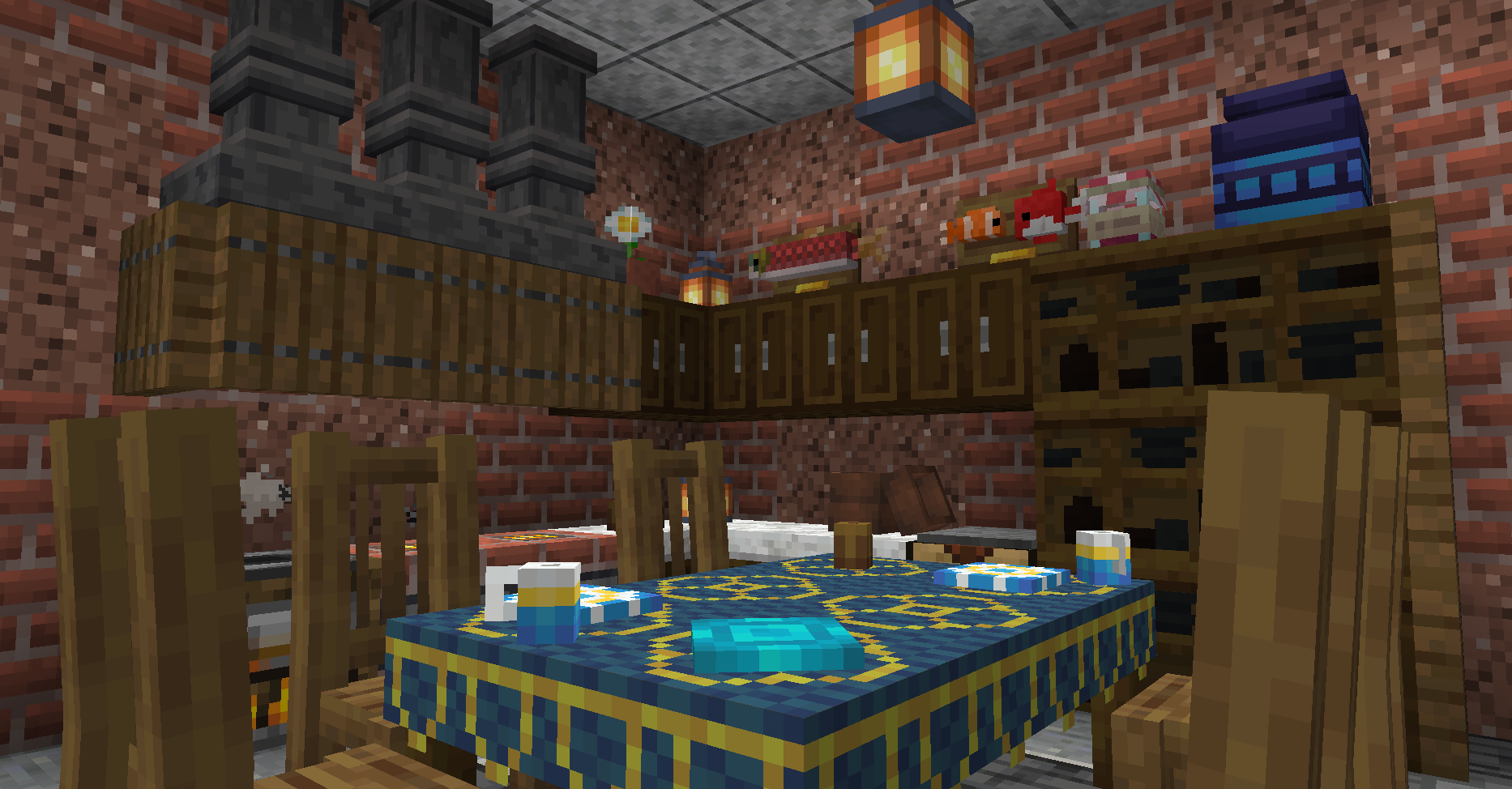
Candles
Candles are the most flexible light source in the game and the most underused. One to four per block, dyeable in sixteen colours, and they can sit on any solid surface.
They give low light, which means they are decoration rather than illumination – but as accent lighting on a table, a shelf or a mantelpiece they are exactly right.
Light level versus appearance
A room can look well lit and still have dark corners at light level zero, which is where mobs appear. The two requirements – looking good and preventing spawns – do not always coincide.
The usual solution is hidden light in the floor at the edges, or a slab floor that cannot spawn anything regardless. The full set of options is in the spawning rules guide, and slabs solve this more elegantly than light does.
Ceiling as a light fixture
A coffered ceiling – a grid of recessed panels with glowstone in the recesses behind trapdoors – is the best interior lighting available in vanilla, and it doubles as the ceiling detail that most rooms are missing.
It is more work than a torch, and it is the difference between a room you built and a room you designed.
Building the fixtures
Chandeliers, wall sconces, standing lamps and floor lanterns are all buildable from vanilla blocks – chains, trapdoors, fences, item frames, and a light source hidden inside.
The vocabulary for constructing them from what you have is the same one that makes furniture work, and furnishing a room without a furniture mod covers the components in detail.
A quick upgrade
- Remove every torch from the room.
- Put glowstone in the ceiling behind trapdoors, or under the floor edge behind slabs.
- Hang two or three lanterns on chains of different lengths.
- Add candles on one or two surfaces.
- Check the corners for dark spots and fix them with hidden sources.
Twenty minutes per room, and it is the most visible improvement available for the effort.
Copper bulbs
Copper bulbs are the newest useful light source and the only one that can be switched with redstone without moving a block. They oxidise through four stages, each dimmer than the last, and waxing one fixes its brightness permanently.
That gives four distinct light levels from the same block, which is more control than anything else in vanilla offers.
Rooms by function
- Bedroom – low, warm, from below eye level. Candles and a single lantern.
- Workshop – bright and even. Hidden ceiling sources, task light over the bench.
- Great hall – high ambient, dramatic accent. Chandeliers and wall sconces.
- Storage – even and side-lit, so containers read.
- Corridor – rhythmic. Lights at regular intervals imply length.
Corridors are the one where repetition is correct. Everywhere else, regular spacing is what makes lighting look automatic.
Images: Handcrafted project gallery on Modrinth.