Functional builds – farms, sorters, mob grinders – are usually ugly, and most players accept that as a rule of the game. It is not. The reason farms look bad is that they are built shape-first with no shell, and adding a shell after the fact is straightforward.
Separate the machine from the building
The single technique that solves most of this: build the farm, confirm it works, then build a structure around it that has nothing to do with how it works.
A mob farm is a tower of dark platforms. A mob farm inside a stone keep is a keep. The machine is unchanged and invisible.
Why to test first
Because wrapping a farm that does not work means dismantling both. Get the rates right, run it for an hour, and only then start building the shell.
This also means the shell can be designed around the finished dimensions rather than guessed.
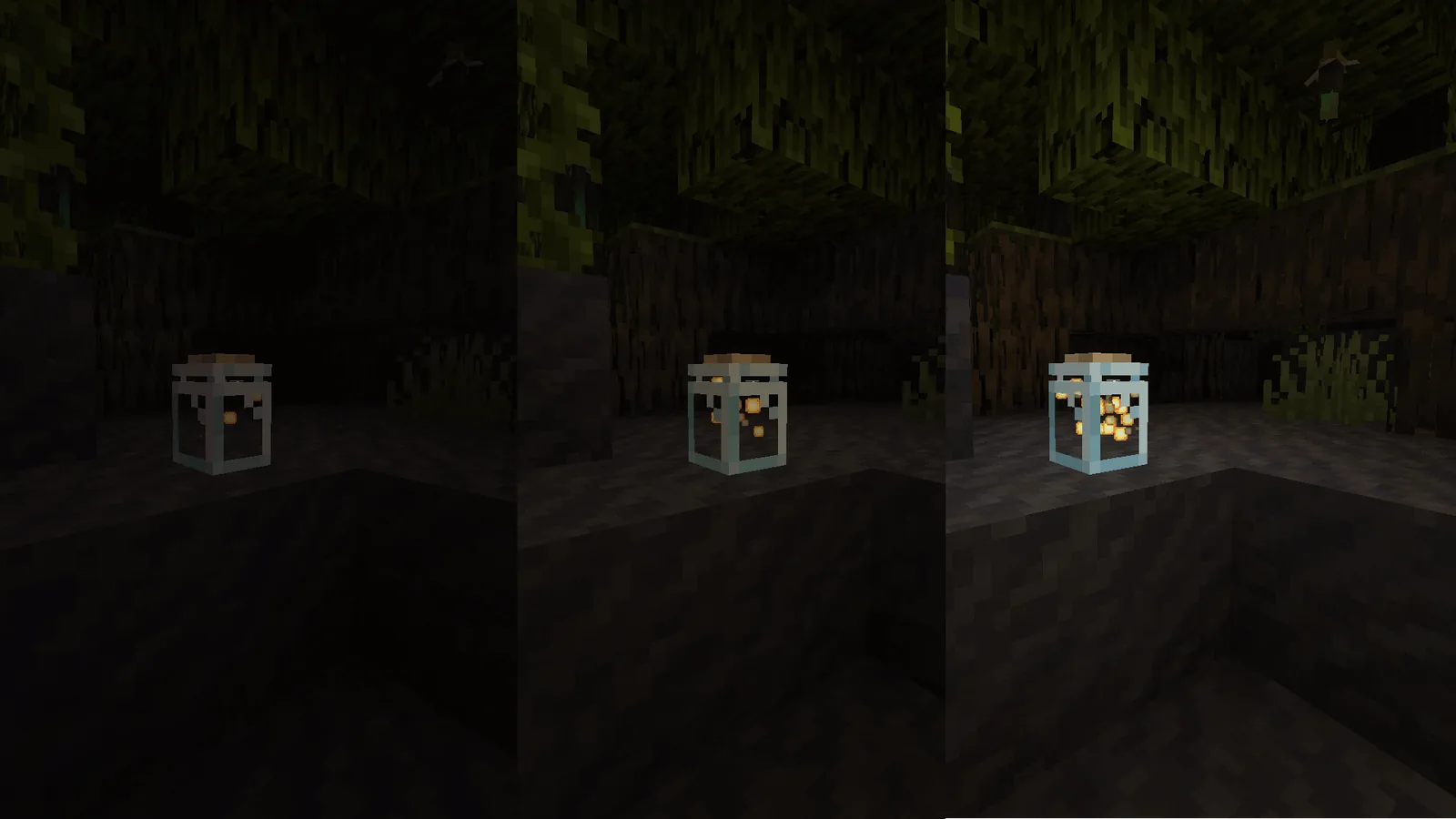
Shell types by farm
- Mob farm – a tower. Castle keep, lighthouse, chimney, or a tree if you are ambitious.
- Crop farm – a greenhouse, a barn, or terraced fields with retaining walls.
- Animal pens – fencing, a barn, and actual paths between them.
- Item sorter – a wall of barrels with the hoppers behind it.
- Furnace array – a forge, which is the easiest theme in the game to build.
Furnace arrays are the best case. Smoke, iron, brick, and a chimney – the theme writes itself.
Hiding hoppers
Hopper chains are the ugliest part of any automated build, and they are also the part that must remain functional. The answer is always a floor: run them under a slab layer or a floor one block above the storage.
Access panels – a trapdoor or a removable block – let you reach a broken chain without demolishing the floor, which you will eventually need to do.
Crop farms as landscape
A nine-by-nine dirt square with water in the middle is the default and it looks like what it is. Terraced fields following a slope, irregular field boundaries, and paths between plots read as agriculture instead.
The water can be hidden under a block, which removes the most obviously artificial element.
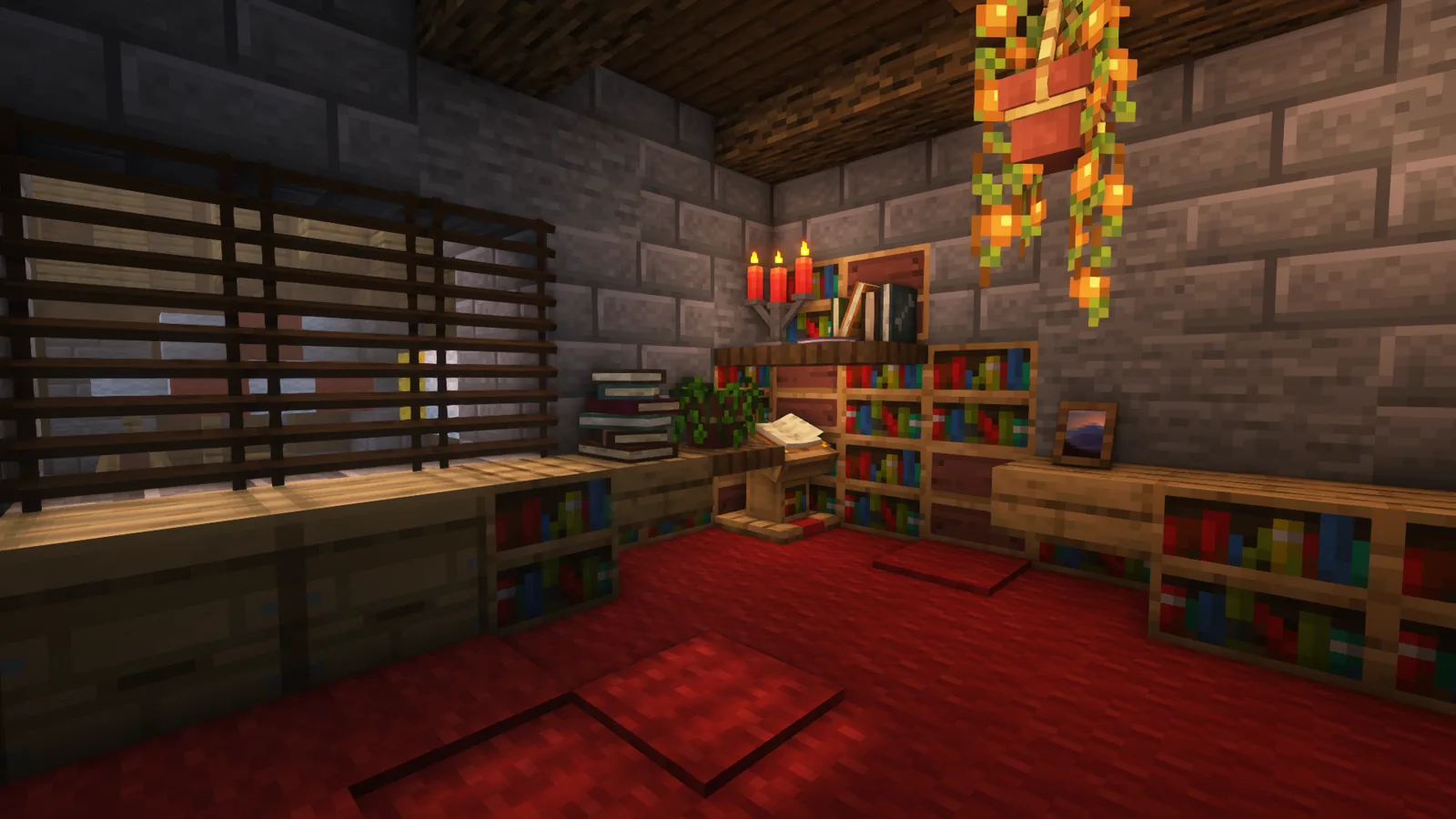
Automating without ruining the look
Observer-based farms are the friendliest to hide, because the mechanism is small and sits at the edge of the plot rather than running through it. A hopper line under the soil and observers in the wall is close to invisible.
The basic circuit is four blocks and works for most crops – why crop farms fire exactly once takes it apart, and the smaller the mechanism, the easier the shell.
Animal pens specifically
- Fence posts with a gap, not a solid fence line.
- Trough details – a slab or cauldron of water at one end.
- Varied ground inside the pen – trampled dirt, not pristine grass.
- A gate that faces the path, not the nearest edge.
Animal farms are the easiest functional build to make look good because the function is already pastoral. The mechanics of keeping one productive are the harder part – food, cooldowns and building a farm that keeps up covers the throughput side.
Lighting functional builds
Farms need specific light levels to work, which constrains where light can go. Crop farms need light 9 or above; mob farms need darkness in the spawning chamber and light everywhere else.
Working within that is a design problem rather than an obstacle – a mob farm shell with lit exterior and dark interior is exactly what a tower looks like anyway.
The AFK spot
Every mob farm has one, and it is usually a hole in a wall with a chest. Making it a room – a lookout, a study, a balcony – costs twenty blocks and is where you will spend hours.
Common mistakes
- Building the shell before testing the farm.
- Shell walls that block the spawning volume.
- No access to the mechanism once it is enclosed.
- A themed shell that does not match anything else in the base.
- Leaving the hopper chain exposed because it was going to be temporary.
The access point is the one people regret. Every enclosed farm eventually breaks, and one that cannot be reached has to be destroyed to be repaired.
Theming a base consistently
The problem with shelling farms individually is that you end up with a castle keep, a Japanese pagoda and a modern glass box in the same base. Deciding a theme once and applying it to everything is less work and looks vastly better.
- Pick one palette for the whole base and one accent material.
- Use the same roof approach everywhere.
- Vary scale and detail, not style.
- Connect buildings with paths in the same material.
Paths between buildings do more for coherence than the buildings themselves.
Underground farms
The alternative to shelling a farm is burying it. An underground farm needs no exterior at all, and the entrance is the only part that has to look like anything.
That is often the right answer for anything genuinely ugly – an item sorter, a furnace array, a hopper network – and it is why most serious bases have more below ground than above it.
Images: Beautify! project gallery on Modrinth.