Key takeaways
- The 2019 session ran fourteen entries, the largest line-up in the archive on this domain.
- Entries ranged from physical edible games to a maze game that tricks you into pressing Windows hotkeys.
- Several – Carto, What the Golf?, Hypnospace Outlaw – reached wide commercial release.
Attendees started queueing an hour and a half before the doors opened. That detail, recorded in the organisers’ own recap in the archive, tells you what the session had become by its seventeenth year.
That detail, recorded in the organisers’ own recap, tells you what the session had become by its seventeenth year.
The full list
Jennifer Sandercock’s collection of edible games and a cookbook. Lucky Me by Mohannad Al-Khatib, where everyone copies your actions. Lucifer Within Us from Kitfox Games, reconstructing a crime by combining testimonies into a timeline. Misshapen by Nicolas Saraintaris and Nicolas Recabarren, distorting enemy bodies and building structures from the result. Carto from Sunhead Games, a tile-placement adventure where you explore the land you just placed.
Sloppy Forgeries by Jonah Warren, a race to copy a painting. Eloquence by Gerben Grave and collaborators, language puzzles played as a friendly alien. Nerve Damage by Dennis Carr and Corey Bertelsen, a shooter built to provoke panic while staying playable. Plusminus from a Finnish team, generating magnetic fields to survive. Hostile User Interface by Shawn Liu and Ian Schreiber, a maze whose controls trick you into hitting Windows hotkeys.
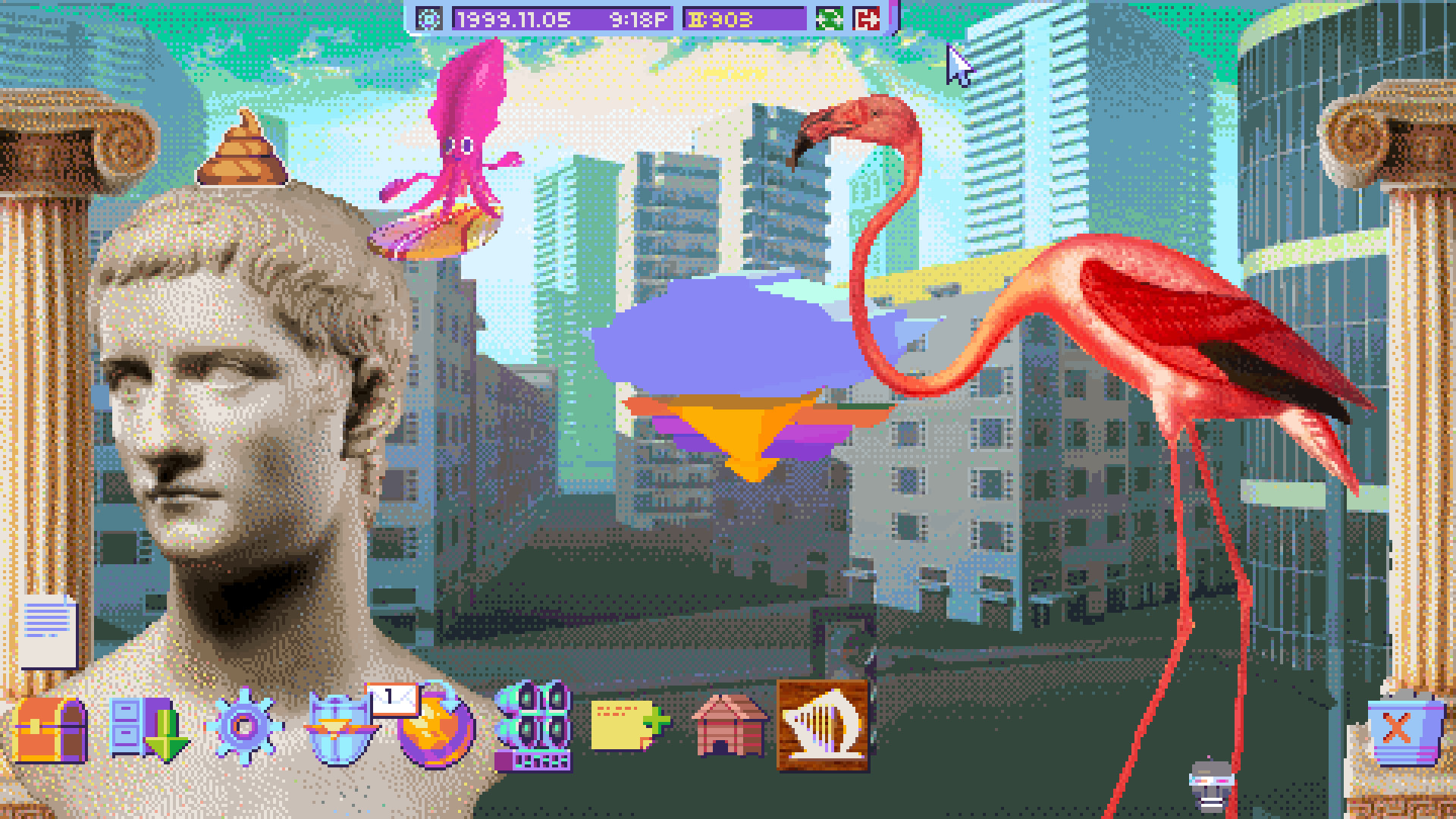
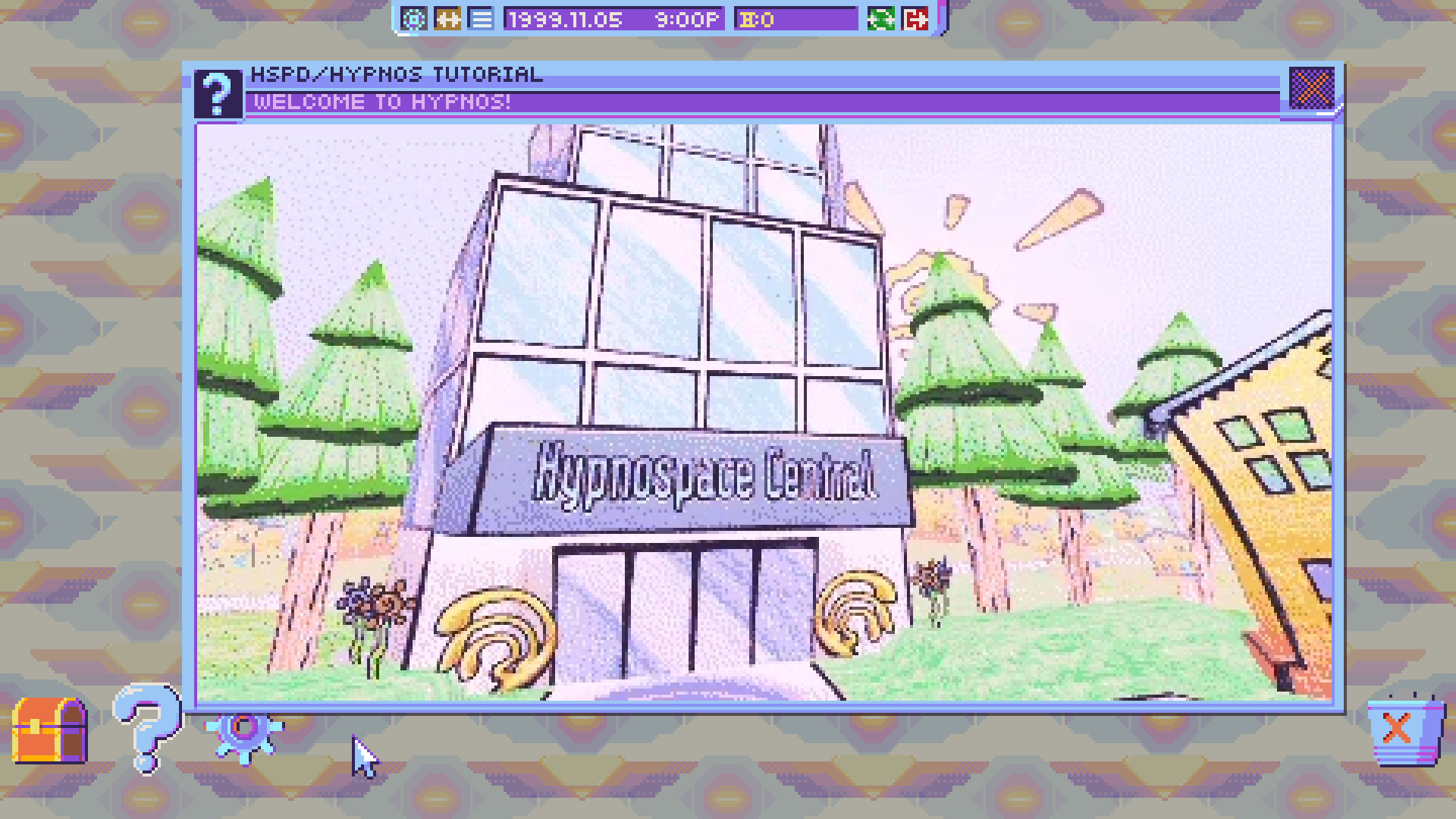
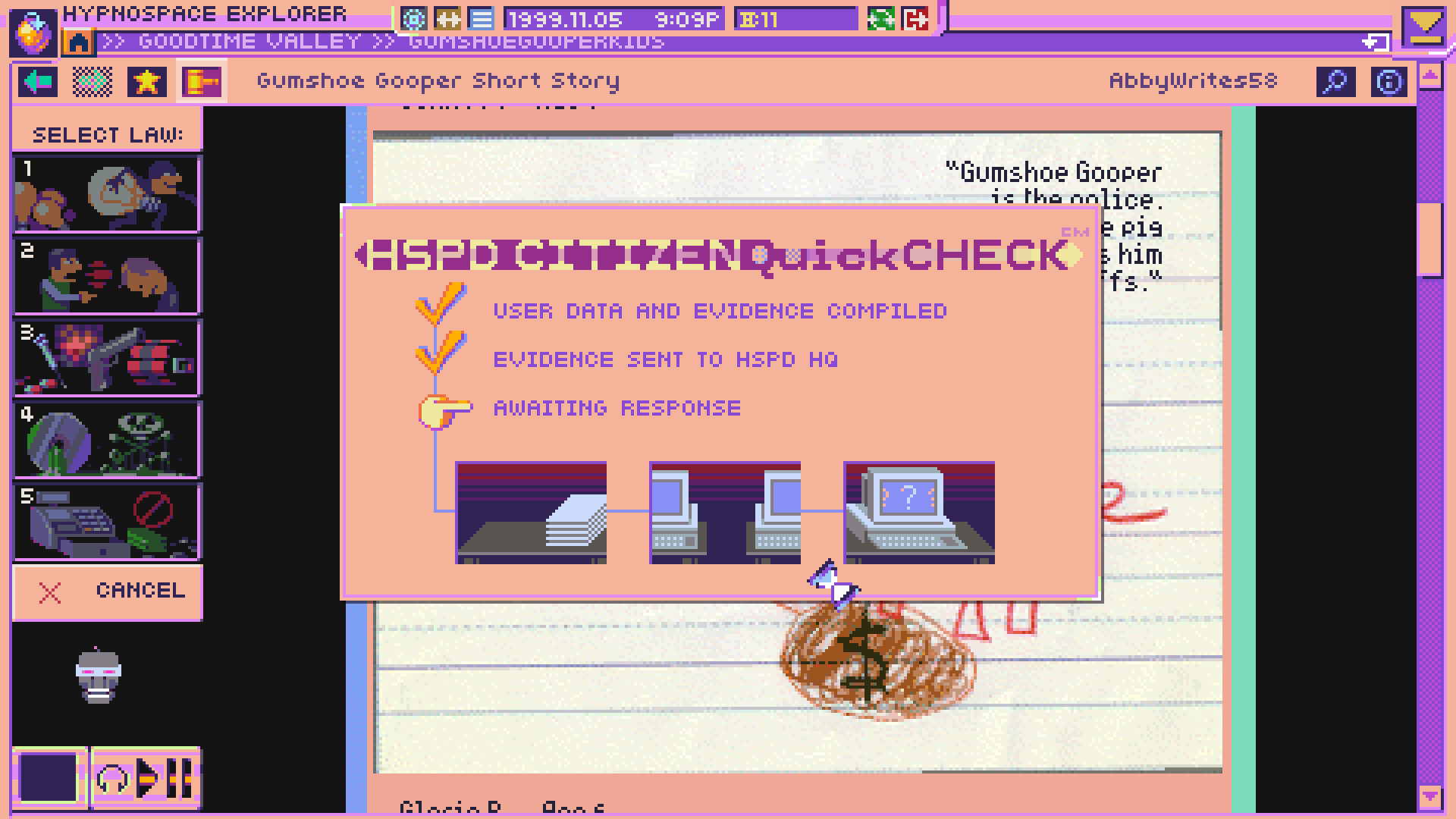
What the Golf? by Triband, a physics parody where every hole is a different kind of golf. You Busy? by Trynn and Christopher Sosa, about the channels information passes through. Picture Processing by Frank DeMarco, a puzzle game about restoring glitched 8-bit games. Hypnospace Outlaw by Tendershoot, Michael Lasch and ThatWhichIs Media, about being an internet censor in the nineties.
Fourteen in one hour
Fourteen entries is nearly double the 2018 bill, and in a single session that is roughly four minutes each including changeovers. That is barely enough to show a mechanic and not nearly enough to explain it, which changes what kind of work succeeds: the entries that land are the ones that can be understood while they are happening.
Hostile User Interface is the clearest case. A maze game whose controls are designed to make you accidentally minimise the window is funny in ten seconds and needs no context at all.
The edible games
A cookbook of games you eat is the entry that sounds like a joke and is not. It is a legitimate exploration of what happens when the components of a game are consumed during play, and it is exactly the kind of work that has no other venue at a conference about video games.
Our view is that these entries are the best argument for the session’s existence. A physical game made of food will never be a product this industry sells, and a room of three hundred developers thinking about irreversible components for five minutes is worth more than another talk about retention.
What shipped
Carto, What the Golf? and Hypnospace Outlaw all reached wide release and found audiences. Lucifer Within Us shipped. Several others remain prototypes, and at least one – the edible games collection – was never going to be a release in the first place.
This is the last full session recap this domain holds. Where the format went afterwards is the subject of twenty years on.
Period fidelity as a mechanic
Hypnospace Outlaw recreates a fictional late-nineties internet in enough detail that navigating it is the game. You are a censor, you browse, you follow links, and the work of understanding the social world you are policing is the actual play.
That only works because the reconstruction is exact. A slightly wrong version of a period interface reads as a joke; a precise one reads as a place. The precision is the design, not the decoration.
A joke engine that keeps working
What the Golf? treats each hole as an opportunity to break the premise of the previous one. The ball is not always the ball. The club is not always a club. The design problem is not difficulty but escalation – every hole has to surprise a player who now expects surprises.
Very few comedy games survive their own premise for a full release. This one did, which is why it appears on GDC’s own list of the session’s notable alumni.
Tile placement as exploration
Carto’s idea is that the map is the world: rearrange the tiles in your hand and the landscape reorganises itself around you. Exploration stops being movement through fixed terrain and becomes an act of construction.
It is the kind of premise that sounds like a puzzle gimmick and turns out to support a full adventure, which is exactly the judgement a four-minute demo is being asked to make.
What the archive preserves
Fourteen entries, of which four or five are now widely known and the rest are not. The recap on this domain is one of the only accessible records that Sloppy Forgeries, Eloquence, Plusminus and You Busy? were ever presented anywhere, and that record is the reason this page is still here.
Images: Tendershoot and ThatWhichIs Media, via the Hypnospace Outlaw Steam store page.