Key takeaways
- Loot tables are tiered by how hard a structure is to reach and survive, not by how it looks.
- Early structures pay in materials and enchanted books. Late ones pay in items you cannot craft.
- Knowing the tier tells you whether a detour is worth making before you make it.
A survival world produces a constant stream of small decisions about whether to investigate something. Knowing roughly what each structure type contains turns that from a guess into a calculation.
The tiering logic
Loot scales with the difficulty and depth of the structure. Surface ruins and small generated buildings hold low-value materials. Structures that require travel, combat or specialised preparation hold items that cannot be obtained any other way.
The exceptions are informative. A desert temple is trivially easy and holds reasonable loot, because its difficulty is a trap rather than a fight. A shipwreck is easy and holds maps, because its purpose is pointing you at the next thing.
Early game: worth every detour
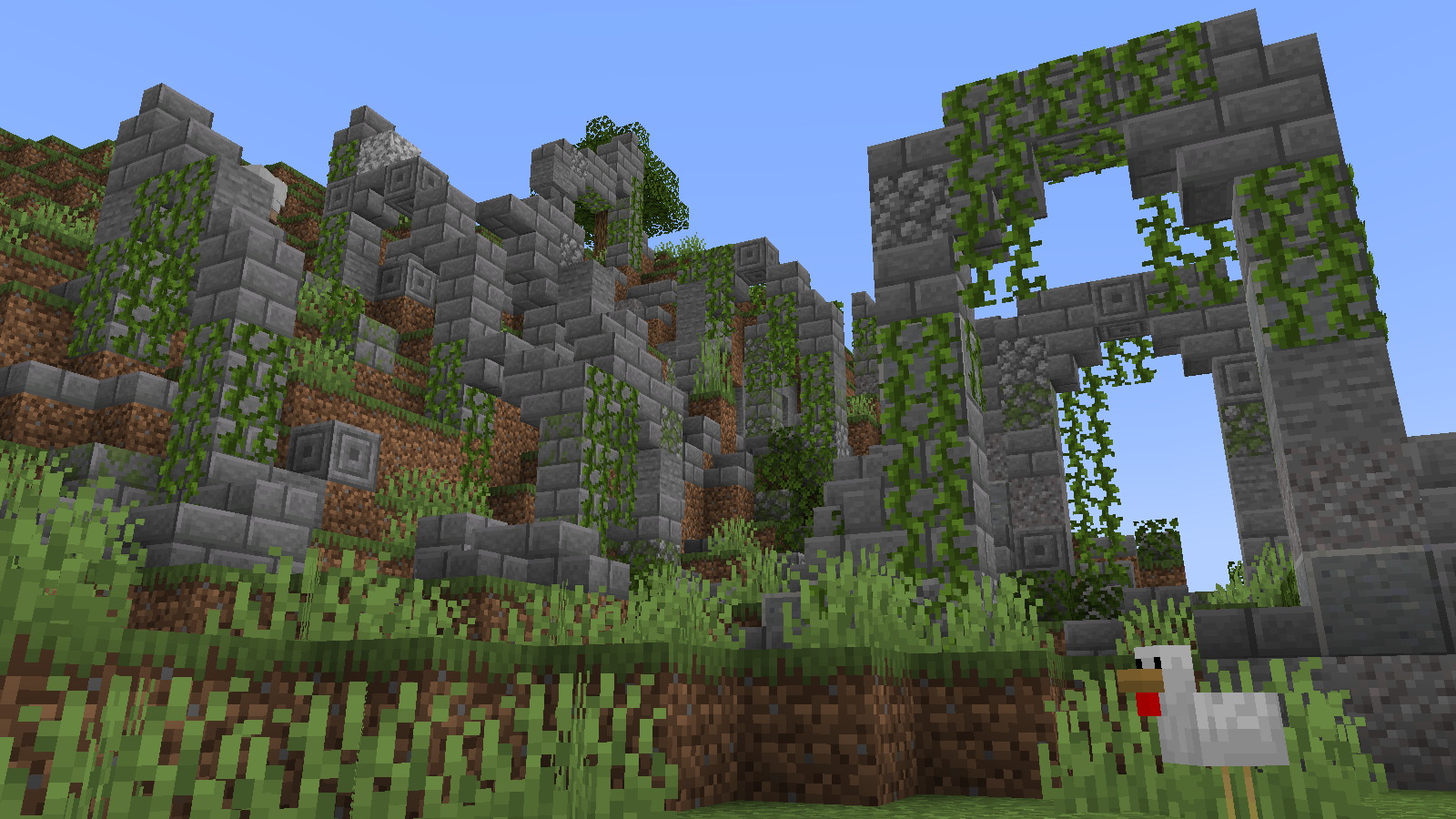
Shipwrecks, ruined portals and small ruins pay off disproportionately in the first hours of a world. Iron, gold, food, enchanted books and occasionally a map are all worth more before you have infrastructure than after.
Ruined portals specifically deserve more attention than they get. The gold blocks alone are worth the trip, and the obsidian saves a diamond pickaxe trip to a lava lake.
Mid game: selective
Once you have a farm and an enchanting setup, most common structures stop being worth the detour. The exceptions are ones that contain something uncraftable: a saddle, a name tag, a specific enchanted book, or a map to somewhere else.
This is the point where players should start reading a structure’s purpose rather than its chest count. A structure that leads somewhere is worth more than one that holds a stack of iron.
Late game: only the exclusives
By the late game, only three things matter: items that cannot be obtained any other way, materials that are slow to farm, and maps. Ancient cities hold echo shards and swift sneak. End cities hold elytra and shulker shells. Everything else is scenery with a chest in it.
Our view is that Minecraft’s loot design has a gap in the middle. The early game is generous, the late game has two or three genuine prizes, and the long stretch between them offers almost nothing a player wants. That gap is exactly the space loot mods fill, and it is why they feel so effective despite adding very little.
Deciding in the moment
Ask what the structure could contain that you cannot make. If the answer is nothing, walk past it. If you are in the first ten hours of a world, the answer is almost always something, so do not walk past anything.
Structure placement is explained in the generation guide, and the two late-game exceptions in the ancient city guide and the End guide.
Maps as loot
The most undervalued items in early loot tables are maps. A buried treasure map from a shipwreck leads to a chest with a heart of the sea, and explorer maps from cartographers point at structures that would take hours to find otherwise.
Treating a map as the reward rather than as a consolation prize changes how you rate a structure. A chest with two iron ingots and a map is worth more than a chest with six iron ingots.
Loot that only matters in context
Saddles, name tags and horse armour cannot be crafted, which makes them permanently relevant regardless of your gear level. Enchanted books vary enormously: a mending book is worth a long detour at any stage, and most others are not once you have a librarian.
The practical filter is craftability. If you can make it, the chest is a shortcut. If you cannot, the chest is the only source.
What structure mods change
Adding structures multiplies the number of chests without changing what is in them, which floods the early game with materials and leaves the late game exactly as empty as before. Mods that add new item categories to loot tables address that; mods that only add buildings do not.
If your goal is to make exploration rewarding again in a mature world, the item side matters more than the building side.
Keeping a mental tier list
After a few worlds, most players carry an internal ranking of which structures are worth stopping for at which stage. Writing it down once – early, mid, late, never – makes the decision automatic and stops you clearing a desert temple for the fourth time in a world where you already have more gold than you can spend.
Images: Philips Ruins project gallery on Modrinth.