What this mod does
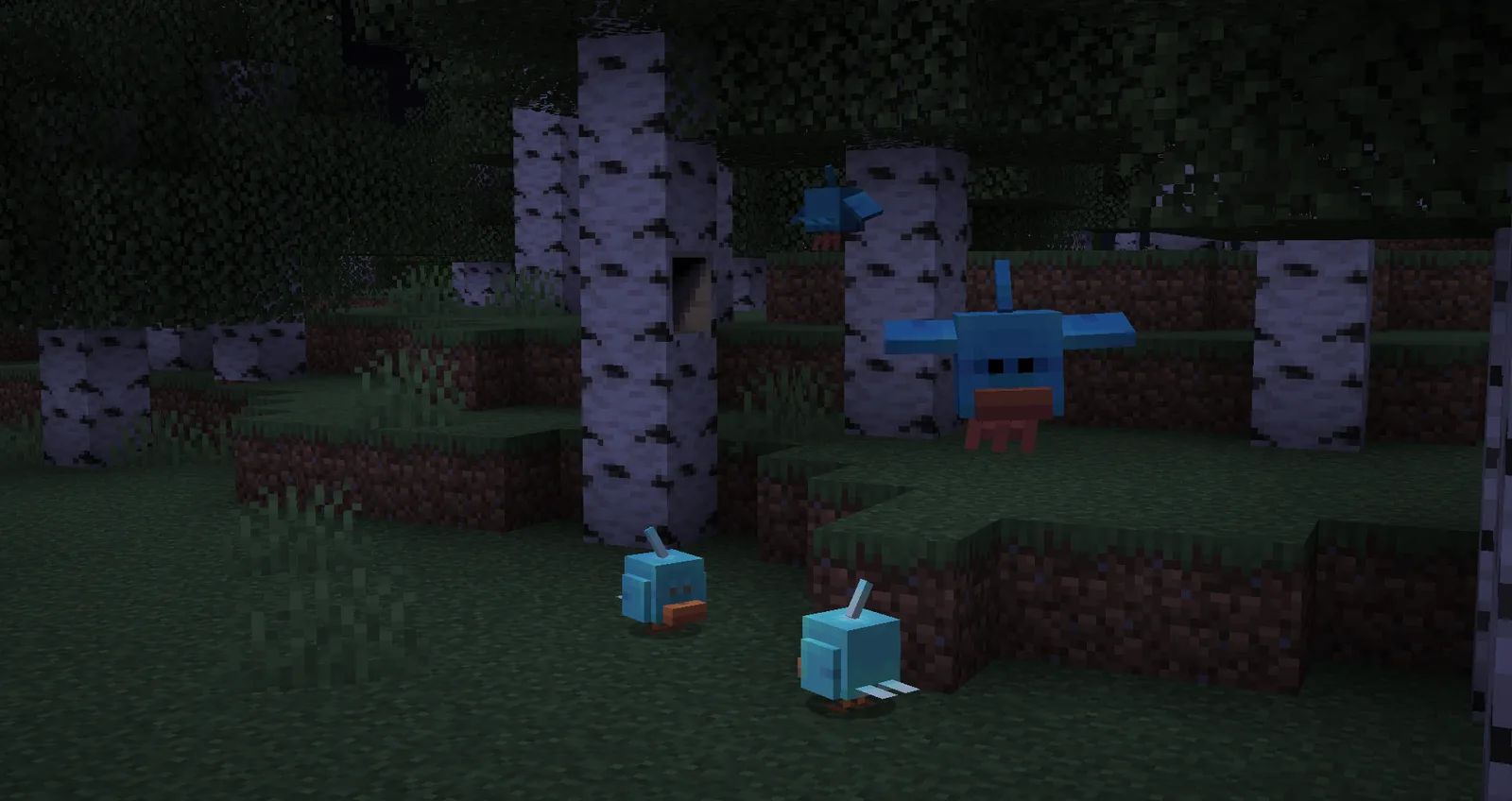
It adds fictional creatures with a distinct art direction of their own, rather than imitating Mojang’s. Behaviour, drops and habitats are all custom, and the creatures are designed to be strange rather than plausible.
Key takeaways
- The art style is deliberately its own, which is the main thing to decide before installing.
- Behaviour work is solid, and creatures have purposes rather than being scenery.
- It sits awkwardly in a strictly vanilla-styled pack and very well in an expressive one.
Key features
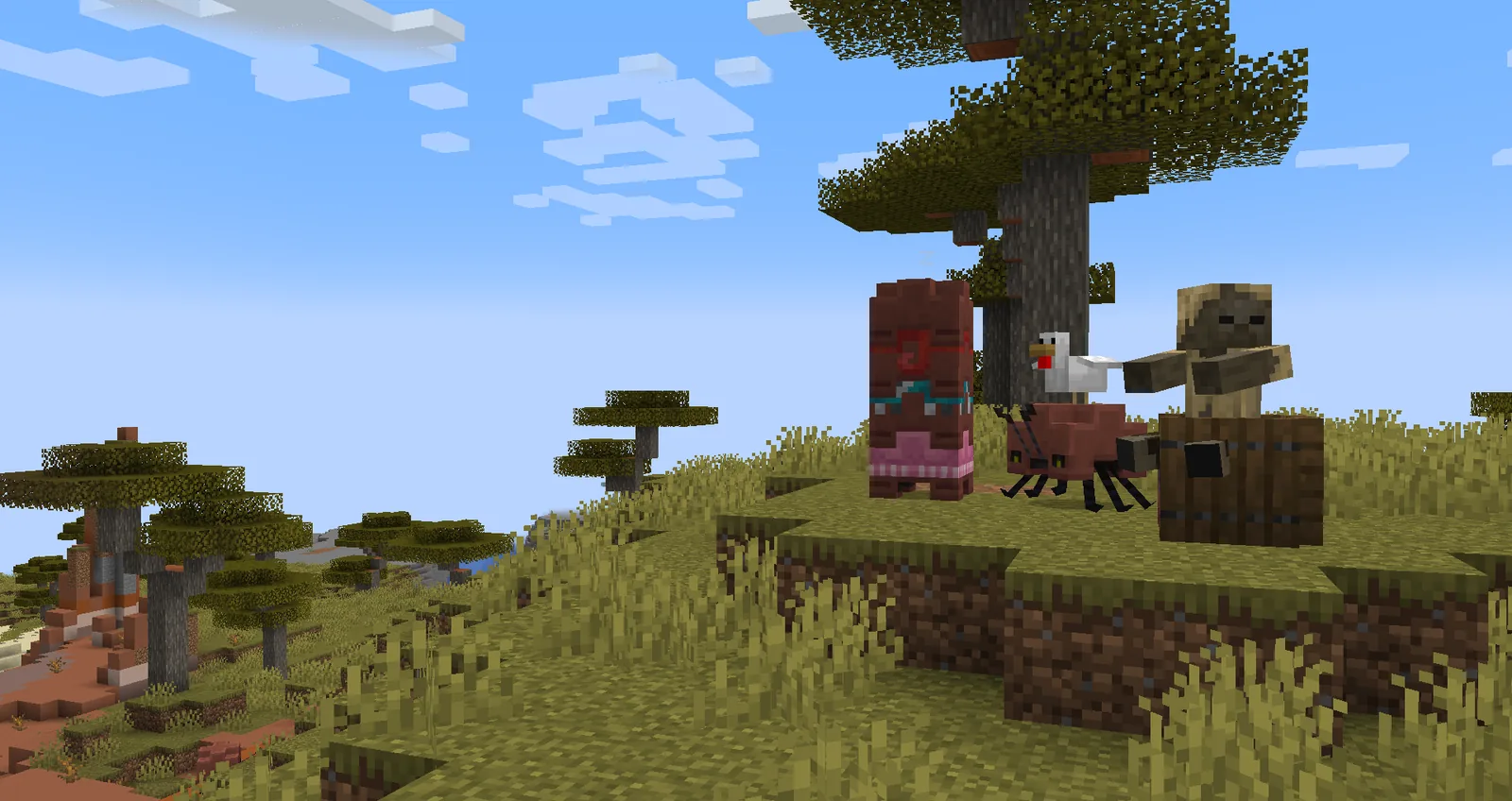
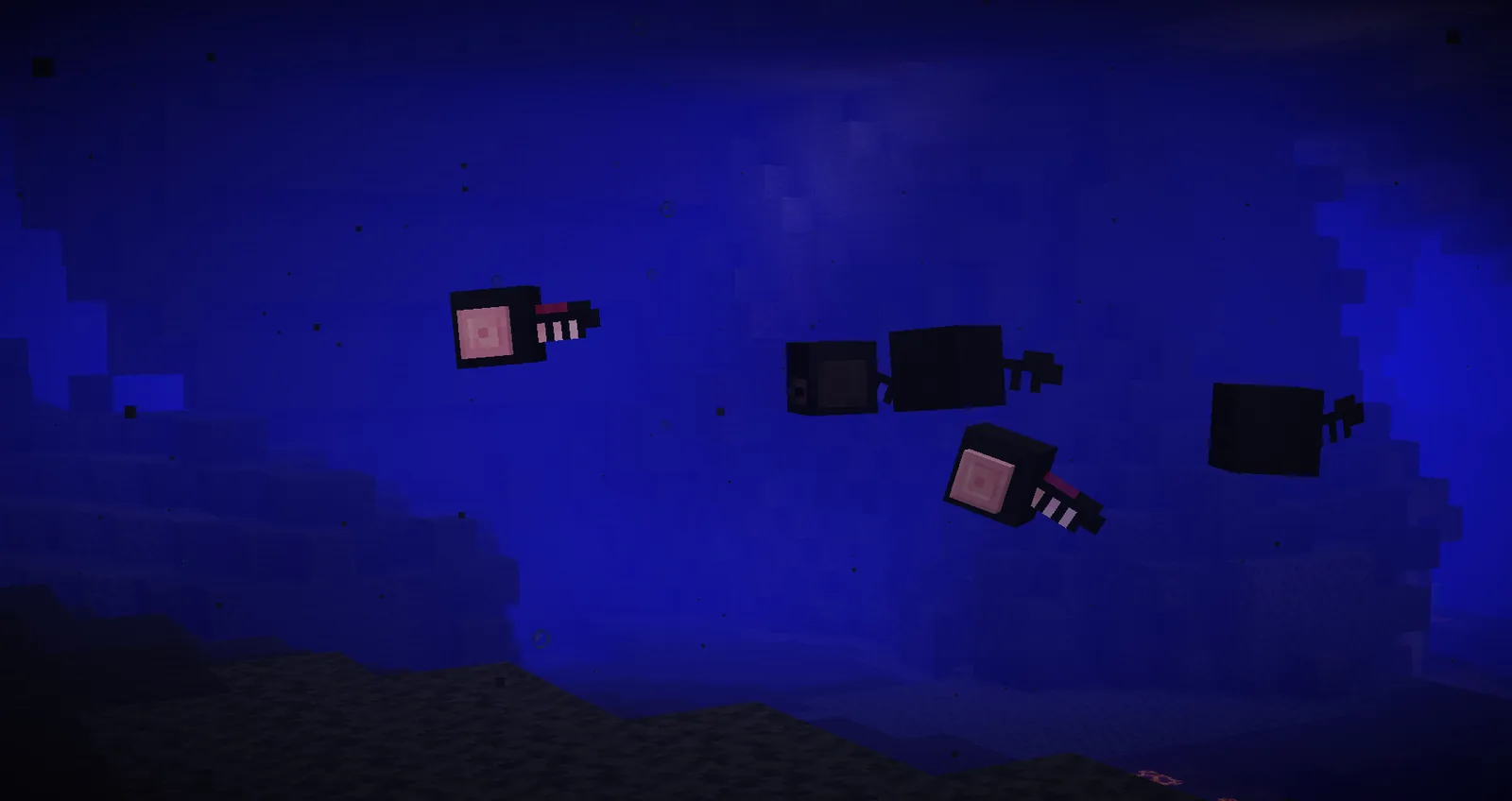
Creature silhouettes are unusual – long limbs, unexpected proportions, colour schemes vanilla would not use. Whether that is a feature depends entirely on the pack it lands in.
Mechanically, each creature has a role: a drop worth collecting, a behaviour worth watching, or an interaction worth learning. Nothing is purely ornamental, which separates it from mods that add models and stop there.
Compatibility
Technically unproblematic. It spawns by biome tag and does not modify worldgen, so it works with biome packs and other mob mods. The compatibility issue is aesthetic rather than technical, and no configuration file fixes that.
How to install
Standard loader install, safe on an existing world. If you are building a pack around a specific look, install it early and judge it in context rather than on the project page screenshots.
Is it worth installing
Yes if you are building a pack with its own identity, and no if you are trying to keep a world that could pass for vanilla. That is an unusually clean split for a mod recommendation, and it is the honest one.
Our view is that the vanilla-style consensus in Minecraft modding is stronger than it needs to be. Mods that look like Mojang built them are easier to recommend and harder to remember, and a pack where every addition blends in eventually has no character at all. A mod with a point of view is worth having, even when the point of view is not yours.
For the opposite approach, see the Friends&Foes review.
How it behaves in a survival world
Spawn rates are tuned so that encounters feel occasional rather than constant. In practice you meet one or two of the new creatures in an evening of play, which is the right frequency for something designed to be surprising. A mod at this density does not compete with vanilla mobs for attention, it punctuates them.
The creatures are not uniformly hostile, which matters more than it sounds. A world where every addition attacks you becomes exhausting, and the mix here keeps exploration from feeling like a combat treadmill.
Where it sits in a modpack
It works best as a deliberate stylistic choice in a pack that has one. Alongside a maximalist biome pack with its own strong palette, the creatures fit naturally, because the whole world has already departed from vanilla. Alongside a strictly vanilla-styled list, they stand out in a way some players will find jarring and others will find refreshing.
If you are assembling a pack for other people, install it last and look at it in context before committing. Art direction is the one thing config files cannot adjust.
Performance and maintenance
Entity count is the only real cost, and it is modest at default spawn rates. The more practical consideration is update cadence: mob mods with custom animation systems tend to lag behind new game versions, so check the supported version list before building a pack around it.
Configuration and spawn control
Spawn weights per creature are adjustable, which matters if you want the additions present but rare. Dialling the rates down turns the mod from a visible feature into an occasional surprise, and that is often the better setting for a pack with several content mods competing for the same attention.
Verdict
Recommended for packs with a defined aesthetic of their own, and skippable for anyone building a world that should pass for vanilla. The quality of the work is not in question – the question is whether its look belongs in your world, and that is a decision no review can make for you.
Images: Species project gallery on Modrinth.