Key takeaways
- There is one weather state. Whether it appears as rain or snow depends on the biome’s temperature at that position and height.
- Temperature falls with altitude, which is why a single storm can rain in a valley and snow on the peak above it.
- Powder snow, ice formation and the freezing damage effect are separate systems that players routinely confuse.
Minecraft’s weather looks decorative and is actually one of the few systems where biome data has visible, immediate consequences. Understanding the temperature rule explains most of what looks inconsistent about it.
One storm, different precipitation
When it rains, it rains everywhere in the loaded world at once. What changes is how each biome renders it. Warm biomes show rain. Cold biomes show snow. Hot dry biomes such as deserts and badlands show nothing at all, which is why a desert can be in the middle of a thunderstorm with a clear sky overhead.
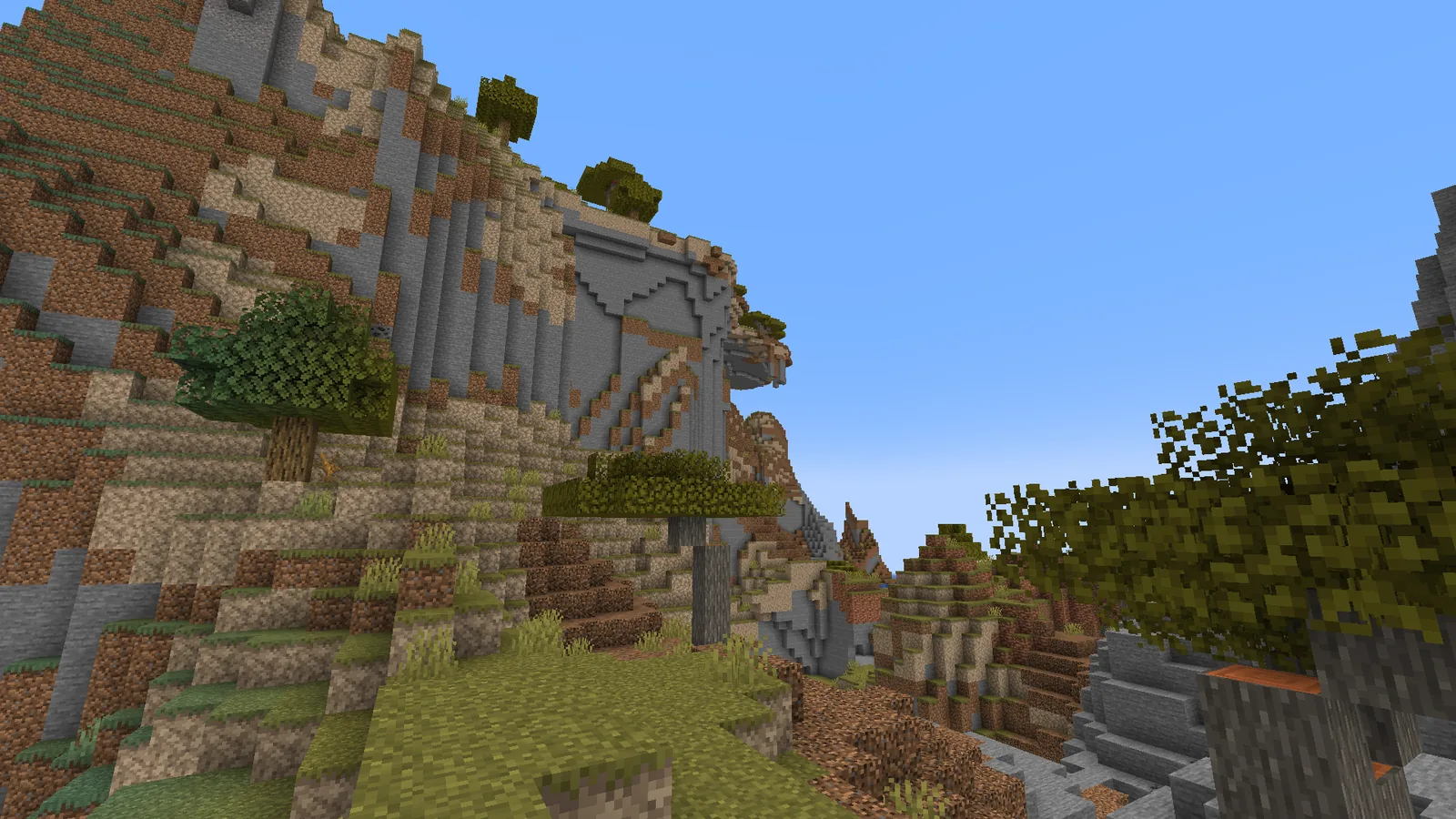
Temperature is a biome property, and it is modified by height. Above a certain altitude the effective temperature drops far enough that snow falls. That is the mechanic behind the familiar sight of a mountain capped in white while the forest at its base is soaked.
What snow actually does
Snow layers accumulate on solid blocks with sky access during snowfall. They can be collected with a shovel, and a silk touch shovel gives the layer itself rather than snowballs. Layers stack up to a full block, and a full block can be crafted back down.
Snow does not fall through leaves or overhangs, which is why a forest floor stays clear while the canopy above it turns white. Builders use this deliberately: a roof of leaves keeps a path snow-free without any lighting or block trickery.
Ice, packed ice and freezing water
Water freezes into ice in cold biomes when exposed to the sky and not adjacent to a light source. This catches out anyone building a canal through a snowy biome: the water freezes, boats stop, and the fix is a torch every few blocks or a roof over the channel.
Packed ice and blue ice do not melt and are the fast-travel surfaces of choice. Blue ice under a boat is the quickest horizontal movement in the game short of an elytra with rockets.
Powder snow is a trap, deliberately
Powder snow looks like a snow block and is not solid. Walking into it drops you in, and staying in it applies freezing damage over time. Leather boots let you walk on top of it, and leather armour prevents the freezing damage.
Used deliberately, it is a fall damage negator and a mob trap. Encountered accidentally on a mountain at night, it is a death. The game gives no visual warning beyond a slightly different texture, which is one of the harsher pieces of design in recent updates.
Our view is that the freezing system is the most interesting underused mechanic Mojang has shipped in years. It introduces an environmental hazard that armour counters in a non-obvious way, and almost nothing in the game asks the player to engage with it after the initial encounter.

Practical notes
Cauldrons fill with snow in snowy biomes and with water in rainy ones, which is a free water source without a bucket. Lightning during thunderstorms can convert certain mobs, and a channelling trident makes that controllable. Rain also extinguishes fire and slows mob spawning on the surface by changing light levels.
The biome side of the equation is covered across the seeds hub, and building for cold climates is in the builds section.
Farming and weather
Rain hydrates farmland regardless of nearby water, which matters for large fields. It also puts out fires and prevents them spreading, which is why a lightning strike during a storm is less catastrophic than it sounds.
Thunderstorms reduce light levels enough for hostile mobs to spawn on the surface during the day, which is a genuine hazard for anyone caught away from home and a useful farming condition for anyone who wants it.
Using weather deliberately
A lightning rod protects a wooden build by attracting strikes, and placing one on a tall point of any large build is cheap insurance. Channelling tridents turn a storm into a controllable tool, most usefully for converting certain mobs into their charged or variant forms.
Cauldrons filling from rain and snow provide a water source without a bucket, which is useful in the early game and in biomes where placing water is awkward.
Building for cold biomes
Three practical rules. Roof any water you want to stay liquid, or light it. Expect snow layers on every flat exposed surface, and design roofs where that looks intentional rather than messy. Use overhangs to keep paths clear, since snow does not fall through solid blocks.
Builders who work in snowy biomes often place light sources under trapdoors along paths, which keeps them clear of snow and ice without visible torches breaking the aesthetic.
Images: Immersive Weathering project gallery on Modrinth.