Key takeaways
- Stutter while moving fast is chunk generation and loading, not rendering. A better graphics card will not fix it.
- Generating new terrain is far more expensive than loading terrain that already exists on disk.
- Threaded chunk mods and a sensible render distance address the real bottleneck.
Everyone who has flown an elytra across unexplored terrain knows the feeling: the world hangs for a fraction of a second, repeatedly, in a rhythm that matches how fast you are travelling. It looks like a graphics problem. It is not.
Two different operations
When a chunk enters your view, one of two things happens. If that chunk has been visited before, the game reads it from the region file on disk and hands it to the renderer. That is cheap. If it has never been visited, the game has to generate it: terrain shape, biome placement, caves, ores, structures, decoration, and the lighting pass over all of it.
Generation is orders of magnitude more expensive than loading. This is why flying over your established base is smooth and flying into the unknown is not.
Why a fast computer does not save you
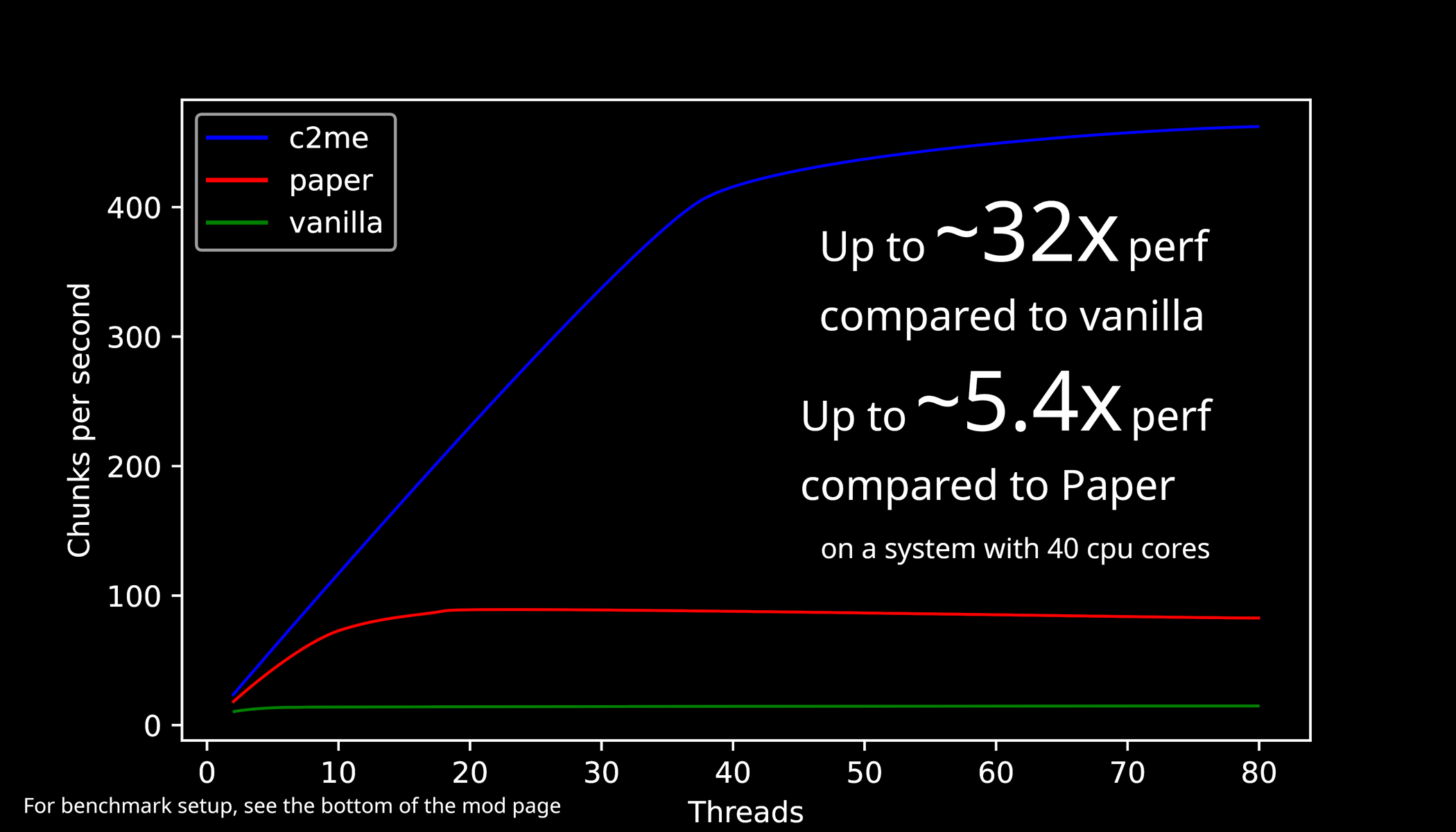
Chunk work in the base game is heavily bound to a small number of threads, and parts of it must complete before the game can continue the tick. A modern processor has many cores sitting idle while one of them does the work. That mismatch is the whole problem.
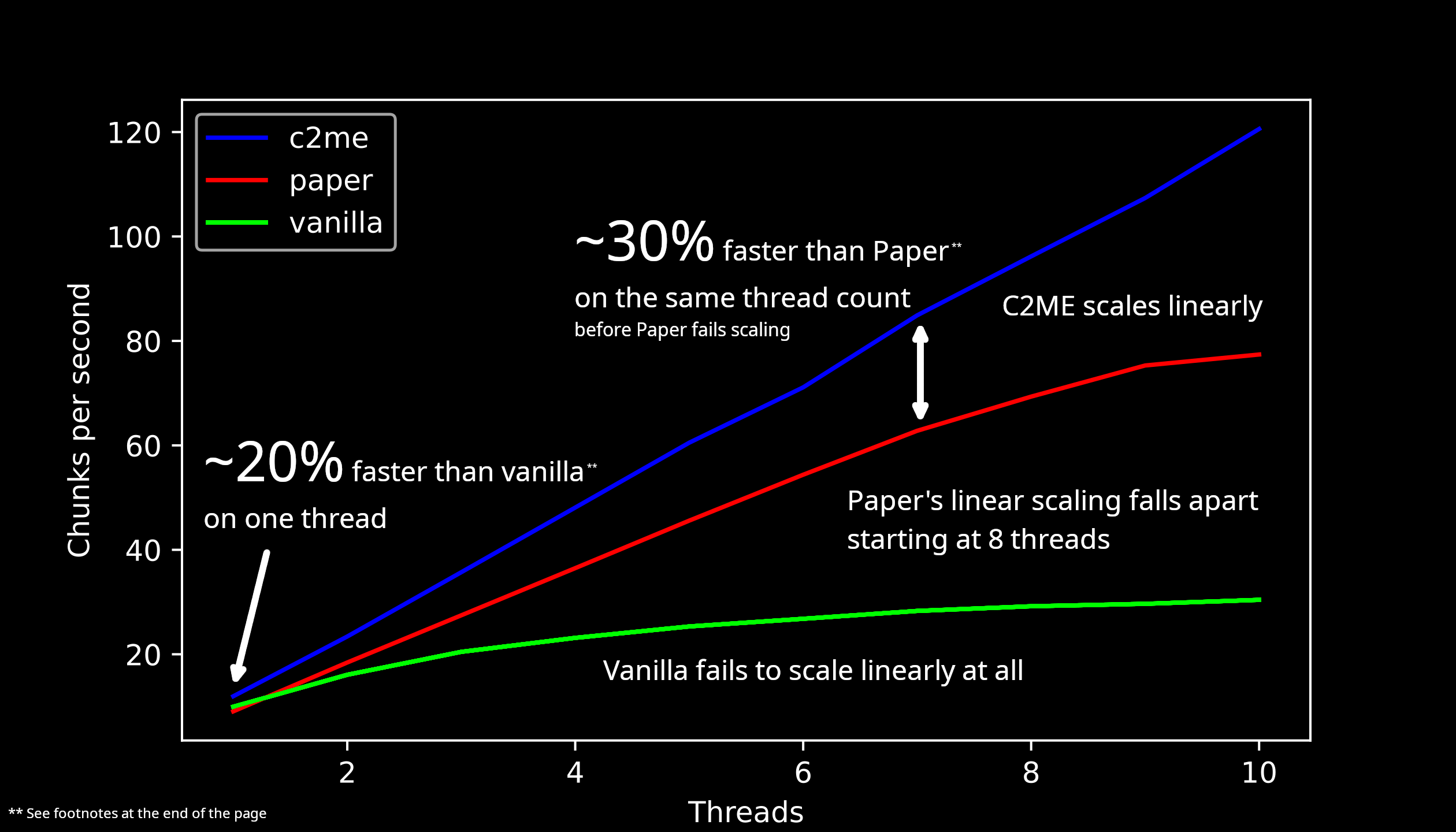
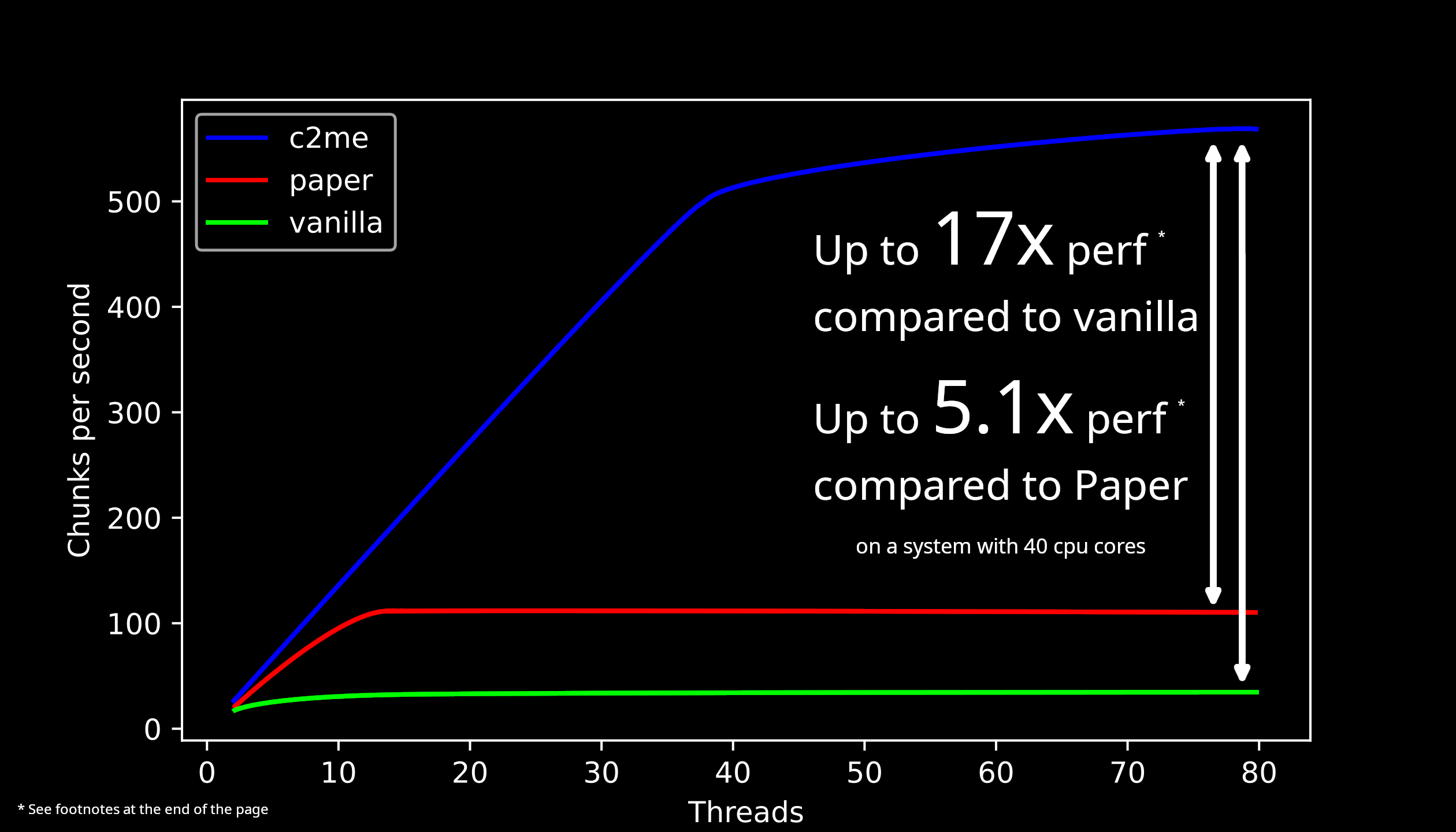
The mods that improve this restructure the pipeline so that generation, loading and lighting can run in parallel across those idle cores. The gain is not a higher frame rate while standing still – it is the removal of the hitches while moving.
What to try in order
First, lower simulation distance rather than render distance. They are separate settings and players routinely confuse them. Simulation distance controls how far the game ticks entities, redstone and block updates. Render distance only controls how far you can see. Dropping simulation to a modest value costs very little visually and removes a real amount of work per tick.
Second, pre-generate terrain if you are on a server or a world you will explore heavily. Generating chunks ahead of time, while nobody is flying through them, converts the expensive operation into the cheap one permanently.
Third, install a threaded chunk management mod. This is the step that addresses the architecture rather than working around it.
The honest limitation
None of this makes generation free. A world with a heavy worldgen mod installed will always hitch more than vanilla, because each chunk has more work to do – more biomes to select, more structures to test for, more decoration to place. If you are running several worldgen mods at high render distance and expecting no stutter, no performance mod will deliver that.
Our view is that pre-generation is the most underused tool available to server owners. It is a one-time cost, it runs while nobody is playing, and it converts the worst-performing moment in the game into a disk read. Most server performance complaints we see would be halved by it.
Related reading
The rendering side of performance is a separate problem with separate solutions, covered in the culling explainer and the performance mods list.
Render distance versus simulation distance in practice
A useful starting point on a single player machine is a high render distance with a low simulation distance. You see far, the game ticks little, and the difference in feel is immediate. Most players have them set to the same value without realising they control different things.
Pre-generation tools
Server-side pre-generators walk a bounded area and generate every chunk in it ahead of time. On a large world this takes hours and it is a one-time cost. Pair it with a world border so the generated area is the playable area, otherwise players simply walk past the edge and hit unpregenerated terrain anyway.
When the problem is the disk
Loading existing chunks is a disk read, and on slow storage a large world with heavy region files can stutter even when nothing is being generated. If pre-generation did not help and the profiler shows time spent in chunk loading rather than generation, the bottleneck is storage rather than processing.
That is one of the few cases where hardware genuinely is the answer.
Settings to leave alone
Chunk builder settings and thread counts exposed by some performance mods look like the obvious levers and rarely help. Defaults in modern renderers are tuned reasonably, and manual thread limits usually make things worse on the hardware most players have. Change distance settings and pre-generate; leave the internals alone unless a profiler points at them.
Images: Concurrent Chunk Management Engine project gallery on Modrinth.