Key takeaways
- Ranks are held per role, so the same player can sit in three different divisions at once.
- The game updates your visible rank in batches rather than after every match, which hides short-term swings on purpose.
- Role queue fixed the team composition problem and created a queue time problem in its place.
Overwatch’s competitive mode has been rebuilt more times than most shooters have shipped sequels, and each rebuild has been an argument about the same tension: how much of the underlying system should a player be allowed to see?
Role queue and what it solved
Before role queue, a team of six picked whatever they wanted and the first thirty seconds of a match were a negotiation nobody enjoyed. Players who wanted to play damage outnumbered players who wanted to play support by a wide margin, and a match could be decided by which team blinked first.
Locking a slot per role removed that entirely. You queue as tank, damage or support, you get a game with a guaranteed composition, and the pre-match argument disappears. The cost is queue time: if a role is oversubscribed, its players wait, and no amount of clever matchmaking makes that arithmetic go away.

Why you have three ranks
Because ranks are tracked per role, your profile carries separate divisions for tank, damage and support. This is more honest than a single number. Playing support well and playing tank well are different jobs, and a player who has ten thousand hours on one is a novice on the other.
It also punishes flex players in a way that is worth naming. Spreading your games across three roles means three slower climbs, and none of the three will reflect your actual ceiling. If you care about the number, the system rewards specialisation – which sits awkwardly with a game built around flexibility.
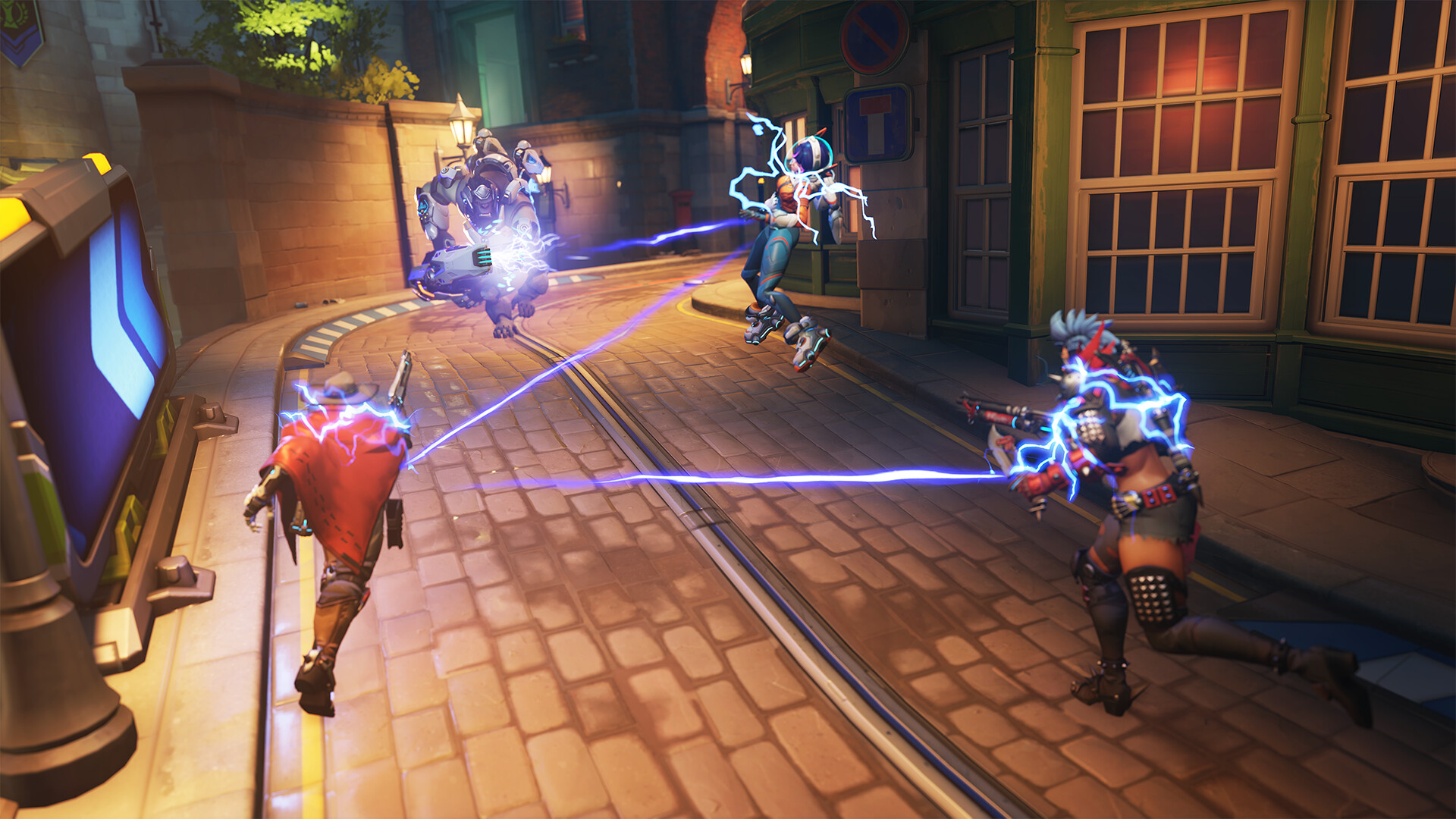
Batched updates and hidden rating
Rather than moving your rank after every match, the game reveals an update after a run of wins or losses. Internally, your rating is moving the whole time. What changes in batches is what you are shown.
The reasoning is defensible. Players who watch a number tick down after every loss tilt harder, queue angrier, and lose more. Batching smooths that. The cost is transparency: when the update arrives, it is hard to tell which games moved you and by how much, and players fill that vacuum with theories about the matchmaker punishing them.
Our own view is that the batched display is the right call for a team game with six players per side, where any individual match outcome is mostly noise. Counter-Strike can afford to show a raw number because its rounds are so numerous that a match is already a large sample – the reasoning behind CS2’s visible CS Rating. A hero shooter with hard counters and a five-minute snowball has a much noisier signal, and showing every tick of it would tell players less, not more.
What actually moves you up
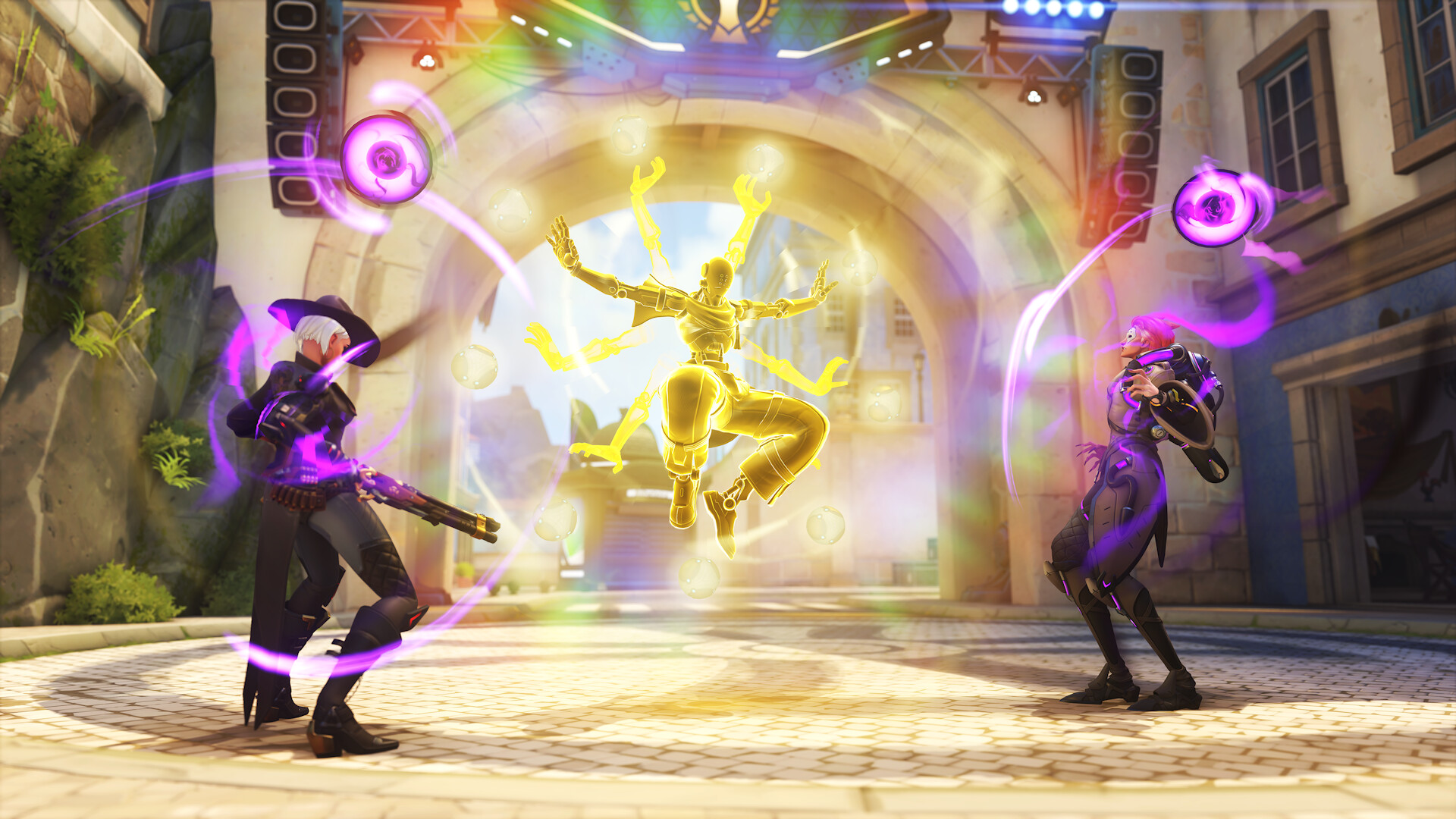
The honest advice for climbing in a role queue shooter is unglamorous. Play a small hero pool so your mechanics are consistent, take the fights your composition is built for, and treat ultimate economy as the resource it is. Hero counter-picking matters, but far less than not dying at the start of a fight.
If you want to see how a different studio handles the same problem of ranking players inside a fixed-role team game, the League of Legends structure piece covers the professional end of that design.
Why matchmaking feels unfair even when it is not
A matchmaker in a six-player team game has to balance two things that pull against each other: match quality and queue time. Waiting longer produces better-matched games. Nobody wants to wait. The compromise is a system that widens its search as the wait grows, which means late-night and off-peak matches are systematically less balanced than peak-hour ones.
This produces a real experience that players describe inaccurately. The game is not putting you with bad teammates to force a loss. It is choosing a wider skill band because the alternative was a five-minute queue, and a wider band means more variance in both directions.
The other confounder is role. A tank one division above the lobby average has more influence on the outcome than a support at the same relative rating, because the roles do not carry equal weight in a fight. A matchmaker balancing on a single rating number per player cannot fully account for that.
Reading your own performance honestly
The most useful habit is reviewing your deaths rather than your eliminations. Eliminations are shared credit in a team fight. Deaths are usually individual decisions – pushing without cooldowns, holding a position after the fight was lost, taking a duel your composition did not support.
Ten reviewed deaths will tell you more about why your rank is where it is than a hundred games of playing harder. That advice is unglamorous and it is the one thing every high-rated player in every team shooter agrees on.
Images: Blizzard Entertainment, via the Overwatch 2 Steam store page. Official game site: overwatch.blizzard.com.