Mojang published a long studio interview under the deadpan title “So You Want To Rule A Game Universe?”, and underneath the comedy bits it is the clearest public statement the team has made about how Minecraft’s world is actually designed. It is not a patch note and it is not a roadmap. It is a list of constraints the studio has been working inside for fifteen years, and once you see them written down, a lot of decisions that looked arbitrary stop looking arbitrary.
We watched the whole thing and pulled out the design rules that matter, plus the places where the studio’s stated philosophy visibly shapes features you already use.
Four rules that run through the whole interview
- Variation beats authorship. The world generator is asked to produce difference, not set pieces, because the player is supposed to be the one who decides what a place means.
- The player writes the story. Mojang’s phrasing is that players take part in forming their own stories and their own worlds; the game supplies nouns, not a plot.
- No pop culture. Minecraft’s world stays free of references to anything outside itself, which is why it has aged the way it has.
- The Overworld is home. Every other dimension is allowed to be an extreme; the Overworld is deliberately the one you come back to.
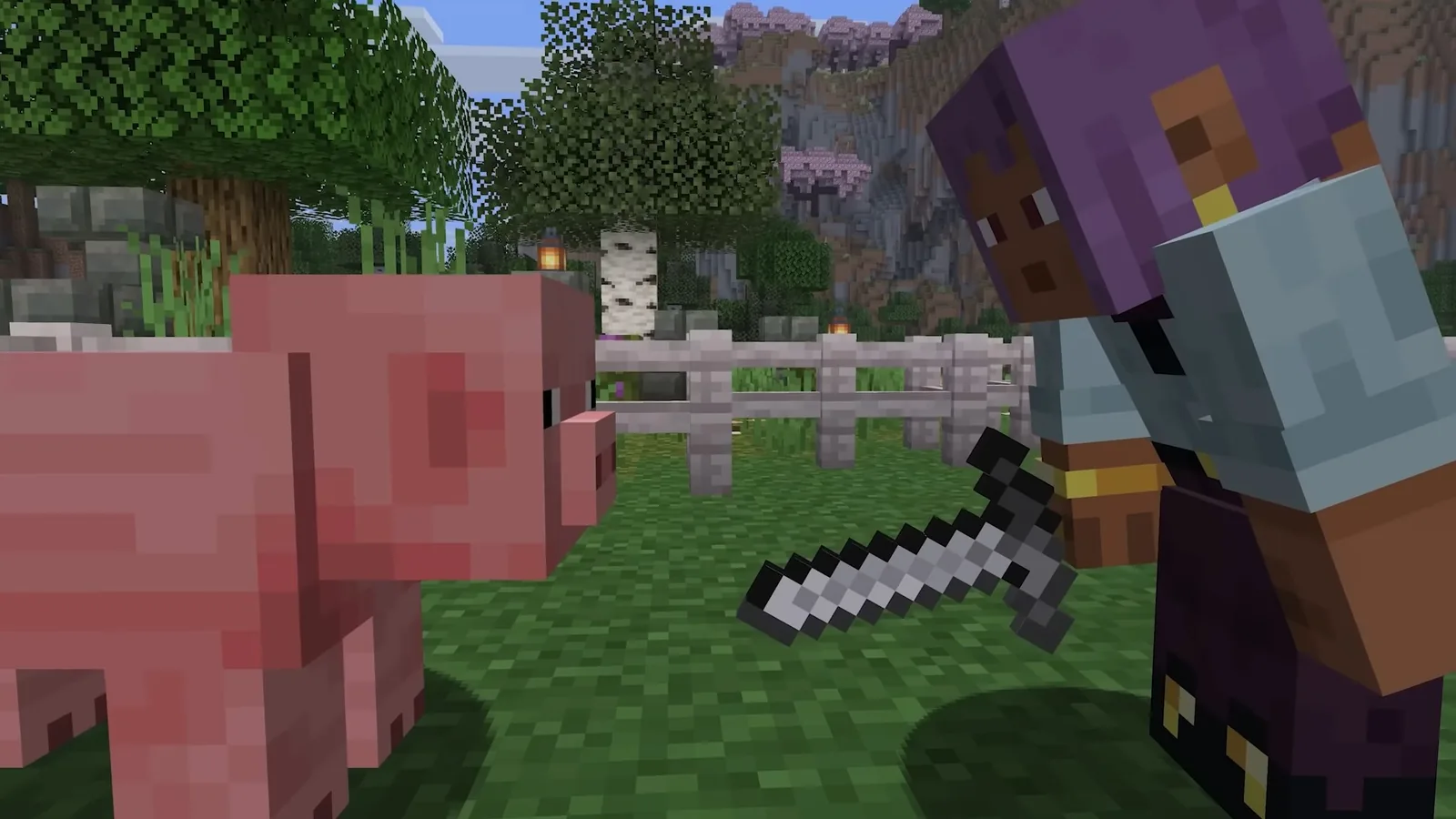
Why procedural generation is a design decision, not a shortcut
It is easy to read world generation as a content-budget trick: nobody can hand-build a world that size, so a seed does it instead. The interview frames it the other way around. Generation is what makes the world yours, because the specific mountain you built your first base into does not exist in anyone else’s save. The studio’s job is to make sure the generator keeps producing places that feel worth stopping at, which is why biome work, cave shape and terrain height have absorbed so much developer time across the last decade.
That framing also explains why Mojang keeps returning to the same systems instead of bolting on new ones. A new biome is not just new scenery; it is another way the generator can surprise a player who has already seen a thousand worlds. If you have ever wondered why a version can ship with what looks like a small feature list and still change how worlds feel, this is the reason. Our guide to ore distribution and Y levels is a practical example of the same idea from the player’s side: the rules are fixed, the output never is.
Mobs are cheap tricks, on purpose
The section on mobs is the one that will change how you look at the game tomorrow. The studio’s position is that a creature feels alive because of a very small number of legible behaviours, not because of a deep simulation. A mob that turns its head to look at you is doing almost nothing computationally and is doing an enormous amount socially. You now believe it noticed you.
Stack a few of those and you get a villager who appears to have a routine, a wolf who appears to have an opinion about you, and a creeper whose entire personality is one sound cue and a two-second delay. None of it is intelligence. All of it reads as intent, which is what the design is actually buying.
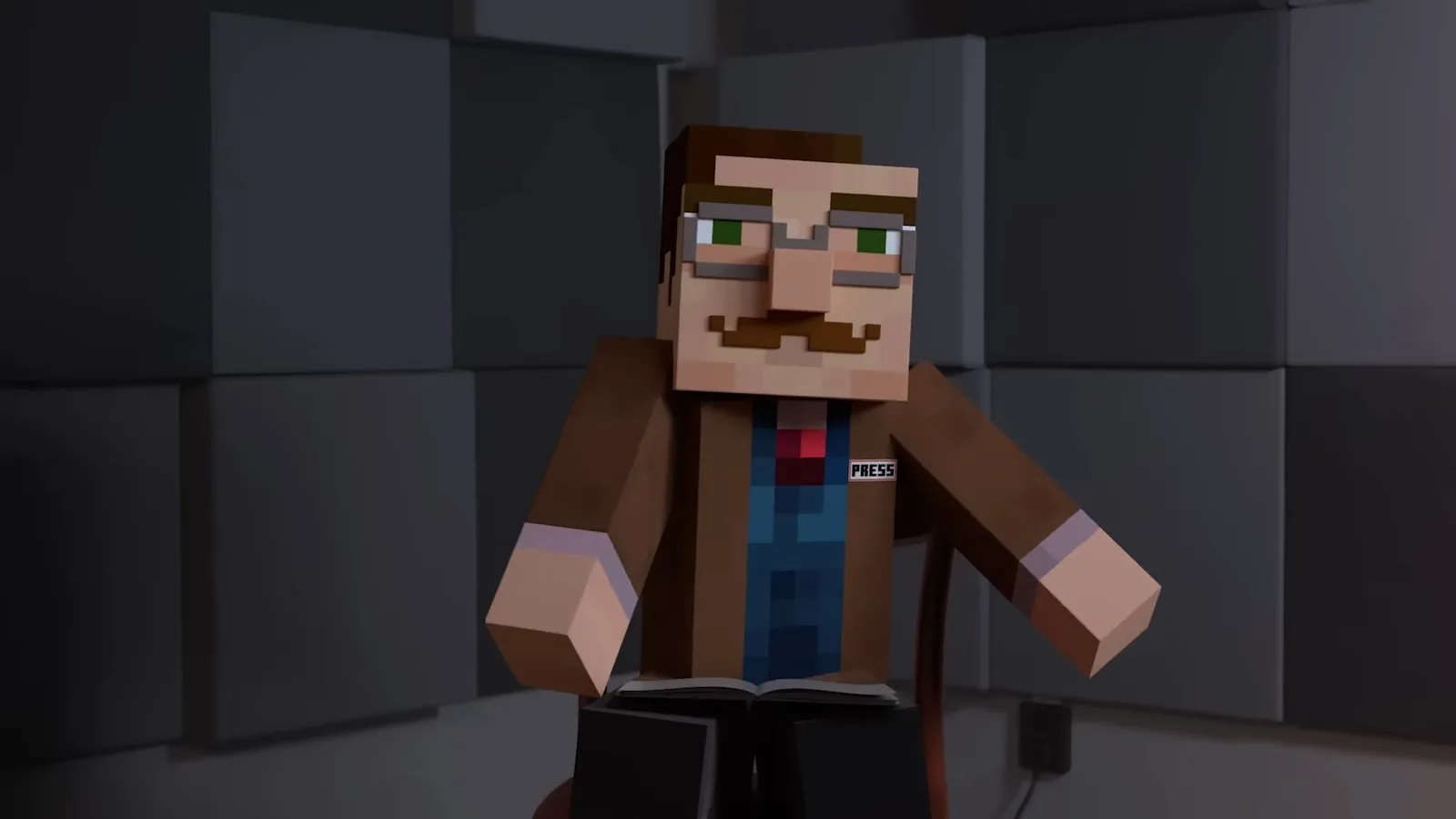
Which is why the team is careful about adding more
The same logic makes Mojang conservative. Every new mob has to earn a slot in a world where the existing cast is already doing the emotional work, and it has to interact sanely with systems built years earlier. That is the tension behind almost every “why did this take so long” conversation in the community, and it comes up again in Mojang’s own account of building the Happy Ghast, where a flying mount had to be slotted between existing transport options rather than replacing them.

The no-references rule is doing more than you think
Mojang’s refusal to put pop culture into the base game sounds like a branding preference. In practice it is a preservation strategy. A reference dates a world to the year it was made; a world with no references has no year. A player starting a fresh save in 2026 lands somewhere that does not feel like it was built for someone else’s decade, and a player returning to a world from 2013 does not find it embarrassing.
It also keeps the meaning of everything open. A blocky tower is a castle, a lighthouse, a spawn hub or a joke, depending entirely on who built it. The moment the game tells you what something is, the player stops deciding.
Dimensions as emotional contrast
The interview describes the non-Overworld dimensions as fantasy extremes, and the Overworld as the place you are safe and creative. That is a contrast structure rather than a difficulty curve. The Nether is not simply harder; it is hostile in a way that makes the Overworld read as home when you step back through the portal. The End is not simply the last area; it is empty in a way that makes a base full of chests feel like an achievement.
Once you accept that, the Overworld’s relative calm stops being a weakness. It is the control group. Everything else is measured against it.
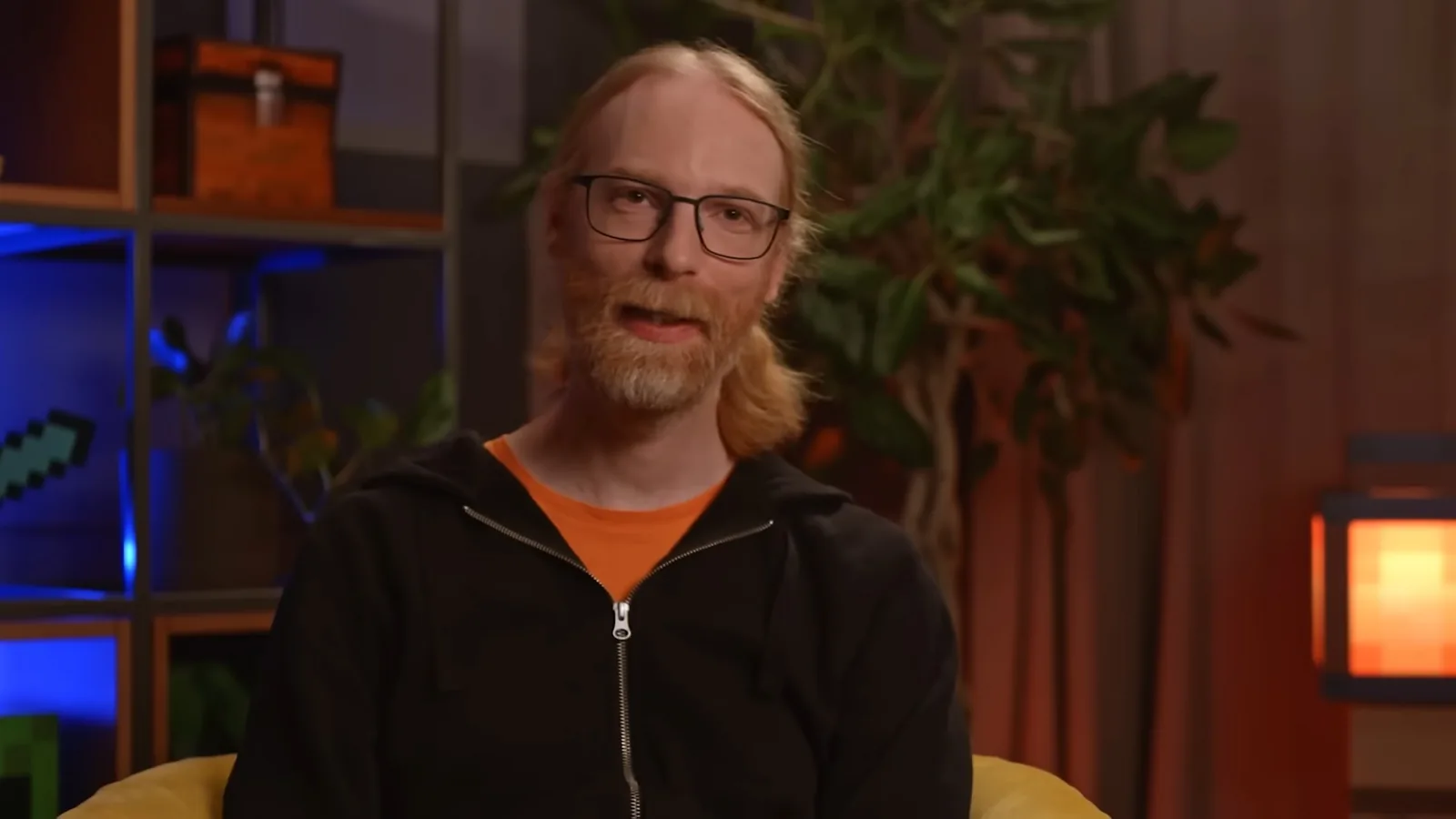
Where ideas actually come from
The least glamorous part of the video is the most useful. Ideas arrive from internal brainstorming and from community feedback, and then most of them die. The studio talks about the filtering rather than the inspiration, which matches what players see from the outside: a feature appears in a snapshot, gets torn apart on the bug tracker and in forums, and either survives in changed form or quietly disappears.
That loop is visible in the public tooling too. Mojang’s bug tracker is not only a defect queue; it is a running record of what players care about enough to document. We went through how that pipeline works, and the bugs that changed the game separately, because it is a genuinely unusual way for a studio this size to operate in the open.

The nostalgia part, and why it is a design target
The closing argument is that Minecraft’s real product is memory. You customise a world, you spend hundreds of hours in it, and the world becomes a record of that time. Everything above serves it: generation makes the world unique, the absence of references keeps it timeless, and the mobs give it enough life that the memory has characters in it.
It also explains the studio’s caution. A game whose value is stored in players’ old saves cannot casually break old saves, and cannot casually change what the world means. Minecraft keeps evolving, but the constraint is that a world you left five years ago should still be recognisably the place you left.
The short version
Minecraft’s world design is a set of refusals as much as a set of features: refuse to author the player’s story, refuse to date the world with references, refuse to make the Overworld exciting at the cost of making it home. The interview is worth the full runtime if you build, mod or write about the game, because it tells you what Mojang will and will not do next far more reliably than any roadmap.