Key takeaways
- The Frostbite is a zombie variant that spawns in cold and icy biomes and switches between melee and thrown Ice Balls depending on range.
- Freezing is a new mob effect that behaves like standing in Powder Snow, and mobs vulnerable to it take five times the damage.
- Ice Balls are brewable into Freezing potions and craftable into Arrows of Freezing, which gives players the effect as a weapon.
Every game drop adds a mob, and most of them are either a passive animal or a reskin of an existing hostile. The Frostbite, added in Minecraft 26.4 Snapshot 3, is neither. It is a zombie variant with a ranged attack, a conversion rule in both directions, and an immunity that lets it use terrain players cannot. On paper that makes it the most mechanically complete hostile mob added since the Breeze.
The more interesting part is the effect it carries. Freezing is a new status effect, and unlike most hostile mob effects it is immediately available to players through brewing and crafting. That is a design decision worth looking at on its own, because Mojang does not usually hand you a mob’s signature mechanic in the same update that introduces the mob.

What the Frostbite actually does
The behaviour list is short but every line changes something:
- It spawns in cold and icy biomes, and also inside the new Ice Caves biome alongside Strays.
- It throws Ice Balls at range and switches to melee when a target closes, with the switch depending on both distance and whether it still has ammunition.
- Melee attacks apply Freezing. Ranged attacks throw Ice Balls instead.
- It transforms into an ordinary Zombie after long enough underwater.
- It drops Rotten Flesh and Ice Balls.
- It can stand on top of Powder Snow, and it is immune to freezing – no slowdown from the Freezing effect and none from Powder Snow.
The ammunition clause is the detail most people will miss. A Frostbite that has run out of Ice Balls has to come to you, which means a ranged fight has a natural end state rather than an infinite stalemate. That is a cleaner solution than giving the mob an arbitrary throw cooldown, and it means killing one and collecting its drops is partly a matter of letting it spend its stock.
Conversion runs both ways. Zombies and Husks turn into Frostbites inside Powder Snow, and Frostbites turn back into Zombies underwater. That is a pair of rules a server owner should know before building anything near a snowy biome, because a Powder Snow trap in a cold biome is now a Frostbite factory rather than a kill box. Our spawn-proofing guide covers the baseline rules this layers on top of.
How Freezing works as an effect
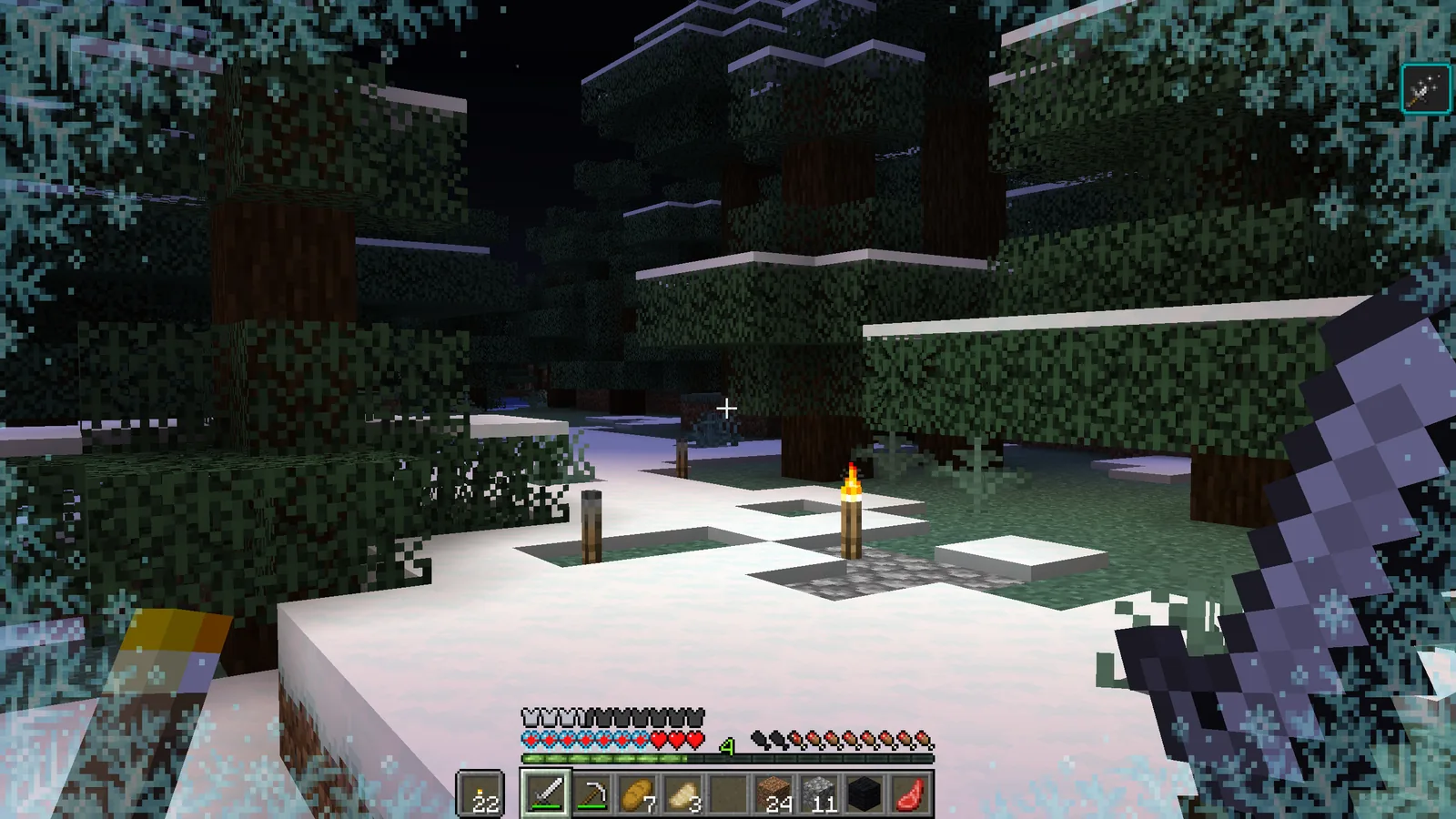
Freezing causes the player to shake and eventually take damage, and it progressively freezes you as though you were standing in Powder Snow for the effect’s duration. In other words it decouples the freeze meter from the block. Previously the only way to be frozen was to be physically inside Powder Snow, and stepping out stopped the clock. Now an effect can carry that state with you across any terrain.
Leather armour still protects from freezing the way it does with Powder Snow, with an important caveat: it does not stop the effect being applied and it does not remove the effect. So leather is damage mitigation, not immunity. You will still see the shake, the effect will still sit in your status list, and you will still want to deal with it.
The number that matters for combat is on the mob side. Mobs that are vulnerable to Freezing take a five times multiplier to Freezing damage while affected. That is a very large multiplier by Minecraft standards, and it is the reason the player-facing half of this update exists. Our status effects reference lists how the other effects stack and which ones a milk bucket clears.
Ice Balls, potions and arrows
Ice Balls are the Frostbite’s projectile and its drop. As a projectile they deal 4 damage on hit, scaling down with velocity, apply knockback, and break on impact with blocks or entities with a particle effect and a sound. That is a slightly stronger snowball with a visual tell.
As an item they are a brewing ingredient. Ice Balls brew into Potion of Freezing, including Splash and Lingering variants. Arrows of Freezing are crafted by surrounding a Lingering Potion of Freezing with eight arrows in the crafting grid, which is the standard tipped-arrow recipe shape. Our brewing guide covers the base and modifier ingredients that the rest of this chain depends on.
Put the five times multiplier and the arrow recipe together and you have a thing worth testing: a Freezing-tipped arrow against a mob vulnerable to freezing is a significant damage increase for one crafting step. Mojang has not published the vulnerability list, so which mobs qualify is the main open question from this snapshot.
What this does to cold-biome survival
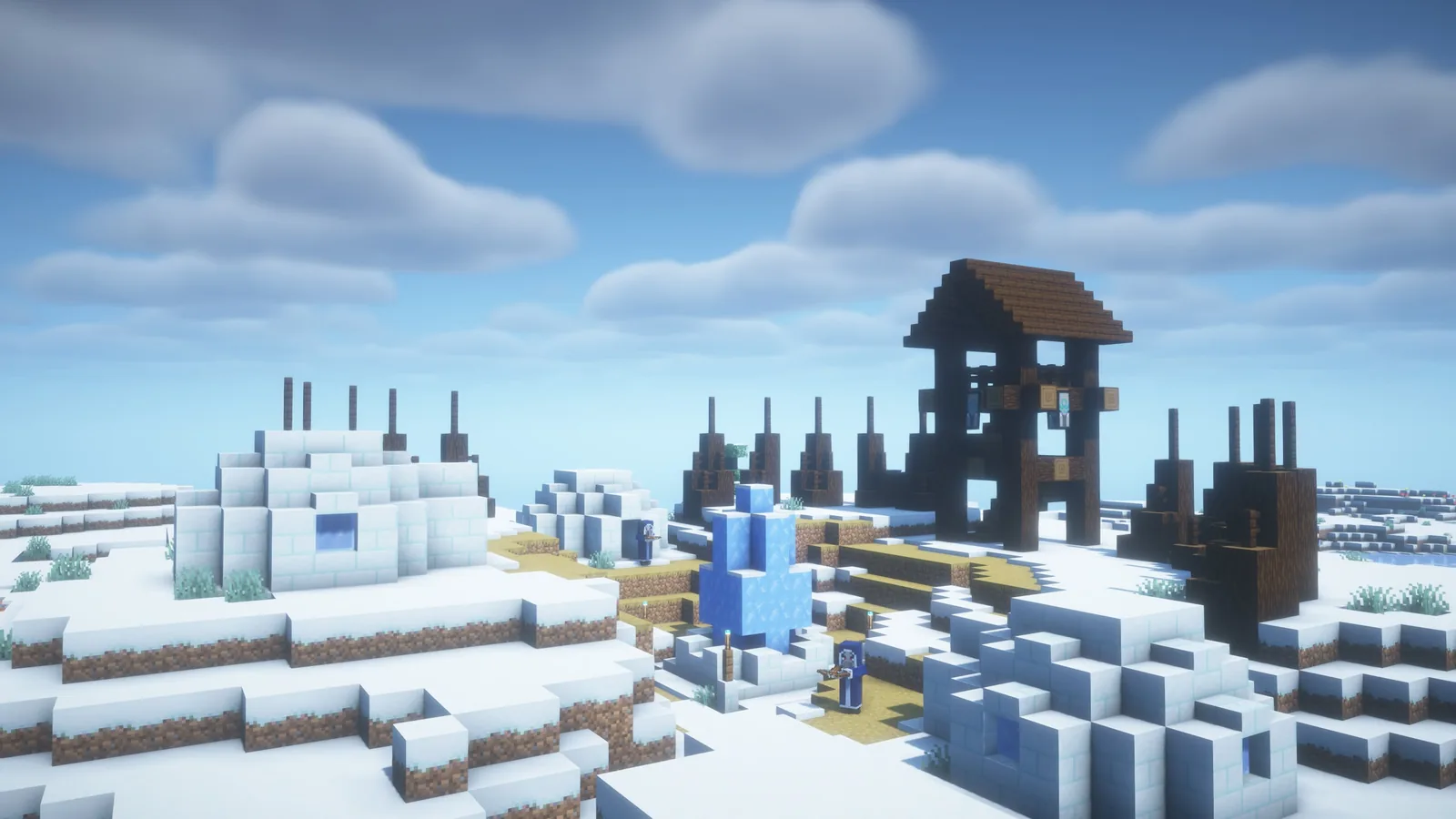
Cold biomes have always been mechanically thin. Snowy plains gave you a hostile that shot slowness arrows, Powder Snow gave you a hazard you could walk around, and that was the extent of it. A snowy spawn was a cosmetic preference rather than a different game.
Three things change that. There is now a hostile that forces a ranged engagement in open snow. There is a status effect that follows you off the hazard block. And there is a cave biome underneath those surface biomes that is dark by design and spawns both Strays and Frostbites. A cold start is now a genuinely different early game, and leather armour has gone from a crafting curiosity to something you want before you go underground.
Builders get the better end of it. Ice Crystals emit light and place in any direction, Snow can now be placed on Packed Ice, and Icicles have base, middle and tip variants for anyone detailing an eave or a cavern mouth. The constraint is that Icicles break near light, so the decorative use is outdoors and in the dark.
Our read on the design
The Frostbite is the first hostile mob in a while that is defined by a terrain immunity rather than a stat line. It does not have more health than a zombie or hit harder in melee. What it has is the ability to stand on Powder Snow, which means the one piece of terrain that reliably stopped mobs in cold biomes no longer does. That is a cheap way to make an existing biome feel hostile without touching difficulty numbers, and it follows the same pattern as the Warden punishing noise rather than carelessness.
Handing the player Freezing in the same snapshot is the part that reads as confidence. Mojang is betting that the effect is interesting enough to build around rather than just survive, and the five times vulnerability multiplier is a strong hint that there is an intended target. Snapshots tied to an open feedback site change often, so treat all of this as provisional – but as a statement of direction it is the clearest one the 26.4 cycle has made.
Images: Natural Temperature and Frostiful project galleries.