Vanilla generates villages in six biomes. There are considerably more than six biomes. Moog’s Missing Villages fills the gaps, and version 2.2.0 on 21 September is the kind of update that shows the author is paying attention to the small stuff.
The premise
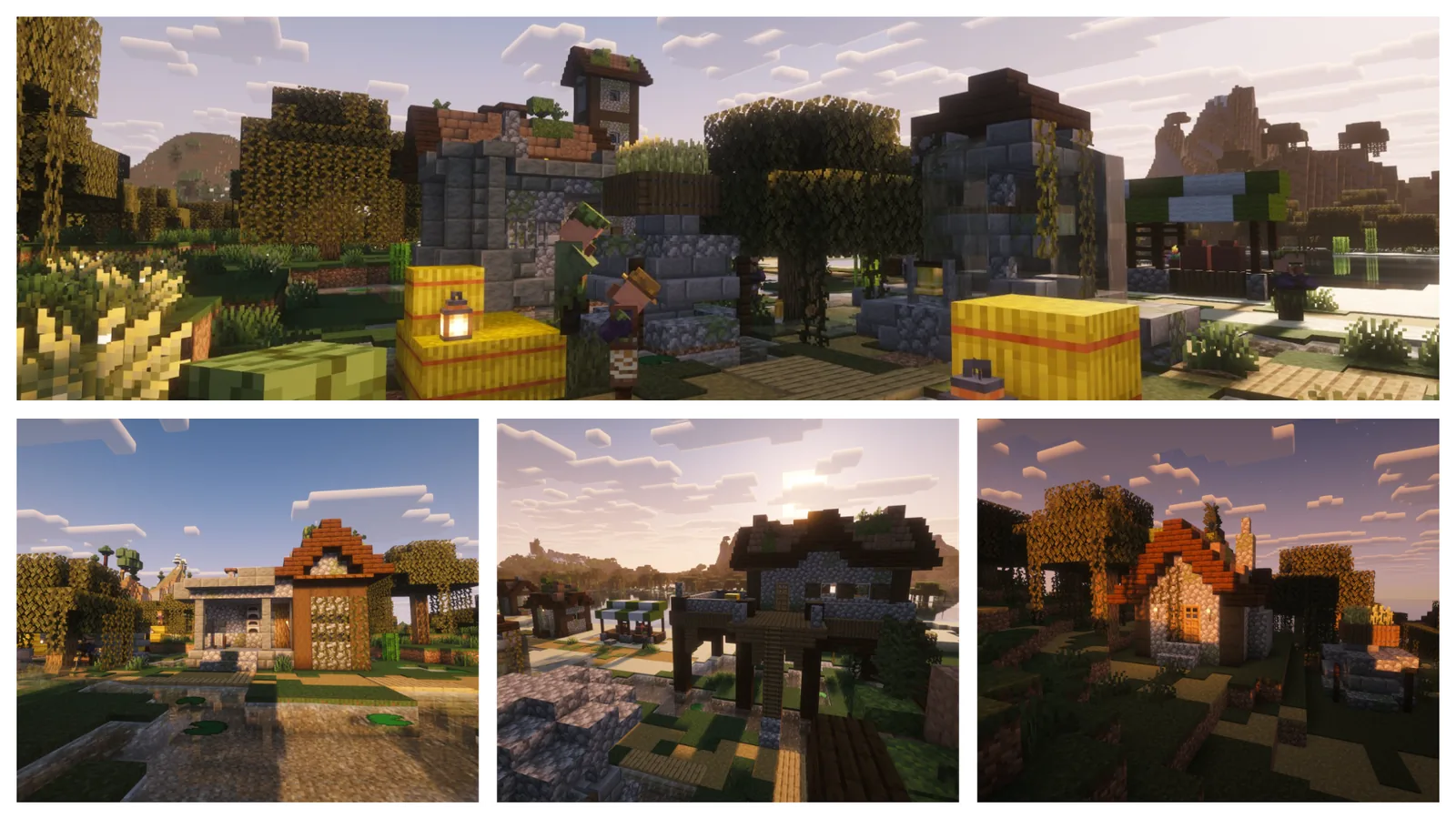
A village in every biome that should plausibly have one, built in materials that match, with the same construction language vanilla uses.
That is a narrower brief than most structure mods take and it is why the results blend. A dark oak village looks like something vanilla would have shipped, because it follows the rules vanilla follows.
It joins the rest of the Moog’s family – MVS for the overworld and MES for the End.
The Nether half is MNS, and they all share the same architecture: vanilla blocks, vanilla entities, server-side only.
What 2.2.0 added
The changelog is a list of details rather than features, and it is worth reading as an example of what makes a generated settlement feel inhabited:
- Dark oak villages now have their own villagers rather than borrowing vanilla’s.
- The archer’s house in dark oak villages displays a bow and an arrow in item frames.
- Armour stands in villages wear a random set of leather, chainmail or iron armour.
- Village cats come in varied types rather than a single one.
None of those change gameplay. All of them change whether the village reads as a place people live in or a set of buildings placed by an algorithm.
The item frame detail is the clearest example. A house labelled “archer” by its contents is doing narrative work that a house labelled by its shape cannot, and it costs two item frames.
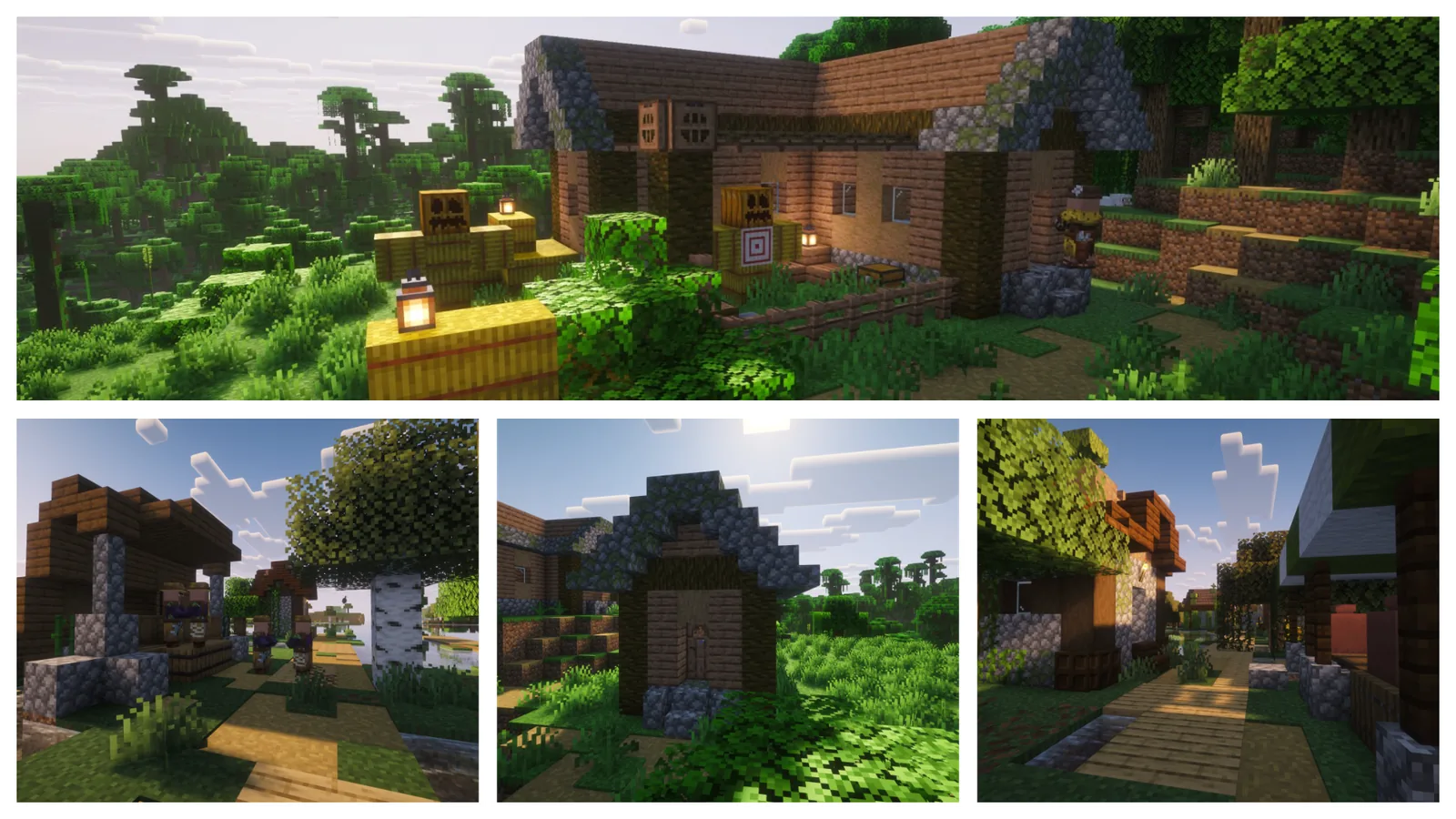
Server-side only
Client unsupported, server required. The usual property of this family, and the usual consequence: install it on the server and vanilla clients see everything.
For villages specifically this matters more than for other structure types, because villages are where players interact rather than where they explore. A village everyone can see and use without installing anything is a shared landmark.
Fabric, NeoForge and Forge builds all exist. Licence is AGPL-3.0, so modpack inclusion is unrestricted but derivative work carries obligations.
What villages are for
Worth stating, because it decides whether this mod is useful to you.
A village is three things: a source of trades, a source of free buildings, and a place to establish. The first is the one most players use, and it is the reason a mod adding villages adds more than scenery – more villages means more cartographers, more librarians, more of the trades that make trading viable.
It also means more raids, if you care about that, and more villagers to keep alive, which on a survival server is a real ongoing cost.
Adding it to an existing world
New chunks only, as always. Unlike the Nether, the overworld is expensive to get fresh chunks in – you have to travel a long way overland or through a portal.
So this is a mod best added at world creation. On an established world, the honest expectation is that you will see the new villages when you next explore somewhere new, and not before.
The general case is covered in retrofitting worldgen, and villages are the worst category for it because they are the structure you most want near where you already live.
Verdict
Install it at world creation if you like villages and want them in more of the map. It is low-friction, vanilla-consistent and server-side, and 2.2.0 shows it is being actively detailed rather than left to sit.
Skip it if your world is established, or if your complaint about villages is their contents rather than their distribution – this adds more villages, not different ones. For settlements that are genuinely unlike vanilla’s, Towns and Towers is the other direction.
Villages as a base site
A generated village is the cheapest good base site in the game, and more villages means more choice of site.
What a village gives you: a bed and a spawn point immediately, farms already planted, a source of trades, and buildings you can renovate rather than build. What it costs: iron golem spawns, villager pathing, and a settlement that raids will target.
Building into an existing village rather than beside it is the approach most players eventually settle on, and it is a genuinely good building exercise – the constraint of an existing structure forces decisions that an empty field does not.
Biome coverage in practice
The value of this mod scales with how much of the map you actually see. A player who settles in the first plains they find gains nothing from villages in taiga variants and swamps.
A player who explores, or a server with people spread across biomes, gains a lot – because the point is not more villages near you, it is a village wherever anyone happens to be.
That makes it a better fit for a multiplayer world than a solo one, which is true of most structure mods and especially true of this one.
Images: MMV – Moog’s Missing Villages project gallery.